
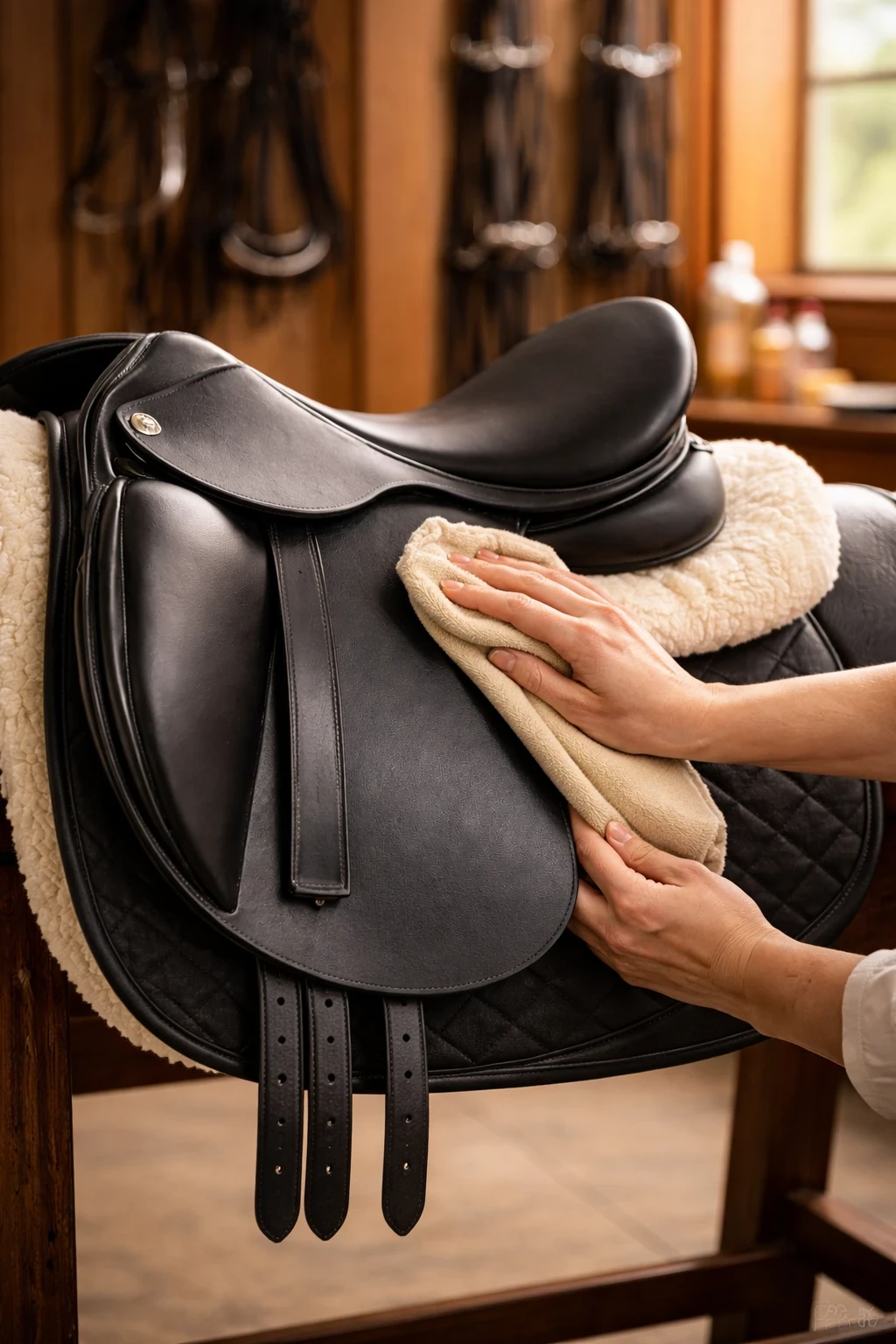
If you own an Arena Monoflap Dressage Saddle, chances are you want it to last, ride beautifully, and hold its value. Whether you’re a teen rider moving up the levels, a parent protecting a big purchase, or an adult amateur upgrading from synthetic tack, proper care makes all the difference.
Affiliate Disclosure: This article contains affiliate links. If you choose to purchase through one of these links, I may earn a small commission at no additional cost to you. I only recommend products I genuinely believe offer real value to riders and families.
If you’re still deciding whether this saddle is the right long-term investment, you may also want to read my guide on How To Choose An Arena Monoflap Dressage Saddle and my comparison, Arena Vs Traditional Dressage Saddles, to understand how the monoflap design impacts fit, feel, and maintenance.
In this guide, I’ll walk you through the exact care routine that keeps monoflap leather supple, panels supportive, and your saddle looking show-ring ready — while also protecting the resale value you worked hard to invest in.
Why Proper Care Matters for Your Arena Monoflap Dressage Saddle
Monoflap dressage saddles are less forgiving than double flap ones when it comes to sweat, leather care, and structure. Arena saddles use quality synthetic and leather materials, but they’re still susceptible to wrong cleaning, sweat buildup, or poor storage.
If you’re still evaluating whether the monoflap structure is right for your riding style, my full breakdown in How To Choose An Arena Monoflap Dressage Saddle explains how design affects long-term maintenance.
Taking care of your monoflap keeps it looking sharp and gives you years of comfort, even on a tight budget.
Protecting Leather Quality and Structure
Monoflap designs give a super close feel, but that also means the leather shows wear faster if you slack on cleaning or use the wrong products. A good balance between too much and too little conditioning keeps the saddle from drying out or going spongy.
Remember, leather that’s either too dry or too oily loses its elasticity and structure, so keep tabs on the look and feel of your saddle often.
Maintaining Close Contact Performance
With nothing but a slim panel between you and your horse, sweat and grime can sneak under the flap fast. Cleaning routines that focus on sweat-prone areas keep the foam fresh, the leather supple, and your connection with the horse just right.
This close contact not only improves communication with your horse but also helps with your own posture and balance in the saddle, making proper care essential for riding performance.
I go deeper into how this close-contact feel compares to traditional builds in my guide on Arena Vs Traditional Dressage Saddles.
Preserving Resale Value
Arena saddles often keep solid value, but cracked flaps, greasy seats, faded panels, or busted billets will slash what you can get as a trade-in or private sale. Consistent care keeps it market-ready if you move up or swap disciplines.
And if you’re planning to upgrade in the future, reviewing the sizing and fit considerations in How To Choose An Arena Monoflap Dressage Saddle can help you plan ahead.
Paying attention to effective maintenance ensures your saddle remains attractive to future buyers, saving you from surprises if you choose to sell.
Daily Care Routine After Every Ride
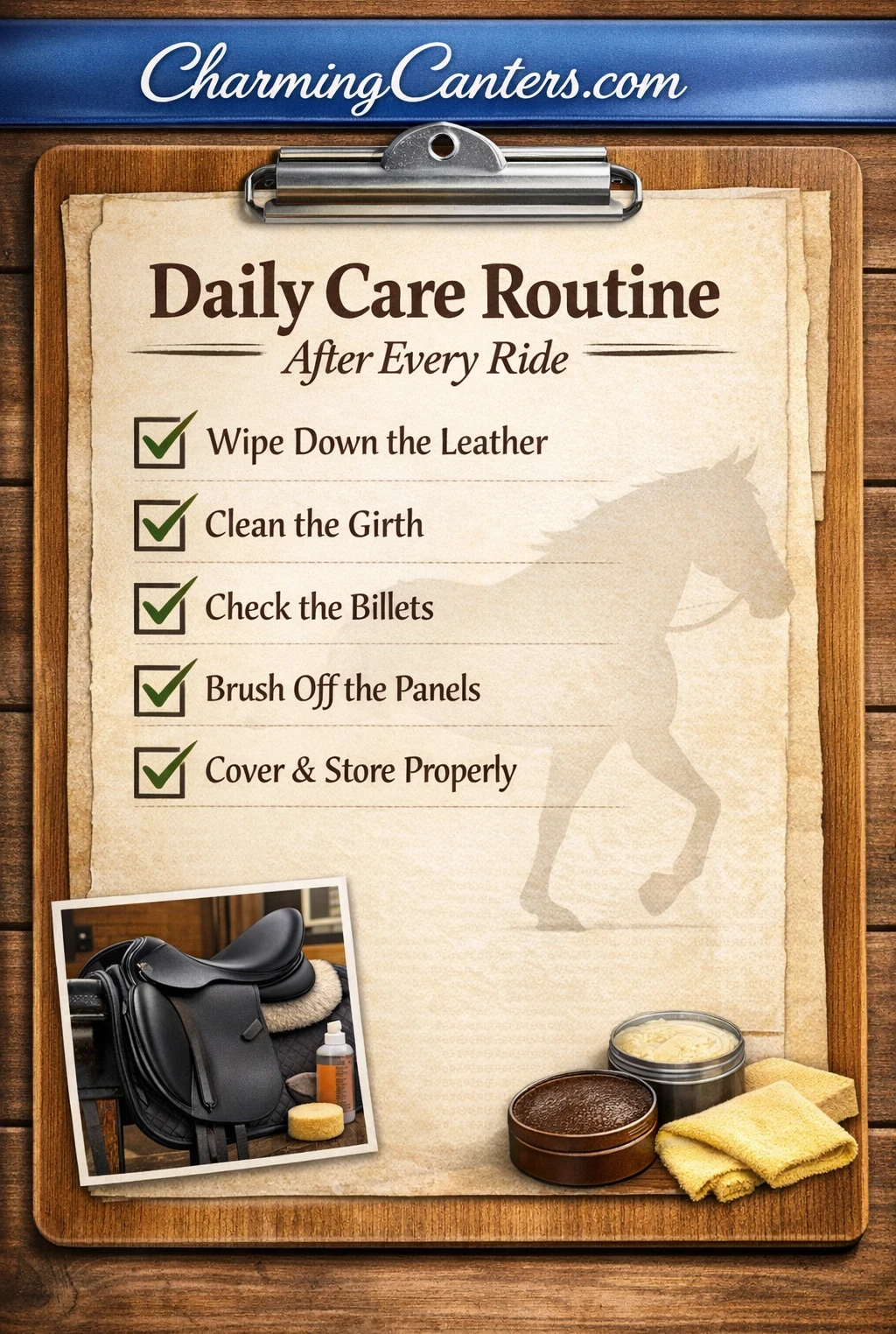
It’s tempting to toss your saddle on the rack and head home after riding, but spending an extra 5-10 minutes can make a massive difference. Here’s my daily routine to keep your saddle in peak shape without overdoing it. Quick attention every day keeps grime in check and wards off longer, tougher cleaning sessions later on.
Wiping Down Sweat and Dirt
After every ride, take a slightly damp cloth (plain water or a touch of glycerin based saddle soap) and carefully wipe the top, seat, flap, and, most importantly, the underside where sweat builds up.
Make sure the cloth isn’t soaked. Too much water leads to trouble for stitching and leather structure. Wiping after every ride prevents buildup and keeps your saddle looking and smelling fresh day after day.
Cleaning the Girth and Billet Area
The girth area catches loads of sweat and grime. Run your cloth down the billets and around the girth straps. If you see buildup, use a safe, mild leather cleaner (not regular hand soap or household stuff) to break up the gunk. Keeping this area clean helps protect the most stressed parts of the saddle from premature wear and tear.
Allowing Proper Drying Time
Let your saddle air out after wiping it down, at least an hour before tossing on a cover. Storing a damp saddle traps moisture, which can cause mold or soften those panels more than you’d want. Whenever possible, leave your tack room ventilated after a ride to keep gear dry and in top shape.
Weekly Deep Cleaning Your Arena Monoflap
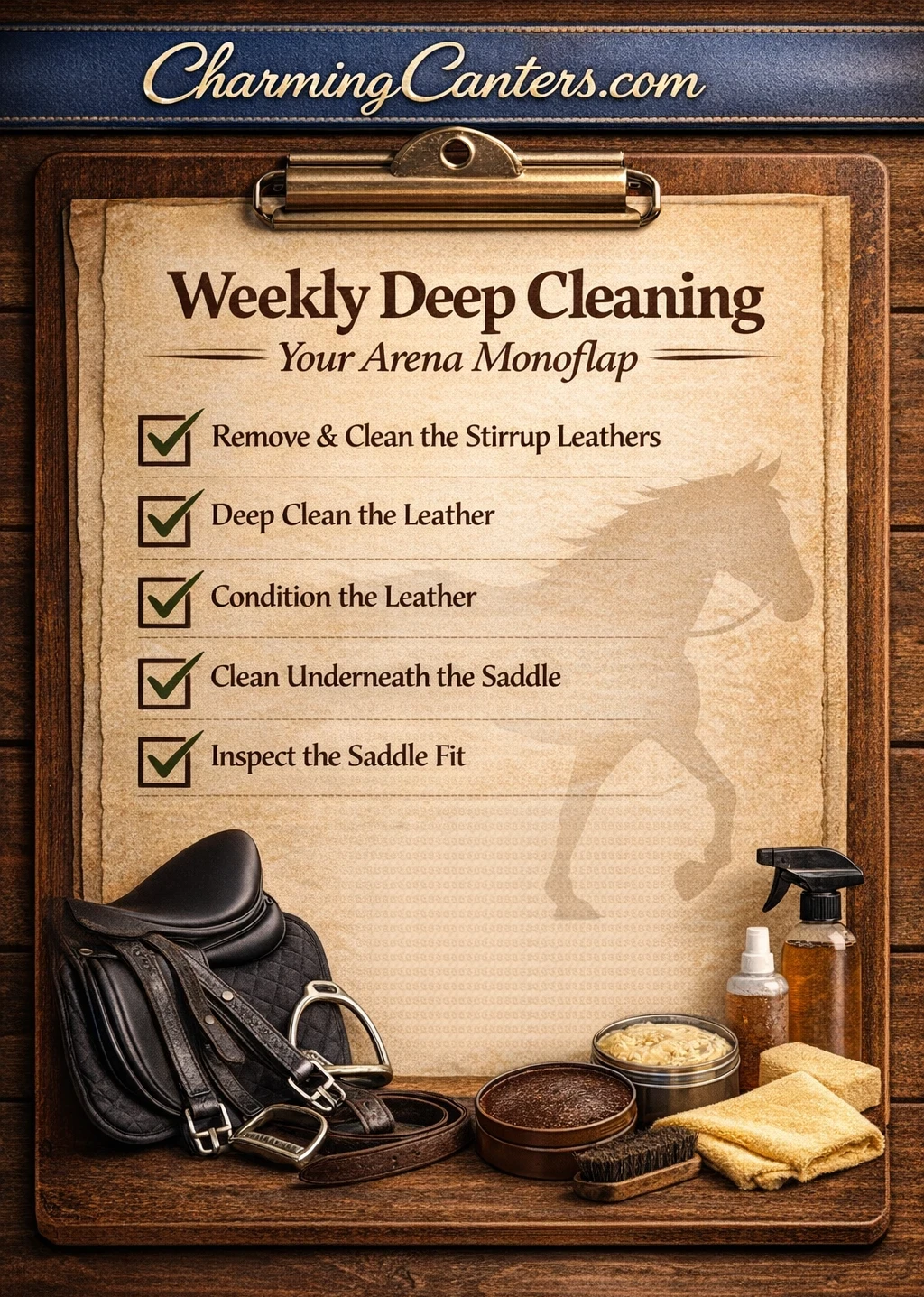
Once a week, or after extra sweaty sessions, take your care one level deeper. But don’t overdo it; some riders kill their saddle’s firmness by conditioning too often or scrubbing with harsh products. Weekly deep cleaning also lets you keep tabs on trends in wear and catch issues before they get bigger.
Choosing the Right Leather Cleaner
I would stick to saddle soap designed for equestrian leather (like a glycerin bar or a specifically marketed spray). Glycerin based products pull off sweat without getting foamy or sticky. Use Arena Glycerine soap.
Avoid heavy duty or multipurpose soaps.
They strip leather oils and hurt stitching. A cleaner formulated for the type of leather in your Arena saddle means less risk and longer saddle life.
How to Condition Without Over Softening
Lightly condition after cleaning, focusing on areas especially exposed to sweat—the seat, flaps, and girth region. Use a small amount of a light balm or cream, and stay away from thick oils (like straight neatsfoot) which can saturate and spongify panels. I wipe off any extra with a clean towel so there aren’t greasy spots.
Use Arena Leather Balsam. This product was specifically created for Arena saddels.
If your saddle feels slick or soft, dial it back and let it breathe for a few rides before adding more. The right balance keeps leather responsive and your saddle firm enough for precise riding.
Cleaning Under the Monoflap Panels Safely
This part is really important for monoflap fans. Gently lift the flap and use a dry or just barely damp towel to handle foam panel sweat marks. Never soak the underside or use anything that leaves a film.
Keeping this zone clean stops breakdown of the foam and hidden mold growth, two problems that are tough to reverse. This hidden step is a game changer for keeping your saddle in show-ring condition.
Monthly Inspection Checklist
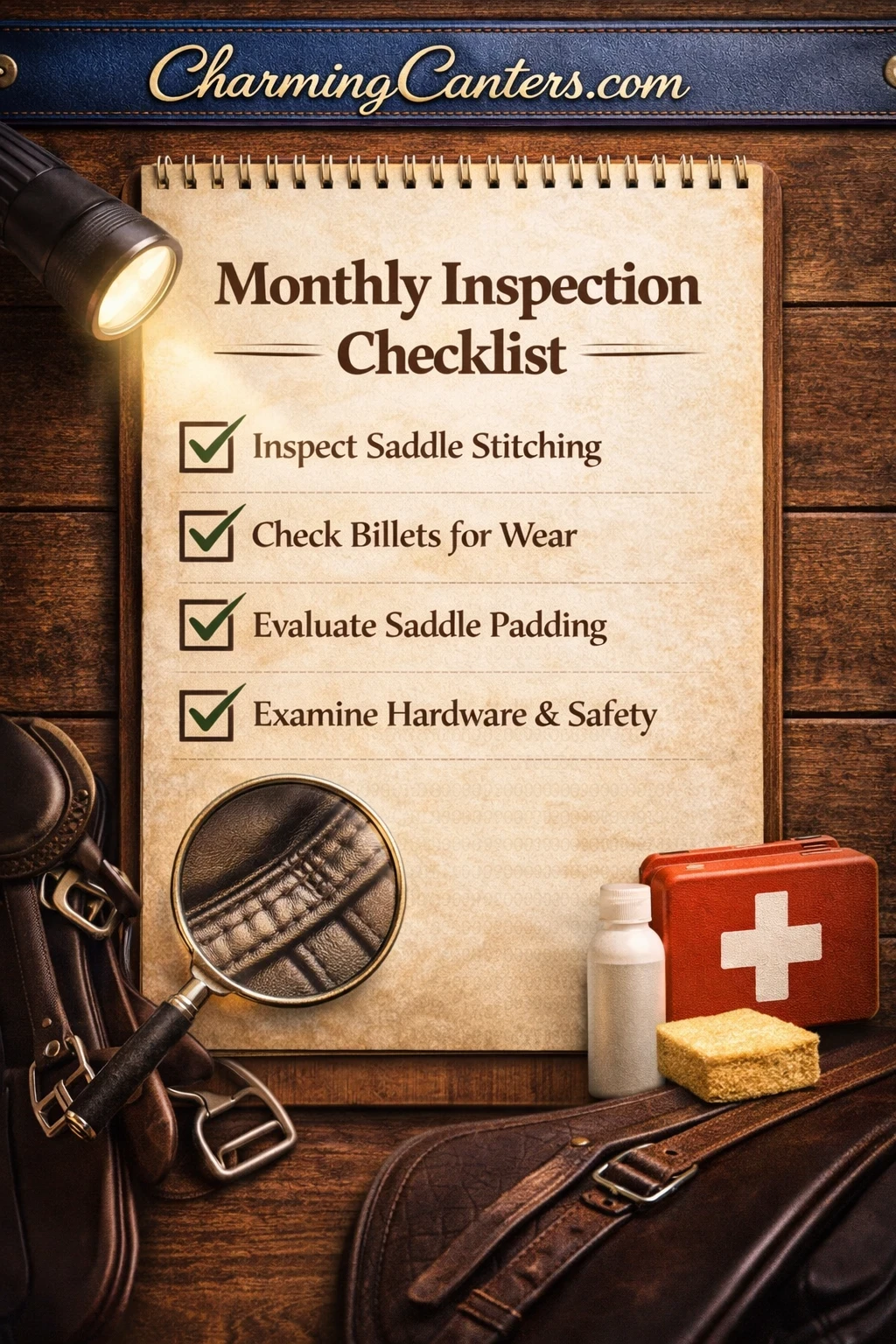
Quick checks each month help you spot small issues before they turn into big repairs. Ten minutes pays off in fewer surprises, especially since monoflap dressage saddles tend to get more panel and billet wear than bulkier models. These checks help prevent nagging issues later and give you peace of mind between deep cleans and tune-ups.
Checking Billets for Stretching or Cracks
Run your fingers down each billet. If you spot stretching, drying, or little tears where the holes are, that’s your cue to ease up on cinching or prep for a billet replacement. I’ve found that regular checks extend the lifespan, catching dry areas before they pop. Catching these problems early makes repairs cheaper and keeps you safer in the saddle.
Inspecting Stitching and Seams
Look over all seams, especially around the girth points and where the flap is attached. Sweat and cream can break down thread. Any loose or fraying stitches need to be addressed sooner rather than later to avoid flap separations. Don’t forget the hidden seams under the flap—give them a once-over too.
Examining Panels for Compression
With closer contact and more sweat, the panels can get lumpy or flat in high-pressure areas. Glide your palm over the underside to feel for dips, hard spots, or unevenness. Notice any persistent squeaks or clicks? Those can be signs the tree or panels need a professional’s look. Regular touch checks let you keep track of changes before they turn into costly repairs.
How to Store Your Arena Monoflap Dressage Saddle Properly
Proper storage is more than just picking a spot in the tack room. It also protects the tree, keeps leather from drying out or warping, and blocks out mold and mildew risk. A smart storage plan means your saddle ages gracefully and stays ready, even if you don’t ride every day.
Best Saddle Rack Type
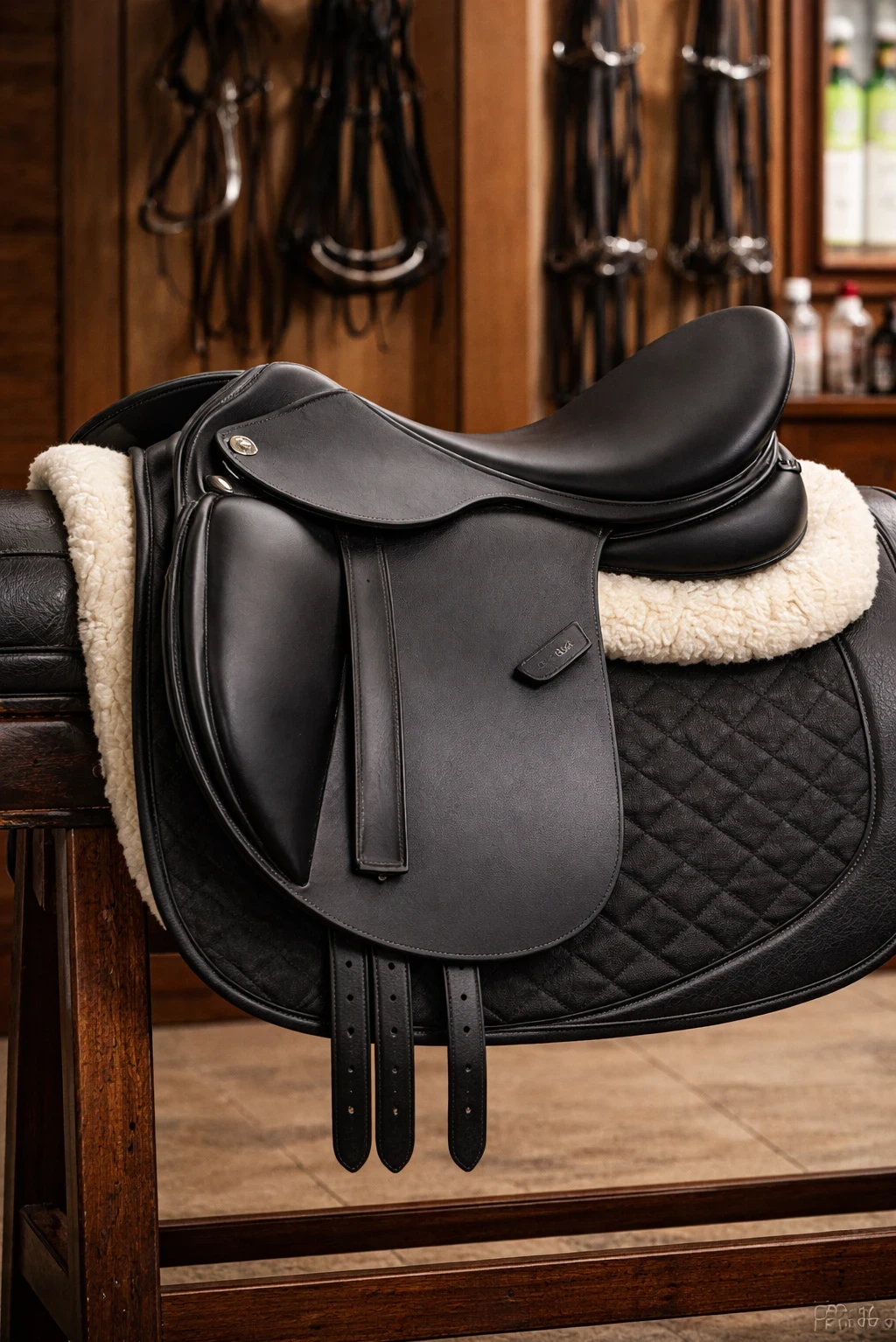
Always park your Arena Monoflap on a wide, well-padded rack. Proper storage also plays into long-term structure, something I explain when comparing construction differences in Arena Vs Traditional Dressage Saddles.
Skip those skinny poles or sharpedged hangers, as they’ll dent the panels and bend the tree over time. I recommend a saddle stand that’s at least as wide as the gullet to keep things balanced and comfortable for storage. If you’re in a pinch, wrap the rack with a thick towel for added cushion.
Ideal Temperature and Humidity
Try to store your saddle in a climate controlled area, away from direct heat, sunlight, or icy drafts. Humidity above 70% or below 40% is bad news for both the leather and foam. In steamy climates, a dehumidifier helps keep that tack room just right. Stable conditions prevent warping, shrinking, and that funky tack room smell nobody wants.
Why Plastic Covers Can Damage Leather
Use only a breathable fabric cover, like cotton or a ventilated saddle bag, to keep out dust without trapping moisture. Plastic covers are a trap for sweat and humidity, which can break down both the leather and the stitching.
For longer-term storage or travel, breathable materials protect your investment far better than plastic, which can trap condensation and speed up damage.
The Centaur Waterproof Fleece Lined Saddle Cover is an excellent choice for your Arena Monoflap Dressage saddle.
Common Mistakes That Damage Arena Monoflap Saddles
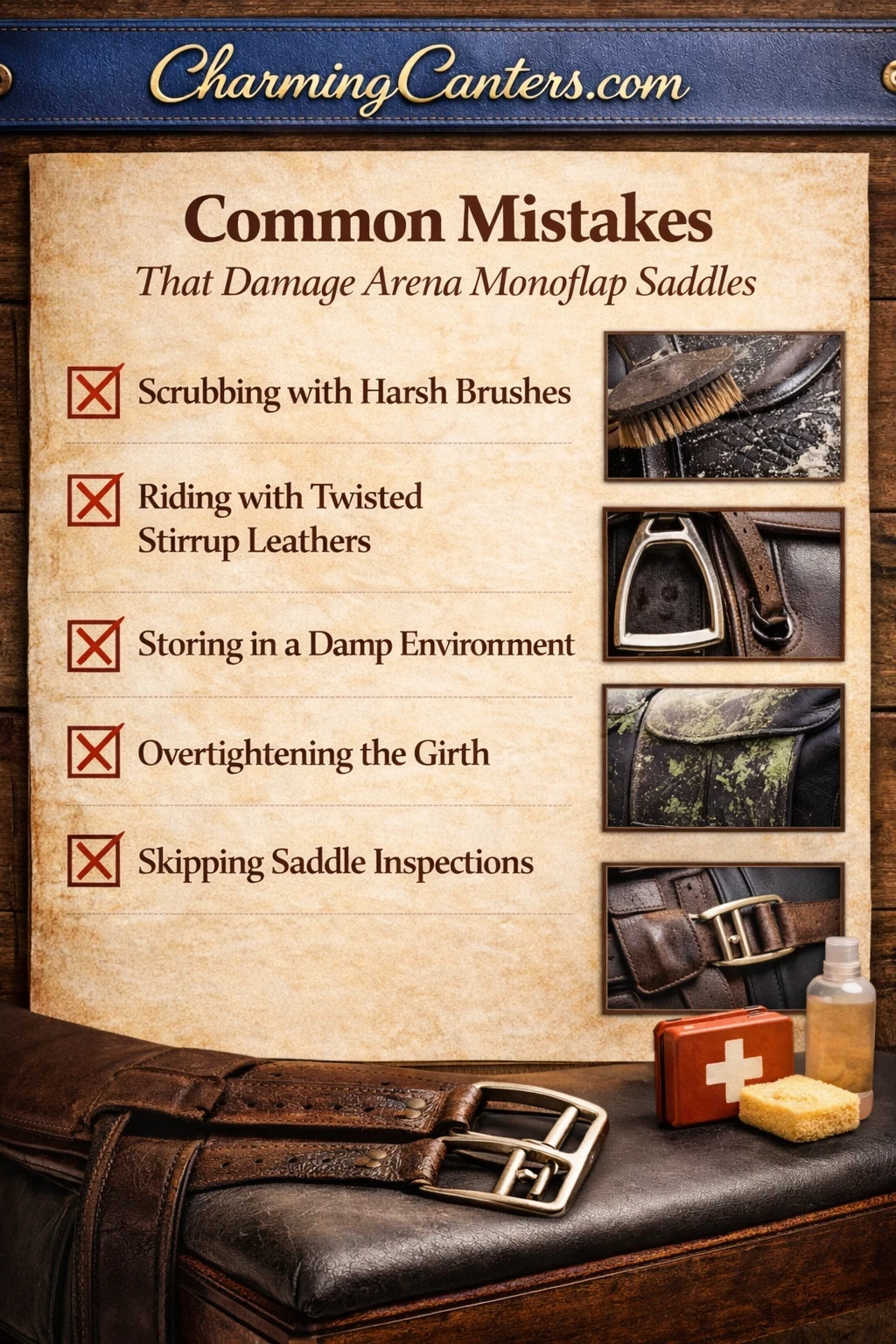
Sometimes it’s what you don’t do that matters most. A lot of wear and tear comes from shortcuts or the wrong product choices. Here are common mistakes, plus tips on what to do instead to keep your saddle looking and feeling like new.
Over Oiling the Leather
Dumping neatsfoot oil or heavy balms onto your saddle might sound like a quick fix, but I’ve seen it ruin panel structure and leave permanent dark patches. Stick with a little leather conditioner, never heavy oils. If the leather looks dry, condition lightly and wait a few days before repeating.
Hanging on Narrow Racks
If your barn only has skinny rack bars, pad them with a thick towel or foam pool noodle to help the panels keep their shape and keep pressure off the tree. Improvised padding gives your saddle the support it needs until you can track down an ideally sized rack.
Letting Sweat Sit Under the Flap
It’s easy to forget the underside, but every sweat mark you leave behind is a spot where bacteria and mold love to start. Wiping down under the flap is a simple “why not?” step that helps massively over months of regular rides. Small adjustments to your routine here can save you from big repairs later on.
When to Call a Professional Saddler
If you notice things like hard spots in the panels, persistent squeaks, tree movement, uneven seat angles, or loose billets, it’s probably time for a saddler’s opinion. DIY fixes can sometimes do more harm than good, so when in doubt, get a pro to check it out. A professional check may seem like a big step, but it could extend the life of your saddle by years and keep you riding confidently.
If you’re unsure whether an issue is structural or simply fit-related, revisiting the guidance in How To Choose An Arena Monoflap Dressage Saddle can clarify what’s normal versus what needs expert attention.
Final Thoughts: Keeping Your Arena Monoflap Ride Ready for Years
Owning a monoflap dressage saddle is a big investment, but with smart care you’ll keep the leather beautiful, the tree sound, and those panels supportive for every ride. A routine of quick wipe downs, regular deep cleans, thoughtful storage, and monthly inspections protects both performance and resale value.
If you’re considering purchasing or upgrading to an Arena Monoflap, you can check current pricing and availability here:
👉 Check current availability of the Arena Monoflap Dressage Saddle
With the right care from day one, your saddle can stay show-ready season after season — and ready for whatever level you decide to ride next.