
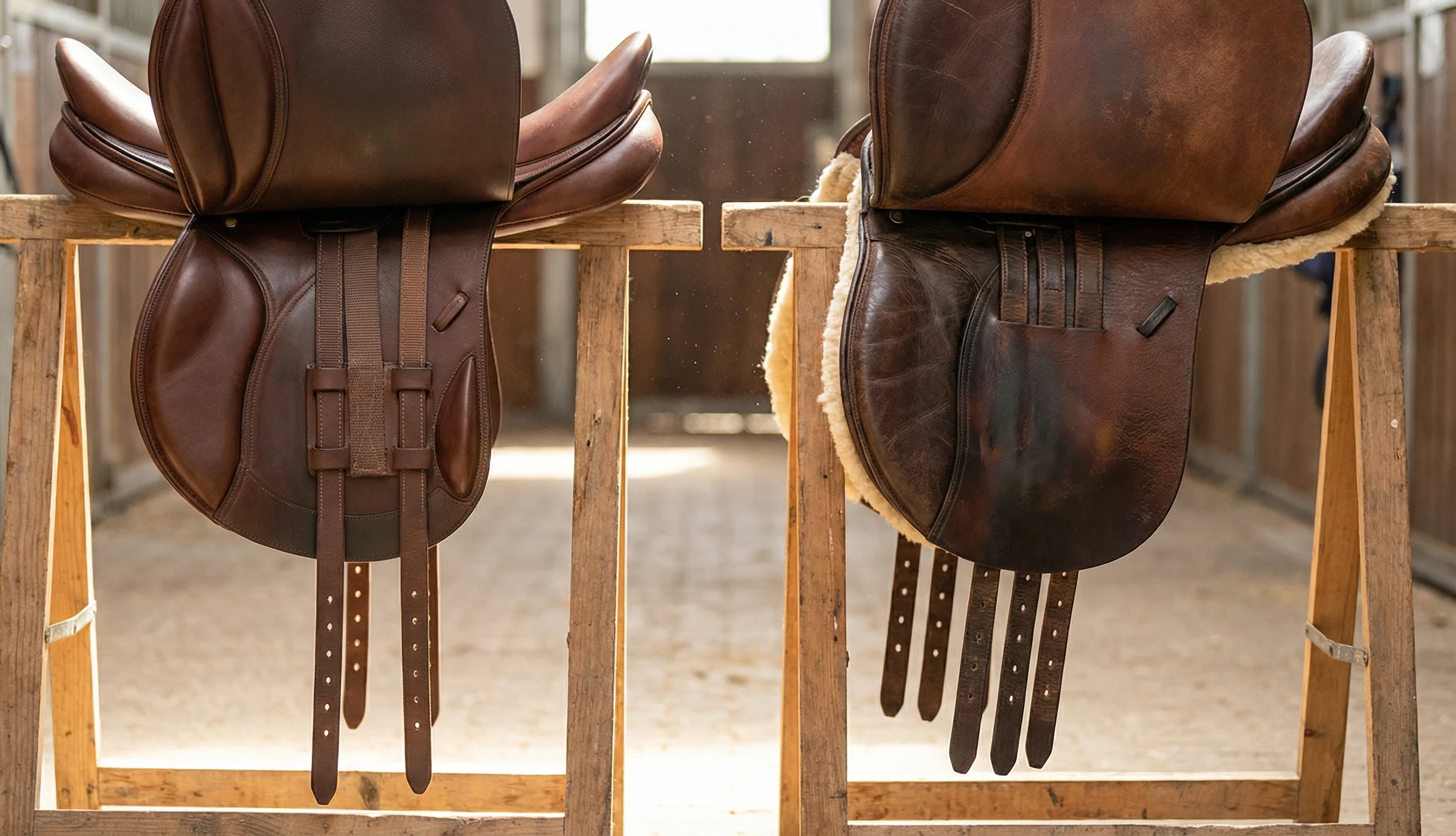
If you’re comparing an Arena monoflap dressage saddle to a traditional double-flap dressage saddle, you’re probably at a real decision point.
Maybe your trainer mentioned monoflap.
Maybe you’ve seen riders at shows switching to sleeker designs.
Or maybe you’re wondering if “traditional” automatically means better.
Before we dive in, just a quick note for transparency: this article may include affiliate links. If you choose to purchase through one of these links, I may earn a small commission at no additional cost to you. It helps support CharmingCanters.com so I can continue creating practical, research-backed resources for parents and dedicated riders.
Now let’s talk about what actually matters.
The debate between Arena vs traditional dressage saddles isn’t about right or wrong. It’s about feel, construction, rider goals, and horse comfort. Monoflap saddles promise closer contact and a modern, streamlined design. Traditional double-flap saddles offer familiarity and a classic structure many riders grew up with.
But here’s the real question most riders are asking:
Are you sacrificing quality or correctness if you choose Arena?
In this guide, I’ll break down the structural differences, how each type affects your leg and your horse’s movement, what judges really care about, and which riders tend to thrive in each style—so you can make a confident decision without second-guessing your investment.
Arena vs Traditional Dressage Saddles: What’s the Real Difference?
The main split between an Arena monoflap saddle and a traditional dressage saddle is all about flap design, rider feel, and the mixture of price and quality. While doubleflap saddles have ruled for decades, monoflap models, especially from Arena, are gaining serious attention with riders who want that closer horse connection without breaking the bank.
Monoflaps are designed with a single flap, dropping most of the bulk under your leg. Doubleflaps have a layer for the billet straps and another outside layer, creating a more classic style with extra leather between you and the horse. Both come with unique pros and cons, but your riding goals, your budget, and even a bit of personal taste will guide the right fit.
What Is an Arena Monoflap Dressage Saddle?
The Arena monoflap isn’t just a modern twist. It’s a practical answer for riders wanting an affordable, leather dressage saddle with a closer contact feel. Arena has aimed to bring high-end features, think adjustable trees and European leather, to a price point most of us can actually consider.
If you’re still deciding whether this saddle fits your goals, I walk through seat sizing, tree options, and rider profiles in my full guide on how to choose an Arena monoflap dressage saddle.
What “Monoflap” Actually Means
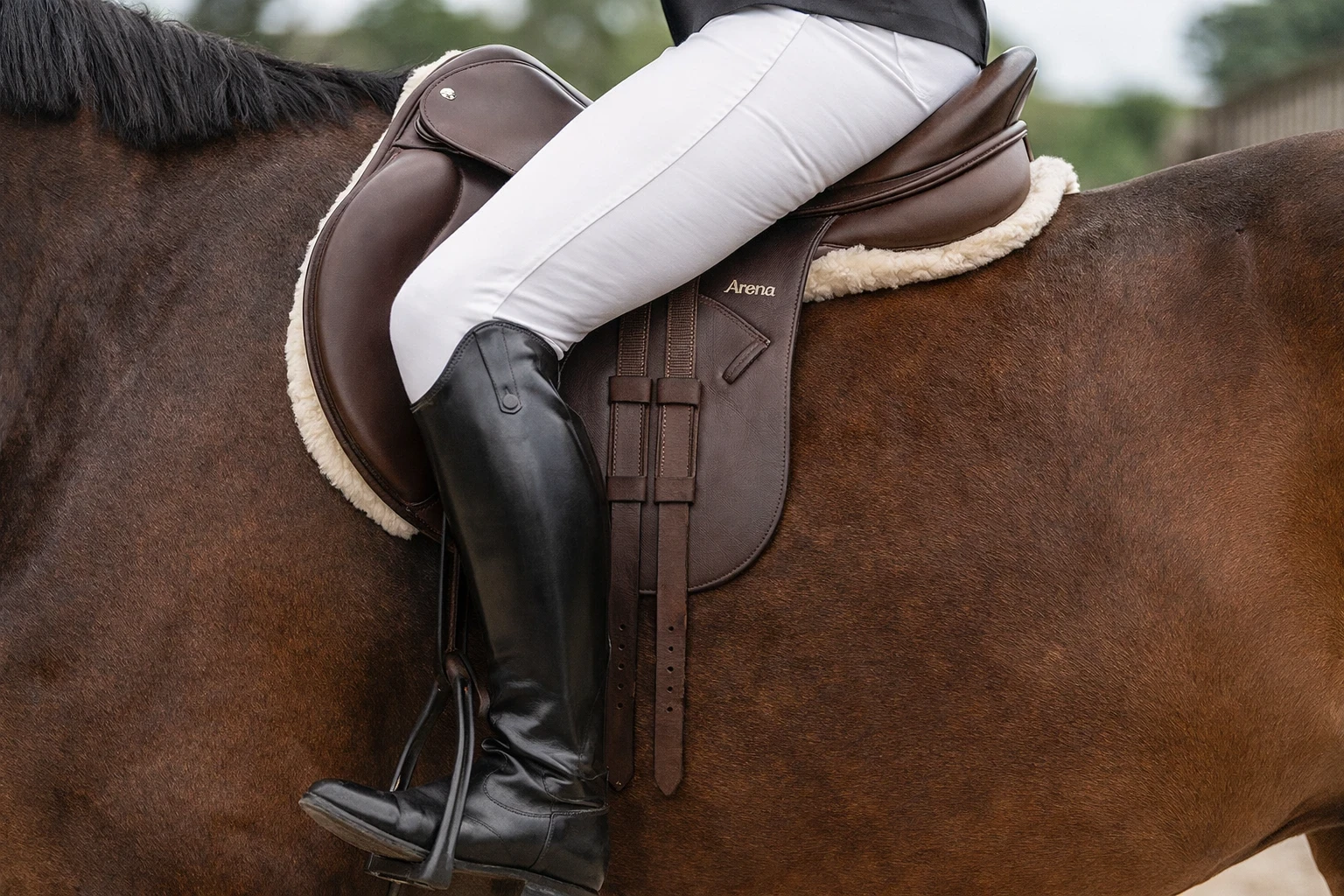
Monoflap simply means there’s a single piece of leather between your leg and the horse, rather than two. There’s no separate outer flap; the billets (those straps you girth up with) are either exposed or neatly slotted so they don’t get in your way. This setup cuts the bulk and brings your leg right up against the horse’s side. If you’ve ever struggled to get your leg really on or adjust your position in the saddle, this style feels pretty eye opening and offers a lot more direct sensation than bulkier models.
How the Arena Monoflap Is Built
The Arena monoflap saddle uses lightweight but sturdy synthetic trees, the skeleton inside the saddle, covered with soft European leather. It’s got flocked panels, not foam, for horse comfort and adjustable gullet plates which makes it really flexible if you own a horse that gains or loses muscle.
Think about seasonal changes or a young horse still filling out. The saddle comes in different seat sizes and has a medium-deep seat designed for the classic dressage posture but without forcing you into a single spot. These details help tailor the fit and comfort for a wide range of riders and horses.
Who Arena Saddles Are Designed For
Arena pretty much targets the budget-conscious amateur. If you’re stepping up from an all purpose or Wintec and don’t want to spend Bates or Prestige kind of money, these saddles hit a sweet spot.
They especially appeal to riders who want quality leather, the adjustability of a changeable gullet, and a real dressage-style position without making a four-figure mistake. Arena’s design is also friendly for smaller adults, teen riders, and parents looking for a saddle a junior can “grow into.”
Trainers suggest these to serious students who are ready for a leather upgrade but aren’t ready for the $4,000 jump. In fact, many riding instructors now suggest the Arena monoflap as a stepping stone for those looking to advance their performance without draining their savings.
What Is a Traditional Doubleflap Dressage Saddle?
Before Arena’s monoflap, almost every dressage saddle used a doubleflap layout. This means there’s an inside flap where the girth straps run and an outer, wider flap to protect your leg from buckles and keep everything neat. This double layer feels familiar, especially in classic brands like Stubben, Passier, Albion, or older Kieffer and Kent & Masters models.
Structure of a Classic Dressage Saddle
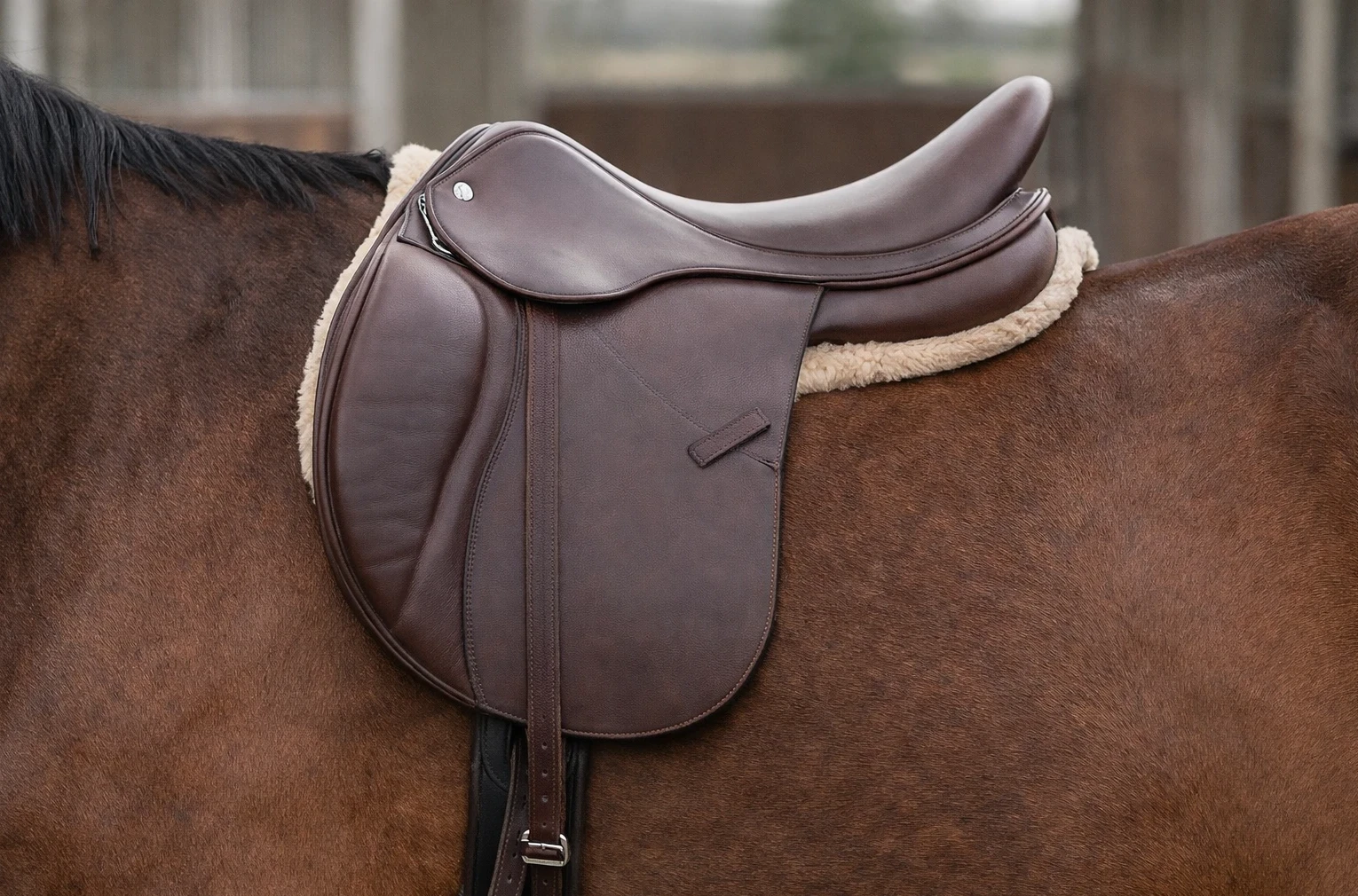
Traditional dressage saddles have that unmistakably proper look. Deep seat, high cantle, and long straight flaps with subtle knee blocks. The flaps help protect your breeches from rubs and can sometimes add a bit of substance between your lower leg and the horse.
These saddles are often heavier with more bulk, and some riders see that as a plus, not a minus. This sturdiness can lend a feeling of extra support, making it a favorite for many experienced riders and professionals alike.
Why Doubleflaps Were the Standard for Years
Doubleflap saddles made sense before modern materials and adjustable tech came along. With extra leather layers, there’s a sense of stability for riders who want a bit more to “hug” their inner thigh.
Some say this creates a more secure, grounded feel, especially when riding big-moving horses or if you grew up riding in this style. The older saddle models also hide their billet straps and keep the look very clean for competition purposes.
For many, tradition is just as important as innovation, and the doubleflap design stands as a trusted companion through countless competitions and training sessions.
Common Brands Riders Compare Against
If you’re shopping, you might see doubleflap models from Albion, Passier, old Bates, Kent & Masters, and Wintec. Many used saddle racks are packed with these. They hold up really well and have serious resale value, especially the big-name German and English brands.
Upsides include their classic styling, wide availability, and decades-long track record in the dressage world. These brands have built a reputation on skilled craftsmanship and consistent performance, making them a favorite among riders who value reliability above all.
Arena vs Traditional Dressage Saddles: SidebySide Comparison
Rider Feel and Leg Contact
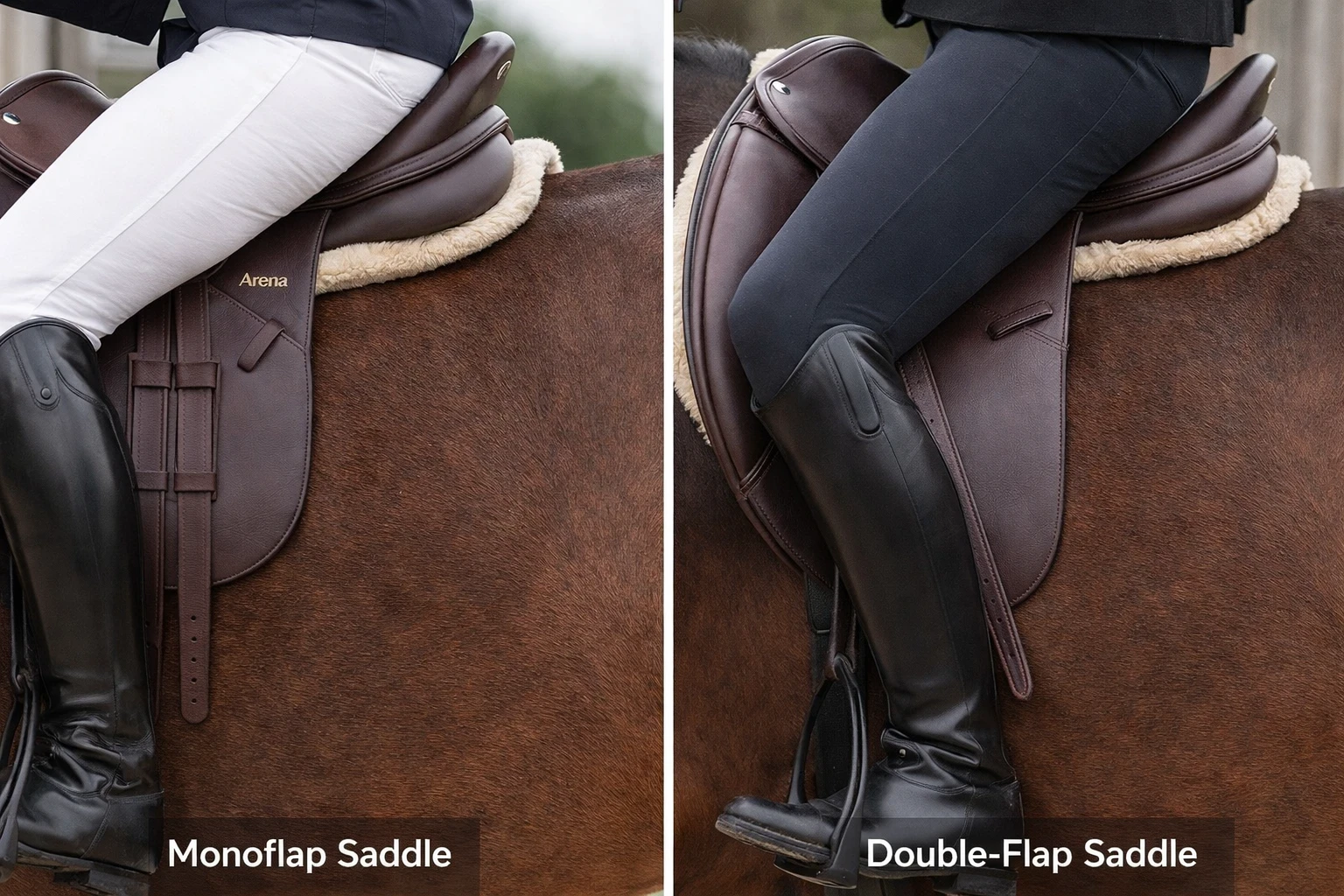
Monoflap saddles like the Arena let you get your leg much closer to the horse. You might notice you can give subtle aids with less struggle, especially if you have a shorter leg or are coming from an all purpose saddle.
Traditional doubleflaps put a layer (or two) more leather between you and your horse, sometimes helping newer riders feel more “held” but often making it a bit harder to feel every movement and adjust instantly. The improved contact in a monoflap can make fine-tuning your cues easier and accelerate your riding progression.
Stability and Security
Some riders feel more anchored with a doubleflap. That extra leather helps them stay put if the horse moves suddenly or if they get tense in a show environment.
Arena’s monoflap, while lighter, still offers solid knee blocks and a balanced seat, but it might feel different for the first few rides. There’s less bulk, closer contact, and sometimes a more open sense if you learned in doubleflaps.
Over time, many riders grow to prefer the freedom a monoflap provides, though the difference is mostly a matter of preference and experience.
Horse Comfort and Shoulder Freedom
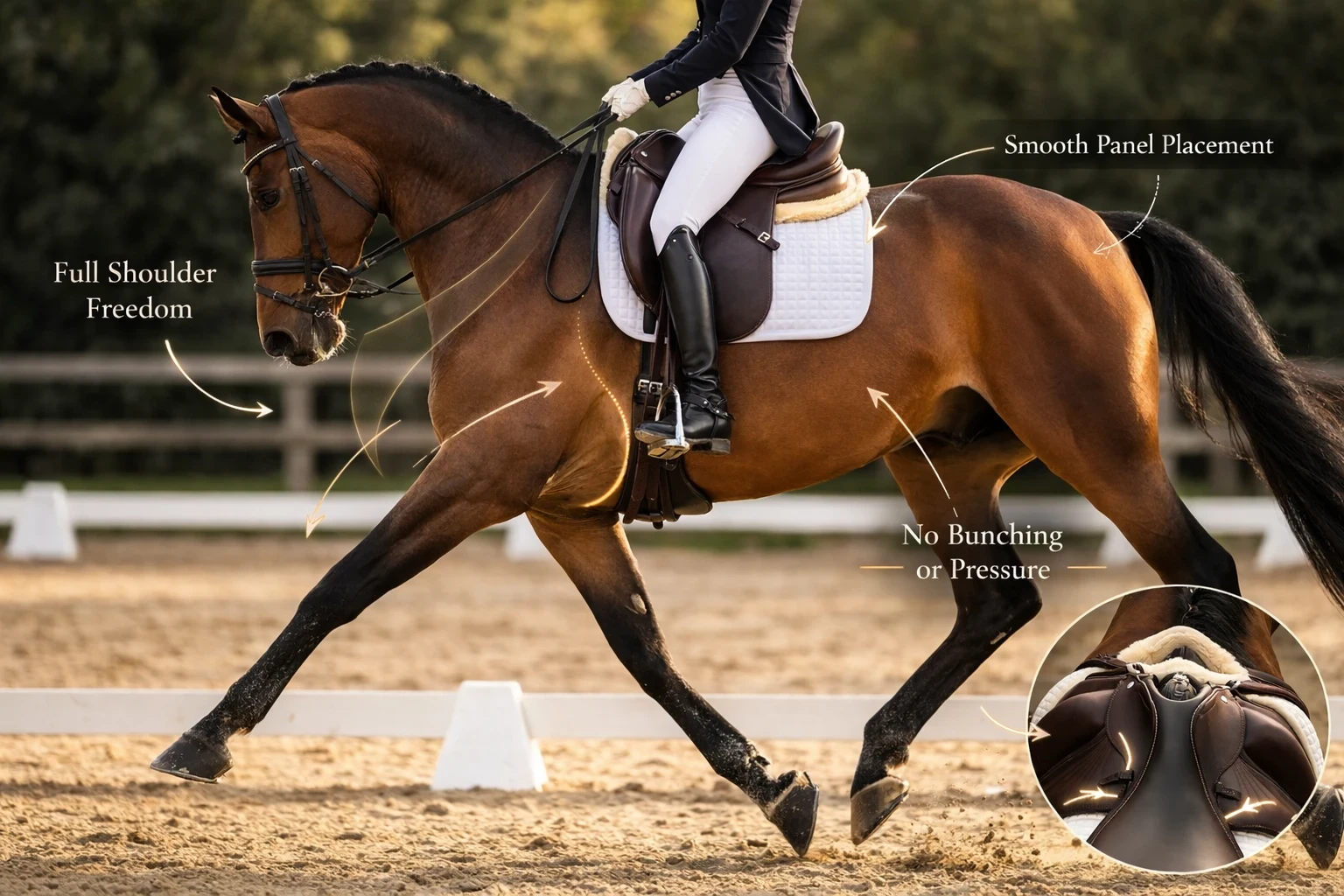
Less bulk under your leg means less bulk on the horse, too. Many horses move freer through the shoulder in a well-fitted monoflap. Arena’s panels are designed to distribute pressure, but as always, saddle fit trumps all. An ill-fitting monoflap is still a problem!
Traditional saddles sometimes have stiffer, more structured panels and bulkier flaps, which can pinch if not fitted carefully. It’s important to check each saddle’s fit during every season to make sure your horse is comfortable and performing at their best.
Weight and Bulk
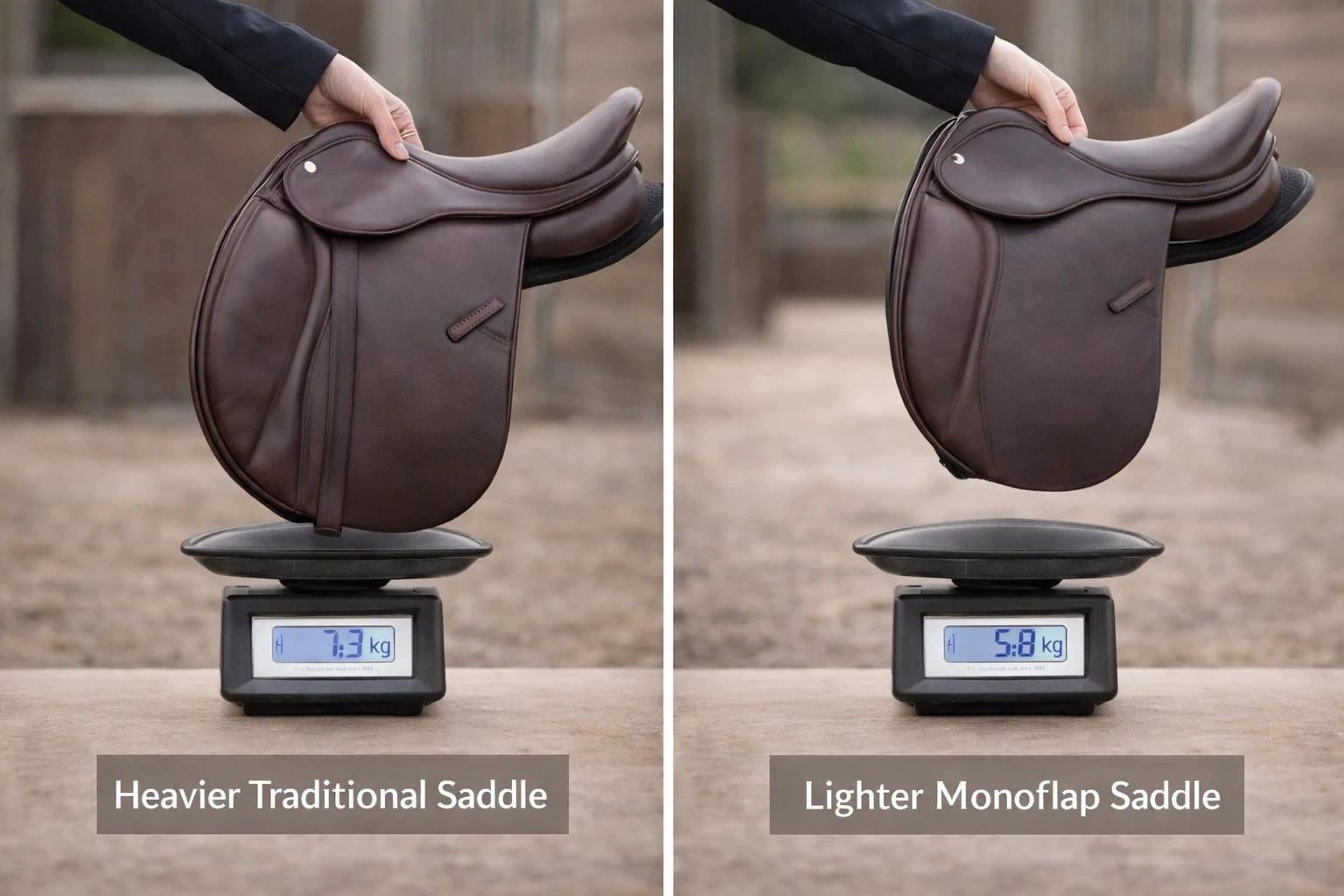
Monoflap equals lighter. It’s that simple. However the image above doesn’t represent the exact weight. Weight differs by brand.
You’ll notice it when you tack up and when you clean the saddle. If you’re switching from a classic Passier or Albion to an Arena monoflap, you’ll probably be surprised how much easier it is to lift on and off.
Less bulk can also help smaller riders feel less “dwarfed” by the saddle. Monoflaps can make a huge difference for juniors or petite adults who struggle with heavier tack every day.
Adjustability and Fit Options
Arena monoflap saddles come with adjustable gullet plates, making them easy to tweak for horses that grow, change shape, or if you ride different horses. Many traditional leather saddles need a saddler to adjust the tree or flocking, which can get pricy.
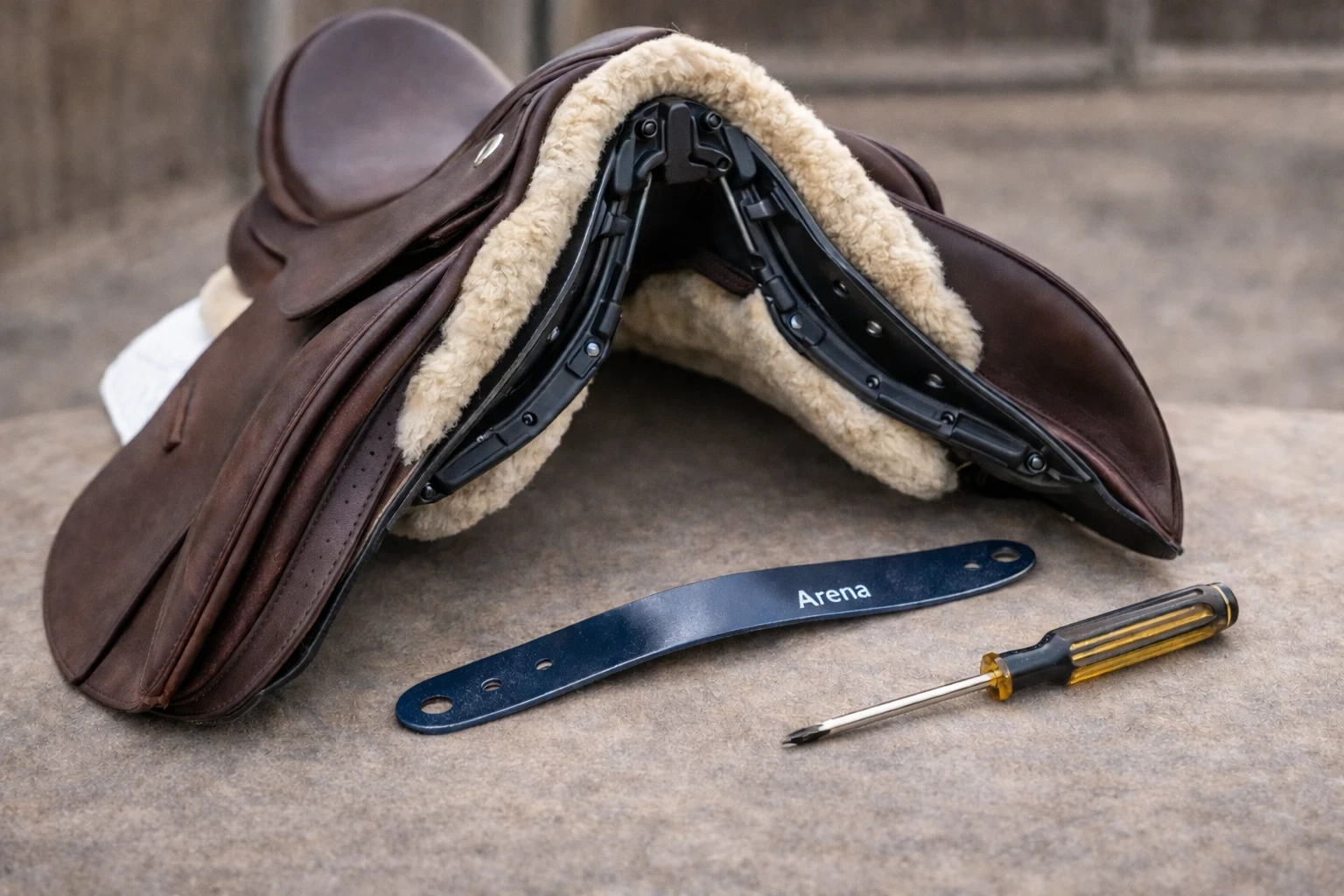
With a monoflap like Arena, you can swap plates with basic tools at home and tweak the flocking for a customized fit. If you’re unsure which gullet width or seat size makes sense for your horse and body type, my detailed guide on how to choose an Arena monoflap dressage saddle breaks it down step by step.
This accessibility is great for families with more than one horse and for those who like to keep their tack fresh and comfortable season to season.
Leather Quality and Break-In Time
Arena uses soft European leather, and a lot of people are surprised by how quickly it breaks in. Classic doubleflap saddles might start stiffer and need more oiling, but they often last decades with good care.
Arena aims for a supple feel out of the box so you’re not spending weeks “wearing it down.” With proper maintenance, both Arena and traditional saddles will deliver years of service, but Arena gives a “ready to ride” impression straight from the shop.
To keep the leather supple and protect your investment long term, I’ve also created a practical guide on how to care for your Arena monoflap dressage saddle.
LongTerm Durability
This is where brand reputation and materials matter.
Arena’s saddles are newer to the market but use proven techniques. Classic brands (Albion, Passier, Stubben) have old-school craftsmanship on their side, and many used saddles are still going strong at 20+ years.
Arena’s synthetic tree and sturdy build should offer years of riding for typical amateur use. If you’re putting multiple rides a day for decades, classic brands might edge ahead here. Riders should match their saddle choice to their expected use for the best longterm value.
Price Point Comparison
Arena lands in that sweet zone for budget-minded riders looking for leather. New Arena monoflaps run about half the price of premium brands, but you’re still getting real leather and high-end features.
New classic doubleflap leather saddles (Albion, Prestige, and similar brands) can easily hit $4,000 or more. Used doubleflaps might close the gap, but you’ll want to factor in fitting costs and the risk of buying secondhand. If you’re comparing Arena to other budget-friendly leather dressage options, you may also want to read my review of the Henri De Rivel Dresseur saddle.
The Arena monoflap can be a great “first leap” into quality leather without the steep price tag.
Is the Arena Monoflap Less “Correct” for Dressage?
Competition Rules and FEI Legality
Dressage rules in the U.S., UK, and most countries allow both monoflap and doubleflap saddles at any level. FEI classes and national shows don’t dock points for flap design. If you ride with a black, neat, well-fitted saddle, you’re good. Judges don’t check flaps. They want to see you and your horse as a team, moving freely and comfortably in the ring.
Trainer Perception vs Modern Trends
Some old-school trainers grew up in doubleflaps and might default to calling them more “correct.” But a lot of top riders now use monoflaps and especially like them for closer leg contact and lighter weight.
Arena’s modern design looks classic from the judge’s box anyway. A good trainer will help you pick what supports your riding, not just what’s “always been done.” Attitudes are shifting as more competitive riders prove success with both designs.
When Traditional Might Still Be Preferred
If you show in very traditional circuits, have a preference for extra bulk, or just want that “classic” look and feel, doubleflap models will still deliver. Some professionals or very tall/heavy riders say that extra structure from doubleflaps keeps them more balanced, especially on powerful horses.
Who Should Choose an Arena Monoflap?
Adult Amateurs Wanting Closer Contact
If you want to move from a general purpose or beginner’s synthetic saddle and crave that leg-on-horse connection everyone raves about, Arena is designed for you. Training students also love how simple it is to feel small movements and correct their seat, making learning more effective and enjoyable.
Riders Transitioning from All Purpose Saddles
If you’re making your first jump into dressage-specific tack, monoflap models, especially affordable ones like Arena, help make the switch less intimidating. The lighter weight and open seat keep things feeling familiar but give a much clearer, more responsive ride. This makes the adjustment period smoother for riders new to the discipline.
Budget-Minded Riders Wanting Leather
Arena offers leather and adjustable fit without the wallet panic that comes from high-end European brands. Parents of up-and-coming juniors and adult hobbyists both find this a realistic path to more “serious” riding without financial regrets. For those who like to ride multiple horses or need flexibility, the Arena’s adjustability removes future headaches.
Who Should Stick with a Traditional Dressage Saddle?
Riders Who Prefer Extra Bulk Between Leg and Horse
If you feel safer and more stable with a saddle that gives you something substantial between your leg and the horse, traditional doubleflap models will offer that. Riders on big-moving or spooky horses sometimes appreciate the extra grip and security. The sturdy build can instill greater confidence during powerful or unexpected movements.
Riders Who Like a Very Classic Feel
If you want to look straight out of a classic dressage photo, or you just love that “settled in” feeling after years with doubleflaps, don’t fight what works for you. There’s nothing wrong with loving the old-school vibe and it’ll always be respected in the dressage ring. For many, riding is just as much about tradition as performance, and the doubleflap delivers that heritage.
Certain Body Types That Prefer Double Flap
Larger or very tall riders sometimes need more structure from their saddle to stay balanced, especially during walloping gaits. That double layer of leather acts as a buffer, helping some riders maintain stability without losing confidence. Finding a saddle that fits your physique and maximizes your control should always be the top priority.
Final Verdict: Is Arena a Smart Alternative to Traditional Dressage Saddles?
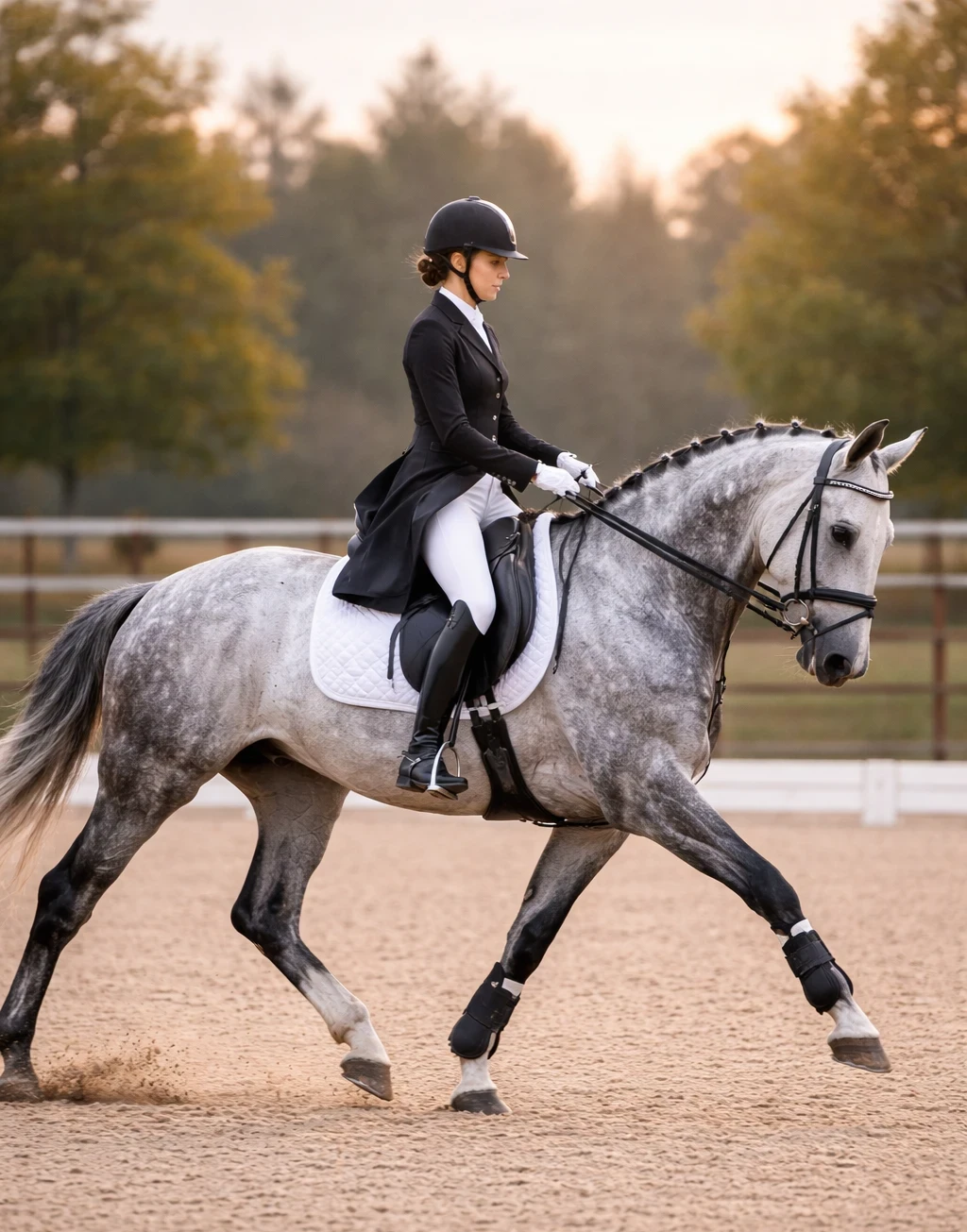
Modern doesn’t mean less correct. Arena’s monoflap puts you closer to your horse, helps with contact, and saves you a pretty big chunk of change compared to upscale classic brands. The adjustability, easy maintenance, and leather finish make it a practical, modern option for amateurs, juniors, and anyone moving up from an allpurpose or budget synthetic saddle.
If you’re feeling nervous about leaving behind tradition, remember: saddles grow and change because riding does too. Arena gives you modern comfort while keeping the look and seat of a classic dressage saddle.
If you’re narrowing in on Arena, I recommend reading my full breakdown on how to choose an Arena monoflap dressage saddle along with my step-by-step guide on how to care for your Arena monoflap dressage saddle before making your final decision.