Bates Advanta vs Pessoa Junior Saddle: Which Is Better for a Growing Rider?

When your child is outgrowing their current saddle and lessons are becoming more serious, choosing the next saddle can feel like a high-pressure decision. Two names often rise to the top for growing riders: the Bates Advanta and the Pessoa Junior Saddle.
Both are well-respected, premium options—but they serve slightly different needs. Parents frequently ask whether one is “better,” when the real question is which saddle fits their child’s stage, riding goals, and growth pattern best.
This comparison breaks down the key differences between the Bates Advanta and the Pessoa Junior Saddle from a parent’s perspective, while also addressing some of the most common saddle mistakes parents make during growth transitions, so you can choose with confidence, not guesswork.
Just a quick heads-up for transparency: this article may include affiliate links. If you choose to buy through one of them, I may earn a small commission at no extra cost to you. It helps support CharmingCanters.com so I can keep creating helpful resources for parents and young riders.
Quick Overview: Bates Advanta vs Pessoa Junior
Before diving into detailed differences, it helps to look at how the Bates Advanta and the Pessoa Junior Saddle compare at a glance. Both are respected options for growing riders, but they are designed with slightly different priorities in mind.
Bates Advanta Saddle
- Price range: Mid-to-high premium range
- Intended rider level: Older youth and early teen riders transitioning toward adult tack
- Adjustability approach: Adjustable gullet system designed to accommodate changes in horse shape and rider growth
- Overall feel: More structured and supportive, with a “grown-up” balance that encourages refined position
Pessoa Junior Saddle
- Price range: Premium youth-focused range
- Intended rider level: Younger riders who have outgrown basic pony saddles but still need youth-specific proportions
- Adjustability approach: Adjustable gullet system with panels designed to adapt to ponies and smaller horses
- Overall feel: More versatile and forgiving, offering flexibility and confidence during growth and transitions
This snapshot helps highlight how each saddle is positioned, without labeling one as better overall. The right choice depends on your child’s current riding stage, growth pattern, and the horses or ponies they ride most often.
Rider Stage & Growth: Which Saddle Fits Best at Each Phase?
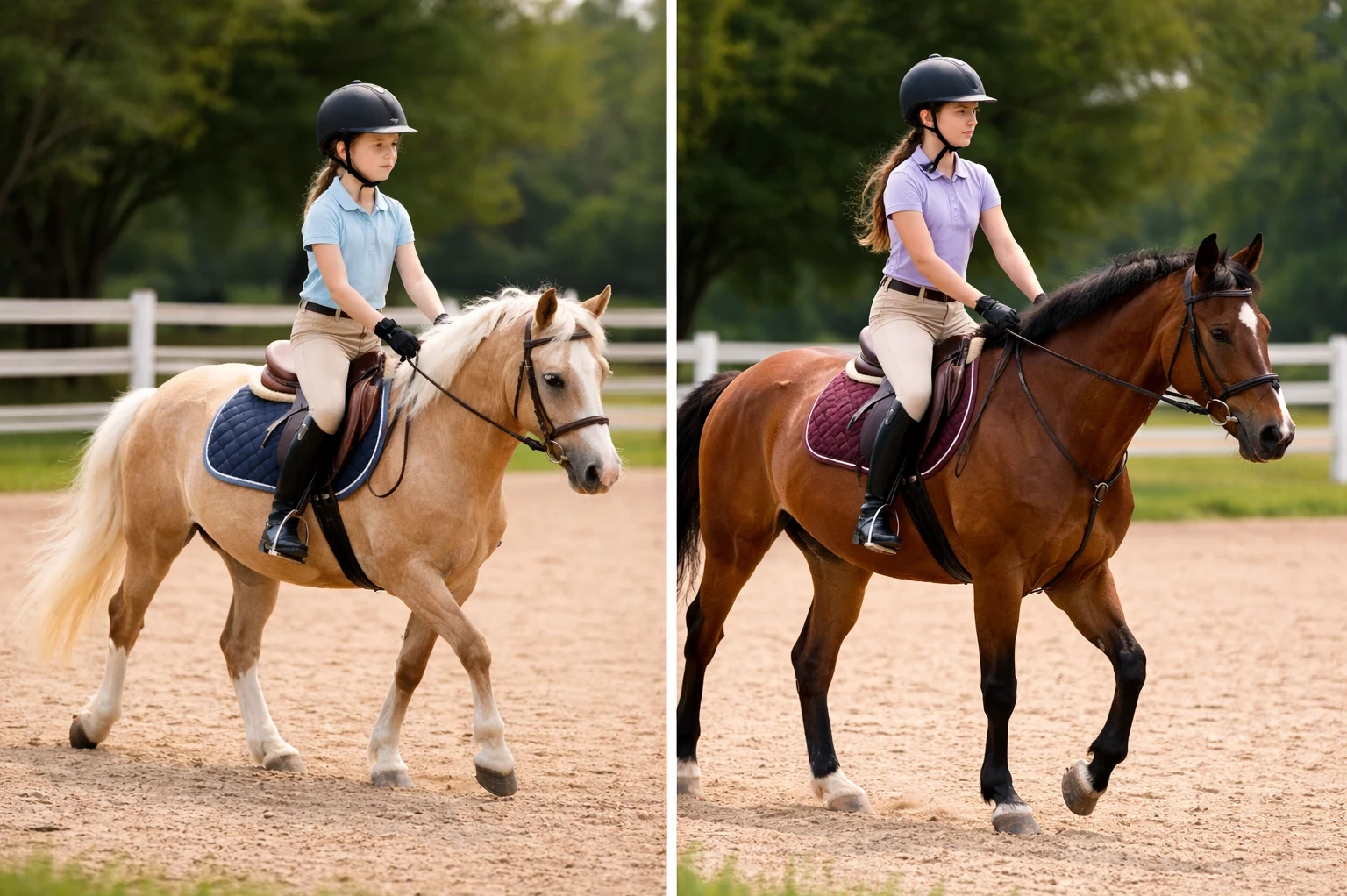
One of the biggest factors in choosing between the Bates Advanta and the Pessoa Junior Saddle is where your child is in their growth and riding journey. While both are high-quality options, they support different stages of development.
Bates Advanta — Best For
The Bates Advanta tends to suit older youth and early teen riders who are beginning to transition toward adult-sized equipment. It works especially well for riders who have experienced noticeable height growth, longer leg length, or a more developed riding position.
This saddle is often a good fit if your child:
- Is starting to look “between sizes” in youth saddles
- Has longer legs that benefit from a more structured flap
- Is riding with a focus on equitation, hunters, or refining position
- Feels ready for a saddle that offers a more supportive, grown-up balance
For many families, the Bates Advanta represents a bridge between youth and adult tack, without jumping straight into full adult saddles too soon.
Pessoa Junior Saddle — Best For
The Pessoa Junior Saddle is designed with youth proportions in mind and tends to work best for younger riders who are still solidly in that stage. It’s a common choice for riders who are stepping up from pony saddles but aren’t quite ready for the structure of adult-style designs.
This saddle is often a good fit if your child:
- Is transitioning out of a pony saddle
- Needs a lighter, more forgiving feel while developing strength and balance
- Rides multiple ponies or lesson horses with varying shapes
- Is experiencing growth but still benefits from youth-specific balance and proportions
For these riders, the Pessoa Junior Saddle offers flexibility and confidence during a period when both rider and pony can change quickly.
Understanding which phase your child is in helps narrow the decision and reduces the risk of choosing a saddle that feels either too advanced or too limiting for where they are right now.
Parents who want a deeper look can read our full Bates Advanta Saddle review or our Pessoa Junior Saddle review to see how each performs individually.
Seat Balance & Rider Support (What Parents Actually Notice)

When parents compare the Bates Advanta and the Pessoa Junior Saddle, the difference they notice most often isn’t a specific feature—it’s how their child sits and feels in the saddle.
Bates Advanta: A More “Grown-Up,” Structured Balance
The Bates Advanta tends to offer a more structured, supportive seat, which many parents describe as feeling more “adult” or polished. Riders often sit deeper and feel more guided into correct alignment, especially through the leg and upper body.
Parents commonly notice that:
- Their child looks more stable in the saddle
- Leg position appears more consistent
- The rider feels supported during flatwork and position-focused lessons
This structured balance can be especially helpful for riders who are refining equitation skills or transitioning toward adult-style saddles, where position precision becomes more important.
Pessoa Junior: More Adaptable and Confidence-Friendly
The Pessoa Junior Saddle typically feels lighter and more forgiving, which many parents appreciate during earlier growth stages. Rather than guiding the rider firmly into position, it allows a bit more freedom as kids develop strength, balance, and coordination.
Parents often notice that:
- Their child feels more relaxed and comfortable
- The saddle adapts well across different ponies or lesson horses
- Confidence improves during transitions or growth spurts
This adaptability can be reassuring for families navigating frequent changes in height, leg length, or the horses their child rides.
Why Neither Is “Better” Across the Board
Neither saddle is universally better—it depends entirely on where your child is right now.
Some riders thrive with the added support and structure of the Bates Advanta, while others benefit from the flexibility and forgiveness of the Pessoa Junior Saddle.
The key takeaway for parents is this:
A saddle that supports your child’s current balance and confidence will always outperform one that looks impressive but doesn’t match their stage of growth.
Fit Flexibility for Changing Horses and Ponies

One of the biggest questions parents have when comparing the Bates Advanta and the Pessoa Junior Saddle is how well each saddle adapts to different horses and ponies. For families who ride multiple mounts or whose pony changes condition throughout the year, fit flexibility matters almost as much as rider comfort.
Adjustable Systems: What’s Under the Hood
Bates Advanta
The Bates Advanta uses an adjustable gullet system combined with carefully shaped panels. This means the tree width and panel contact can be adjusted to better fit different animals, from a broader-backed pony to a slightly narrower lesson horse. The system isn’t “one-size-fits-all,” but it gives fitter and saddle shop pros useful tools to fine-tune fit as your pony’s shape changes seasonally.
Pessoa Junior Saddle
Like the Advanta, the Pessoa Junior also offers an adjustable gullet system, and its panel design tends to be more forgiving on ponies and smaller horses. The panel shape and flocking are designed to make reasonable contact across a variety of shapes without dramatic changes. It doesn’t replace a professional fitting, but many parents find it easier to get a good fit “out of the box” on a range of mounts.
How Forgiving Each Saddle Is When Pony Shape Changes
Bates Advanta:
This saddle can adapt well if your pony gains or loses condition, or if your child rides different mounts, but it generally requires more intentional adjustment from a fitter. When adjusted properly, it provides excellent support across that range — but it’s not automatic. You often end up relying on a fitter to keep it tuned.
Pessoa Junior:
The Pessoa Junior tends to feel more forgiving across different shapes without major tweaks. That doesn’t mean it never needs adjustment — just that its panel and gullet design often give a smoother transition when switching between ponies and smaller horses. For many parents, this translates into fewer “does it fit?” moments, especially when the kid rides lessons on different mounts.
Best Fit Scenarios
🏫 Lesson Barns or Multi-Mount Riders
If your child regularly rides at a lesson barn or frequently switches between ponies and horses, the Pessoa Junior Saddle often feels more flexible with less effort. Its forgiving design helps it perform well across slightly different back shapes with minimal adjustment.
🏡 Single-Horse Homes or Growing Ponies
If your child mostly rides one pony — especially one that changes condition through the seasons — the Bates Advanta can be an excellent choice as long as it’s adjusted by a fitter. Its adjustability system really shines when you take advantage of it. With proper setup, it can offer great contact, balance, and comfort across condition changes.
So What Does That Mean for You?
- Pessoa Junior Saddle: Often easier to get “good enough” fit across multiple mounts with minimal adjustment. Great for variety and convenience.
- Bates Advanta Saddle: Extremely adaptable when tuned properly by a fitter — ideal for dedicated horses or dedicated ponies, and families who are comfortable working with a professional fitter.
Neither saddle is universally superior in flexibility — they just approach it differently. Your choice depends on how many different animals your child rides and how much fitting support you want to rely on.
Long-Term Value & Resale Considerations
When parents invest in a high-quality saddle like the Bates Advanta or the Pessoa Junior, they don’t just think about today’s ride — they also consider how long the saddle will last, whether it holds value, and whether it will still feel useful as their child grows. These practical concerns often play a big role in the final decision.
How Long the Saddle Realistically Lasts
Both the Bates Advanta and the Pessoa Junior are built to be durable, but they perform differently over time.
- Bates Advanta: This saddle is built with robust construction meant to stand up to regular use over several seasons. Because it resides toward the transition phase between youth and adult rides, many families find it stays useful through multiple growth stages — especially if adjusted by a fitter as the child grows.
- Pessoa Junior Saddle: Designed specifically for youth proportions, this saddle typically serves well throughout the core youth period. It’s durable and comfortable, and many parents find it remains a trusted go-to for everyday schooling even as their child’s skills strengthen.
In both cases, longevity depends on:
- How often the saddle is used
- The child’s growth rate
- How well the saddle is maintained
Neither saddle becomes “obsolete” overnight — but how long it feels optimal on the rider does vary by individual growth patterns.
Resale Demand
Resale value matters to many families, especially when saddles cost several thousand dollars.
- Bates Advanta: Because it sits at a desirable price and performance point, it typically retains solid resale interest. Older youth or adult communities often look for well-cared-for Advanta saddles when upgrading, which can help recoup some cost down the line.
- Pessoa Junior Saddle: Youth models in good condition tend to attract buyers looking for reliable, comfortable saddles for younger riders. A well-kept Pessoa Junior can be appealing to families moving up from starter tack, which supports steady resale demand.
In both cases:
- Good leather condition
- Proper maintenance records
- Neutral colors and average seat sizes
can all help make a saddle easier to resell.
Stepping Stone vs Long-Term Solution
Parents often think about whether a saddle is a short-term stopgap or something more lasting.
- Bates Advanta: Some families view this as a transition saddle — it bridges the gap between youth and adult tack. For children closer to a full adult saddle, this can be a strategic stepping stone that still feels substantial and supportive.
- Pessoa Junior Saddle: Many parents see this as a solid long-term youth option — it grows with the rider during the key youth stage without feeling too small or too “starter.” For children who are a bit younger or still developing strength and balance, this can be a very practical choice for multiple seasons.
Neither saddle is inherently “short-sighted,” but they tend to serve slightly different roles in a child’s riding progression. The best choice depends on how long you want the saddle to feel like an ideal fit versus a bridge toward adult tack.
Practical Takeaway for Parents
When you think beyond today’s fit and consider:
- How long you want the saddle to serve your rider,
- Whether you may sell it later,
- And whether it supports your child’s growth path,
…it becomes clear that both the Bates Advanta and the Pessoa Junior offer long-term value — just in slightly different ways.
A thoughtful comparison of these aspects helps parents make a confident choice that supports both today’s comfort and future flexibility.
Which Saddle Wins in Each Real-Life Scenario?
✅ Choose the Bates Advanta if:
- Your child is close to transitioning into adult tack
- Position refinement is a priority
- Trainer prefers a more structured saddle
- You want a “next-level” feel without going custom
✅ Choose the Pessoa Junior Saddle if:
- Your child is still solidly in youth sizing
- You want flexibility across ponies or lesson horses
- Confidence and adaptability matter most
- You want a premium youth saddle that isn’t rushed
👉 Key takeaway:
There is no universal winner — the “best” choice depends on where your child is right now.
Common Parent Questions
Is the Bates Advanta too much saddle for a younger rider?
For some younger riders, it can be. The Bates Advanta is designed with a more structured, “grown-up” feel, which works best when a child has the strength, leg length, and balance to use that support correctly. For riders who are still solidly in youth proportions or just transitioning out of pony saddles, it may feel more saddle than they need right now.
Will the Pessoa Junior Saddle feel limiting later?
Eventually, yes — but not right away. The Pessoa Junior is intentionally designed to support youth riders through key growth stages. As a child approaches full adult proportions or begins seeking more refinement in position, they may outgrow the feel of a youth-specific saddle. For many families, this happens gradually and provides plenty of time to plan the next upgrade.
Which one do trainers usually recommend?
Trainer preference often depends on the rider’s stage. Trainers may lean toward the Bates Advanta for older youth working on refined position and toward the Pessoa Junior for younger riders who still need adaptability and confidence. Most trainers focus less on the brand and more on whether the saddle supports the rider’s balance and the pony’s comfort.
Which one is safer during growth spurts?
Safety during growth spurts comes down to fit and adaptability rather than brand alone. The Pessoa Junior is often more forgiving during rapid changes, especially for riders switching between ponies or lesson horses. The Bates Advanta can also remain safe and comfortable during growth spurts when it’s properly adjusted by a fitter, particularly for riders closer to adult sizing.
Final Verdict: How to Choose Without Regret
When it comes down to choosing between the Bates Advanta and the Pessoa Junior Saddle, the most important factor isn’t the brand name—it’s where your child is in their riding and growth journey right now.
A saddle that matches your child’s current growth stage will always perform better than one chosen for where you hope they’ll be later. Likewise, the best saddle is the one that fits both rider and pony comfortably, not the one with the highest price tag or the most prestige. When a saddle supports balance and comfort, confidence follows—and confident riders progress faster and more safely.
If you’re deciding between these two options, focus on:
- Growth stage over brand loyalty
- Correct fit over price alone
- Confidence and comfort over prestige
Ready to Take the Next Step?
If you’re still weighing your options, the best way to choose without regret is to look closely at how each saddle performs on its own.
👉 Read our full Bates Advanta Saddle review to see whether its structure and support align with your child’s current stage.
👉 Explore our Pessoa Junior Saddle review to decide if its flexibility and youth-friendly balance are the better match right now.
Both saddles are excellent when chosen thoughtfully. Taking the time to match the saddle to your child—not just the label—will help ensure a decision you can feel good about for years to come.
I found you article informational on which saddle is better for a growing rider. To be honest, I never thought about a youngere rider needing a special saddle than an adult. It just never occurred to me they made them especially for younger riders before reading your article.
Bates Advanta vs Pessoa Junior saddle explained has cleared up a lot of my concens for my daugther, the Bates Advanta being older youths especially those in their teens, and the Pessoa Junior saddle being best for younger riders or riders not yet in their teenage years.
This really was a good guide on saddles for younger riders
Jeff
Hi Jeff!
Thank you so much for taking the time to share that — I really appreciate it!
You’re definitely not alone in that thought. A lot of parents (and even riders) assume a saddle is just a smaller version of an adult one — but when kids are still growing, their balance, leg length, and core strength are completely different. That’s where models like the Bates Advanta and the Pessoa Junior really start to make sense.
You summed it up perfectly:
The Bates Advanta tends to suit older youth riders and teens who are starting to ride more seriously and need something that can carry them through growth spurts and advancing skills.
The Pessoa Junior is fantastic for younger riders who still need a lighter, more supportive saddle that fits their smaller frame and helps them stay secure.
One of the biggest things I see is confidence. When a saddle truly fits a child — not just the horse — their position improves naturally, and they feel more balanced. That alone can make lessons smoother and safer.
I’m really glad the comparison helped clear up your concerns for your daughter. Choosing tack for a growing rider can feel overwhelming at first, but once you understand why youth-specific saddles exist, it all clicks.
If you ever have questions about sizing or how long one might last before she outgrows it, I’m happy to help.
This comparison highlights a dilemma many parents and trainers face when supporting a growing rider, and I appreciate how the article frames the decision around development rather than brand loyalty. What stood out to me is the contrast between adjustability and immediate rider support, which is often underestimated when choosing youth saddles.
From experience, growth is not just about height or leg length, but about balance, strength, and confidence in the saddle. A highly adjustable system can be appealing for long term use, yet if it compromises stability or clear feedback in the present, it may slow technical progress. On the other hand, a saddle that offers strong positional guidance now may require replacement sooner as the rider changes.
I also value the attention given to how each saddle interacts with the horse. Young riders rely heavily on the saddle to help them stay centered, and horses respond quickly to inconsistencies. That interaction is where the real difference is often felt.
My question is this: when evaluating these two saddles for a growing rider, how do you prioritize adjustability versus immediate positional support, and are there specific stages of rider development where one approach clearly outweighs the other, regardless of future growth considerations?
Hi Farid.
Thank you so much for this thoughtful question—you’ve highlighted exactly the balance parents and trainers are trying to strike. You’re absolutely right that growth is about balance, strength, and confidence just as much as physical size.
In practice, I usually prioritize immediate positional support for riders who are still developing their balance and core strength, because feeling secure and correctly aligned now often accelerates confidence and skill progression. As a rider becomes more independent and consistent in their position, adjustability tends to carry more weight, since they can adapt more easily to subtle changes and benefit from a saddle that grows with them.
So rather than one approach always outweighing the other, it often comes down to the rider’s current stage: early development favors clear support and stability, while later stages can take fuller advantage of adjustability without compromising technique. Your point about the horse–rider interaction is spot on—that feedback loop is where the right choice truly shows itself.
I really appreciate the breakdown of the adjustability systems. I know Bates uses the HART (Horse and Rider Technology) system with the EASY-CHANGE gullet, while Pessoa uses the XCH system. Quick question: In terms of durability for a saddle that gets used every day, have you found one system to be more ‘user-friendly’ for parents who have to do the adjustments themselves? I’m always worried about stripping screws or not getting the panels lined up perfectly!
Hi Adrian.
Great question — and it’s a very common concern. In everyday use, Bates’ EASY-CHANGE (HART) system tends to feel more parent-friendly. There are no screws to strip, and the gullet plates are guided into place, so alignment is straightforward and forgiving even if you’re making adjustments yourself at the barn.
The Pessoa XCH system is very solid and durable once set correctly, but it does require a bit more precision when seating the plate. It’s not difficult — just slightly less intuitive the first few times.
Bottom line: if you expect to adjust the saddle regularly and want the lowest stress, lowest risk option, Bates usually feels easier for parents doing hands-on adjustments.
I never knew about this before, so I liked learning something new from your article. I love horses, but I am not a horse care person, and you explained it in a way that was easy to follow and not confusing. I like that you broke down the differences clearly and focused on what is better for a growing rider, because it made it interesting and helpful even for someone like me who is still learning.
Hi AJ. Thank you so much for your comment. I’m glad this was helpful. If I can help you with a purchase, let me know.
I appreciate how you framed this as a stage-based decision rather than a brand comparison, because that is where many parents get tripped up during growth spurts. How often would you recommend reassessing saddle fit for a growing rider, especially if they are riding multiple ponies in a lesson program? I am also curious whether you find that most families benefit more from investing in a professional fitter early on with a saddle like the Bates Advanta, or if the built-in forgiveness of the Pessoa Junior tends to reduce fitting adjustments in the first couple of years. Thanks so much!
Hi Aly. Love the questions. Keep them coming! You’re absolutely right that the decision often comes down to growth stage and flexibility, not just brand.
For growing riders in lesson programs, I usually recommend reassessing saddle fit every 6–12 months, or sooner if the rider has a noticeable growth spurt or starts riding different ponies regularly. Kids can change position quickly as their leg length and balance develop, so a quick check twice a year keeps things comfortable and balanced for both rider and horse.
With the Bates Advanta Jump Saddle, many families do benefit from working with a saddle fitter early on. The saddle is highly performance-oriented and adjustable with systems like the EASY-CHANGE gullet and CAIR panels, which allow the fit to be customized as horses change shape. That flexibility is fantastic, but it also means a fitter can help you dial in the setup to get the most out of the saddle.
By comparison, the Pessoa Junior Saddle tends to be a little more forgiving during the early pony years. It’s designed specifically for transitioning riders, with features like wool-flocked panels and an adjustable gullet that allow the saddle to adapt across multiple ponies and growth stages. Because of that, many families can go longer between major adjustments.
In practical terms, I often see it work like this:
Pessoa Junior: great early investment when kids are rotating through ponies and still growing quickly.
Bates Advanta: excellent once the rider is more established and wants a higher-performance saddle with fine-tuned fit.
Both can work well — the key is simply keeping an eye on fit as the rider and horse change. Hope this helps!