
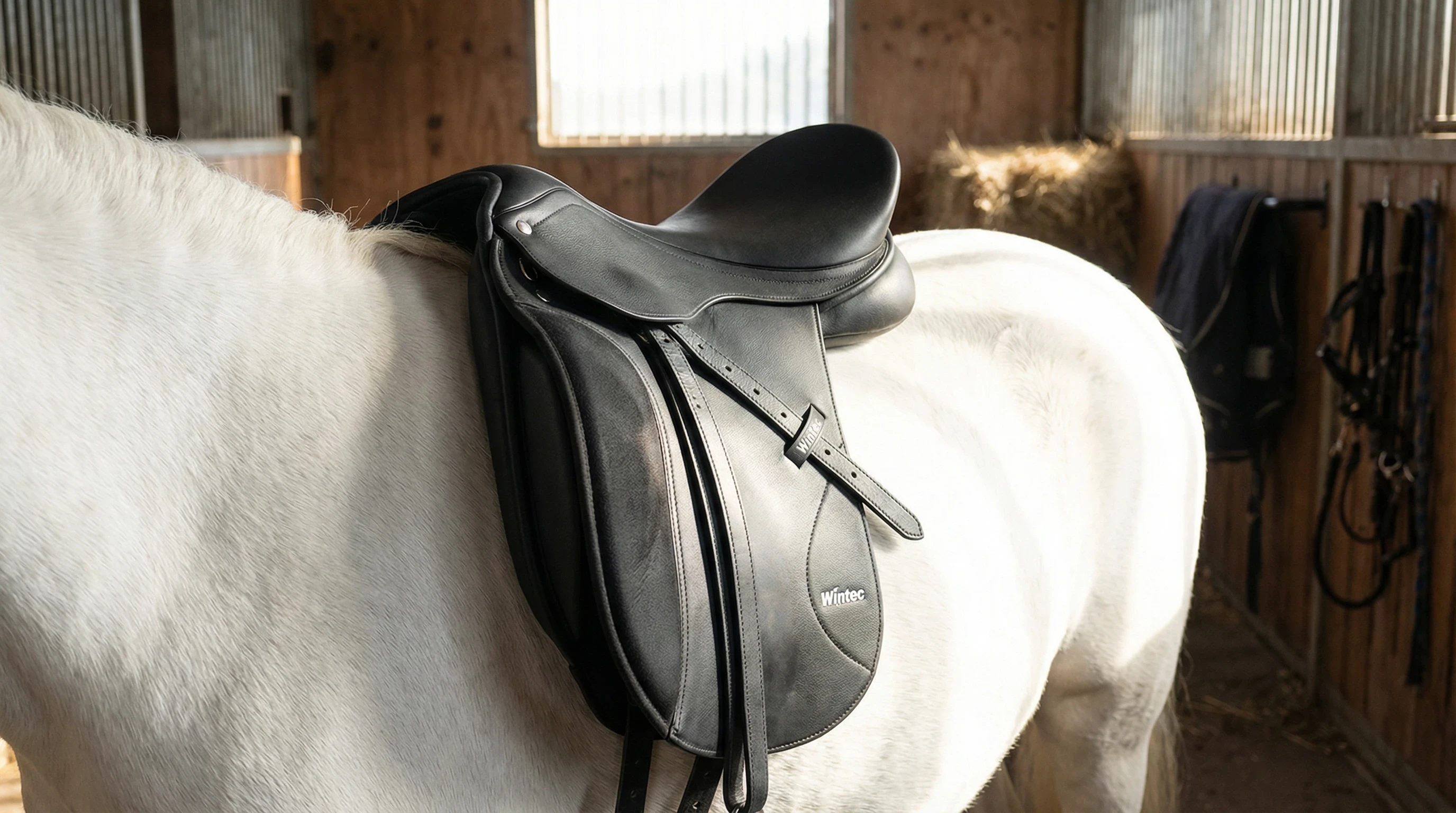
If a young rider is progressing in dressage and a versatile pony saddle is needed to accommodate both developing riders and a variety of pony builds, the Wintec Pro Pony Dressage Saddle frequently appears in search results and recommendations.
This review examines fit, adjustability, rider position support, and long-term value to help clarify whether it’s the right investment. For families carefully comparing Wintec Pro Pony Dressage Saddle reviews, this guide breaks down the key factors that matter most before purchasing.
Affiliate Disclosure: This article contains affiliate links. If a purchase is made through links on CharmingCanters.com, a small commission may be earned at no additional cost. This helps support the site and allows continued publication of independent, rider-focused saddle guidance.
If you’d like to see current pricing, seat sizes, and available gullet options, you can check the latest Wintec Pro Pony Dressage Saddle models here.
Who Is the Wintec Pro Pony Dressage Saddle Designed For?
Best for Young Dressage Riders on Ponies
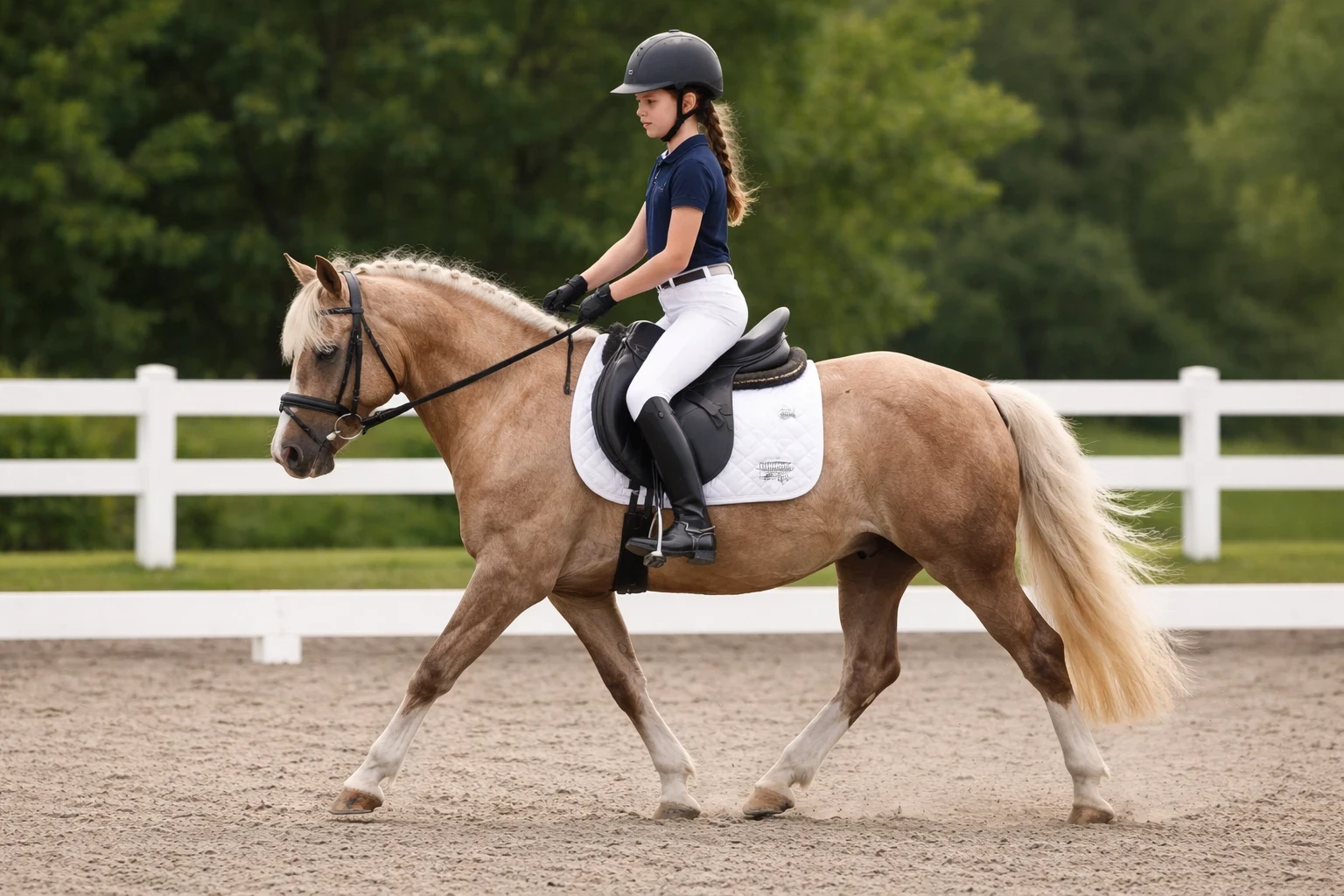
This saddle is built specifically with kids and young teens riding ponies in mind. The balance and seat size work well for small riders who want more security and support than a general purpose saddle or old school pony cutback.
I’ve seen it help new dressage riders maintain a stable position without feeling locked in. Riders from about age six through early teens fit comfortably, especially if they’re outgrowing tiny lead line saddles and moving into proper flatwork.
Ideal Pony Conformation and Back Length
One thing I appreciate about this saddle is that it’s tailored for real life pony shapes: shorter backs, round barrels, and all sorts of wither profiles. Not every saddle sits well on compact ponies, but this one is sorted for the wide and flat types you find in kids’ programs and Pony Club.
If your pony is borderline miniature or a very long backed cob type, cross-check the fit before buying. Fitting a short backed pony can be tricky, and a well-proportioned saddle can help sidestep a lot of problems.
When This Saddle Is Not the Right Fit
This isn’t the best pick for large horses, stock horses, or upper level ponies with pronounced withers and dramatic toplines. It’s also not ideal for kids who are already almost too tall for their ponies. If your kid’s knees are hanging past the flap, you’ll probably need something with a longer seat and more room up front.
Why Parents Are Researching Wintec Pro Pony Dressage Saddle Reviews
Concern #1 – Will It Fit a Wide or Round Pony?
Pony riders (and their parents) know fit issues are front and center, especially for wide, mutton withered, or rolypoly ponies. The Wintec Pro Pony Dressage Saddle is known for fitting broader ponies better than most leather kids’ dressage saddles. The adjustable gullet system comes in pretty handy if you have one of those ponies that doesn’t fall into standard tree widths.
Concern #2 – Will It Support Correct Rider Position?
Helping beginners keep still and build a confident seat is a big deal. If you’re comparing support features across brands, you may also want to read my guide on the best dressage saddles for beginners.
This saddle has deeper seat contours, good knee blocks, and supportive flaps. Most of the juniors I see using it look much more stable at the walk and trot, and leg position seems a bit easier to keep right, particularly for those who want to move up the dressage levels.
Concern #3 – Is Synthetic Appropriate for Dressage?
Some traditionalists always want leather, but synthetic material offers a lot for pony saddles. It’s easy to clean (a huge plus for busy parents), holds up well to daily use in lessons, and won’t harden or damage easily if the saddle gets rained on or muddy. In local shows and most beginner or youth competitions, synthetic is totally showlegal and doesn’t stand out against pricier leather models.
Concern #4 – Will My Child Outgrow It Quickly?
The Wintec Pro Pony Dressage Saddle is available in smaller seat sizes designed to last from the youngest serious riders up through teens. It’s worth sizing up if your rider is growing quickly. A slightly roomier seat works just fine, and you won’t have to replace it as soon. If your kid is already on the taller side for their age, double-check flap length and seat depth before making a decision.
Fit and Adjustability Explained
EASYCHANGE Gullet System (How It Works)
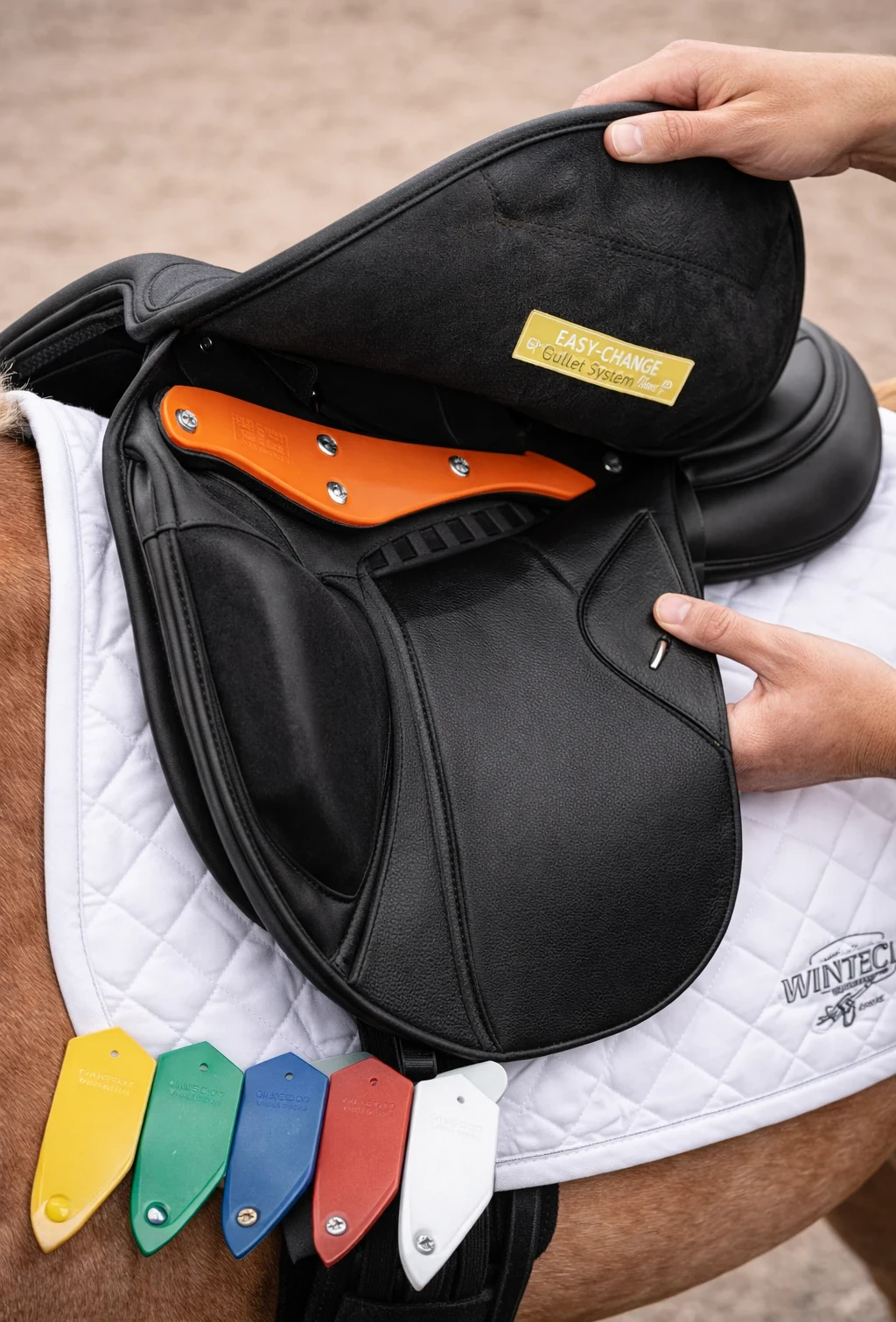
This saddle’s gullet channel can be swapped out fast, so you aren’t locked into a medium tree or stuck if your pony’s shape changes during the year. You just loosen a couple screws, lift the panel, and pop in a new gullet plate at home. It’s very doable for handy parents or older kids, and the instructions are straightforward.
CAIR Panel System – Pros and Cons
CAIR panels use air pockets rather than traditional wool flocking. The panels adapt to the pony’s back and deliver even pressure along the whole panel. The plus side: no pressure points, lighter total weight, and a softer overall contact.
The downside: you can’t tweak air panels the way you can adjust flocking with hand stuffing, so custom fine-tuning is off the table if you want to adjust every detail. I’ve seen it work well for lesson barn ponies whose backs change shape over the year.
Seat Sizes Available for Youth Riders
The Pro Pony Dressage comes in smaller seat sizes to snugly fit young riders. These are measured differently from adult saddles, so always double-check the manufacturer’s chart or try one locally if you can.
Kids in the 6–12 age range usually fit in the smallest size, and teens or taller kids can size up as needed. Since saddle comfort shifts as kids grow, being mindful of seat fit matters a lot for progress in dressage.
If you’re still unsure about sizing for a growing rider, my guide on choosing the right pony dressage saddle walks through seat size and flap length in detail.
How It Sits on Short Backed Ponies
Long saddle panels and big seats are the enemy of short backed Section A Welsh or Shetland type ponies. The Wintec Pro Pony Dressage is cut so the panels don’t poke past the last rib or dig into the loins. This can really help keep ponies comfortable and avoid rubs or saddle sores. It also makes a difference for ponies that can be tricky with saddling, making daily rides much more pleasant for everyone.
Rider Position and Security
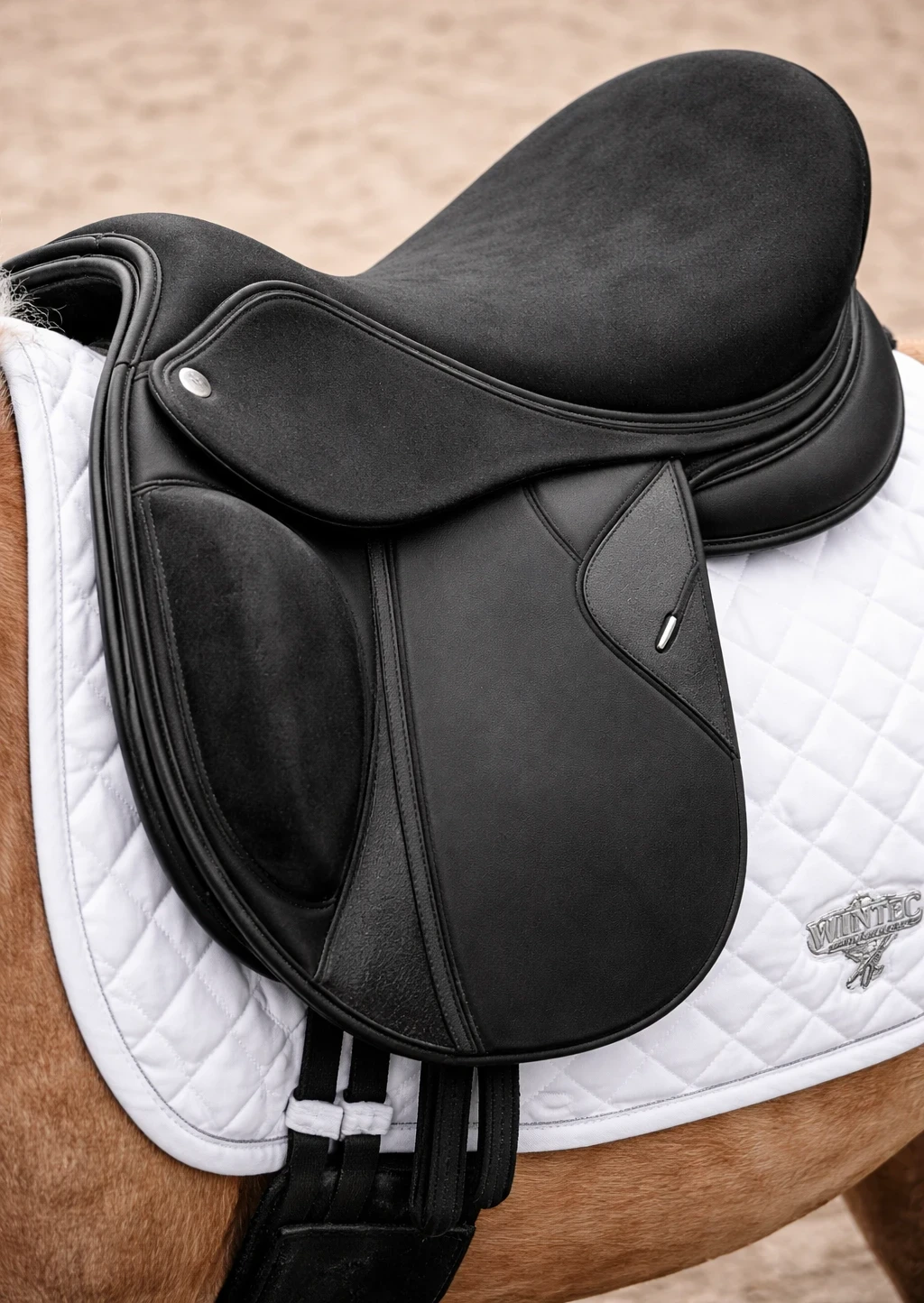
Seat Depth and Balance Point
The deep seat and central balance point naturally put young riders in the right place. I find that even wiggly or nervous beginners feel steadier in this saddle compared to flatter GP models. Dressage trainers like how the design encourages a longer leg and a light, upright upper body with less effort from the rider. Stability built in like this can really give young riders confidence in early lessons.
Knee Blocks and Leg Stability for Young Riders
The fixed knee blocks are contoured and chunky enough to offer support without pinning the leg in place. Parents often notice their kids’ legs stop swinging as much when using this saddle, making lessons less stressful for everyone involved, and giving kids better feedback from their instructor.
Does It Feel Slippery?
Synthetic saddles can sometimes feel slick, but the Wintec Pro Pony Dressage uses a suedelike grip material on the seat and knees. Riders agree it’s very secure, even with tights or breeches, and you don’t get that skating feeling that some cheaper synthetics can cause. For extra grip, some kids prefer riding in jodhpur boots rather than tall boots.
RealWorld Performance
Lesson Program Use
This saddle is super popular in riding schools because it can handle a lot of use, takes a beating, and won’t break the bank if it needs to be replaced down the line. Plus, the adjustable fit helps barns with different ponies. Swapping between mounts is much easier, saving a lot of time and effort for instructors and young riders alike.
Local Show Suitability
You’ll see these saddles pretty often at local dressage shows, Pony Club events, and 4H. The look is neat enough for entry level to mid level shows. If your rider is aiming for higher level or championship shows, double-check rulebooks. But at grassroots dressage and most equitation classes, synthetic is accepted with no problem. For many, being able to use the same saddle for lessons and shows is extremely handy.
Longevity Over Multiple Seasons
This saddle can go through several years (and sometimes several riders and ponies) without major wear. The synthetic panels don’t crack in bad weather, the gullet system keeps it adaptable, and scuff marks wipe right off. Good resale value is another bonus since these don’t go out of demand. Even with daily use by a few different kids, the structure holds up very well, and parents appreciate being able to pass the saddle to their next young rider.
Pros and Cons of the Wintec Pro Pony Dressage Saddle
✅ Pros
- Lightweight (great for kids to carry and tack up solo)
- Fully adjustable gullet for growing ponies or barns with several mounts
- Low maintenance synthetic material; just hose it down and wipe dry
- Affordable compared to most leather pony dressage saddles
- Surprisingly good resale value in the kids’ tack market
- CAIR system gives even pressure distribution for evolving pony shapes
- Sits well on shortbacked ponies, reducing fit issues and sore spots
❌ Cons
- Synthetic feel (not everyone loves it, some people prefer classic leather)
- Limited customization or seat/panel upgrades compared to pricier saddles
- CAIR air panels aren’t adjustable like wool flocking can be
- Not ideal for advanced FEI dressage or very competitive juniors
- The seat can feel a little firm to some kids used to spongier options
Parent Fact Questions (What Most Parents Ask Before Buying)
Is the Wintec Pro Pony Dressage Saddle showlegal?
Yes, it’s fine at most grassroots and regional dressage shows, Pony Club rallies, and local equitation events. If your kid’s going to really fancy national finals, a quick check of the rules doesn’t hurt, but I haven’t seen this saddle turned away anywhere at the youth or intro level.
Will it fit a very round pony with no withers?
This is one of the main markets for this saddle. The adjustable gullet and flat panels make it one of the better options for the classic barrelshaped Section B Welsh or Shetland types. If your pony is ultrawide, try the widest gullet plate option first.
What seat size does my child need?
These pony dressage models start from 15 inches and go up to junior sizes. Get your child to sit in a few saddles at a tack store if possible, or consult the usual seat size to pants size charts online. If you’re unsure, it’s generally better to size up slightly; extra room rarely hurts for flatwork and gives your child a bit of space to grow.
Can the gullet be changed at home?
Yes, no professional saddle fitter needed. You just need a screwdriver and the correct width gullet bar. Guides and videos are easily found online, and the process saves a trip to the tack shop. This ease of adjustment is a big reason for the saddle’s continued popularity.
Is CAIR better than flocking for ponies?
For most everyday ponies, CAIR is very forgiving, especially if your saddle is being shared or your pony is changing shape throughout the year. Some specialist fitters prefer wool flocking for detailed fit adjustments, but CAIR is a good balance for the average family or barn.
If you’re unsure how panel systems affect long-term comfort, my dressage saddle fitting guide for adults explains the key differences in more depth.
How long will this saddle realistically last?
Most families see three to six years of use, depending on how fast their child grows and how many ponies it’s used on. It stands up better than cheap leather imports and typically gets passed down or resold easily when your kid moves on or outgrows ponies. Even heavier lesson use doesn’t wear the saddle out quickly.
Is this better than buying a used leather saddle?
If you want adjustability and low maintenance, yes. Used leather saddles can work if they’re in perfect shape, but many aren’t easily altered to fit round ponies. You can also see how leather compares in my Arena Pony Dressage Saddle review for a closer look at traditional construction. Plus, leather needs regular care. For busy families, Wintec synthetic comes out ahead in most ways excluding “prestige.”
Wintec Pro Pony Dressage Saddle vs Leather Pony Dressage Saddles
Price Comparison
Most new Wintec Pro Pony Dressage saddles are priced less than new or even some used high end pony-size leather dressage saddles. The price to longevity ratio is really strong, especially factoring in resale later on. For families watching their budget, this is a solid plus.
Maintenance Comparison
Synthetics win hands down for easy care. A wipedown is usually plenty. See my post, How to Maintain Your Wintec Pro Pony Dressage Saddle. Leather needs more attention, especially if you want it to last through regular wet or muddy lessons. No need for fancy saddle soap or conditioners with the Wintec, which is especially excellent for barns with multiple young riders.
Rider Feel and Break-In
Leather saddles need a breakin period, but synthetic Wintec saddles feel the same from day one. The seat is a touch firmer, but grippier for nervous kids or lessons with a lot of wiggling riders. Serious dressage kids sometimes like the “give” of broken in leather, but most can go either way.
Long-Term Adjustability
Wintec’s gullet system and panel structure let you change things quickly, while leather saddles (unless built on adjustable trees) can cost a lot to refit or adjust as a pony changes shape or if you switch between ponies at home or a barn. This flexibility is a top feature for young riders swapping mounts as they progress.
Final Verdict – Is the Wintec Pro Pony Dressage Saddle Worth It?
This saddle sits in the sweet spot for parents and kids who want professional features on a budget and need a saddle to fit less traditional pony shapes. If you have a growing rider, more than one pony, or just want to avoid the fuss of leather cleaning, it’s worth checking out.
Skip it only if your child is moving into the top tiers of national-level competition or if you’re committed to a custom leather model for very specific fit needs.
If you’re ready to try the Wintec Pro Pony Dressage Saddle for your child and pony, you can view current availability and updated pricing here.
Smart shopping, a clear understanding of your child’s needs, and taking time to get a good fit will help both rider and pony get the most out of their dressage adventure.
This review does a great job breaking down the practical side of choosing a pony dressage saddle. I’m curious — for ponies that fluctuate seasonally in weight or muscle, how often would you realistically recommend reassessing gullet width? And for riders transitioning from this model to a full-size dressage saddle, what signs show they’re truly ready to move up?
Hi Genie! Great questions—this is exactly where the Wintec Pro Pony Dressage is so useful.
For ponies that change shape seasonally, I’d realistically reassess gullet width 2–3 times per year, plus anytime you notice changes like topline, sweat patterns, or balance under saddle. Adjustable systems make it easy to stay on top of those shifts.
As for moving up to a full-size dressage saddle, the big signs are:
Rider’s leg is too long for the flap
They’re no longer centered in the seat
They’ve developed enough balance that they don’t need the extra “security” feel
Most riders do best when they’ve outgrown the function of the pony saddle—not just the size. Hope this helps!