If you’re eyeing the Henri De Rivel Dresseur (HDR Dresseur) saddle, you’re probably looking for honest feedback before making the leap. Whether you ride a few times a week, have a teenager working up the dressage levels, or you’re getting back into the sport, it’s normal to want durability, a traditional look, and real comfort for both horse and rider, without a massive price tag.
That’s exactly what I set out to answer with these all-in-one HDR Dresseur saddle reviews: is this saddle actually worth your money?
Affiliate Disclosure: This article contains affiliate links. If you choose to purchase through one of these links, I earn a small commission at no additional cost to you. I only recommend products I believe offer real value to riders and families.
If you’d like to check current pricing and availability for the Henri De Rivel Dresseur saddle, you can view it here:
👉 Check current availability of the Henri De Rivel Dresseur saddle
Quick Overview: Is The HDR Dresseur Saddle Worth It?
The Henri De Rivel Dresseur saddle is geared toward budget-focused dressage riders wanting to upgrade out of entry-level synthetics or tired older saddles. Built with European leather over a wood laminate tree, it gives a deep, classic seat designed for correct rider position. You’re looking at a saddle in the $900–$1,200 range (new), which falls far below higher end French or German brands but above the lowest synthetic options.
You can view updated pricing and current stock here.
The tree is not adjustable.
But you can choose between medium and wide widths. With understated stitching and simple flap design, it looks sharp and traditional in the show ring. It’s definitely more show ready than most economy models.
My bottom line verdict: the HDR Dresseur makes a pretty solid choice for adult amateurs and teens who want quality real leather on a realistic budget, without emptying their wallets for top-shelf imports.
What Makes The Henri De Rivel Dresseur Saddle Different?
Traditional Deep Seat Design
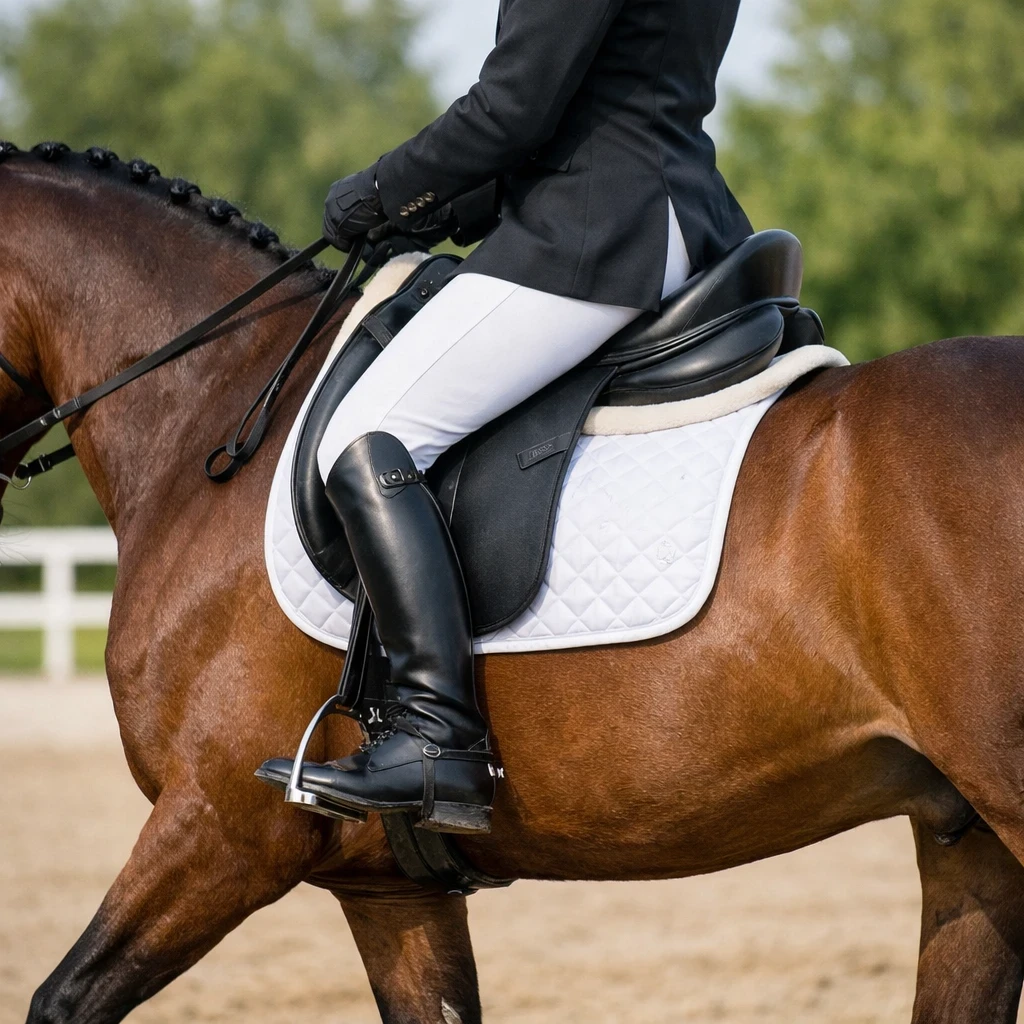
The seat is deep and slightly curved, which encourages a balanced, upright dressage position. I noticed right away that the cantle offers nice lower back support, something you’ll appreciate if you’re working on core stability or putting in long flat schools. This saddle won’t leave you feeling tipped forward or out of place, even if you’re not riding six days a week. Plus, its well-defined seat allows your pelvis to stay neutral—building confidence session after session.
Fixed Tree & Panel Construction
The HDR Dresseur features a traditional wood laminate tree, giving a sturdy feel under your seat. The panels are woolflocked so a saddle fitter can tweak them a bit, but the tree itself isn’t adjustable. That’s important to know if your horse is still growing or you’re switching between different shapes. Most horses with an average English build enjoy a good fit, but extra-wide types might be hard to fit in this model.
Knee Block Support & Rider Positioning
Big, softly padded knee blocks are set under the flap. They really help with leg stability, especially useful for riders moving up from flat flapped general purpose saddles. These blocks feel supportive without being bulky or locking your leg in place. Most equestrians get a boost in security, but still have some room to move when posting or practicing lateral work. The blocks also subtly guide the thigh for a classic long legged profile.
Leather Quality & Finish
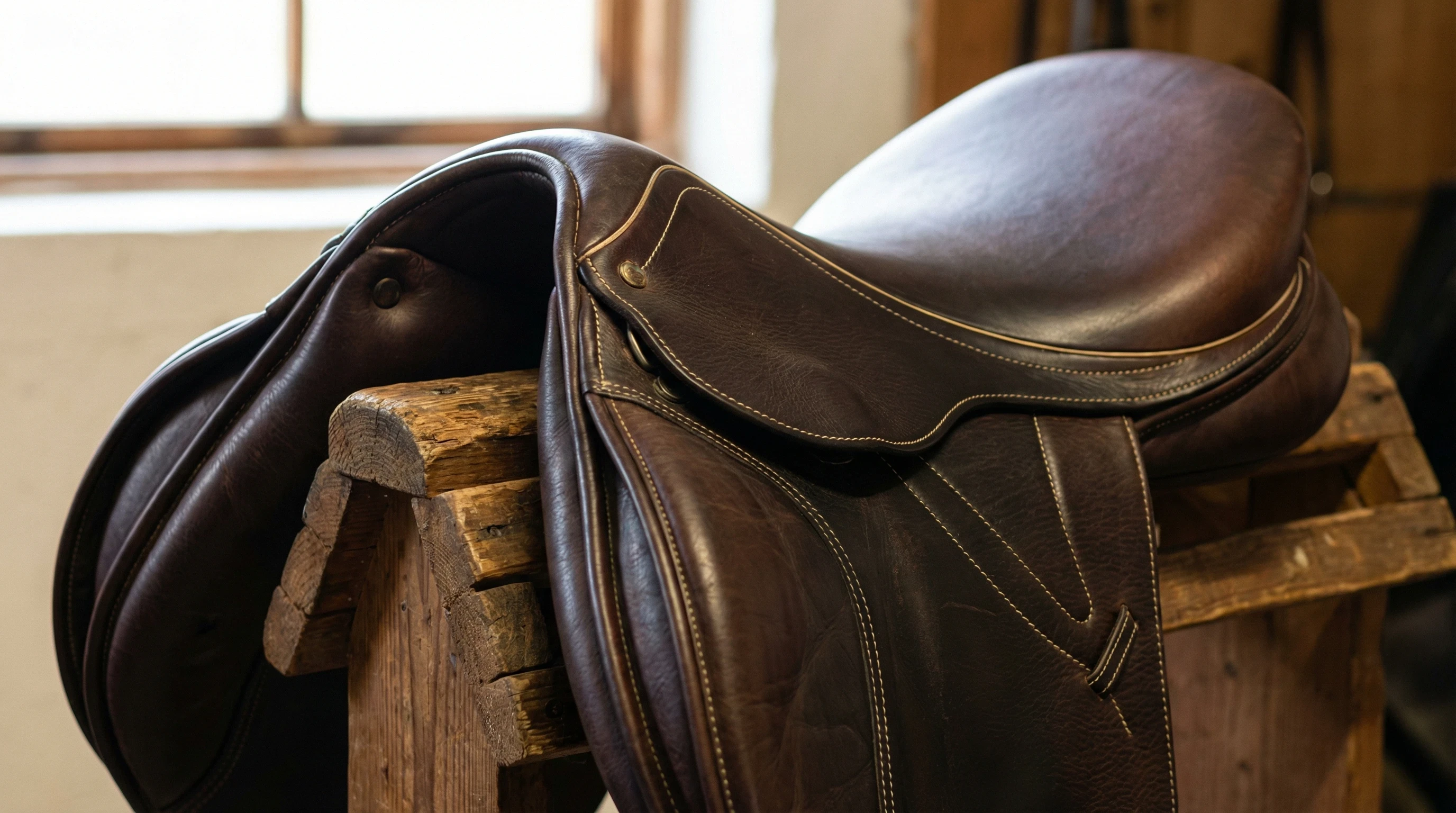
You get European leather in a grained or slightly pebbled texture. It’s definitely real leather, not calfskin or buffalo, but much nicer than most entry-level synthetic options. There is a bit of a break-in period (more on that below), but after a few rides, the seat and flaps get more supple and easier to wipe down. As the leather matures, it develops a deeper sheen—not slippery, but definitely easier to grip than cheaper alternatives.
How Does The HDR Dresseur Saddle Fit The Horse?
Tree Width Options (Medium vs Wide)
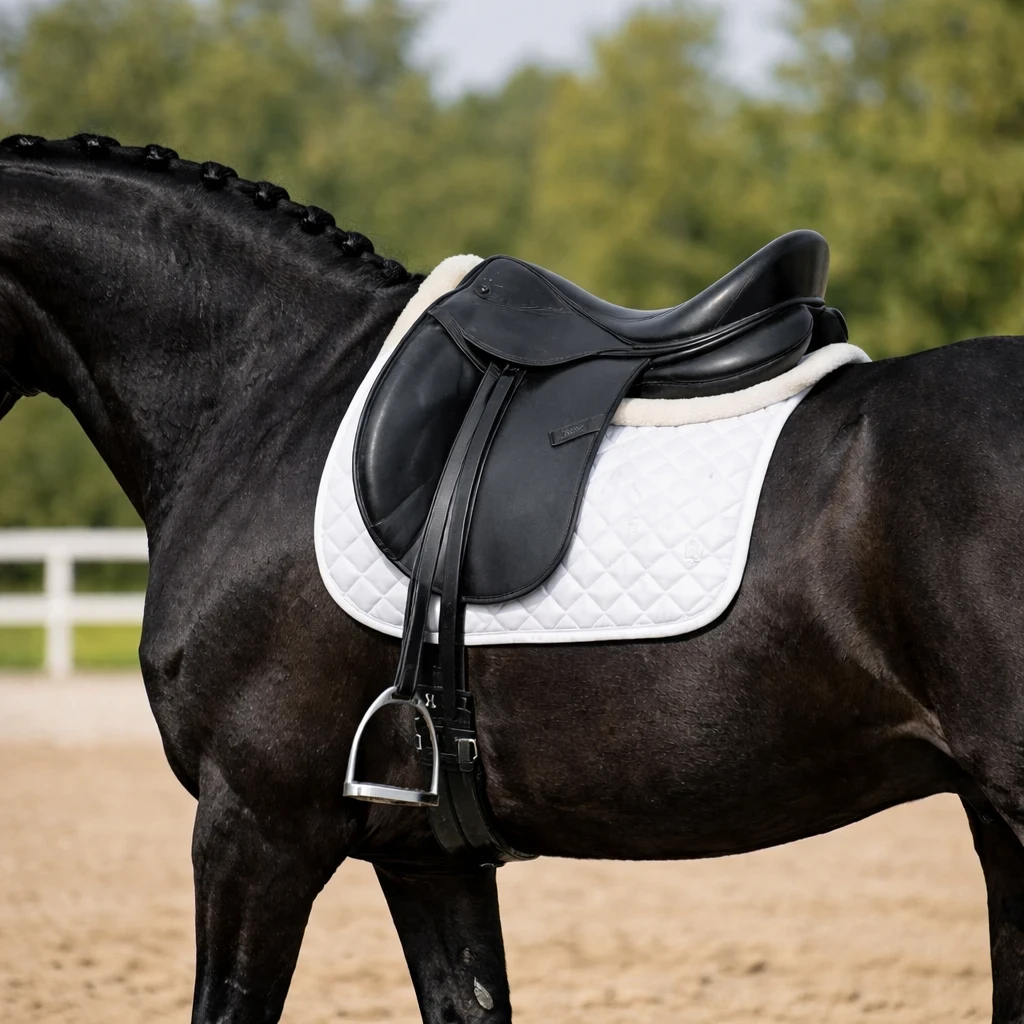
This saddle comes in medium and wide tree options. Medium works well for Thoroughbred or lighter warmblood builds with normal withers. The wide tree is roomier, but not super generous. It’s more suited for heavier warmbloods, chunkier quarter horses, or anything with a rounder back but not a true extra wide cob. The fixed width means less flexibility with multiple horses, so check carefully before committing.
Panel Shape & Back Compatibility
The panels offer a fairly broad contact area, with moderate gussets and good flocking. This helps distribute pressure, making it comfortable for horses with a typical English back. Horses with super broad, flat backs (think heavy draft crosses or superwide cobs) may still find it a bit perched or tight, but average horses will benefit from the gentle contour. The panel shape does hug the horse nicely, and the channel is wide enough to avoid spine pressure, so long as your horse’s topline isn’t completely tablelike.
Best Horse Types For This Saddle
- Thoroughbreds or lighter bodied warmbloods with average withers
- Average warmbloods with a moderate build
- Quarter horses or crosses that aren’t super flat backed
It isn’t a great choice for extremely wide, mutton withered cobs or horses needing an extrawide or hoop tree, but otherwise it covers the needs of most active amateur dressage riders.
Does It Require Professional Fitting?
You can definitely get away with out-of-the-box use for well built horses, but having a saddle fitter adjust wool flocking makes a big difference in comfort and saddle longevity. If you’re shopping online and worried it won’t fit, check the return window with your tack shop or online retailer first.
Many allow short trial periods if the saddle is kept clean, so don’t hesitate to ask about fitting services or return policies before you buy. A basic professional adjustment every year or so is ideal if your horse’s muscle tone changes through the season.
How Does It Feel For The Rider?
Seat Comfort & Break-In Period
The HDR Dresseur seat feels firm the first couple rides. I found it softened up by the third or fourth ride, especially if you work leather balm into the seat and flaps. It has the spring and shape of a classic dressage saddle—definitely not cushy like some modern models, but not a plank either.
If you’re coming from a synthetic, you’ll probably notice the difference in support immediately. Expect the leather to mold slightly to your seat and legs over time, making each ride more comfortable. Tack care rituals with this saddle quickly become habit, and that pays off in the long run.
Balance & Stability
This saddle sits you deep and centered, making it really easy to keep your shoulders, hips, and heels in line. The high cantle and padded knee blocks help you stay grounded, even when your horse gets bouncy or distracted. Riders working on long, relaxed legs and developing core strength will find this useful for training level to second level work. The seat depth also lends itself to confident transitions and practice with upper level movements for those looking to advance.
Is It Good For Beginners Or Advancing Riders?
This saddle is a nice choice for riders making the jump from an all purpose to their first real dressage saddle, but it also works well for those moving up to the mid-levels. It isn’t flashy, but it looks serious and won’t get side-eye from judges or trainers.
The support offered by the seat and knee blocks means even less experienced riders can keep their form during lessons, clinics, or casual shows, while experienced equestrians appreciate the no-nonsense design that doesn’t get in their way.
Pros And Cons Of The HDR Dresseur Saddle
Pros
- Affordable real leather construction
- Traditional look for shows
- Deep seat for extra security
- Ideal for entry to mid-level dressage schooling
Cons
- Tree is fixed, so there’s no adjustment for changing horses
- Leather feels stiff at first (needs breaking in)
- Limited sizing (no extrawide)
- Not much room for customizing blocks or flaps
How Long Does The Henri De Rivel Dresseur Saddle Last?
Leather Durability
The leather stands up well to normal daily use if you clean and condition it. Sun, sweat, and mud do take their toll, but the grain resists scratches better than super soft calfskin. Over several years, I’ve seen these saddles hold up without the seat going slippery or shiny, which is pretty handy if you’re in and out of the ring a lot.
Some minor scuffs wipe away with a damp cloth and regular balm. Taking time with tack care pays off big here, extending saddle life and keeping it looking sharp ride after ride. If you want a step-by-step routine for cleaning, conditioning, and protecting this specific model, I’ve written a full care guide for the Henri De Rivel Dresseur saddle here.
Billets & Stitching Quality
The billets (the straps that hold your girth) are thick and stitched tight. I’ve yet to see any pop stitching or serious stretching over a few years’ regular riding. As always, check stitching and billets every few months, especially if your rider is heavy handed with tightening the girth. Periodic care and occasional pro tuneups help to keep the saddle performing its best and sidestep costly repairs later on.
Maintenance Tips To Extend Life
- Wipe daily with a damp, clean cloth
- Condition leather every few weeks
- Check and tighten screws and stirrup bars periodically
- Store on a saddle rack, not on the ground
Who Should Buy The HDR Dresseur Saddle?
- Adult amateurs doing local shows or regular schooling
- Teen riders needing something show ready for a fair price
- Programs offering lessons or leasing
- Anyone wanting a step up from a synthetic or older GP saddle
- Parent Tip:
- If your child is still growing or might switch horses in the next year or two, consider if a fixed-tree saddle like the HDR Dresseur could create some future fit issues. It’s a great option for a committed pair, but less flexible for frequent swaps!
Want the exact products and schedule I recommend? Here’s my detailed HDR Dresseur care breakdown.
Who Should Skip This Saddle?
- Anyone needing adjustable or interchangeable gullet systems for multiple horses
- Owners of very wide-backed cobs, drafts, or horses with a flat, table-like topline
- Those wanting fancy, ultra-soft French or Italian leather
- Advanced riders looking to invest in a professional level upgrade
How It Compares To Other Entry Level Dressage Saddles
The HDR Dresseur is a clear step up from most synthetic dressage saddles. You’ll notice the real leather ages better and holds its value longer. When compared to entry-level Bates models, the HDR is less customizable, but comes in at a lower price. Against high-end European brands, you’re trading soft leather and tweaks for practicality and wallet friendliness. For a more detailed side-by-side — including how HDR’s close contact models differ from the Dresseur — check out my full HDR Galia guide here.
Final Verdict: Is The HDR Dresseur Saddle A Smart Investment?
If you’re looking for a reliable, comfortable step up from a school or budget saddle, the HDR Dresseur stands out as a solid, traditional option. The price makes it accessible, the look suits any show ring, and the ride offers support for growing skills. For anyone hesitating, these saddles last through years of lessons and weekend clinics, and still look sharp.
If you’re ready to upgrade into real leather without spending thousands, you can check today’s availability here before stock changes.
Thanks, I appreciate how clearly you laid out who this saddle works best for, especially around the fixed tree and medium versus wide options. For riders with horses that are still building topline, have you found that minor flocking adjustments are usually enough to maintain fit over time, or does the fixed tree become limiting faster than expected? Also, how would you compare the HDR Dresseur to other real leather dressage saddles in the same price range when it comes to resale value and long-term durability?
Hi Aly. You ask the best questions! I love it.
In my experience, the wool-flocked panels on the HDR Dresseur give a saddle fitter enough room to make small adjustments as a horse builds topline. For normal conditioning changes, a bit of reflocking is usually enough to keep the saddle fitting comfortably for quite a while.
Where the fixed tree can become limiting is if the horse’s shape changes more dramatically — like young horses developing muscle quickly or horses coming back into work after time off. In those cases, you sometimes reach the point where flocking alone can’t compensate for the tree width.
As for durability and resale, the HDR Dresseur generally does pretty well for its price range. It’s real leather and tends to hold up better over time than most synthetic saddles. It won’t keep value like higher-end European dressage brands, but because HDR is a well-known entry-to-mid-level leather saddle, they usually resell fairly easily if they’ve been kept in good condition.
Overall, I tend to see it as a solid schooling and lower-level competition saddle, especially for riders whose horses have fairly stable back shapes. I hope this helps.
I learned a lot here, Shalisha. I’ve still got a couple of lingering questions though.
You mentioned these can hold up well over several years, which is great from a durability point of view. I might’ve missed it, but how does that affect fit long-term?
Say you’ve got something like a 5-year-old warmblood that’s still building topline, how far can flocking adjustments realistically go before the saddle just stops fitting properly?
And on that same note, is this the kind of saddle that can realistically be used across different horses, or is it more of a “fit one horse well and stick with it” type of setup because of the fixed tree?
Just trying to figure out whether it’s worth it long-term at this price point if you expect changes, or if it’s really better suited to a more consistent build.
Hi Robert!
Great questions—and you’re thinking about exactly the right things long-term.
With the HDR Dresseur, the wool flocking does give you some flexibility as your horse develops, but it’s not unlimited. On a 5-year-old warmblood building topline, a good saddle fitter can usually keep things working with periodic reflocking and balancing—to a point.
Once the horse changes more significantly (wider through the back, more lift in the withers, different shoulder angle), flocking alone can’t compensate for a tree that no longer matches the core shape.
Because the tree is fixed, this saddle tends to fall more into the “fit one horse well” category rather than being easily shared across multiple horses—especially if those horses differ in build. You might get away with minor variations, but it’s not as forgiving as an adjustable-tree setup.
So big picture:
Great value if your horse’s changes are gradual and you’re willing to reflock as needed
Less ideal if you expect major conformational changes or want one saddle for multiple very different horses
If your warmblood is still developing quite a bit, just go in with the expectation that this may be a phase saddle rather than a 10+ year solution—and that’s not a bad thing if it fits well right now. Hope this helps.