
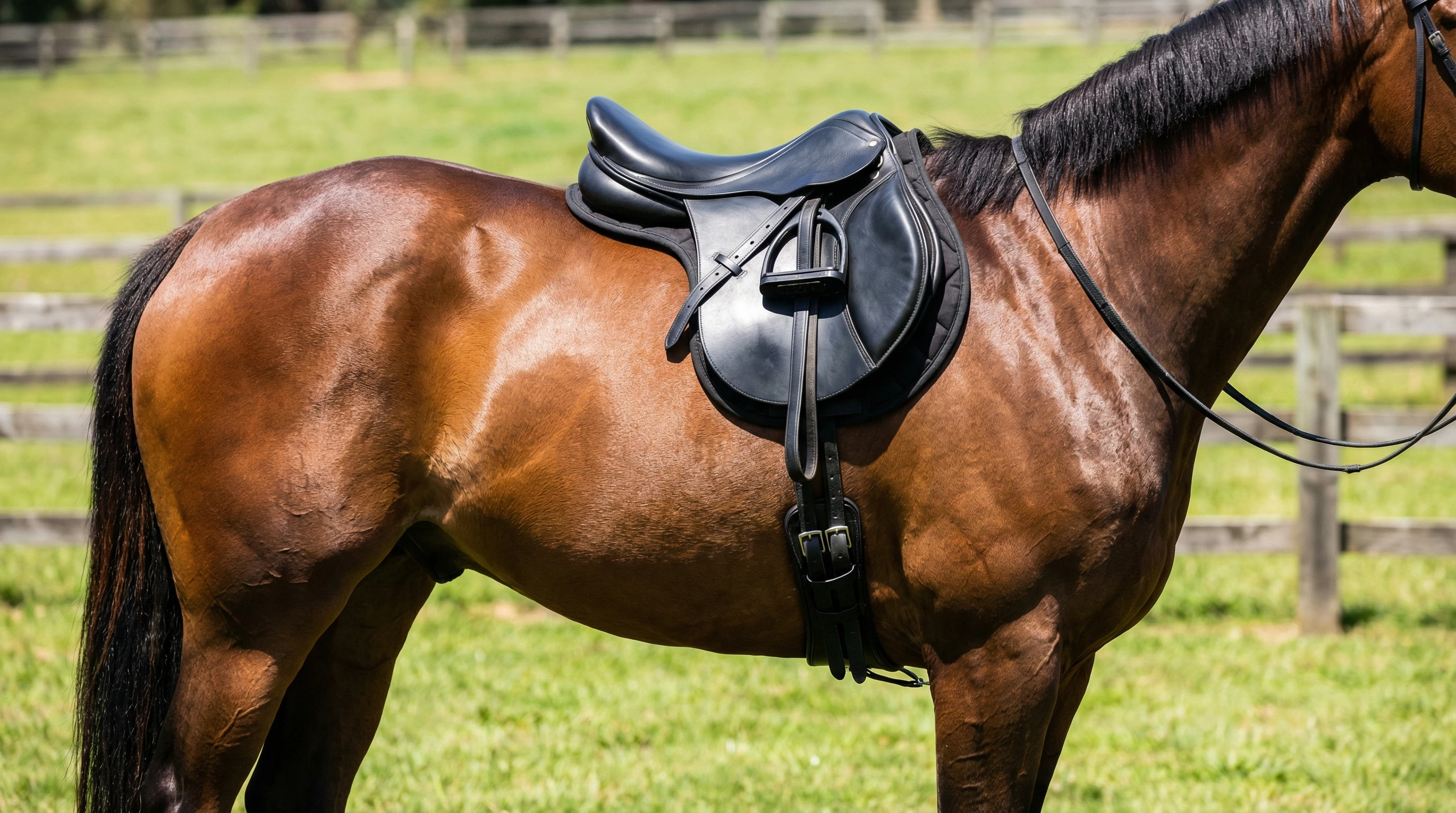
Fitting a saddle correctly is one of the most important things you can do for your horse’s comfort and long-term soundness.
Over the years, I’ve seen first-hand how a poorly fitted saddle can lead to sore backs, resistance under saddle, and even subtle changes in movement that are easy to miss until they become bigger problems.
The Arena Monoflap Jump Saddle is especially popular among hunters and jumpers because of its close-contact feel and lightweight design. That said, even the best-designed saddle won’t perform as intended unless the fit is dialed in for both horse and rider.
(Just a quick heads-up for transparency: this article may include affiliate links. If you choose to buy through one of them, I may earn a small commission at no extra cost to you. It helps support CharmingCanters.com so I can keep creating helpful resources for parents and young riders.)
Many riders feel overwhelmed when fitting a monoflap saddle, especially when terms like billets, flocking, panels, and girth placement come into play.
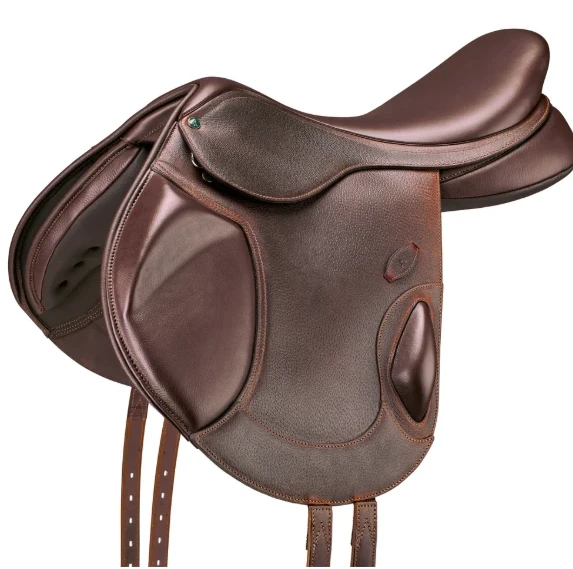
I get it — I’ve been there. The good news is that once you understand a few key fitting principles, the process becomes far more manageable and your horse can move more freely and comfortably as a result.
In this guide, I’ll walk you through how to properly fit an Arena Monoflap Jump Saddle, including what fit markers to look for, how to troubleshoot common issues, and how to re-assess fit as your horse’s back changes over time.
Whether you’re purchasing your first monoflap saddle or refining the fit of one you already own, these tips will help you make confident, informed decisions — and get the most out of every ride.
If you’re still deciding whether a monoflap saddle is the right option for you, I break down the key differences — including feel, adjustability, and riding style — in my guide on How To Choose Between Monoflap And Double Flap Saddles.
Saddle Fitting Basics: Why Fit Matters
Saddle fit affects your horse’s comfort, performance, and long-term health. A good fit helps avoid back soreness, girth galls, pressure points, or poor performance.
With the Arena Monoflap Jump Saddle, the monoflap design puts you close to your horse and provides better leg contact, but this also means you need to pay close attention to fit details. I always recommend checking saddle fit at least twice a year, especially as your horse’s shape changes due to training or age.
If you’re unsure how tree shape and width affect overall saddle balance, this guide on How To Choose the Right English Saddle Tree Type explains how different trees interact with a horse’s back.
Signs Your Saddle Doesn’t Fit Well
- Tight or uneven sweat marks after riding
- White hairs or patches along the withers or spine
- Reluctance to move forward or bucking under saddle
- Sensitivity when brushing the back or girth area
- Girth sores or pinching at the elbow
If you spot any of these, your saddle likely needs adjustment or may not suit your horse at all. I’ve had times when a saddle looked fine on the rack but caused issues after a few rides, so taking these signs seriously helps keep horses happy and performing well.
Many fit issues show up subtly at first, but the long-term effects of an ill-fitting saddle can be serious if they’re ignored. If you want a deeper look at how poor saddle fit affects the horse’s body and behavior, see What Is the Impact of an Ill-Fitting Saddle on a Horse?
Measuring Your Horse For a Monoflap Jump Saddle
Before you even set the saddle on your horse, I find it helpful to have a basic idea of your horse’s shape. The Arena Monoflap Jump Saddle comes with adjustable gullet plates and flocking, so you can fine-tune the fit, but good measurements get you started in the right direction.
Always get into the habit of measuring before every new saddle purchase so you have a baseline to work from.
Key Measurements to Take
- Wither profile: Place a flexible curve or a clean wire shaped to your horse’s withers, then trace onto paper. This helps match the saddle’s tree width.
- Back length: Measure from the back edge of the scapula to the last rib. The saddle should not extend past this point.
- Shoulder angle: Horses with upright or sloped shoulders need different tree shapes and panel designs.
If you don’t have a flexible curve, you can use a coat hanger or even ask your local saddle fitter for help. Taking photos from the side and above can also help when talking to tack store staff or a professional fitter.
Gathering several types of measurements—including ones that may seem minor at first—can reveal hidden issues and save you headaches down the road.
Checking Saddle Placement and Balance
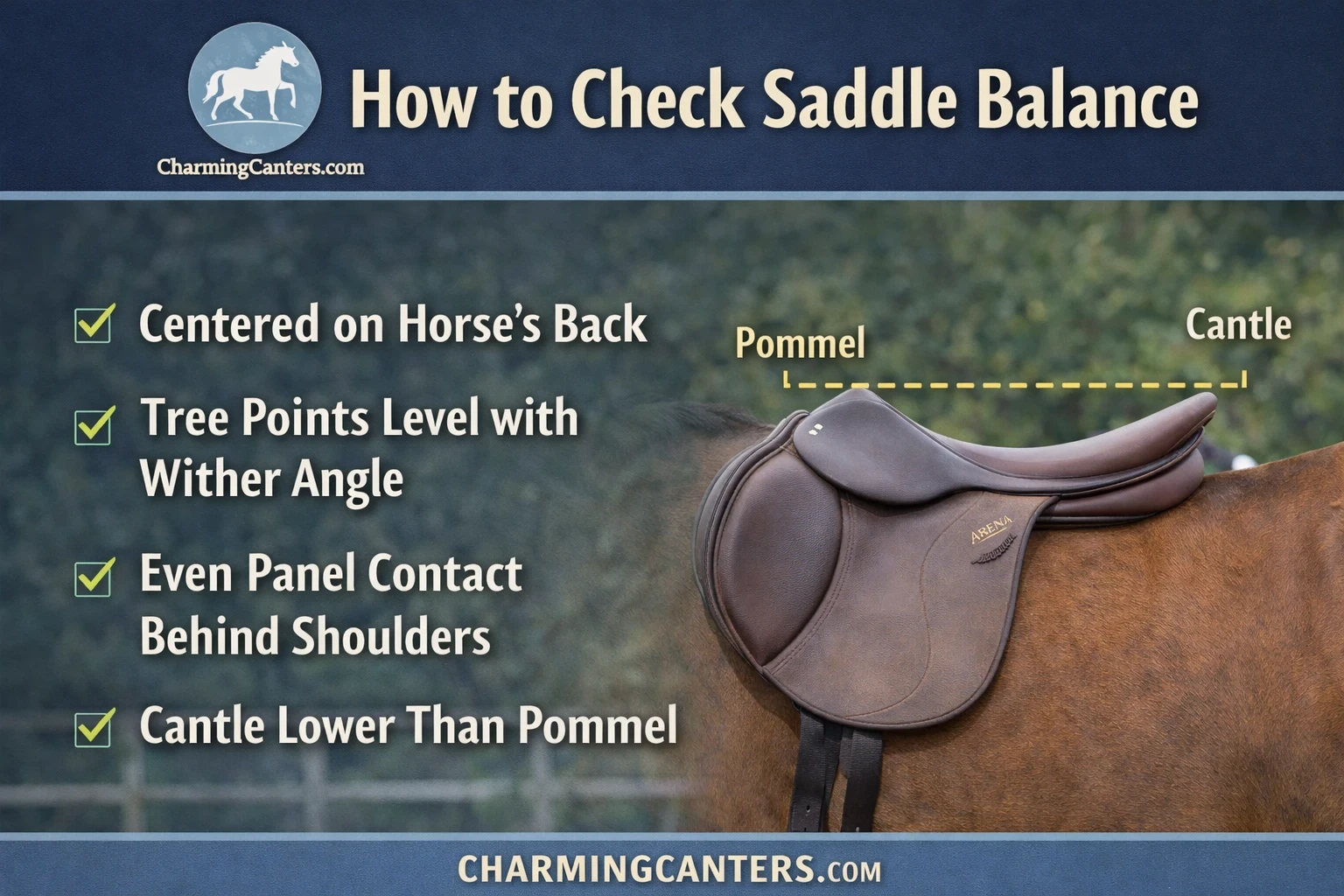
The right spot for your Arena Monoflap Jump Saddle is behind the shoulder blade, not on it. As I place the saddle, I make sure it doesn’t block the horse’s movement. You want to feel the saddle settle into the natural hollow just behind the wither.
I always double-check by gently running my hand under the flap to make sure the saddle clears the shoulder and spine easily.
How to Check Saddle Balance:
- The deepest part of the seat should be level or just a little lower toward the back.
- Look from the side. If the cantle is much higher or lower than the pommel, the fit is off.
- If you slide a pencil along the seat, it should rest in the center, not roll forward or backward.
Balance is really important. If it’s off, your position can suffer and your horse has a tougher time jumping confidently. If you need help, a photo of the saddle on your horse from the side (with no pad) helps me check the balance visually.
Good balance is essential for your horse’s movement and for your own comfort as a rider. Even small imbalances can make a big difference, especially over fences.
Adjusting the Arena Monoflap Jump Saddle
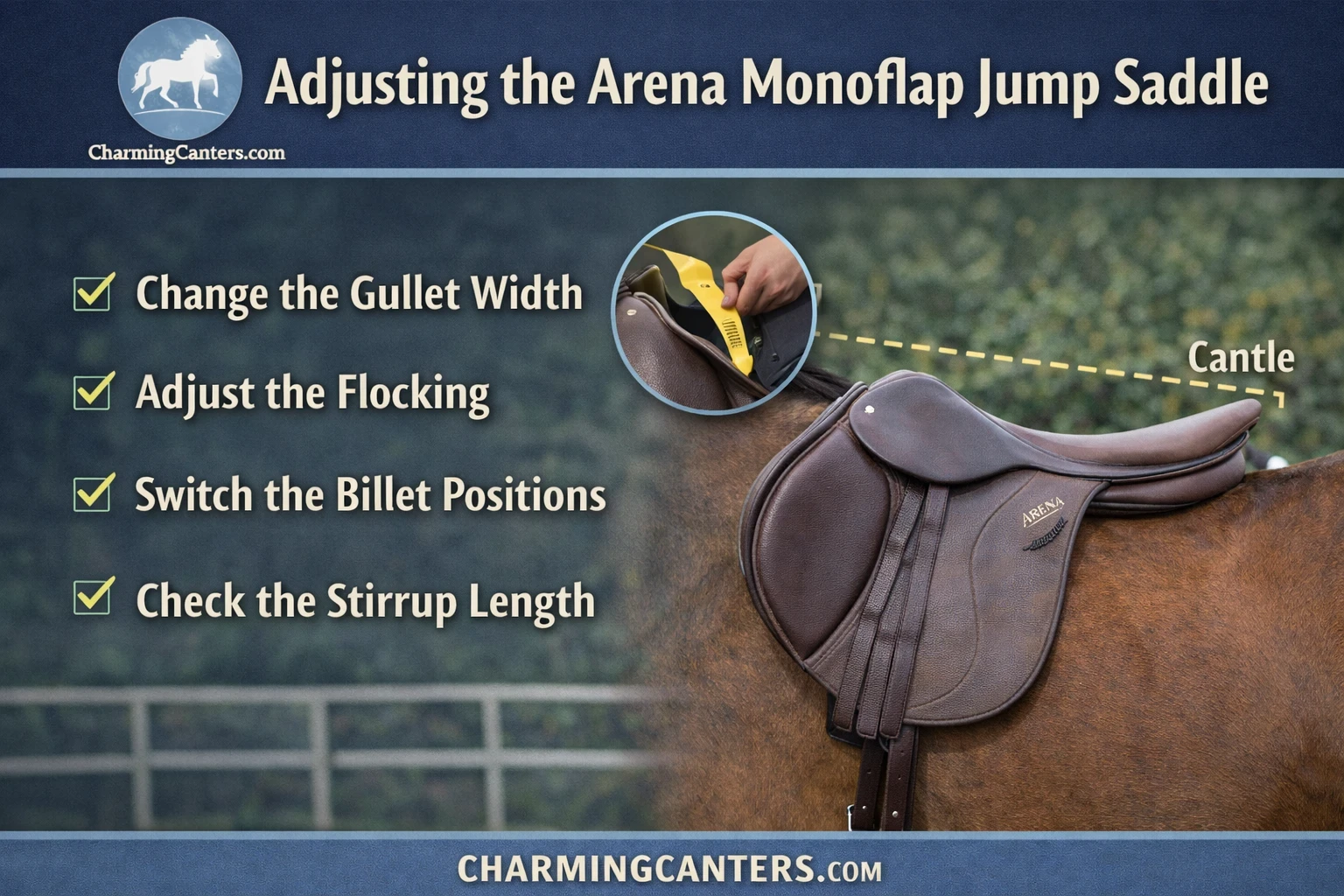
The Arena Monoflap Jump Saddle features a removable gullet system and adjustable flocking, which makes it easier to tweak fit at home. I’ve changed gullets plenty of times and appreciate how user-friendly the design is, especially when working with a horse whose shape changes through training seasons.
It’s much more efficient than traditional methods, and you don’t always need to wait for a professional just to make minor tweaks.
Steps to Adjust Gullet Width
- Remove the saddle and turn it upside down on a clean surface.
- Unscrew the front screws using the included wrench or screwdriver.
- Take out the old gullet and slot in the new size based on your horse’s wither width.
- Reattach the screws securely.
If the saddle sits too low in front, the gullet is likely too wide. If it perches up or rocks on the wither, it may be too narrow. Always recheck the fit on your horse after every adjustment.
I use my fingers to make sure there are at least two to three fingers between the pommel and the wither when the rider is mounted. Checking for even sweat marks underneath the panels also helps spot fit issues before they become bigger problems.
Flocking Adjustments
Wool flocking can be added or removed to adjust pressure distribution. This is something I usually recommend leaving to professional saddle fitters. But a small adjustment, like reducing pressure at a hot spot, is sometimes possible at home.
Regularly check for hard spots or unevenness in the panels, which might mean it’s time for a professional reflock. Keeping up with these checks helps you spot small issues before they make your horse uncomfortable.
Girth and Billet Strap Setup
With the monoflap design, girthing feels a bit different than with a traditional dualflap saddle. The billet straps are long and sit under a single flap, giving your legs more contact with the horse’s side.
I love how this makes my leg aids clearer in the saddle, but you do need to match the right girth and check for rubbing at the elbow.
- Choose a short (dressage) girth for this saddle.
- Girth up in stages, checking for evenness while your horse stands square.
- After riding for a few minutes, check the girth again. Saddles can settle once the horse warms up.
If you see skin pinching or girth sores, swap to a girth with elastic ends, or one that’s anatomical to avoid pressure on sensitive areas. Proper girth choice often improves both comfort and saddle stability, so it’s worth checking different girths if you notice persistent problems.
Fit Checks While Riding
I always test ride after any saddle adjustment. As you tack up and walk off, watch to see if your horse moves freely through the shoulder and back. Key things to look for:
- Even and forward movement, especially at the walk and canter
- No dipping, stiffness, or bucking
- You feel secure and in balance, not pitched forward or off to one side
I’ve learned that your horse will often “tell” you if something isn’t right. A slight head toss, pinned ears, or awkward jump are often signs to recheck the fit.
Never ignore your horse’s feedback, as they are your best indicator of what’s truly comfortable during rides. Paying attention every time you ride helps you catch and fix problems early.
Common Saddle Fit Problems & How To Fix Them
Bridging
If the panels only touch at the front and back and leave a gap in the middle (called bridging), this usually means the panels don’t match the curve of your horse’s back. I use shimmable pads as a temporary workaround, but longterm, either flocking adjustment or a different saddle shape works better. Never rely on pads as a permanent solution—they can help in a pinch but aren’t a lasting fix.
Rocker or Tipping
If the saddle rocks forward and backward when you press on the seat, check the gullet size again and make sure the tree matches your horse’s shape. Sometimes, adding more flocking where it’s uneven can help. If issues persist, consult a saddle fitter so you can solve the root problem.
Pressure Points
Press along the panel with your palm. If you find hard lumps or highpressure spots, the saddle needs a professional adjustment. Addressing these spots quickly will keep your horse comfortable and help prevent injuries.
Keeping The Fit Right: Ongoing Maintenance
Saddles and horses both change over time. I schedule a saddle check at least twice a year, just to keep up with muscle and body changes from training. After a major coat change, a period off, or if my horse changes weight, I check the fit again.
Cleaning your Arena Monoflap Jump Saddle regularly and storing it well helps prolong its life too. If you ever notice strange behavior or persistent soreness, take a closer look at your saddle again.
Frequently Asked Questions
How can I tell if my saddle fits my horse well?
You should be able to slide three fingers under the pommel when mounted, see even contact along the panels, and notice good movement with no soreness after riding. Watching for consistent sweat marks post-ride can also help you spot trouble zones early on.
Do I need a professional saddle fitter?
Even if you’re comfortable making small adjustments, a professional fitter offers expertise that catches things you might miss. I always recommend getting a fit check for new saddles and after major changes in your horse’s condition. Many professionals can give you tips for ongoing checks at home, helping you feel more confident making adjustments down the road.
What is the benefit of the Arena Monoflap Jump Saddle vs. regular saddles?
The monoflap design helps you feel closer to your horse, making cues clearer. It’s lighter and less bulky than many traditional jump saddles, which is great for those who like minimal interference between horse and leg. Riders often report more security over fences and improved communication with their horses as a result of this design.
I wrote a detailed post titled How to Choose Between Monoflap and Double Flap Saddles. I get into detail on the differences and the benefits of each. You may find this post helpful.
Next Steps for a Comfortable Ride
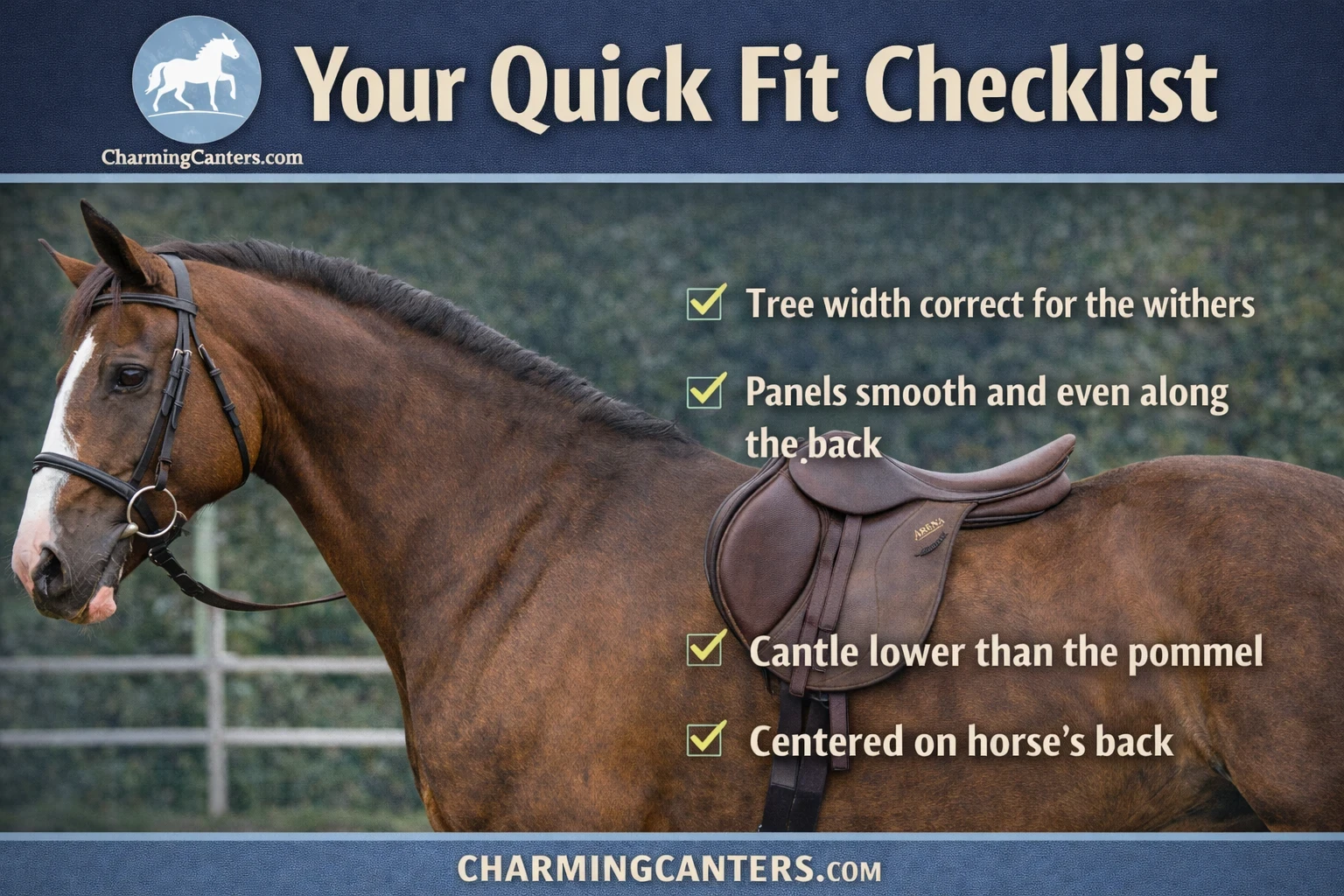
A properly fitted Arena Monoflap Jump Saddle supports your horse and improves both your riding position and your horse’s freedom to move. Start with careful measurements and make small adjustments as needed.
Check the fit regularly and don’t hesitate to reach out to a professional for help. Investing time up front pays off with happier rides and a more confident horse.
Your Quick Fit Checklist:
- Measure your horse’s wither and back length before buying a saddle.
- Check saddle balance and spine clearance every time you ride.
- Adjust the gullet and flocking as your horse changes shape.
- Test ride after any adjustment, watching your horse’s movement.
Taking the time to get the fit right can make a difference in your horse’s comfort and your riding experience.
Proper fit is only one part of the equation — choosing the right Arena monoflap jump saddle in the first place matters just as much. If you’re still comparing options or want a deeper look at what to consider before buying, I walk through key features, fit variables, and rider considerations in How To Choose An Arena Monoflap Jump Saddle.
This is very useful to ensure that you are buying the right fit of saddle. I never thought that you could simply take the wither profile, back length and shoulder angle. Using a coat hanger to get the angle is a brilliant idea.
I also was always under the impression that that the cantle and the pommel had to be the same height and not the pommel slightly higher.
If it is higher does it make a huge difference to the pony? I have always preferred the cantle slightly higher or it feels like I am sliding backwards.
Hi Michel.
That’s a great question — and you’re definitely not alone in thinking that.
In practice, the pommel and cantle don’t have to be perfectly level. What matters most is that the seat is balanced for both horse and rider. A slightly higher pommel is very common in monoflap jump saddles and usually doesn’t bother the pony at all, as long as the saddle isn’t tipping your weight forward.
If the cantle feels higher to you and makes you feel secure rather than pushed back, that’s often just personal balance preference — not a problem. The key check is that the saddle sits evenly on the pony’s back and you don’t feel like you’re constantly fighting your position.
You’re absolutely thinking about the right details.