Figuring out which English saddle tree type is best for your child’s horse or pony can get confusing fast. There are so many choices—wood, synthetic, adjustable—and every tack shop or website seems to have a different “best” option. If all those decisions are making your head spin, you’re far from alone.
Quick note for transparency: this article may contain affiliate links. If you choose to purchase through one of them, I may earn a small commission at no extra cost to you. It helps support CharmingCanters.com and allows me to keep creating practical, parent-focused riding resources.
Many parents don’t realize that saddle tree type plays a major role in fit—especially for growing riders. This is something I break down in more detail when comparing youth saddles like the Pessoa Junior vs. Pessoa Pony.
Picking the right saddle tree isn’t about memorizing diagrams or choosing the fanciest brand. It’s about finding something that makes riding safer, more comfortable, and more enjoyable for both horse and rider.
You don’t need to be an expert to make a confident choice for your young rider. You just need a few simple guidelines—and a focus on your child and their pony’s comfort as they grow.
Step 1: What Does an English Saddle Tree Actually Do?
The saddle tree is the sturdy part inside every English saddle, kind of like the bones in your body. It keeps the saddle’s shape and helps spread out the rider’s weight, so the pony or horse doesn’t get sore spots from too much pressure in one place.
It also plays a big role in how comfy and secure a young rider feels in the saddle.
So, when you’re choosing a saddle, the tree matters because it’s what keeps things comfortable, balanced, and working as they should.
The tree has to fit the horse’s back shape and needs to feel right for your child (not too wide, not too pinchy, and with the right amount of flexibility). Fancy details don’t matter much if the tree isn’t right.
Step 2: English Saddle Tree Types (Explained Simply)
Traditional Wooden Trees
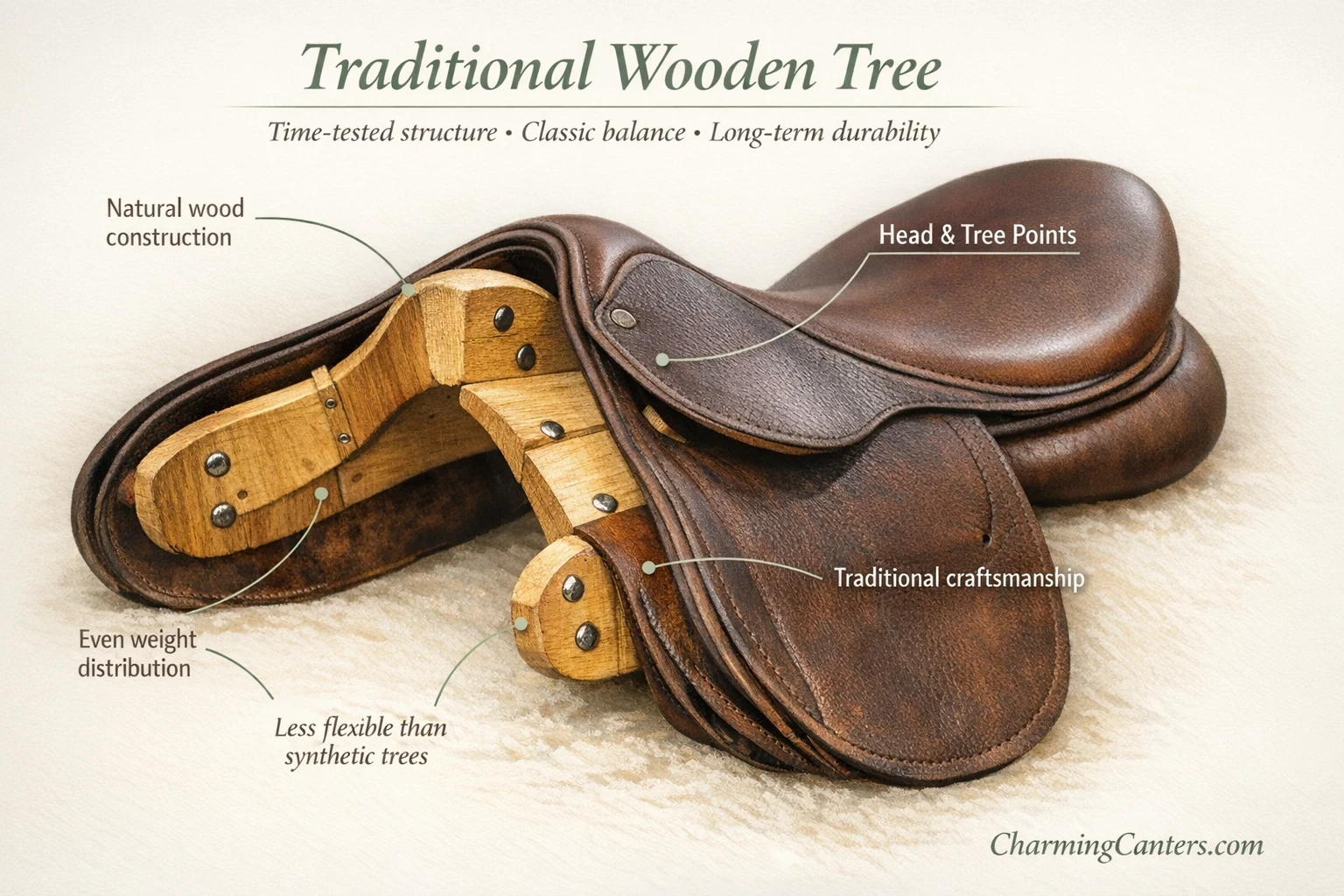
Classic English saddles often use springs or laminated layers of wood, sometimes with steel added for strength. These wooden trees have been around a long time, and they’re known for being sturdy and having a nice, classic feel.
But they can be pretty heavy, especially if you pick a full-size adult or all-purpose saddle. If your child is using a pony, the extra weight can sometimes make it tougher for them to handle the saddle alone.
Wooden trees are also a bit less forgiving when it comes to subtle changes in a pony’s shape, which matters if your pony gains or loses a few pounds seasonally.
Synthetic and Composite Trees
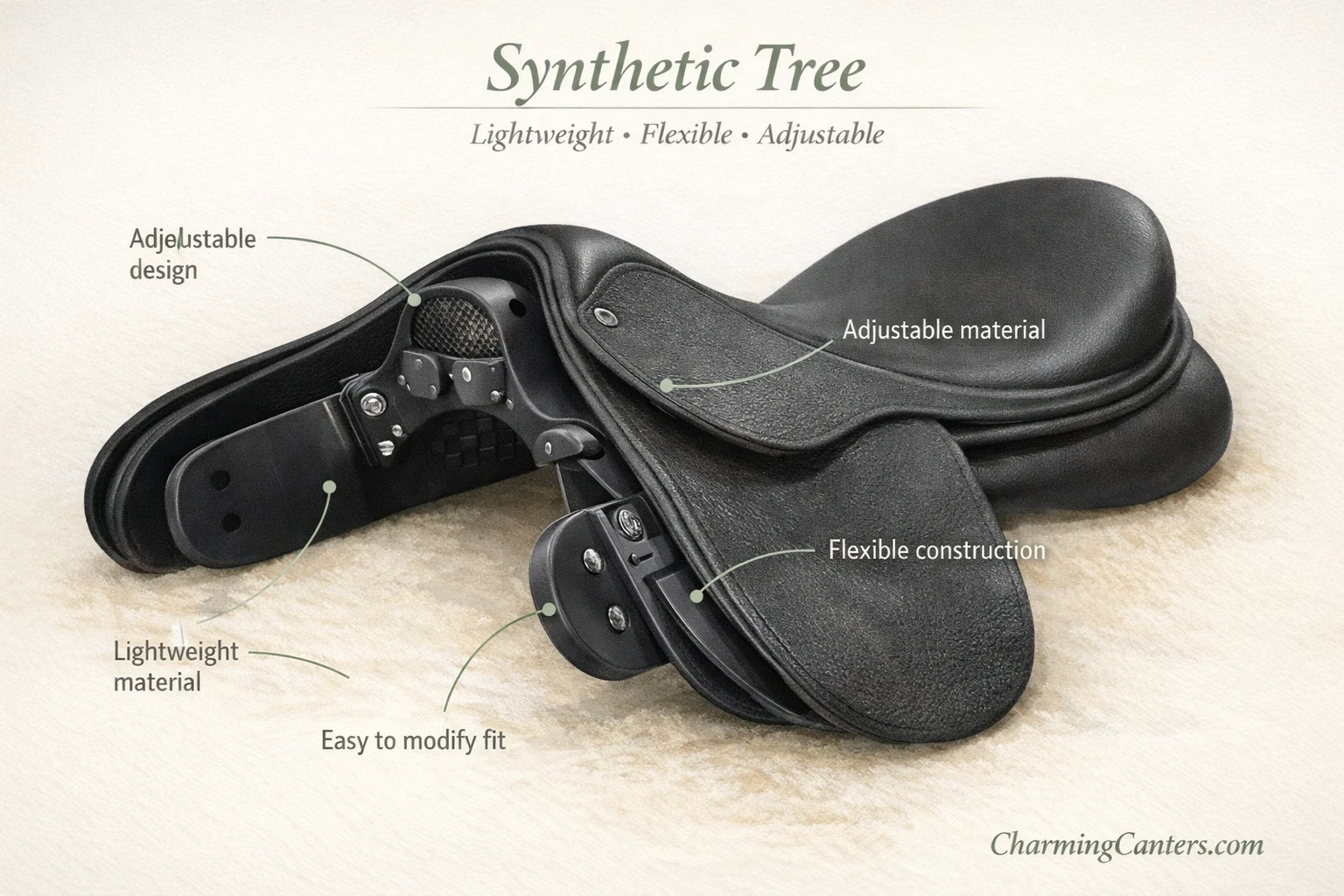
Newer saddles use materials like tough plastic, fiberglass, or a blend of both. These synthetic trees are lighter, a bit more flexible, and often less expensive.
For kids’ and pony saddles, a lighter tree makes tacking up (and carrying the saddle!) easier.
Some people also say synthetic trees handle moisture and heat better than wood, which can be a bonus for active ponies and riders. Synthetic trees also resist warping or cracking over time.
So, if you live somewhere with wild temperature swings or a lot of rain, this can make a long-term difference in your saddle’s durability.
Adjustable and Interchangeable Tree Systems
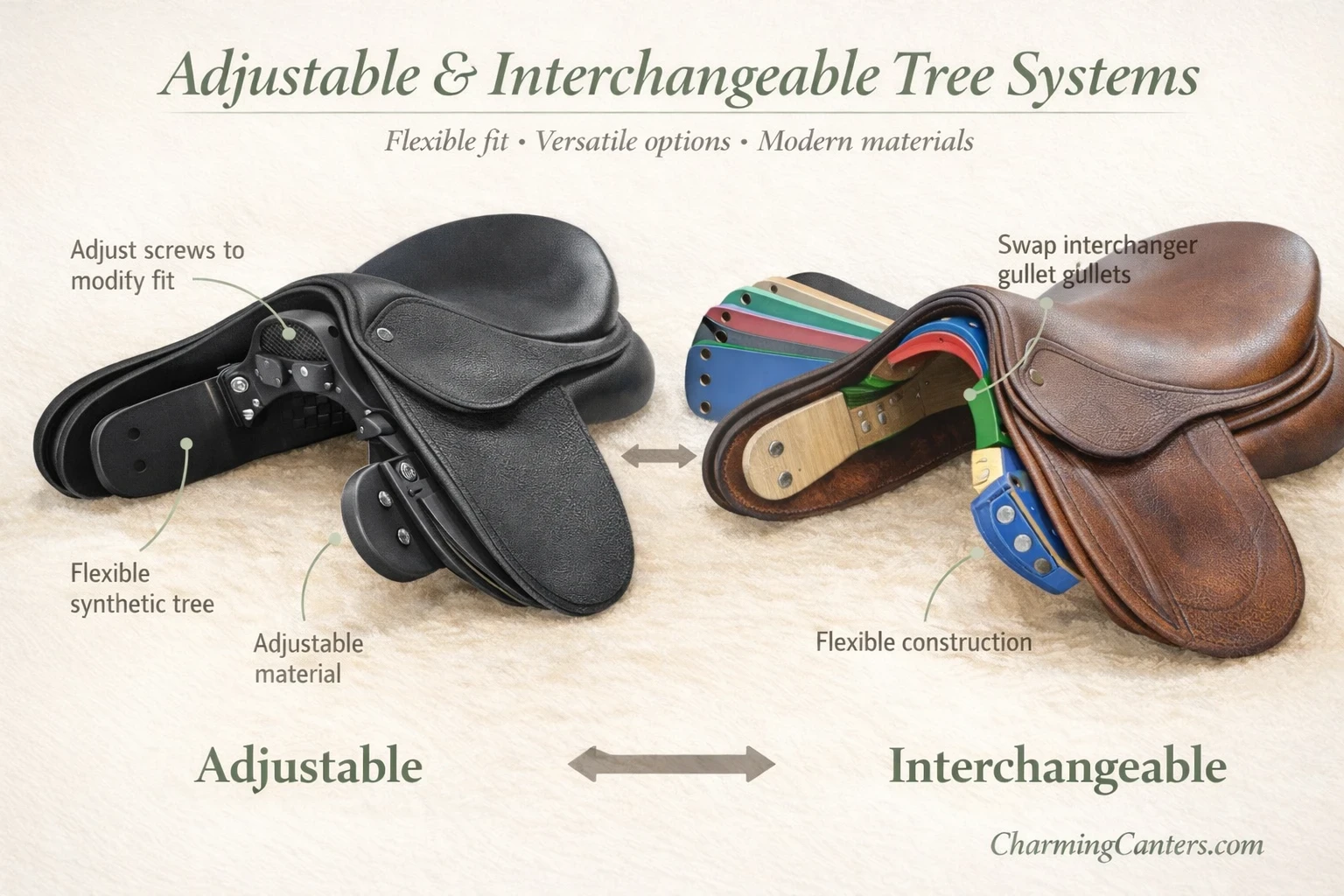
Adjustable trees sound high-tech, but they’re just saddles that let you tweak the tree’s width at the front. Instead of buying a totally new saddle every time your pony grows or changes shape, you can swap out a metal piece or turn a simple tool to make things fit better.
This type of system is often used in youth saddles designed to adapt over time, such as the Bates Advanta Saddle, which is built to accommodate changes in a growing rider and pony.
Adjustable trees can even be a good option for riding schools or families with more than one pony, helping you get a single saddle to fit multiple shapes over time.
Step 3: Match the Tree to the Horse (and Growth Stage)
No two ponies or horses have backs that are exactly the same. Some breeds are curvy, some are flat, and young horses change a lot as they grow. That’s why tree shape and size are way more important than what brand or style you pick.
- Growing Ponies: If your child’s pony isn’t fully grown, their back will probably get wider or rounder as they fill out. For these riders, adjustable or slightly flexible trees (usually synthetic or composite) can keep the saddle usable longer, which is pretty handy for ponies in growth spurts. This way, you won’t need to buy a new saddle every season.
- Mature Horses: A full grown horse or pony, especially one with a consistent body shape, can often use a traditional wooden or fixed synthetic tree. Just make sure it suits their back profile: narrow horses need narrower trees, rounder ponies need flatter or wider trees.
If you’re unsure, a saddle fitter or experienced instructor can take a quick look and point you in the right direction.
Feel free to snap pictures and bring them to your local tack shop; they’ve seen it all before and can give advice tailored to your specific pony.
Step 4: Match the Tree to the Rider (Especially for Kids)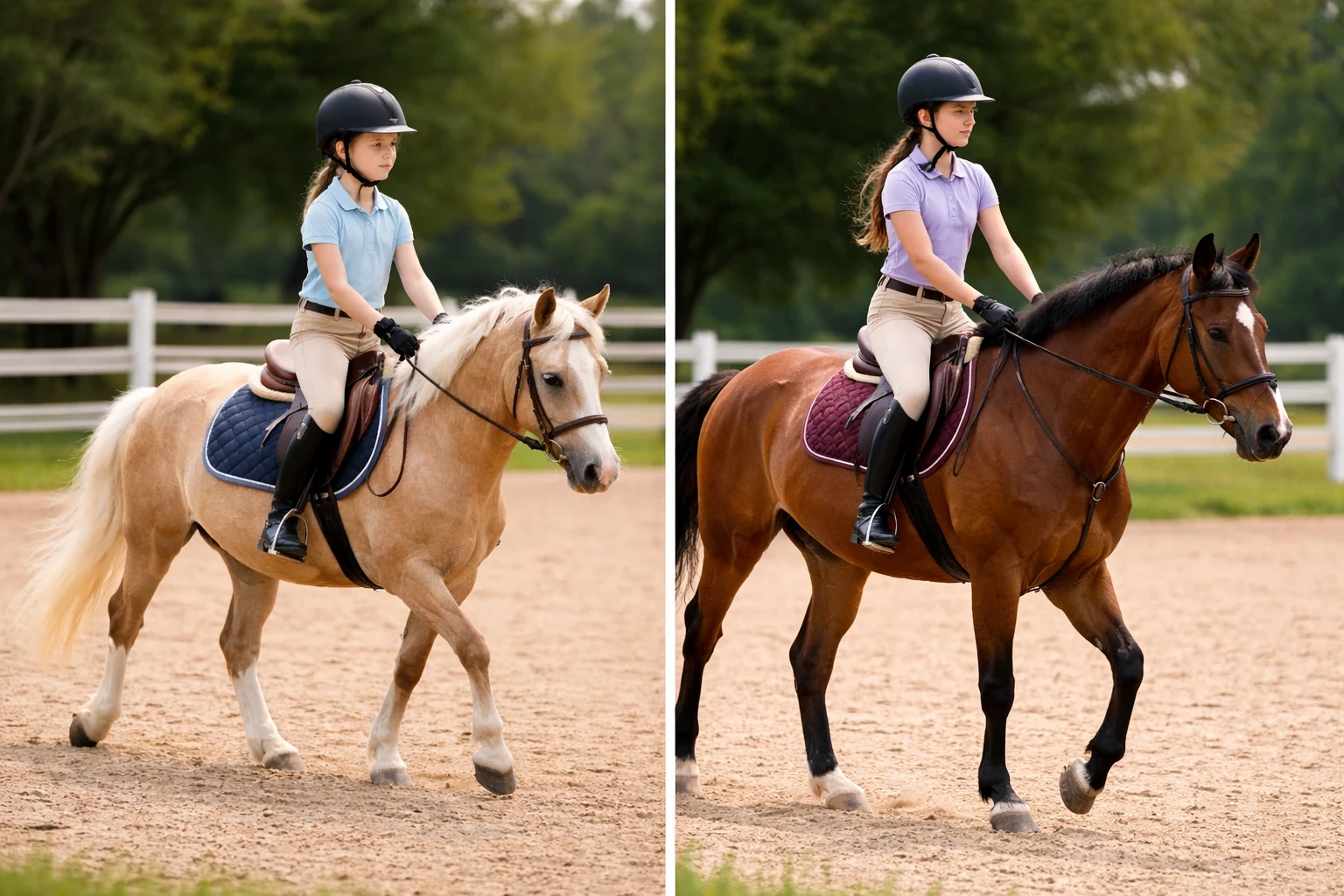
- Seat Balance: Some trees put the rider more forward or centered, which affects how balanced your child will feel. For newer or younger riders, having a saddle that helps keep their seat centered really gives a boost to confidence. A centered seat also helps your child learn strong riding basics.
- Stability vs Flexibility: Kids need a saddle that’s both stable, so it doesn’t roll side to side, but also flexible enough to let them move. Most synthetic trees and well-made adjustable trees do a great job here by offering both stability and a touch of give.
- Lighter is Usually Better for Youth: A heavy saddle can be a real struggle for young riders and their ponies. Lighter synthetic or adjustable saddles are easier to lift, carry, and don’t weigh down smaller ponies. This helps make independent tacking up possible, which builds responsibility and confidence over time.
If your child is moving up quickly in riding level or outgrowing ponies every year or two, picking a saddle with an adjustable or composite tree can make life a lot simpler – not to mention help your wallet since you won’t need to buy as frequently.
Always keep in mind your child’s comfort in the saddle, as a properly fitting tree will support better posture and happier rides.
Step 5: When Do Adjustable Trees Make Sense?
Wondering when you should consider an adjustable tree instead of a traditional one? Adjustable trees make a lot of sense if:
- Your child’s pony is still growing or tends to change shape with the seasons.
- You’re planning to resell or trade the saddle (makes it way easier if it can fit a wide range).
- You ride or own multiple horses or ponies of similar size but different widths.
Some adjustable saddles for younger riders that I’ve personally found helpful include the Pessoa Junior and Bates Advanta. Both are worth checking out if you want a futureproof option. If you want more info on adjustable saddle brands, check out my full saddle fit guides.
Adjustable trees aren’t always perfect. A traditional fixedtree saddle is sometimes the best if your horse is fully grown, has a hard to fit back, or if you prefer the feel of a wooden tree.
Adjustable trees need a little more maintenance, and some have weight limits, so always doublecheck with the saddle maker or seller. Be sure to periodically inspect the mechanism and adjust as your pony changes shape, especially after growth spurts or weight changes.
The flexibility of these saddles is a big benefit for growing riders and ponies, but only if you keep the adjustments up to date.
Common Mistakes Parents Make with Saddle Trees
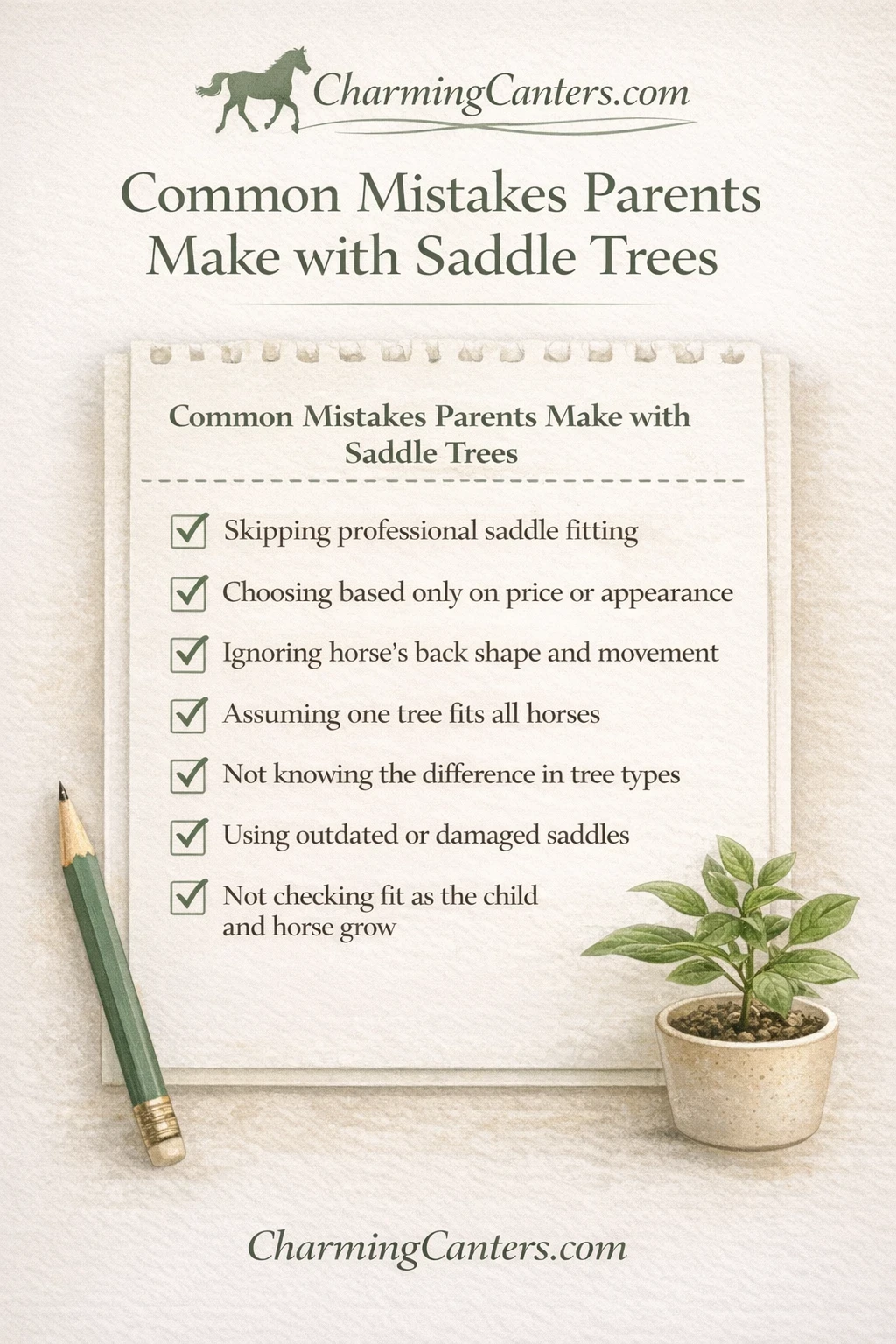
- One Tree Fits Every Pony: No two ponies are the same. What fits one won’t always work for another, so always check before swapping saddles among friends. If you get a new pony, measure or have their back shape assessed before using your old saddle.
- Buying Based on Brand Alone: Some big brands make great saddles, but the name on the tag doesn’t guarantee a good fit for your horse and rider. Fit should always come before trendy names or popular opinions.
- Ignoring Growth Spurts: Young riders and ponies change a lot. Choosing the right tree now, plus room for adjustment, can save you the hassle of buying a totally new saddle next year. Remember, ponies can surprise you with how quickly they fill out or slim down!
Quick Decision Checklist (Save or Pin!)
- ✅ Best Tree Types for Growing Riders: Synthetic or adjustable trees, lighter weight, easy to fine tune
- ✅ When to Size Up vs Adjust: If pony or rider is in a growth spurt, try adjusting first before buying new. Only size up when saddle can’t be made to fit safely. Do regular checks each season to see if your adjustments still work.
- ✅ Signs the Tree is Wrong: Saddle rocks or tips, pinches the pony’s withers, rider feels out of balance, or pony acts grumpy when tacked up. Pay attention to changes in your pony’s behavior—they can often tell you if something is off with their tack.
I keep this list handy when helping others pick out a saddle; feel free to screenshot for your next shopping trip. When in doubt, ask a pro at the tack shop or your riding instructor to run through this checklist with you. Sometimes a second pair of eyes makes all the difference.
If You’re Comparing Saddles Right Now…
Looking at different pony or youth saddles? You may find these indepth guides super useful while you decide:
- Pessoa Junior vs. Pessoa Pony: Complete Comparison
- Bates Advanta Pony Saddle: My Review
- How to Get the Best English Saddle Fit for Kids and Ponies
If you’re stuck, remember that finding the right tree is all about keeping your rider smiling and your pony comfortable. You don’t have to get it perfect every time. Just ask questions, trust your gut, and check in with your local saddle experts anytime you’re not sure. Happy riding!
Thank you for such a clear and practical breakdown. I especially appreciate how you simplified the technical differences between tree types and connected them to real-world considerations for young riders and ponies. Your step-by-step structure and checklist make decision-making feel far less intimidating for parents who may not have an equestrian background. Well done on making a complex topic both accessible and actionable.
Hi Kavitha. I’m so glad you found the article helpful. Yes, this is a complex topic and my aim was to simplify it. Job done.