Choosing a pony saddle can seem confusing, especially if you’re new to ponies or just starting out with young riders. Pony saddles are not simply smaller versions of horse saddles.
There are plenty of little details that can make a huge difference in fit, comfort, and safety for both the pony and your child. Most parents learn by doing, and it’s perfectly normal to make a few mistakes in the beginning.
Luckily, every mistake can be fixed as long as you stay patient and keep learning.
Just a quick heads-up for transparency: this article may include affiliate links. If you choose to buy through one of them, I may earn a small commission at no extra cost to you. It helps support CharmingCanters.com so I can keep creating helpful resources for parents and young riders.

Pony Saddles vs. Horse Saddles: What’s Actually Different?
I wrote an in-depth post titled, “The Difference Between English Saddles For Ponies And Horses Explained.” That post explains how English saddles for ponies and horses differ and why choosing the right one matters for comfort and performance. It highlights key differences in seat size, tree (saddle framework) size and shape, panel and flap length, weight, and gullet width. Definitely check it out.
Pony saddles come with a handful of smart design tweaks made just for ponies and younger riders. First, pony backs are short and round, while horses have longer frames, so the saddle panels (the padded parts underneath) are shorter to match.
This keeps the saddle from hanging over the pony’s ribcage, which could cause pain or discomfort during rides.
Ponies Have Flatter Wider Backs
Most ponies also have flatter, wider backs, especially across the withers (that bony area where the neck meets the back). Pony saddles are built with a flatter tree and a broader channel to fit these shapes better.
The way a child’s weight settles in the seat is also important. While kids don’t weigh much, their weight presses in one concentrated spot. A well-fitted pony saddle will spread out the weight, so ponies stay comfortable, even on longer rides.
Another point is rider balance. Pony saddles are shaped to help smaller riders stay secure and steady, usually by using shorter seats, smaller flaps, and correctly placed stirrup bars.
Rider Fit: Why Your Child Comes First
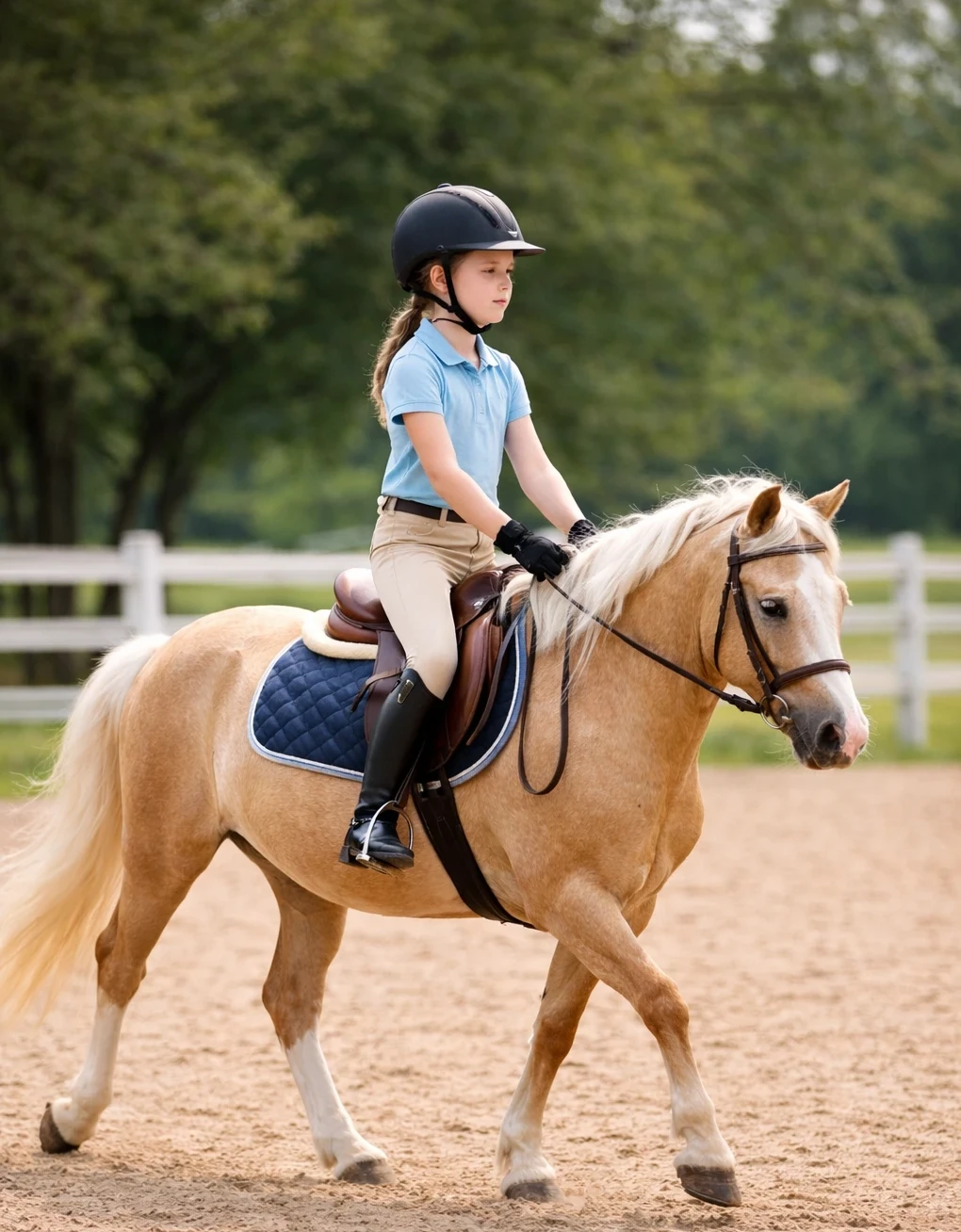
Getting the fit right for your child is really important—sometimes even more than the pony’s fit at first. The wrong size saddle turns riding into a chore instead of a good time.
- Seat Size: Pony saddles often start as small as 12 inches for little children and go up to about 15 inches for older kids or smaller teens. A saddle that’s too large leaves your child sliding around; one that’s too small just makes them uncomfortable.
- Stirrup Bars: In a well-made pony saddle, the stirrup bars are placed far enough forward for short legs. This helps kids stay balanced in the seat.
- Flap Length: Shorter flaps come in handy since young riders tend to have shorter legs. The right flap length keeps the saddle from getting in the way or hanging awkwardly.
- The Problem with “Growing Into It”: Choosing a larger saddle because you hope your child will grow into it seems practical but actually leads to poor posture and insecurity in the saddle. Kids end up with knees bouncing or sliding around. See my post, “Best English Saddle for a Growing Child and Pony (Avoide These Mistakes).
Pony Saddle Fit Basics, Made Simple
You don’t need to become an expert saddle fitter overnight. Here are a few clear checks that will help you track down a good fit for most ponies:
- Wither Clearance: Always leave a gap between the pony’s withers and the saddle pommel—enough room for 2 to 3 fingers. No squishing or pinching.
- Panel Contact: Panels should sit smoothly and evenly on the pony’s back. If there’s a gap underneath (called “bridging”), the saddle isn’t fitting quite right and could affect the pony’s comfort.
- Saddle Length: Never let the saddle go past the pony’s last rib. Hanging off the back causes sore backs and could limit movement.
- Pads Alone Won’t Fix Fit: Thick pads can help if things are just slightly off, but they can’t fix a saddle that’s too wide, narrow, or the wrong shape overall.
If you’re considering a true pony-specific model, the Pessoa Pony Saddle is a popular starting point for beginners.
Here’s a checklist for before every ride:
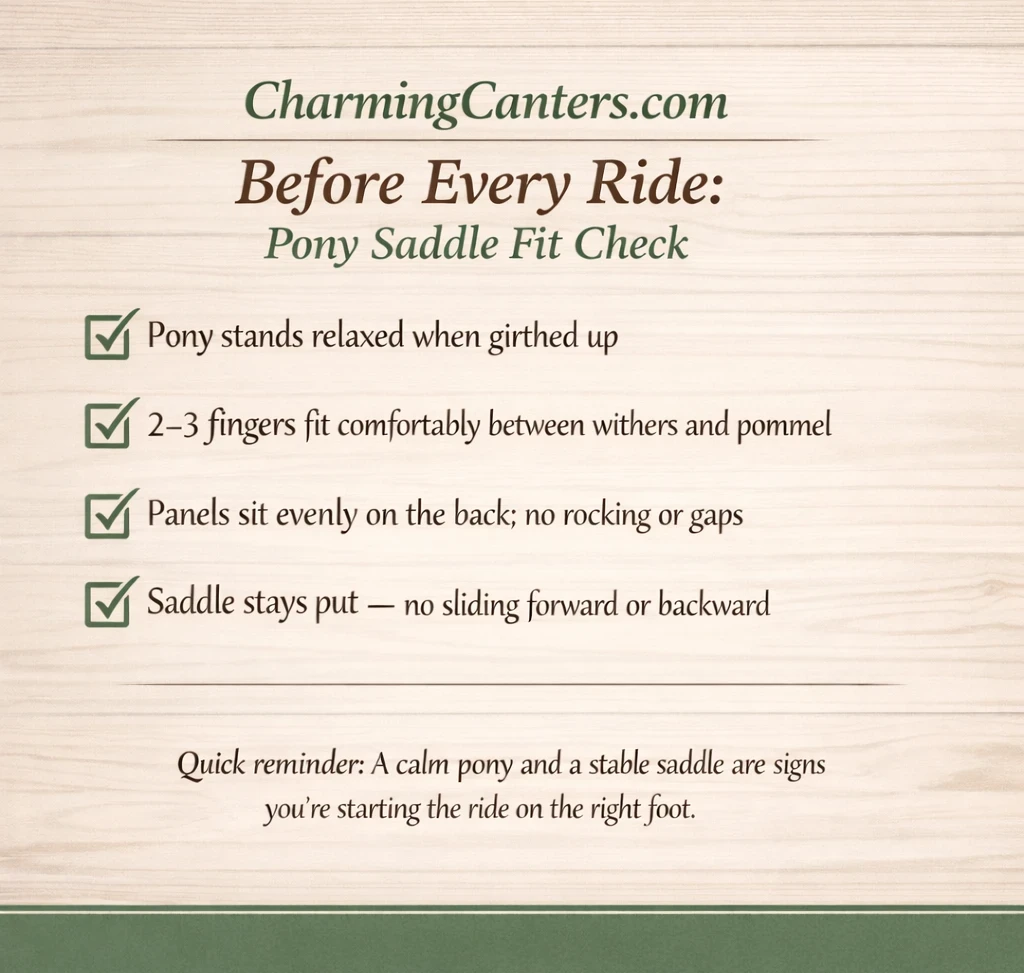
- Pony stands relaxed when girthed up
- 2–3 fingers can fit between withers and pommel
- Panels sit evenly on the back; no rocking or gaps
- Saddle stays put—doesn’t slide forward or backward
Each of these points becomes second nature after a few rides. With practice, checking saddle fit will save headaches for both your child and their pony. Sometimes, you may want to ask an experienced rider or local saddler if you aren’t sure what you’re seeing. It’s always better to double-check than risk discomfort.
Common Mistakes Parents Run Into (and How to Avoid Them)
Lots of beginner families run into the same issues when picking out a pony saddle. Here are some popular mistakes and ways to avoid them:
- Buying Used Without Checking Fit: Secondhand saddles are wallet-friendly, but always check fit before using them. Even if a saddle looks almost new, ponies have very different shapes. Try the saddle and do a few short rides, making sure neither child nor pony winds up squirming or sore.
- Choosing by Looks: It’s easy to be drawn to nextlevel cool colors and patterns. However, always prioritize comfort and safety over appearance. The cutest saddle isn’t useful if it rubs or wobbles.
- Oversizing for Growth: Picking an oversized saddle so your child can grow into it seems wise but usually backfires. Riders can’t balance well, and ponies get pinched or carry the saddle off-center.
- Relying on Thick Pads: Using tons of padding to “fix” a bad fit only hides problems. Pads are fine for a small boost or minor tweak, not as the main solution. Always aim for a well-fitted saddle first.
- Assuming Pony Means Mini Horse: Ponies and horses aren’t the same. Pony-specific saddles are built with rounder, wider trees for a reason. Even a shrunk-down horse saddle won’t quite do the trick.
If you keep these common pitfalls in mind, you’ll feel more confident stepping into tack shops or browsing used saddles online.
Types of Pony Saddles: What Are Your Options?
Pony saddles come in a couple of main styles, each best suited to certain activities. Here are the main types you’ll stumble upon:
- AllPurpose Pony Saddles: These are good allaround picks, great for lessons, trail rides, flatwork, and a few tiny jumps. Lots of parents start here as they’re practical and forgiving for general use.
- Close Contact Pony Saddles: They have flatter seats and short flaps—perfect for kids who want to get into jumping or pony competitions. This style lets the rider stay closer to the pony, making it easier to balance over small fences.
- Lightweight and Synthetic Pony Saddles: Best for younger children. These are easy to pick up, easier to clean, and usually more budgetfriendly. While they may not last as long as topquality leather, they’re great for first timers and offer a chance to see whether your child really enjoys riding.
- Traditional Leather Saddles: With classic looks and sturdy build, these saddles are built to go the distance. They’re a little heavier, so younger kids might need help carrying them, but with care, a good leather saddle can last for years and feel even better with time.
As you check out saddle types, think about your child’s main riding activities. A casual backyard pony likely doesn’t need a specialist jumping saddle, while an adventurous pony club member will benefit from a saddle made for their favorite style.
When to Upgrade Your Child’s Pony Saddle
Kids and ponies grow and change fast, so outgrowing a saddle is part of the adventure. When is it time to upgrade? I wrote an in-depth post which you’ll find helpful, “How To Upgrade My Youth Rider’s Saddle Effectively”. This post tells you when to upgrade and how. Definitely check it out.
Here are signs it’s time to upgrade your child’s pony saddle:
- Growth Spurts: If your child has shot up or their legs are suddenly longer, watch for knees sliding past the flap or a seat that feels cramped. Comfort and safety call for a new fit.
- New Riding Skills: More advanced young riders might need a saddle that offers extra support or better matches their chosen activities, like jumping, games, or eventing.
- Pony Changes: Switching to a different pony often means changing saddles entirely. Every pony has a unique back shape and fit needs, so it’s important to make sure the new match works for everyone.
For kids who are starting to progress, the Pessoa Junior Saddle offers more room and support than most pony saddles.
Don’t worry about getting the “forever saddle.” Most children will use two or three different saddles as they grow. The second-hand market is a good place to buy, sell, or trade saddles as needs switch up.
Next Steps: Where to Learn More
Now that you understand how to choose the right pony saddle, the next step is seeing how these fit principles show up in real saddles.
The guides and reviews below break down popular pony and junior saddle options with clear photos, practical pros and cons, and honest explanations to help you decide what will work best for your child and pony.
Whether you’re moving on from a junior saddle, accommodating a growth spurt, or upgrading for comfort and stability, these resources are designed to help you compare options confidently and avoid costly mistakes—so you can choose a saddle that supports safe, happy rides.
Hi there –
I enjoy going horseback riding every so often, so this article resonates with me. You have provided helpful tips for choosing saddles throughout the blog. Simply choosing an oversized back to accommodate children of all ages is shortsighted. During the ride, riders have difficulty balancing plus ponies get pinched.
What is your go- to pony saddle?
Hi Godwin.
Thanks so much for sharing your thoughts — I’m glad the article resonated with you! You’re absolutely right that simply choosing an oversized saddle to “grow into” can lead to balance issues for the rider and pinching or discomfort for the pony. Good saddle fit really is about balance, proper seat size, and matching the pony’s back shape, not just bigger-is-better.
As for my go-to pony saddle, I often recommend starting with a pony-specific model like the Pessoa Pony Saddle, since it’s designed for the rounder, shorter backs of ponies and helps both rider balance and pony comfort. That said, the best saddle really does depend on your pony’s build and the rider’s size — so trying a few with a saddle fitter can make all the difference!