
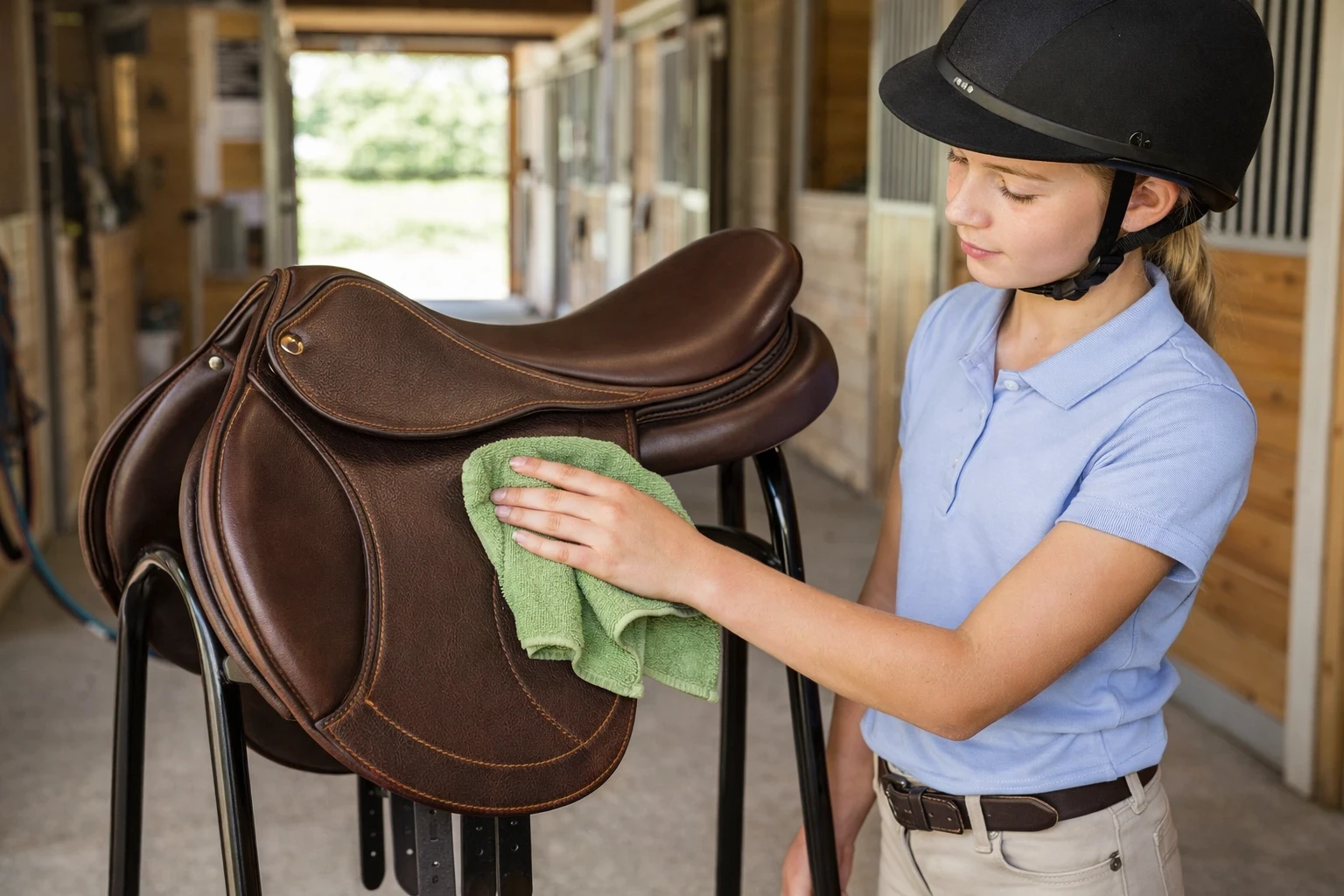
The HDR Galia Close Contact Saddle is a favorite for riders who want style, comfort, and that polished, classic look in the ring. But once it’s hanging in your tack room, keeping it in top shape can feel a little nerve-wracking—especially with all the conflicting barn advice floating around.
Parents, I completely understand. It’s stressful to invest in a quality saddle and then worry about cracked leather, stretched billets, or mold showing up after just a season of regular use.
The good news is that caring for your Galia doesn’t have to be complicated. With a simple, consistent routine, you can protect your investment and keep it looking beautiful for years.
Just a quick note for transparency: this article may include affiliate links. If you choose to purchase through one of them, I may earn a small commission at no extra cost to you. It helps support CharmingCanters.com so I can continue creating helpful resources for parents and young riders.
If you’re still in the decision phase and want to make sure this model is the right match for your rider and horse before you dive into maintenance, I walk through sizing, fit, and who it’s best suited for in my full guide on how to choose the right HDR Galia close contact saddle.
Now, let’s talk about exactly how to keep yours clean, conditioned, and show-ring ready—without risking damage.
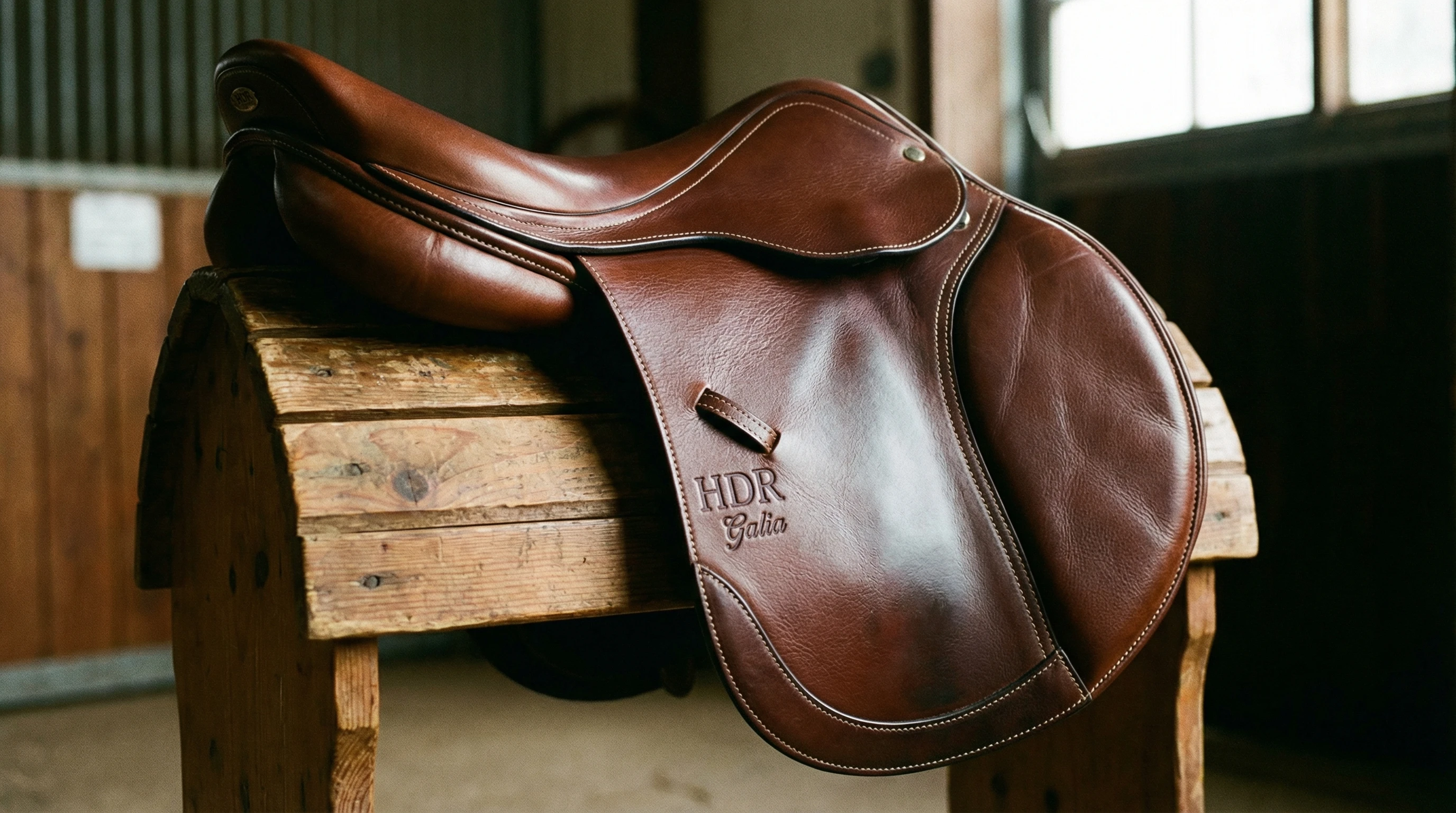
Why Proper Care Matters for the HDR Galia Close Contact Saddle
It’s totally normal to worry about ruining your expensive saddle. Cracked panels, stretched billets, or molded leather are no fun. Beyond just appearances, proper care keeps your saddle safe and comfortable for both you and your horse.
Understanding HDR Leather Construction
The HDR Galia uses high quality, European-inspired leather. The outer leather is made to be durable and soft enough for grip. The interior panels hold structure nicely but can be altered by too much oil or moisture. Knowing this helps you choose the right care products and avoid rough treatments that might do harm.
How Poor Maintenance Shortens Saddle Life
When daily sweat isn’t cleaned off or the wrong cleaner gets used, the leather can lose its oils and dry out. That means cracks and a creaky ride. Too much oil, on the other hand, will soften those panels a bit too much, making the saddle lose its shape and possibly even voiding the warranty. Mold in humid tack rooms is another big worry; it can permanently stain or weaken the leather.
Protecting Resale Value for Growing Riders
If your young rider is still growing, a well-cared-for saddle is way easier to resell or trade up later on. Buyers look for smooth billets, sturdy panels, and even coloring. If you’re unsure which size or tree configuration is best before thinking about long-term resale, I explain fit considerations in detail in my guide on how to choose the right HDR Galia close contact saddle.
All things you protect with a little regular attention, which saves you money and headaches in the long run. Plus, riders shopping used will often ask about maintenance records, so keeping up is worth it.
Daily Care Routine After Riding
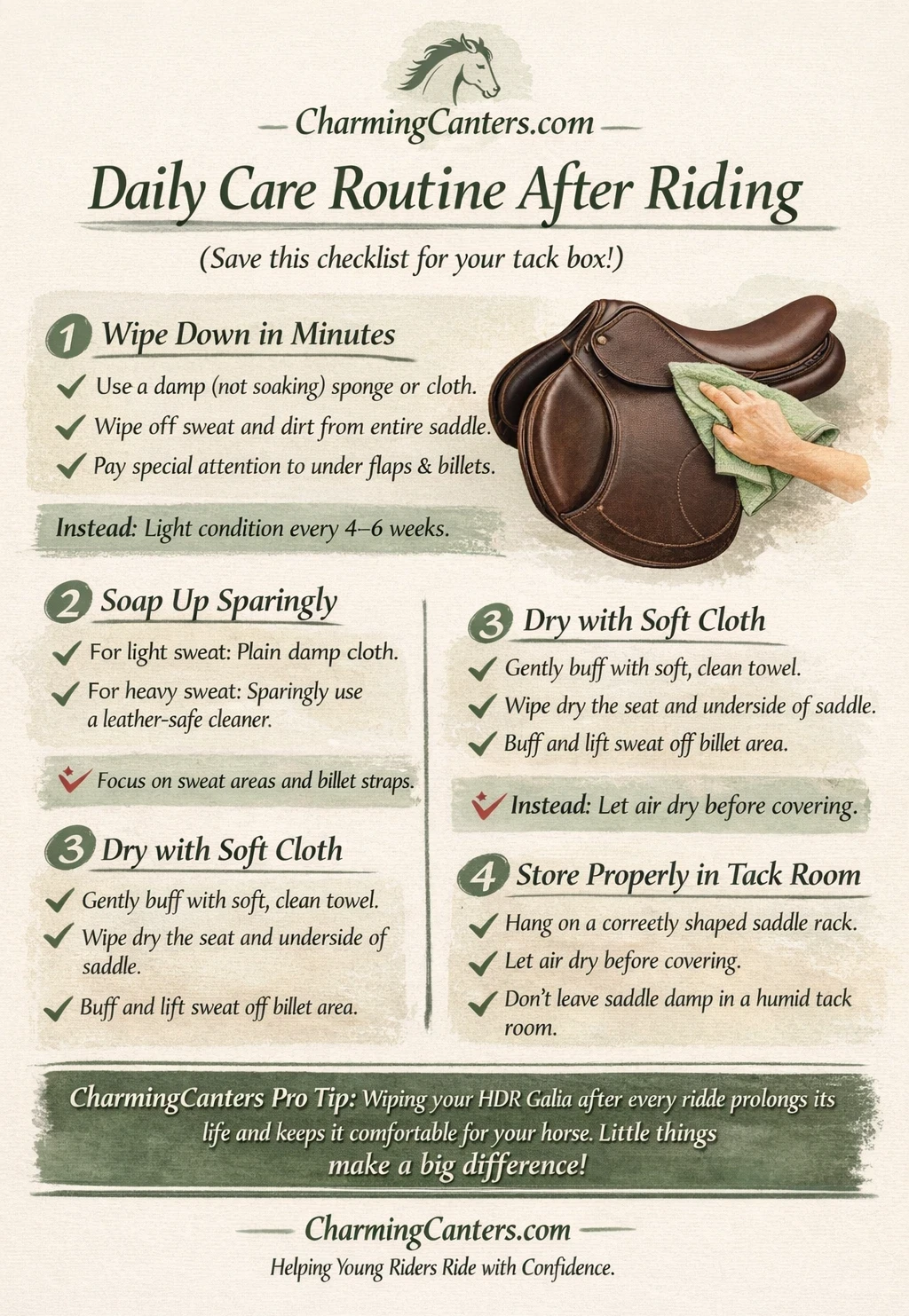
Small, steady habits make the most difference. Even spending just five minutes after each ride keeps the saddle safer than waiting for a big cleaning later. It also makes the deep cleans less daunting.
Quick WipeDown Steps (5 Minutes or Less)
I keep a microfiber cloth or soft sponge in my tack box just for this. Right after pulling the saddle off, gently wipe away sweat and dust, especially from where your leg sits and under the flaps. No need for a soaking wet sponge. Just a little bit damp is perfect. Sometimes, if there’s mud or dampness, I use two cloths so I’m not grinding grit into the leather.
Areas That Collect the Most Sweat
The bottom of the flaps, around the billets, and the seat get the most buildup. If sweat lingers, it pulls natural oils out and the leather can get stiff or start to fade in patches. Wiping these parts first really helps preserve that smooth finish.
What NOT to Use on the HDR Galia
Avoid household wipes, baby wipes, or anything with alcohol—they strip the leather. Same goes for harsh saddle soaps that aren’t pH balanced. Stick to dedicated leather products, and keep oils far away for quick daily cleans. If you’re ever handed a mystery spray bottle at the barn, it’s usually best to skip it and stick with what you know works.
It’s honestly relieving to know that you’re not going to mess up your saddle if you just use gentle cleaners and a light touch each day. No need to stress by overthinking it.
Weekly Cleaning: Keeping the Leather Supple Without Over Oiling
Once a week, plan for a more thorough clean. This is when you can treat the leather to help it look and feel its best, without ending up with overloaded or mushy panels.
Choosing the Right Leather Cleaner
Pick a gentle, glycerine-based cleaner or a saddle soap made for fine leather. These break down and remove deeper grime but don’t strip the oils your saddle needs. I usually use a soft, slightly damp sponge so water never soaks into the seams, and I take care not to use too much product in one spot.
When to Condition (And When Not To)
Conditioner is only needed when the leather starts feeling a little bit dry—maybe every few weeks depending on your climate and usage. You don’t need a heavy, greasy coat. I usually apply a thin layer, let it soak in, and wipe away any excess with a dry cloth. If your panels already feel soft or if you notice sticky spots, wait until it’s needed again rather than applying out of habit.
How Much Product Is Too Much?
A little goes a long way, especially with balms, creams, or oils. Over conditioning makes the leather lose its shape. Focus on drier areas like the kneeroll or seat, and be extra careful near the panels and underflap padding. Always check the label, and if you’re unsure, use less rather than more.
Monthly Maintenance and Deep Inspection
Once a month, give your Galia a full checkup. This takes just a few minutes and can help prevent bigger headaches down the line.
Checking Billets for Stretch and Cracking
Billets take the most strain, so flip your flaps and look for any stretching, deep creases, or cracks. If you spot weakness, get them swapped out by a saddler sooner rather than later, so you avoid bigger repairs and keep things safe.
Inspecting Stitching and Panels
Scan the seams and stitching for any loose threads or puckering. Make sure panels feel evenly stuffed and have no weird lumps. Leather should be smooth and resilient, not mushy or super slick, to keep the ride comfortable and safe.
Monitoring Flocking Compression
Press gently on each panel. If you feel hard or flat spots, the flocking might be compressed and could use some attention from a saddle fitter. Well-maintained flocking keeps your saddle balanced and comfy for your horse.
Preventing Mold and Tack Room Damage
Humidity is the saddle’s enemy. Mold creeps in faster than you think, especially in closed-up barns or after a wet lesson, and can undo all your hard work.
Ideal Storage Conditions
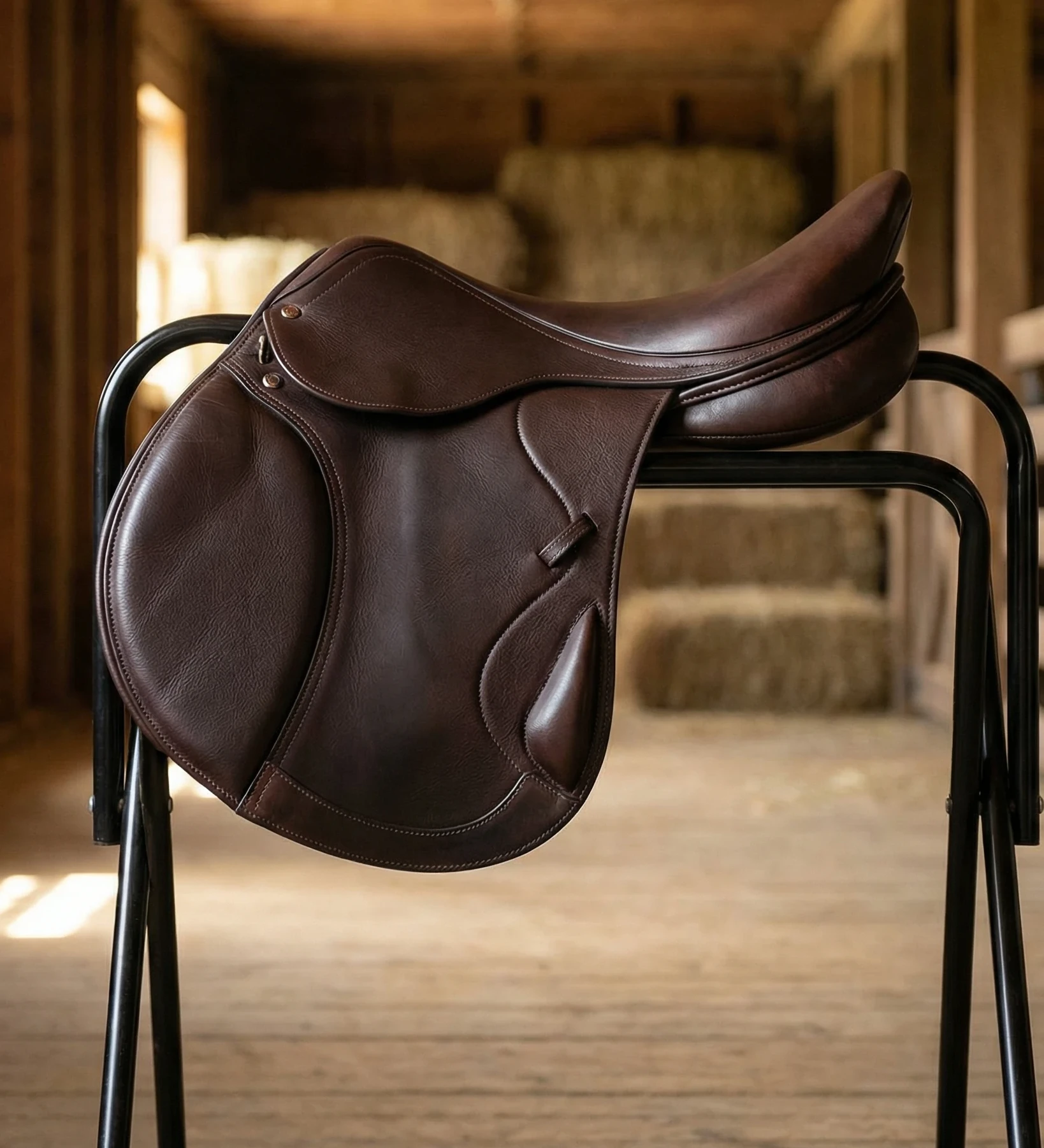
Try to store your Galia in a dry, well-ventilated place, never right up against an outside wall where dampness sneaks in. Avoid direct sun, because it fades leather and dries it out in weird patches. If possible, use a saddle rack that allows airflow underneath.
Using Saddle Covers Correctly
Saddle covers protect against dust, but don’t toss a damp cover on your saddle. Only use covers when the saddle is fully dry to avoid trapping in moisture. If you have a choice, go with a cotton or breathable cover instead of plastic so moisture can escape.
The Centaur Waterproof Fleece Lined Saddle Cover is designed to be both waterproof and breathable. It features a 420 denier nylon outer shell that allows moisture to escape, preventing heat from being trapped against the saddle, while the plush, non-pill fleece lining protects the leather from scratches and wicks away moisture.
Dealing With Humidity
If you’re in a humid area, a tack room dehumidifier or moisture-absorbing crystals nearby can really help; they pull dampness from the air, which can save your saddle. Give your saddle a bit of fresh air after rainy rides before putting it away for good measure.
Common HDR Galia Care Mistakes to Avoid
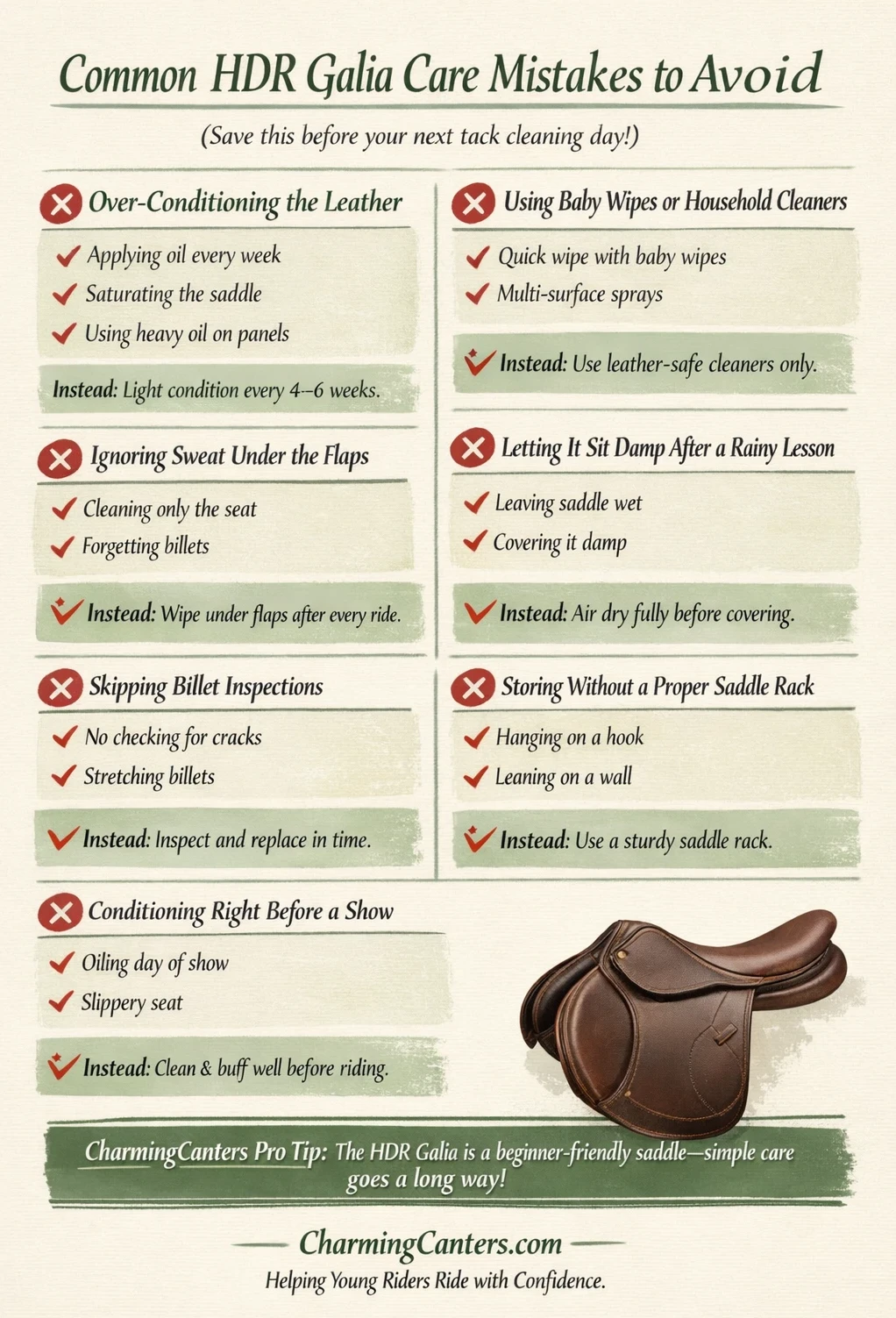
I’ve seen a lot of barn friends make the same mistakes. These are easy to fix, and knowing what to watch for will help your saddle last longer and look better.
OverConditioning
Resist the temptation to slather on conditioner after every ride. This makes panels mushy and weakens the structure. Stick to occasional, light treatments as needed for healthy leather.
Using Household Wipes
Baby wipes and regular cleaning wipes break down leather over time. Always stick with products made for tack care so your saddle can last.
Ignoring Sweat Under the Flaps
The sweat that collects under the flaps or near billets can be easy to miss, but it’s a common spot for cracking. Give these areas extra attention in your daily routine, and you’ll help prevent wear.
Leaving It on the Rack After a Rainy Lesson
If your saddle gets wet, use a soft towel to gently dry it, then let it air dry somewhere safe. Never leave a damp saddle sitting overnight, especially on a rack, to avoid hiding moisture where mold can set in.
How Long Should an HDR Galia Close Contact Saddle Last?
With smart care, your saddle can hang in there for many years and might even get better as the leather becomes more supple.
Signs It’s Being Maintained Properly
Healthy leather feels soft and just a bit springy, stitching is tight, and billets remain solid. The color will stay even, and there shouldn’t be any strange creaks, cracks, or squeaks when you ride.
When Billets Need Replacement
If billets are getting thin or cracked, it’s time to get them replaced right away. This is safer for you and for your horse, and it keeps the rest of your saddle in better shape longer.
When to Consider Upgrading
If your rider is outgrowing the saddle or the panels are permanently misshapen after years of use, start shopping. A well-cared-for Galia typically keeps its resale value, especially if you keep panels clean and billets strong. If you’re evaluating whether to replace it or stick with it another season, my updated HDR Galia saddle review 2026 breaks down performance, durability, and who it’s best suited for today.
Recommended Products for HDR Galia Saddle Care
I’ve tried a variety of products, and a few make my routine so much better (and keep your saddle’s leather happy):
Gentle Leather Cleaners
Look for pH balanced soap or glycerin spray, like Fiebings Liquid Glycerine Saddle Soap. It keep your leather clean while preventing it from drying out.
Light Conditioning Balms
Products such as Oakwood Leather Conditioner or Higher Standards balm give a gentle treat to your saddle when it’s feeling dry. Heavy oiling isn’t required, so your panels stay sturdy.
Safe Tack Sponges and Cloths
Dedicated tack sponges are an inexpensive way to get better results when applying cleaner or conditioner. Microfiber cloths are a smart choice for daily wipedowns, and you can toss them in the wash when needed.
Final Thoughts: Simple Care Protects Your Investment
Your HDR Galia doesn’t require complicated rituals to stay sharp and strong. Just steady habits and the right products are all you need to keep it in great condition. My regular routines help keep my saddle looking sharp in the show ring, comfortable for my horse, and valuable for the next owner.
With just a few minutes each day and a bit of attention each week, you’re setting your Galia up to last for years—and ready for its next rider down the line. If this post was helpful, I’d love to hear your comments below.
A simple, effective and super-soothing conclusion!
You say it rightly: maintaining an HDR Galia is not rocket science — just regular little habits, the right products and a little attention. I love how you highlight sustainable investment: a well-kept saddle remains beautiful, comfortable and retains its value for the next rider.
Your final words are warm and encouraging: a few minutes a day to protect premium equipment and avoid unnecessary costs. Just the kind of wrap-up that gives confidence and motivates you to adopt an easy and winning routine.
A top finale, clear, practical and in perfect sync with the guide!
Thanks for your comment. I’m glad this post was helpful.
This was such a calming and confidence‑boosting read. I love how you break everything down into simple habits instead of making saddle care feel overwhelming. The reminder about not over‑conditioning was especially helpful — I’ve definitely been guilty of thinking ‘more is better’ with leather care. Your step‑by‑step approach makes it feel doable, even on busy days. Thank you for creating something so clear, supportive, and beginner‑friendly.
Hi Kiersti! I’m so glad this post was helpful. Yes, you are not alone in thinking “more is better”. Actually, less is more when it comes to saddle conditioning. Happy riding.