
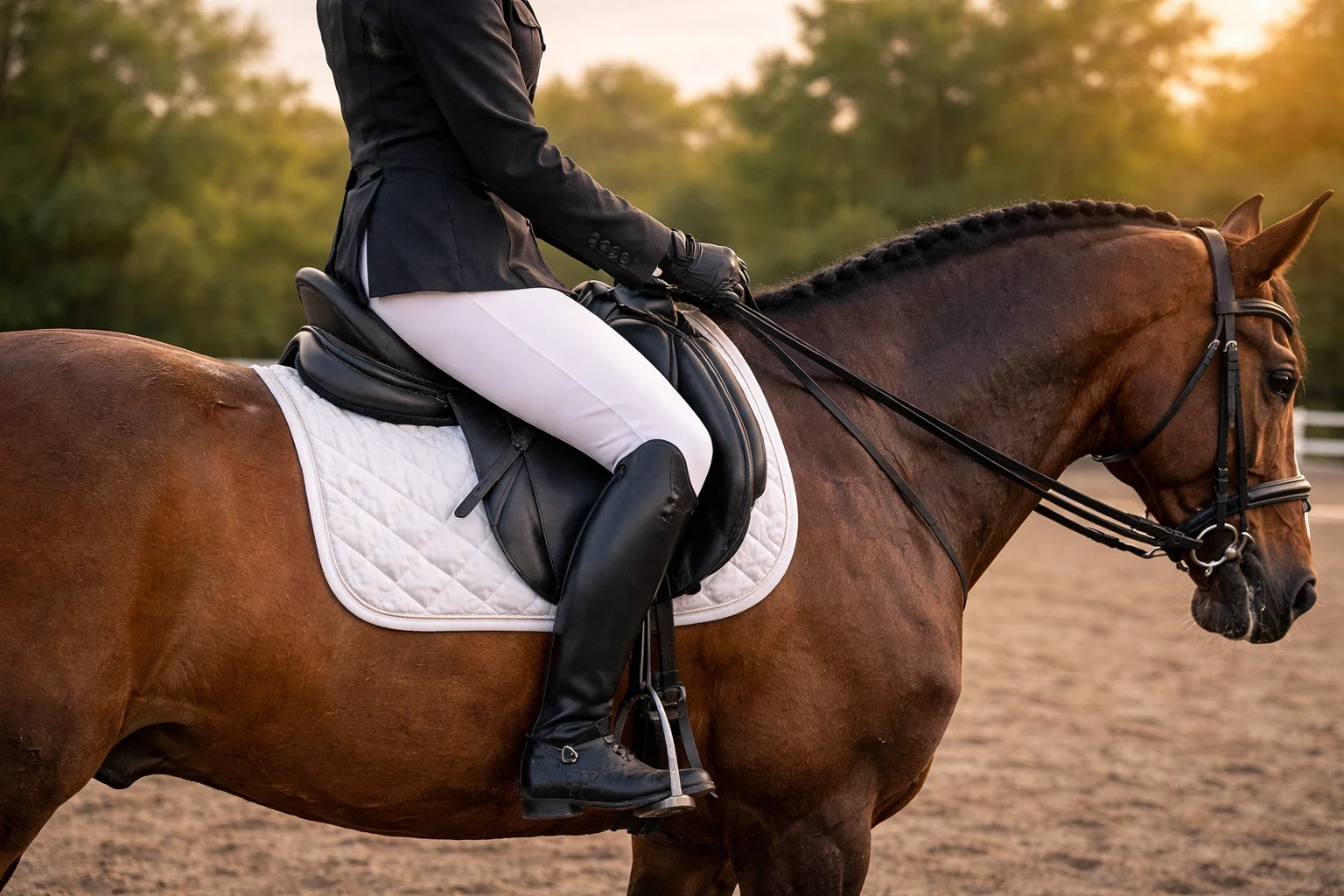
If you’re getting serious about dressage as an adult rider, finding a saddle that truly fits can be a game-changer—not just for your position and comfort, but for your horse’s long-term well-being too.
There’s far more to proper saddle fit than simply asking, “Does it look okay on the horse?” Adult riders bring their own body shape, flexibility, balance, and comfort needs into the equation, and those factors matter just as much as tree width or panel contact.
In this guide, I’ll walk you through what actually matters when fitting a dressage saddle as an adult rider, so you can ride with better balance, ease, and confidence. Some of the links in this article are affiliate links, which means I may earn a small commission at no extra cost to you if you choose to make a purchase. I only recommend saddles and products I genuinely believe offer real value to riders and their horses.
Why Dressage Saddle Fit Matters More for Adult Riders
Finding the right dressage saddle isn’t just about ticking boxes for fancy gear; it’s about legit comfort, balance, and staying pain-free in the saddle. Adult riders bring a few extra fit factors to the table:
- Body proportions change with age and experience: As an adult, your leg to torso ratio, seat shape, and muscle bulk can all impact how you sit. Some folks have longer femurs or a more generous seat, making a standard saddle feel cramped or off balance.
- Balance, flexibility, and hip mobility: Most adults have stiffer hips than teenage pony riders, so a saddle that locks your thighs or tips your pelvis is going to make you feel tense or even sore, which affects how your aids come through.
- “The saddle fits the horse” isn’t the full picture: A saddle can fit your horse perfectly but still be a struggle for you to ride in. Both horse and rider comfort need to be taken seriously, especially in dressage where alignment is important.
Read my post on beginner-friendly dressage saddles for adult riders.
Dressage Saddle Fit Basics (Quick Overview)
A well-fitting dressage saddle should support a balanced, centered seat while allowing your horse to move freely and comfortably. For adult riders, proper fit is about more than size—it’s about how the saddle positions your body, distributes weight, and stays stable as you ride.
At a glance, a correctly fitting dressage saddle should:
- Place you in a neutral, upright position without tipping you forward or locking you behind the motion
- Provide even panel contact along the horse’s back, with no pressure points or bridging
- Offer adequate wither and spinal clearance at rest and in motion
- Match your seat size, leg length, and flexibility, not just the horse’s measurements
- Remain balanced at walk, trot, and canter without sliding or rocking
If any of these basics are off, both rider comfort and horse performance can suffer. The sections below break each of these points down in more detail, so you can confidently evaluate whether a dressage saddle truly fits—before committing to a purchase or adjustment.
Horse Fit vs Rider Fit: What’s the Difference?
Horse fit is about the panels, tree width, and gullet shape matching your horse’s back and shoulders, so there’s no pinching or bridging. Rider fit is all about the seat size, flap length, and block position matching your body, so you can sit centered and use your aids. Both matter for a happy partnership.
What a Correctly Balanced Dressage Saddle Looks Like
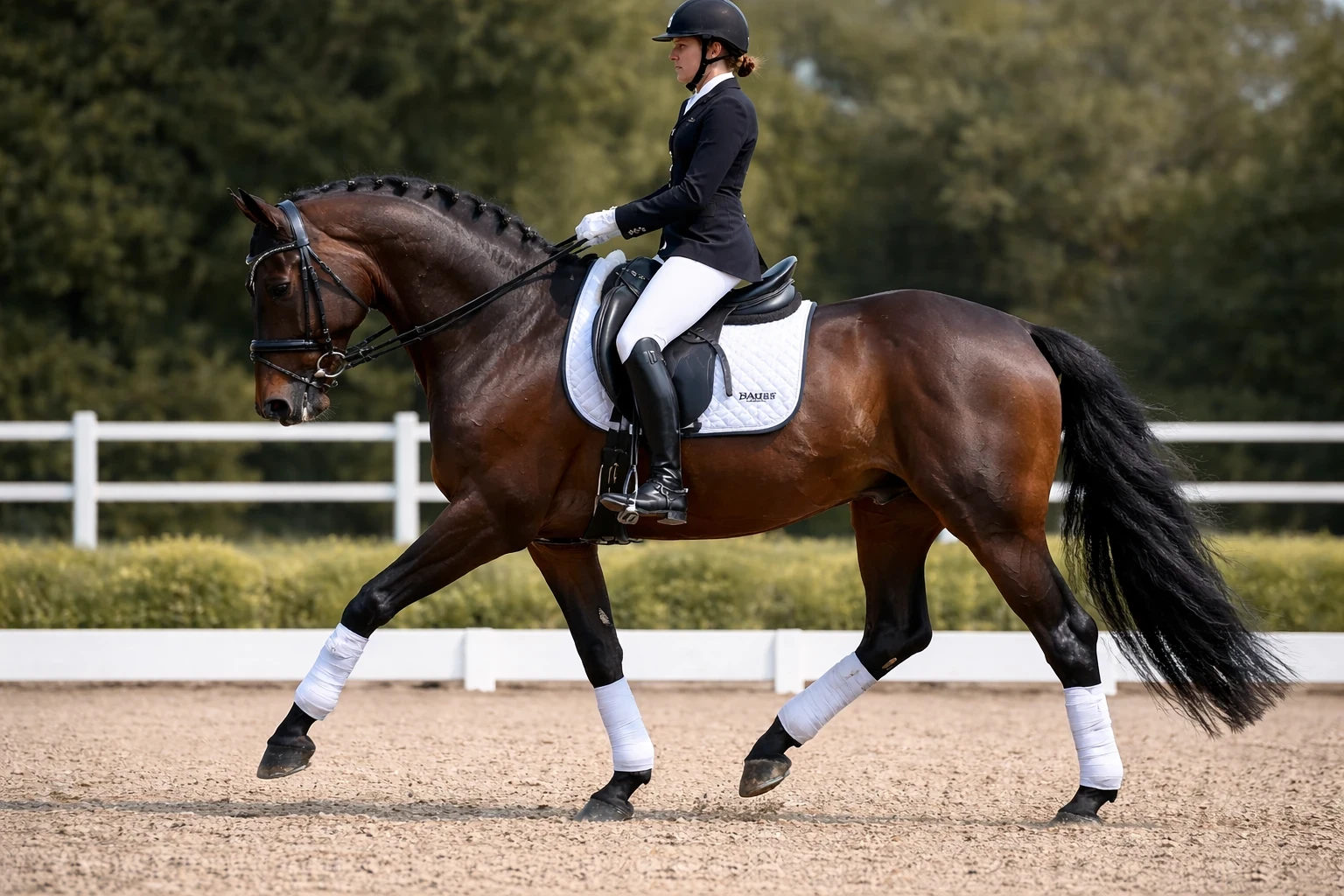
A well balanced dressage saddle should place you in the deepest part of the seat, with your ear-shoulder-hip-heel lined up. The saddle sits flat from pommel to cantle, never tipping forward or falling back. You shouldn’t have to fight to keep your leg under you. A structured dressage saddle is designed to support correct alignment.
How to Choose the Right Seat Size for an Adult Rider
Picking your seat size is probably the biggest game changer for rider comfort and balance. Too many adults try to squeeze into saddles that fit them as teens, or they follow old “one size fits all” rules. Here’s how to size up what really works for you now.
Common Adult Dressage Seat Sizes (16.5–18.5 Explained)
Dressage saddle seats usually range from 16.5” to 18.5”. Most adult women are comfortable in the 17” to 18” range, while taller or longer legged riders might need an 18” or even 18.5”. Your seatbones should fit on the widest part of the seat, with a palm’s width of space behind your bum to the cantle.
Signs Your Seat Is Too Small
- You feel wedged in and can’t sit deep
- Your pelvis tucks under or you perch on the pommel
- Knee/thigh blocks dig into your legs
- Your lower back or hips feel tight after riding
Signs Your Seat Is Too Large
- Your seat slides around and you never feel centered
- You struggle to keep your stirrups under your hips
- Your legs reach for blocks but never quite touch
- You can’t stabilize your core; feels “floaty”
Why Seat Size Affects Balance, Not Just Comfort
Getting the right seat size doesn’t just make sitting more pleasant, it puts your pelvis in the sweet spot where your balance, leg, and aids flow. If you’re always fighting to stay anchored, your horse will feel it, too. Comfort and connection go hand in hand.
Flap Length, Stirrup Bars & Adult Leg Position
Saddles aren’t onesizefitsall when it comes to flaps and stirrup bars either. Adult riders, especially those with long thighs or unique proportions, benefit from knowing what matters here.
Standard vs Long Flaps for Adult Riders
Standard flaps work for riders with regular length thighs, but if you have a long femur, your knee might peek over the flap or get pushed onto (or past) the block. Long flaps let your leg hang naturally, supporting a classic dressage position.
How Stirrup Bar Placement Affects Hip and Knee Comfort
Stirrup bars set too far forward force your leg into a chair seat and make hips ache. Bars further back help you get your leg under you, opening the hip angle and letting your torso stay tall. Trying different placements is worthwhile for hip or knee discomfort.
Common Fit Issues for Long Legged Riders
- Blocks or flaps that your knee shoots over (not helpful!)
- Stirrup bars that prevent a vertical leg
- Flaps that bunch or wrinkle under your thigh
Custom flap lengths and movable stirrup bars are great options if regular sizes don’t work for your leg shape.
Knee Blocks, Thigh Blocks & Adult Rider Support
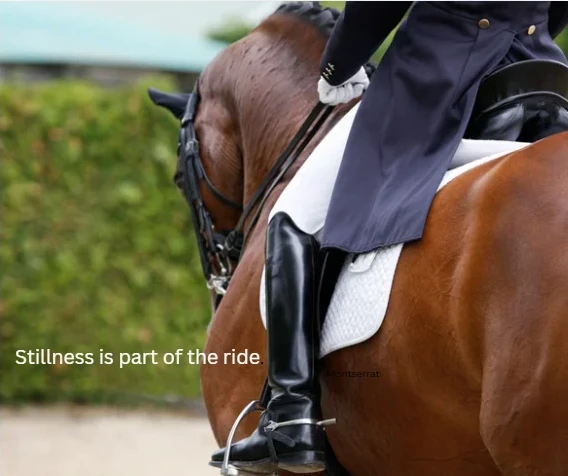
Blocks can be really helpful or totally in the way depending on your conformation and how you use them. Here’s what to watch for.
When Blocks Help (and When They Hurt Your Position)
- Helpful: Blocks that gently support your thigh without gripping or pinning you in place.
- Not helpful: Bulky blocks that jam your knee up or force your thigh in unnatural directions. If you feel you have to fight the block, it’s working against you.
Adjustable vs Fixed Blocks: What Adults Should Know
Saddles with Velcro or adjustable blocks let you fine tune for your personal build and preferred feel. Fixed blocks offer consistency and can be more secure if they’re right for you, but you’re out of luck if they don’t fit your body. More adjustability is generally better for adult riders who want gradual tweaks.
How to Check Saddle Balance From the Rider’s Perspective
Even if the saddle “looks level” to everyone on the ground, it’s your feel that matters most. Here’s how to judge if your saddle is balanced for you.
Feeling Tipped Forward or Backward
If you feel tipped forward, your pelvis may roll forward, your upper body dips, and your legs shoot behind. This is super common if the seat is too small or the balance point is off. Tipped backward makes you feel perched on the cantle, legs out in front, and tension in your lower back. A balanced seat should let you sit tall and relaxed with your legs draping naturally.
Seat Depth and Pelvic Alignment
Deep seats can help some riders feel secure, but if the seat is too deep and narrow, it may tip your pelvis under and close your hip angle. Flatter seats may let you move more, but can be harder to stabilize if you’re used to the feel of support.
Listen to your post ride body: are your hips or back sore? That’s a clue you might need a different shape or depth.
Why Adult Riders Often Feel “Pushed” by the Saddle
If you frequently feel pushed out of the saddle, chances are the seat size, depth, or block position doesn’t suit your body shape. This is common for men or women with wider hips, or if your thigh hits against blocks set for a shorter femur. Always assess the whole fit. Don’t just look at seat length.
Common Dressage Saddle Fitting Mistakes Adults Make
- Choosing based on brand reputation alone: Big name brands don’t guarantee comfort. Try different models, even within the same brand.
- Riding in a saddle sized for a previous owner: Handmedowns are handy, but may not fit your current body shape.
- Assuming pain means “needing stronger core”: Persistent discomfort likely means the saddle isn’t right for you, not that you just need to tough it out.
- Buying without riding in multiple saddles: Always test ride several options (if possible), even if you have a strong preference based on looks or recommendations.
Can One Dressage Saddle Fit Multiple Adult Riders?
In some cases, yes—but with important limitations. While a single dressage saddle can work for more than one adult rider, it depends heavily on how similar the riders are in seat size, leg length, balance, and riding style, as well as how adjustable the saddle itself is.
Adult riders tend to have more defined fit needs than children, particularly when it comes to seat depth, twist width, and flap placement. Even small differences in hip flexibility or femur length can change how a saddle feels and how well it supports correct alignment. A saddle that puts one rider in perfect balance may feel restrictive or unstable to another.
Adjustable features—such as interchangeable gullets, movable or adjustable blocks, and panel systems that can be fine-tuned—make it more realistic for one saddle to accommodate multiple adult riders. However, these systems work best when riders are close in build and proportions, not dramatically different.
The key takeaway is that sharing a dressage saddle should never come at the expense of balance, comfort, or the horse’s freedom of movement. If multiple riders use the same saddle, regular fit checks and adjustments are essential to ensure it continues to work well for both horse and rider.
What Can Be Adjusted (and What Can’t)
- Adjustable blocks and stirrup bars help customize for individual riders.
- Seat size and overall tree shape cannot be changed. Those are set from the start.
- Adding sheepskin seats, riser pads, or custom leathers can help a little, but won’t fix a truly wrong seat size.
When a Saddle Fitter Is Worth It
For group use saddles, a qualified saddle fitter can help set up a “best compromise” and make comfort tweaks through minor adjustments. For private riders, a pro fitting is one of the best investments for a happier ride.
Should Adult Riders Get a Professional Saddle Fitting?
Getting a pro saddle fitting can really help if you’ve struggled with fit issues or have unique proportions. It’s not just about sales. Fitters can spot things you might miss.
What a Fitter Looks at for Adult Riders
- Seat width and depth for your pelvis shape
- Flap length and block style for your femur and riding style
- Stirrup bar and panel setup for your hip and leg comfort
- Your alignment and how you ride in motion, not just static fit
Trial Periods, Adjustments & Expectations
Most fitters offer a trial ride, so you can genuinely feel the difference. Don’t rush the process; what seems ok after 5 minutes may be uncomfortable after an hour’s schooling session. Tiny adjustments (like wool flocking or block tweaks) can make a huge difference, so be honest about what you’re feeling.
Next Steps: Choosing a Dressage Saddle That Works for You
Finding a dressage saddle that truly fits you as an adult can change how you ride—how balanced you feel, how comfortable your body stays, and how clearly your horse can move underneath you. Your comfort and alignment matter, and there are more fit-friendly options available today than ever before.
The smartest next step is to compare saddles intentionally. Ride in more than one model if you can, pay attention to how your body feels during and after a session, and don’t hesitate to involve a professional saddle fitter if something feels off.
Small differences in seat size, flap length, or balance point can make a big difference over time.
If you’re ready to narrow things down, head over to the dressage saddle reviews and fit guides on CharmingCanters.com. You’ll find in-depth, rider-focused reviews, brand comparisons, and practical fit advice designed specifically for adult riders—covering everything from adjustable systems to traditional designs—so you can make a confident, fit-first decision.
This guide, and the resources linked throughout the site, are here to give adult dressage riders real-world answers—no pressure, no “just ride through it,” and no one-size-fits-all advice.
The goal is simple: help you choose a saddle that supports your body, respects your horse, and lets you enjoy a more balanced, comfortable partnership every time you ride.
This is such a thoughtful and realistic guide for adult riders. I love how you emphasized that saddle fit isn’t just about the horse’s back, but also about the rider’s proportions, flexibility, and comfort. Too often adults assume discomfort is a “core strength issue” instead of questioning whether the saddle truly suits them. Your breakdown of seat size, flap length, and block placement makes it much easier to self-evaluate before investing. I especially appreciated the reminder that balance in dressage directly affects communication and harmony in disciplines like Dressage. The point about feeling tipped forward or pushed by the saddle really resonated, it’s subtle but makes a huge difference over time. This guide feels empowering rather than overwhelming, and I think many adult riders will feel validated reading it. Fit first thinking truly supports both horse welfare and rider longevity.
Hi Andre.
Thank you so much for this thoughtful feedback — I’m really glad the rider-fit perspective resonated with you. Adult riders are often quick to blame themselves for discomfort, when in reality a saddle that doesn’t suit their proportions can quietly interfere with balance and communication over time. You’re absolutely right that those subtle “tipped forward” or “pushed out of the seat” sensations can have a big cumulative effect. I love how you framed it as fit first supporting both longevity and harmony — that’s exactly the goal.