
If you ride in the hunter ring, your English saddle is one of your most important pieces of tack. Over time, no matter how much care you take, there will come a point when you’ll need to think about replacing it.
Riding in a saddle that’s past its prime can affect your horse’s comfort, and your performance, too. Here’s my all-in-one guide to knowing when you should look for a new hunter saddle, how long they typically last, what signs show the tree might be broken.
I’ll also give you some tips to keep your gear in top shape for as long as possible.
How Long Does a Hunter English Saddle Typically Last?
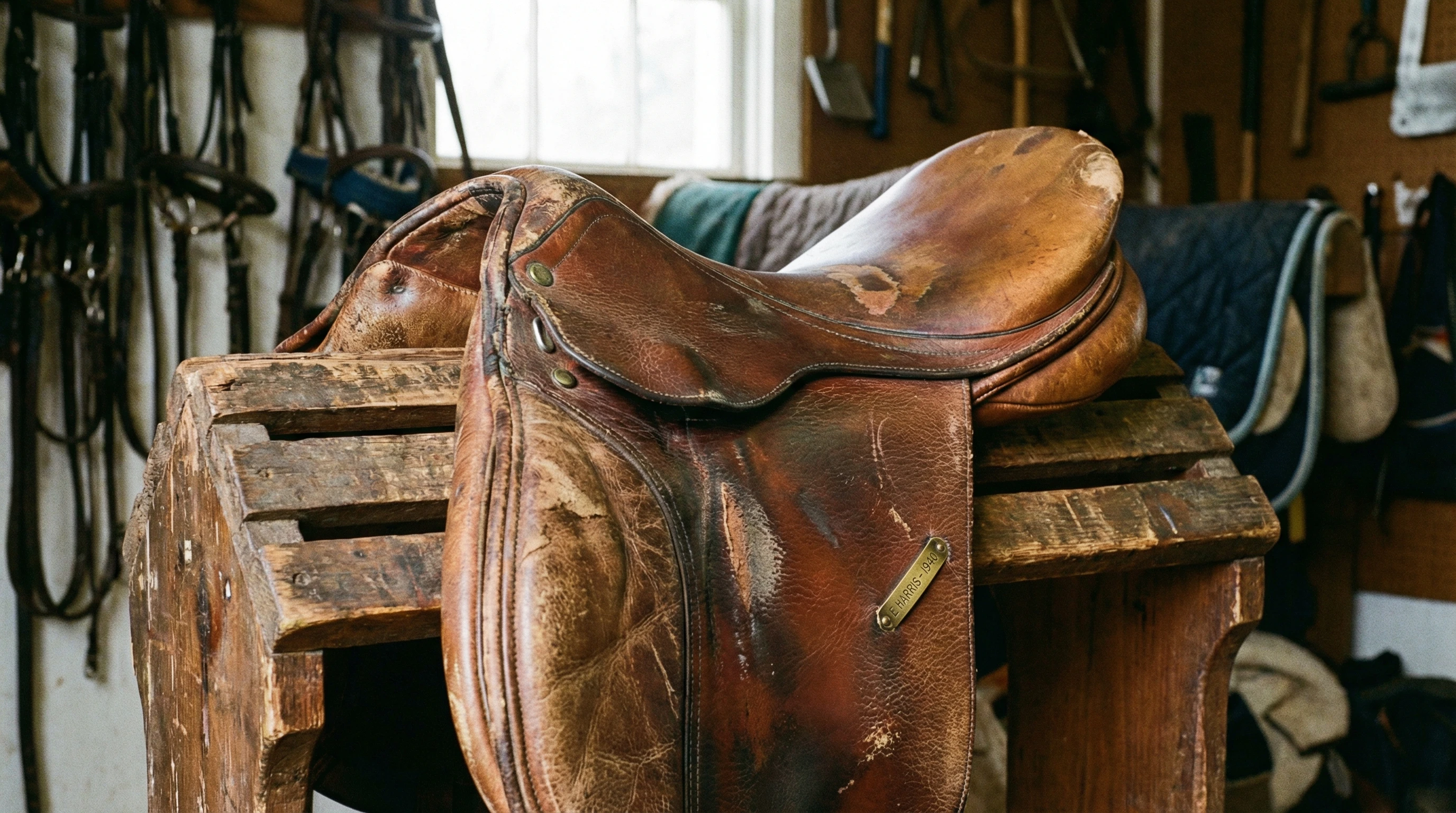
With solid care, regular cleaning, and proper storage, a quality hunter saddle can last anywhere from 10 to 25 years, or even longer. Several factors play into this, like the saddle brand, how often you ride, and whether you use any special saddle pads.
Cheaper saddles tend to break down faster, while premium models from trusted brands hold up longer with the right upkeep.
If you ride daily, your saddle will wear out quicker than if you only ride on weekends. Exposure to sweat, sun, water, and dirt can speed up the aging process, especially if you don’t clean it up after rides.
Leather care makes a huge difference. Even older saddles can stay comfortable and safe if the leather is conditioned often and the saddle is checked routinely by a qualified saddler.
Saddle longevity can also depend on your storage conditions. A saddle left out in the barn, exposed to fluctuations in humidity and temperature, can deteriorate much more quickly than one kept in a climate controlled tack room with proper ventilation.
Riders who occasionally compete in the rain or forget to dry their tack after a wet schooling session should be especially vigilant about cleaning and conditioning.
How Often Should I Replace My Hunter Saddle?
The frequency for replacing a hunter saddle depends on its age, use, and overall condition. Most riders start thinking about replacing their saddle every 8 to 15 years, but that timeline can change if the saddle shows issues or your horse’s shape changes.
A well-maintained saddle might just need new flocking over the years, not a complete replacement. But if you notice cracks in the leather, loose stitching, or an unfixable tree, it’s time for a new one.
The right replacement time also depends on your comfort and your horse’s needs. If your horse develops soreness, white patches of hair under the saddle, or you notice your own position feeling less stable, those are good reasons to look into a replacement sooner.
It’s pretty common for riders to swap saddles when they bring home a horse with a very different back shape, since a poor fit can lead to long-term problems. As you and your horse grow together, changes in muscle tone or condition can also affect saddle fit.
Children and teens often outgrow their saddles physically as they grow taller, so their timelines for replacement might be shorter than an adult’s.
Key Signs It’s Time to Replace Your Hunter English Saddle
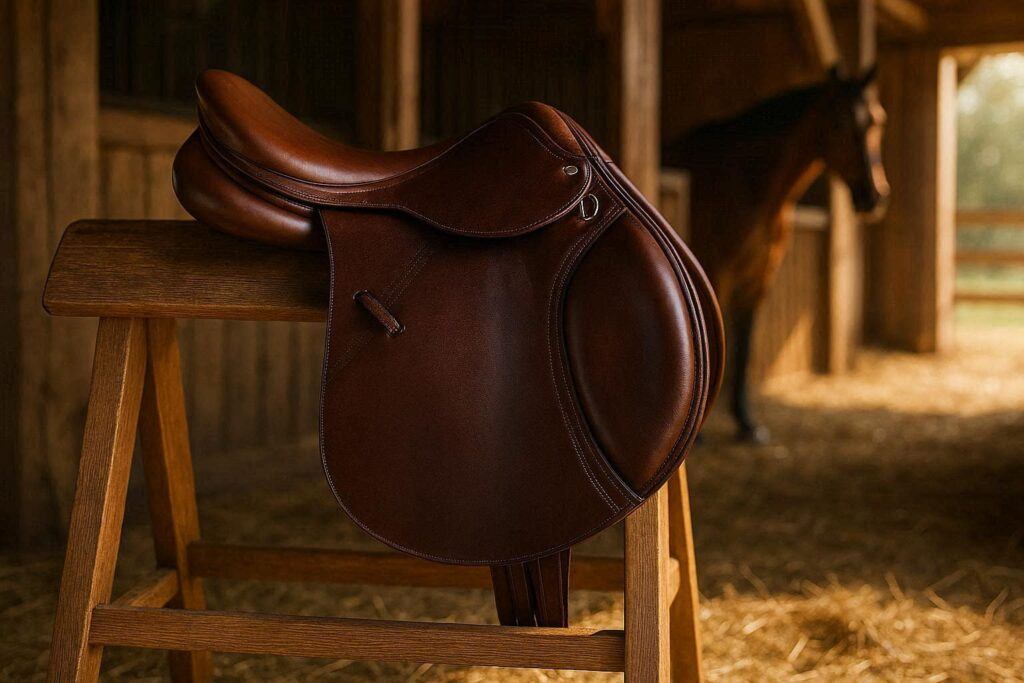
There are some classic signs it’s time to start saddle shopping again. Here’s what I watch out for:
- Visible cracks in the leather: These usually show up on the seat or along the panels. Small scuffs aren’t a big deal, but deep cracks mean the structure’s breaking down.
- Loose or missing stitching: Stitching keeps the panels, billets, and flaps together. Once it starts coming undone, repairs only go so far, especially if the leather is brittle.
- Panels going flat or lumpy: Woolflocked panels compress with time, while foam can break down or lose shape. Lumps and sags create pressure points for your horse.
- Tree squeaking or visible bends: The tree is like your saddle’s skeleton. Squeaks, flexing, or odd noises mean it’s probably cracked or broken.
- Buckled, stretched, or tearing billets: These need to be secure for your girth. When they get brittle or stretched out, replacement is risky, and sometimes it’s better just to get a new saddle.
- Chronic sores or white patches on your horse’s back: These often result from fit issues that aren’t always solved with a saddle pad.
- Comfort issues for you: If you notice pain in your knees, hips, or lower back, it could be your saddle changing shape over time.
If you notice more than one of these at the same time, or the saddle feels less secure than before, it’s definitely time to get it checked or start trying out new models.
Occasionally, a sudden change in your horse’s movement or willingness under saddle may indicate a problem with your tack, so pay attention to subtle behavioral shifts as well.
How to Tell if Your Hunter Saddle’s Tree Is Broken
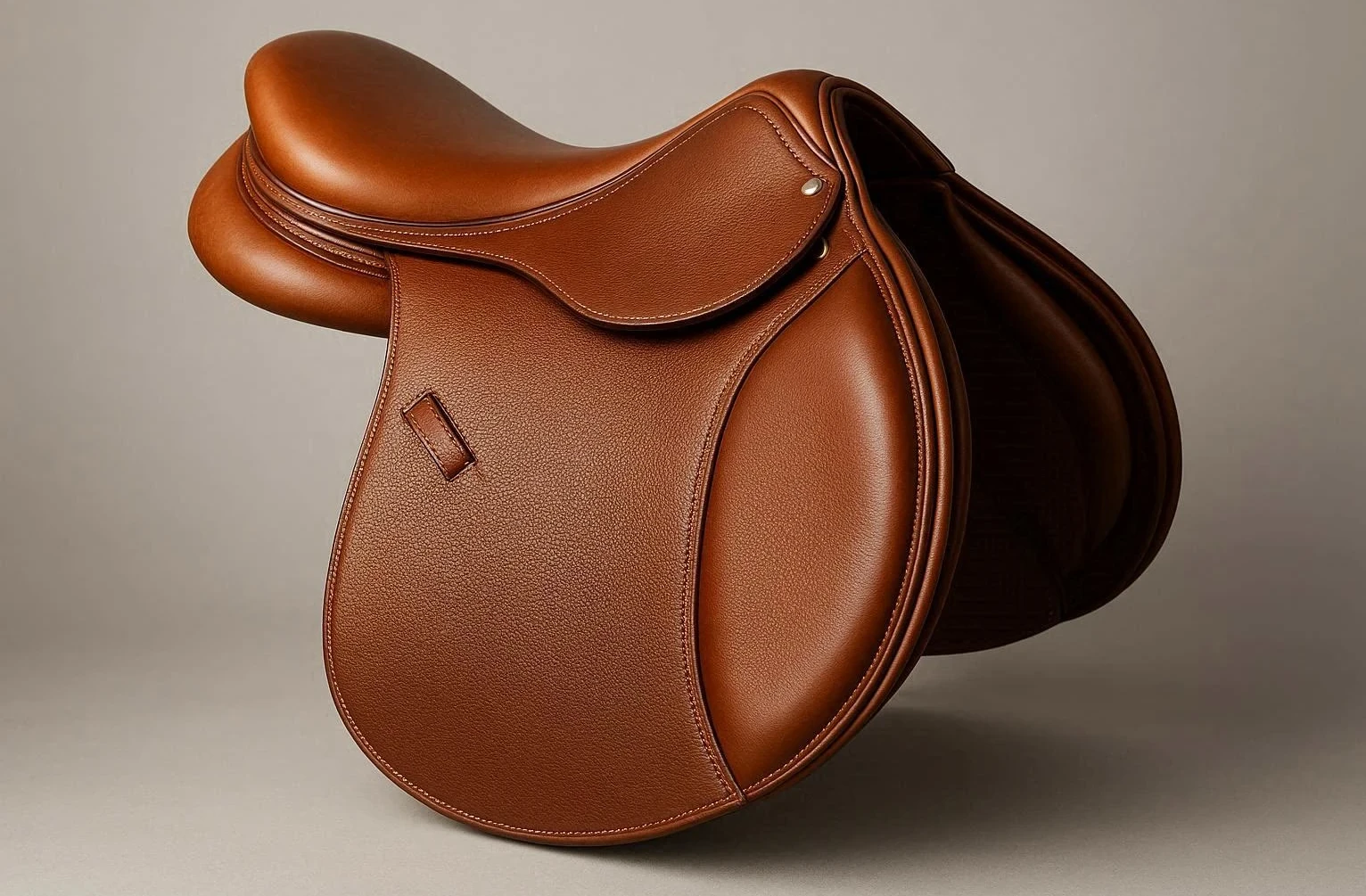
Broken trees are sadly not all that rare, especially with older or very heavily used saddles. A cracked tree can make a saddle dangerous and unusable. Here’s how to check for a broken tree:
- Bend the saddle gently from front to back. If it gives in the middle or flexes too much, the tree’s likely broken.
- Listen for any clicking, creaking, or snapping noises when you press down on the pommel or cantle.
- Check the symmetry. If the saddle looks twisted or has an odd angle you can’t explain, the tree may be cracked or warped.
- Run your hands along the underside and feel for sharp bits, irregularities, or hard lumps that shouldn’t be there.
- If in doubt, take your saddle to a qualified saddler. They can open up the panels and inspect the tree closely.
Even if you find a broken tree, it’s usually not worth repairing, since the fix can be as expensive as a new saddle (and potentially unsafe).
Riding on a broken tree for even one ride can harm your horse’s back.
So, it’s really important not to risk it if you suspect a problem. Prevention is the best approach. Avoid dropping your saddle and make sure it’s properly racked to prevent accidental force that could damage the tree.
Common Issues: Signs Your Hunter Saddle Needs Repair or Replacement
Some saddle problems are repairable, while others mean it’s replacement time. Here’s what I look at when sizing up an aging saddle:
- Stretched flaps or knee rolls: These sometimes get wavy or soft over time. Minor sagging is fixable. Deep waves usually aren’t.
- Rusted metal fittings: Stirrup bars and drings can rust, which isn’t safe for longterm riding.
- Lining coming away underneath: If the internal lining peels or sags, panels won’t distribute pressure properly.
- Mold or heavy mildew: Surface mold wipes off, but deeper mold or rot can ruin the leather and padding.
If you’re not sure about a specific problem, it’s worth asking a local saddle fitter or repair expert. Sometimes they can do minor fixes, but major structural stuff usually signals it’s time for a new saddle.
Track down a reputable repair shop that can give things a onceover if you have doubts.
How to Extend the Life of Your Hunter Saddle
Saddles aren’t cheap, so it’s pretty handy to get as many years as possible out of yours. Here’s what I do to keep my own hunter saddles going strong:
- Clean and condition the leather at least once a month, more often if you ride daily or in wet weather.
- Store your saddle on a supportive rack, away from direct sunlight, damp, or freezing temperatures. Covers help reduce dust and scratches.
- Check the flocking every year. If it’s lumpy or flat, get it reflocked. Wool flocking can often be refreshed for a better fit.
- Replace billets, stirrup leathers, and girth straps right when they look stretched or cracked. Leaving them too long risks bigger damage.
- Bring your saddle to a fitter at least every couple of years to make sure it still fits you and your horse, especially if your horse’s shape changes.
With steady upkeep, and quick attention to little problems, your saddle will serve you a lot longer. Keeping an eye out for early signs of wear—like minor cracks or loose stitching—lets you address small issues before they become dealbreakers.
Consider using a saddle cover during travel or while stored to keep dust and scratches at bay. Also, let the saddle completely dry before storing if it gets wet, to avoid promoting mold growth.
If possible, find out if your saddle’s maker offers refresher services for older models, which can add years to its useful life.
Frequently Asked Questions
I come across these questions at tack shops and barns all the time. Here’s what most riders are curious about when it comes to saddles and replacements:
How often do most hunter riders replace their saddles?
Most will replace a wellused hunter saddle every 8–15 years, but heavy everyday use or major fit changes might mean a quicker swap.
Is it ever worth trying to repair an old or cheap English saddle?
Sometimes you can refresh affordable saddles with a new billet or a panel repair. But if the leather is cracking everywhere or the tree’s gone, saving up for a new or quality used saddle is often smarter.
Many riders opt for second-hand saddles from trusted brands to get the best value for money, especially when upgrading.
How can I tell if my saddle no longer fits my horse?
You might notice uneven sweat marks, sore spots, or your horse acting up when tacking up. A saddle fitter can confirm if the fit has changed or if a new saddle is the best option.
Sometimes, subtle resistance—like pinning ears or fidgeting during mounting—offers early warning of fit issues, so stay alert to your horse’s behavior and check in with your trainer or barn manager for advice if you notice something off.
What’s the risk of riding in a saddle with a broken tree?
It’s unsafe for both you and your horse. The saddle may collapse, or create severe pressure points, making injuries way more likely. Always get it checked if you’re suspicious!
Where to Shop for a Replacement Hunter Saddle
If your saddle’s showing its age, you have lots of options. Local tack shops are great for trying brands in person, and many now offer virtual fittings or demos. There are also specialty saddle retailers online, some with generous return policies, and secondhand markets for riders on a budget.
Focus on reputable brands with good fitting advice and warranties.
Careful research helps buyers make informed decisions and avoid overspending. And always get a qualified saddle fitter to check the fit before making it your goto for daily rides.
Shopping with friends or trainers can add extra feedback and help you spot a good deal or point out a much better fit. Taking the time to read trusted reviews and ask questions can make sure you find a saddle that serves you and your horse well—possibly for decades to come.
If this post helped you decide When Should I Replace My Hunter English Saddle?, I’d love to hear your thoughts in the comments.