
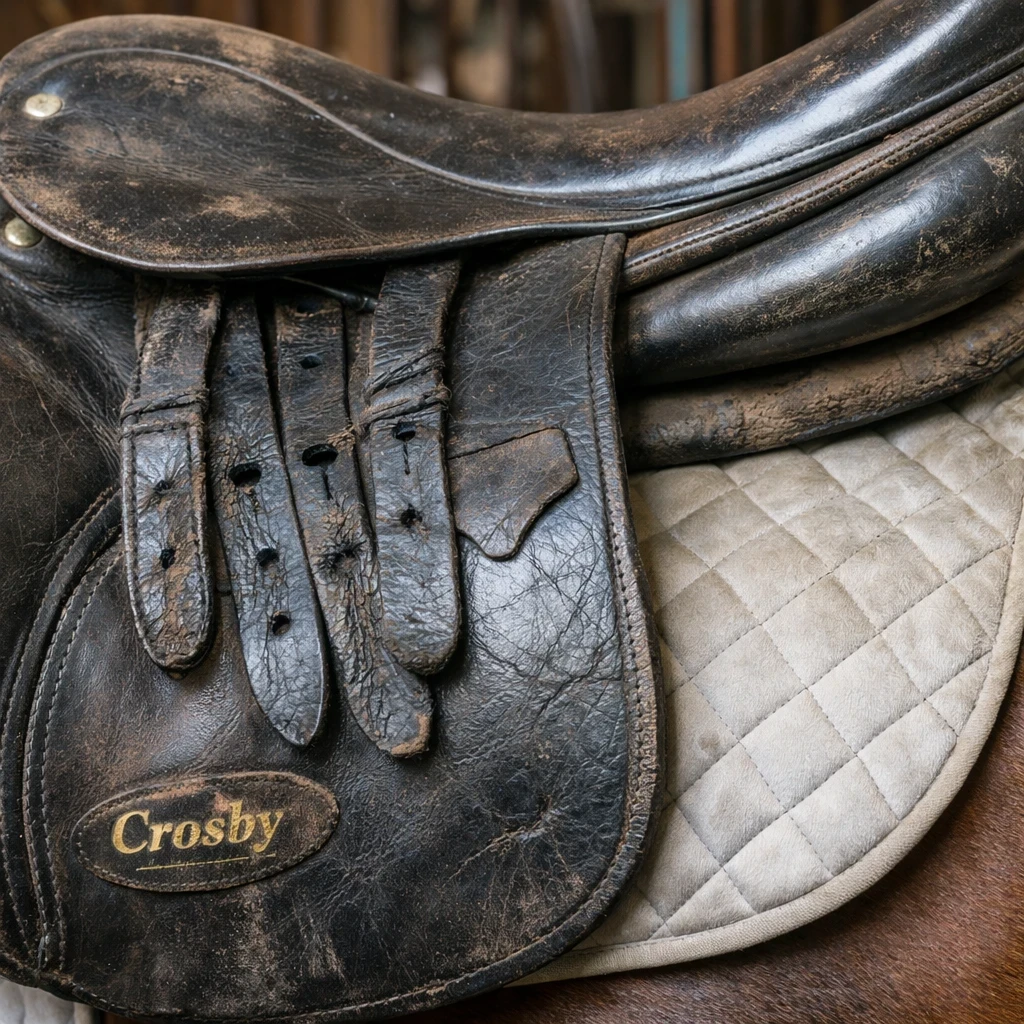
When should I replace my Crosby dressage saddle? It’s a question many riders ask when their trusted saddle starts showing signs of wear or their horse begins moving differently under saddle.
Crosby dressage saddles are known for their durable leather and classic design, but even the best saddles don’t last forever. Over time, leather ages, flocking compresses, and horses change shape, which can affect both comfort and fit.
Knowing when to repair a saddle and when it’s safer to replace it can help protect your horse’s back and keep your riding comfortable.
Just a quick heads-up for transparency: this article may include affiliate links. If you choose to buy through one of them, I may earn a small commission at no extra cost to you. It helps support CharmingCanters.com so I can keep creating helpful resources for parents and young riders.
If you’re still learning about the Crosby line or trying to decide whether a replacement saddle might be the right move, you may find my detailed Crosby Dressage Saddle Review helpful.
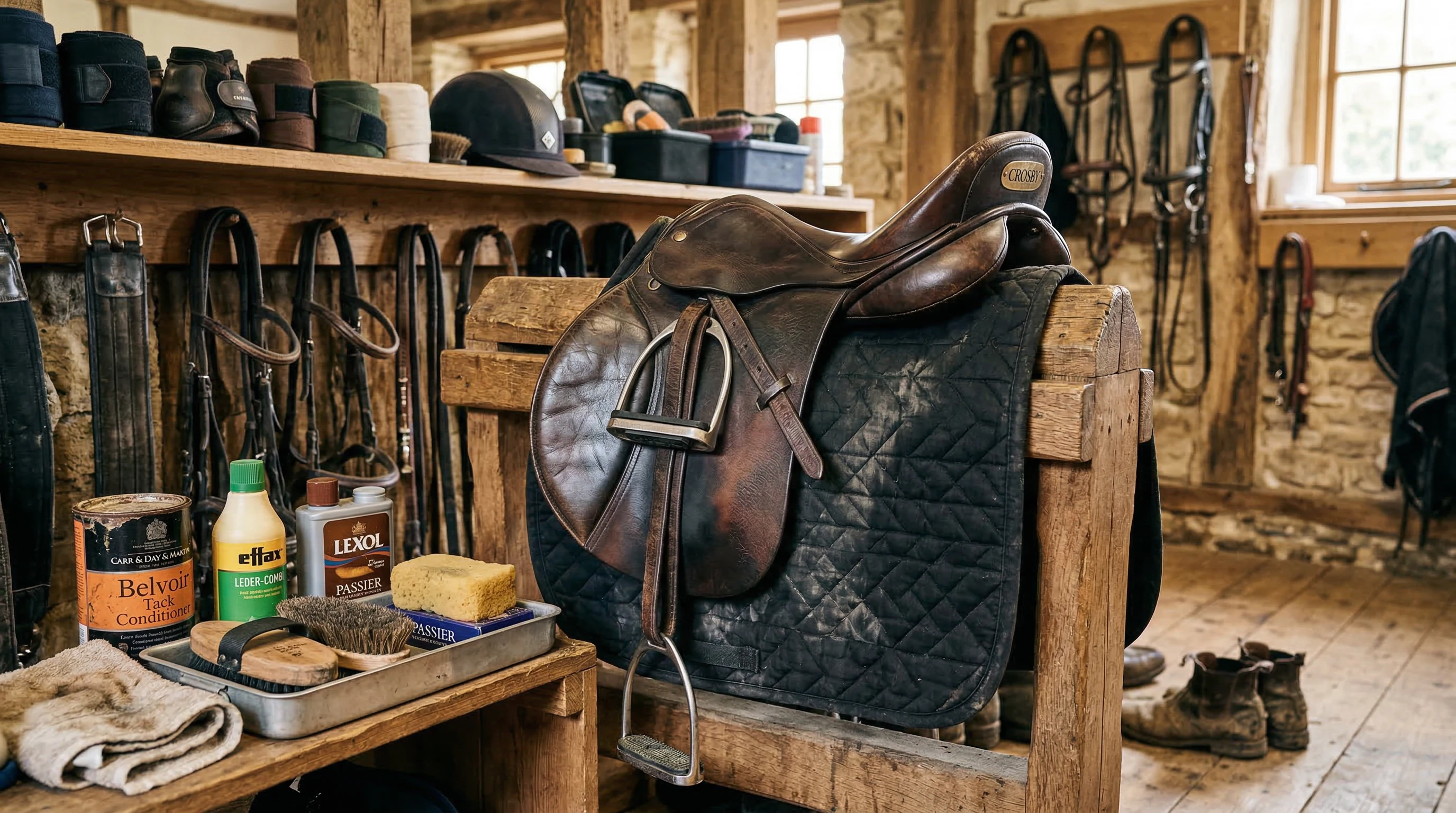
How Long Does a Crosby Dressage Saddle Usually Last?
Crosby is a classic name that shows up in a lot of barns, mostly because these saddles are famously durable. You might be surprised how many are still kicking after 15 or even 20 years. Still, understanding the lifespan isn’t just about the label. It takes into account leather quality, the care it gets, and how often it’s used.
Average Lifespan of Quality Leather Dressage Saddles
On average, a wellcaredfor leather dressage saddle, like a Crosby, runs strong for about 15 years. Some last longer, especially if they’re cleaned and conditioned regularly, but mileage may vary.
Heavy daily use shortens things a bit, while lighter, weekendonly riding can stretch that saddle’s lifetime to the upper range. Those using the saddle only occasionally might even see it last well beyond 20 years, turning it into a true heirloom that gets handed down or resold across several riders.
The key remains regular care and gentle storage when not in use. Proper leather care can dramatically extend a saddle’s life. I explain the best ways to protect leather from moisture and heat in my guide on weatherproofing techniques for saddles.
Why Crosby Saddles Often Last Longer Than Synthetic Saddles
Crosby uses topnotch leather, which naturally resists stretching and cracking when it’s maintained. Synthetic saddles made of plastic don’t hold up the same way. Once their stitching or foam gives out, repairs are limited, and comfort drops quickly.
Many riders say their leather saddle molds to them and their horse, which is hard to beat for comfort factor. Leather also ages with more character, and over time develops a patina that many riders come to love—a testament to quality and years of use.
Factors That Shorten Saddle Lifespan
Humidity, constant exposure to sweat and dirt, irregular cleaning, and being left in hot trailers all speed up wear. Leather can stiffen and crack, trees can warp, and panels can flatten out.
Less obvious but just as important: a changing horse or rider shape that puts pressure in all the wrong places. Additionally, storage in damp tack rooms or riding in heavy rain without proper drying afterwards will eat away at longevity.
Even the oil and conditioner you use matter—a mismatch for the saddle’s type of leather can degrade seam strength or cause spotting.
5 Signs It May Be Time to Replace Your Crosby Saddle
Even the sturdiest saddle won’t last forever. Here are the main flags that your Crosby might be ready for retirement instead of another patch job.
Keep these in mind each year when you look over your tack, and be honest about any big issues that come up after a fall, long period of disuse, or a dramatic change in your horse’s condition.
The Saddle Tree May Be Damaged
The tree is the saddle’s skeleton. If it’s cracked or twisted, repairs either get expensive or impossible. You might notice a hollow feel, strange movement in the pommel, or even hear a small creak when you put weight in the seat.
If you drop your saddle or your horse rolls on it, always check the tree before using it again. Sometimes even subtle noises, like unexplained clicking or flexing under pressure, are signs the tree’s structure is compromised.
The Billets Are Cracked or Unsafe
Billets are the straps that hold your girth. Once these start showing deep cracks or excessive stretching, repairs might not be worth it, especially if the rest of the saddle is looking tired, too.
Brittle billets can snap mid-ride, so this is a big safety issue. The failure of these key straps midlesson or at a competition can put you and your horse in a risky situation. Don’t wait—address questionable billets as soon as they’re spotted, never ignore a deep crack along these straps.
The Panels Are Uneven or Compressed
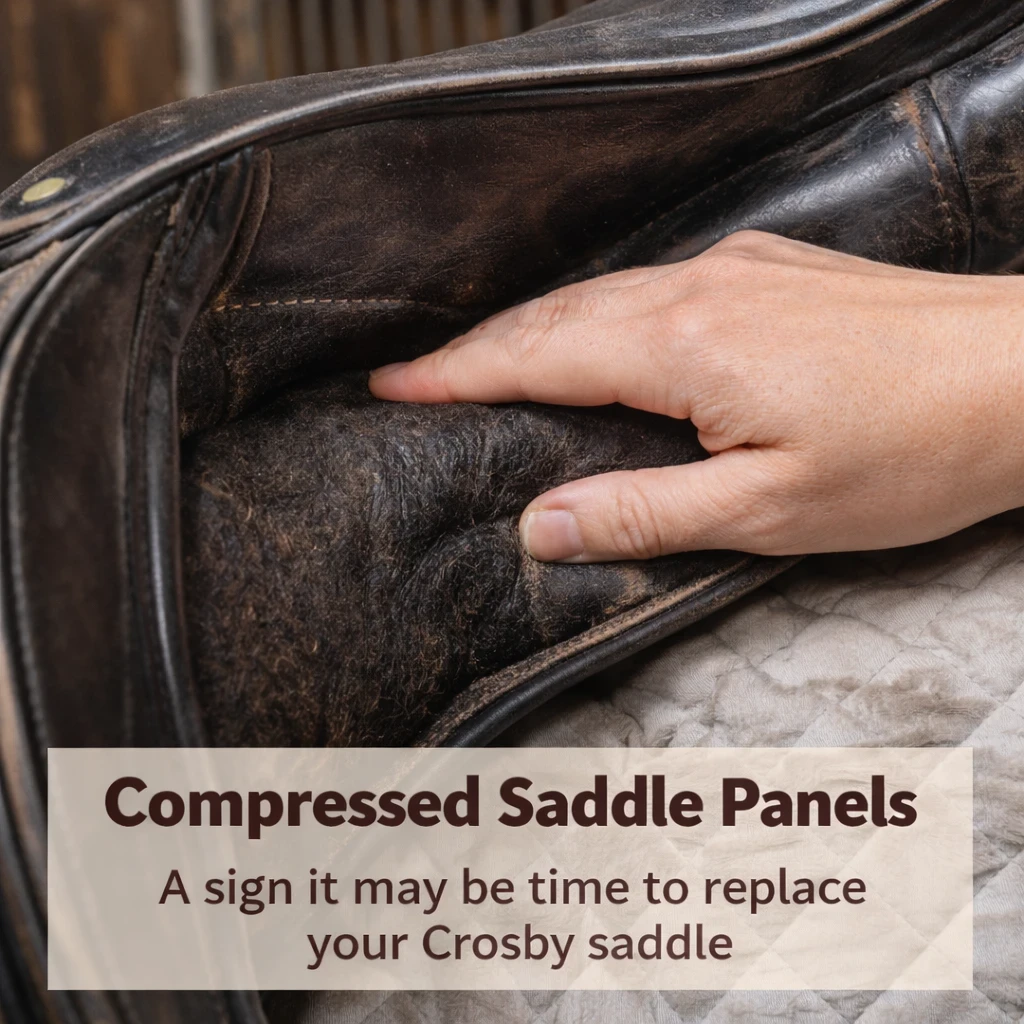
The panels underneath the saddle are supposed to support your horse’s back evenly. If you’re feeling more pressure on one side, or notice visible lumps, compressed spots, or flattened flocking, this can pinch your horse and cause soreness.
Sometimes panels can be reflocked, but past a certain point, too much reworking might just call for a new saddle. Always watch for peaking or sagging areas—run your hands along the underside of the saddle, and if it feels bumpy or thin in places, it’s likely time to address the panel condition.
The Saddle No Longer Fits Your Horse
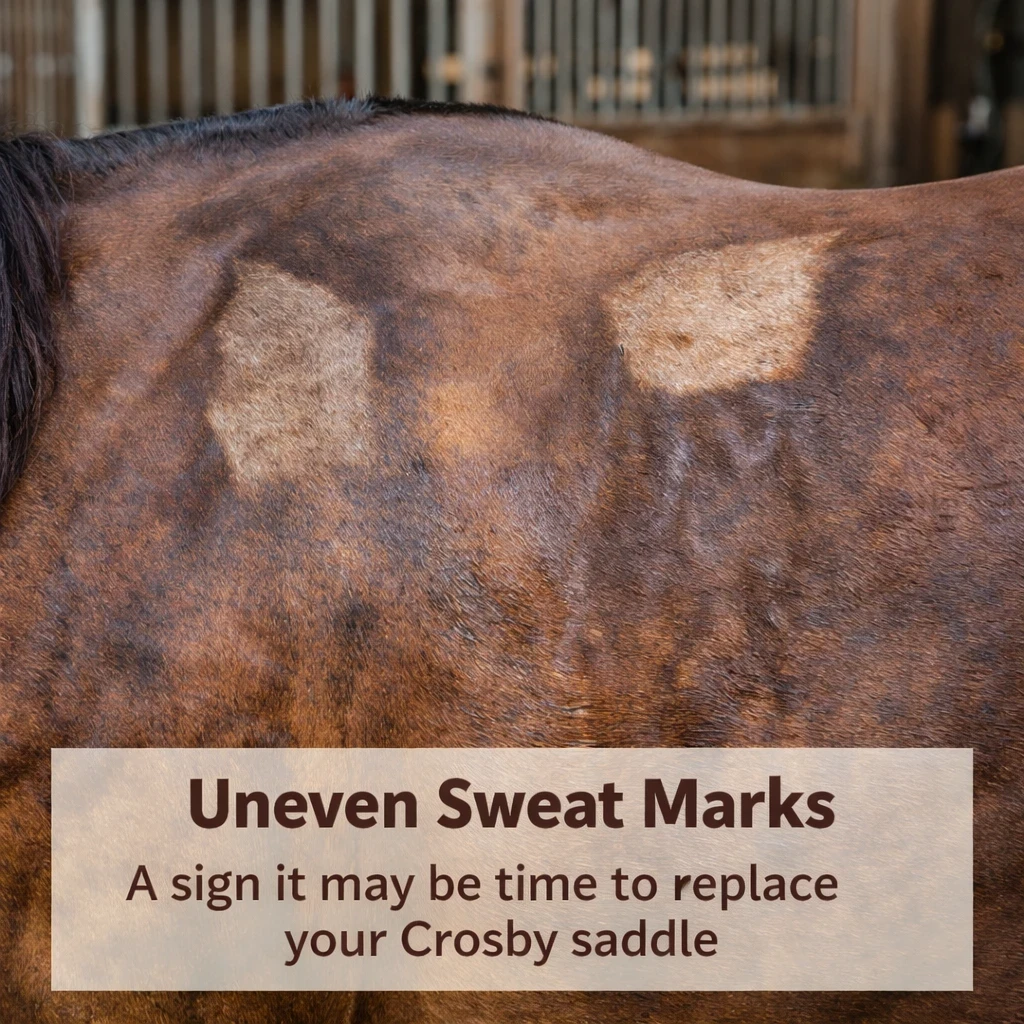
Maybe your horse’s withers are poking through, or you’re suddenly getting uneven sweat marks. Muscles develop, backs sink with age, or a horse changes shape after time off.
If your old Crosby fit perfectly at one point but now seems to slide or rock, or your horse objects to being saddled, it’s likely time to upgrade or get a better fitting option, especially as horse comfort is key for progress in training.
If you’re unsure how to evaluate saddle fit, my dressage saddle fitting guide walks through simple checks you can do at home. This isn’t a reflection of poor care—it’s just the nature of horses changing over the years.
You No Longer Ride Comfortably in the Seat
Rider fit matters, too. If you’re suddenly locking your hips, sliding down a slope, or feeling cramped in the seat, something’s changed. Riders who develop a deeper seat or change disciplines (like moving from lowerlevel dressage into higherlevel work) might outgrow their original seat size or shape preferences. The saddle must support your growth as a rider, or you risk discomfort and a less secure position in the ring or on the trail.
When a Crosby Saddle Can Be Repaired Instead of Replaced
If the core structure is still solid, there’s a good chance you can keep your saddle in play with repairs. Here are the most common repairs worth considering before hunting down a new saddle.
Replacing Billets
Replacing worn billets is a straightforward, affordable fix. Almost any saddler can handle it. New billets mean a safer ride with no surprise breakage. If your saddle is fit well otherwise, it’s a worthy repair. Most shops will let you choose between webbing or leather replacements, and it’s a quick job that can save you hundreds if the rest of your saddle is in good shape.
Reflocking Saddle Panels
Panels lose their spring over time, but a professional can remove old wool, add fresh flocking, and reshape the panels for a balanced fit. This is a service I recommend every few years with regular riding.
Flocking adjustments can also address minor fit changes in your horse, extending saddle life without huge expense. Don’t be afraid to ask your fitter what they recommend for your particular Crosby and riding regimen.
Professional Saddle Tree Inspection
If you think the tree might be iffy but it’s not obviously broken, have it inspected by a qualified saddler. Sometimes, what feels like a tree issue is a problem with loose rivets or minor metal flex.
Get it checked before retiring your Crosby outright.
Qualified professionals will sometimes press, bend, and flex the saddle to spot subtle internal shifts, saving you from unnecessary replacement in some instances.
How Horse Shape Changes Affect Saddle Fit
Your horse is constantly changing shape, and that affects saddle fit more than many people realize. Here are the situations that sneak up on riders most often:
Young Horses Gaining Muscle
Training and muscle gain can lift the back and round out the topline. A saddle that fit a narrow three-year-old Thoroughbred may pinch once the horse is in regular work as a six-year-old. Pairing regular fit checks with conditioning routines keeps things comfortable as your horse grows up and fills out.
Understanding how saddle tree shape affects fit can also help riders avoid pressure points. My guide on how to choose the right English saddle tree type explains the differences.
Older Horses Losing Topline
Aging horses often lose muscle along their spine. Saddles that used to fit snugly might now tip forward, squish the withers, or bridge along the back, causing sore spots. Regular attention to their body changes—and prompt action if your saddle no longer matches their new contour—will make your horse happier and more willing to work.
Weight Changes and Seasonal Conditioning
Horses on rest come back broader, and horses in heavy work may slim down. Even a change in hay, feed, or turnout time can quickly switch your horse’s saddle needs. Checking your Crosby’s fit every season is a good habit.
Many riders skip these regular assessments, only to be surprised by signs of discomfort months down the road. Make it part of your checklist every time seasons change or training ramps up.
How to Check If Your Crosby Saddle Still Fits
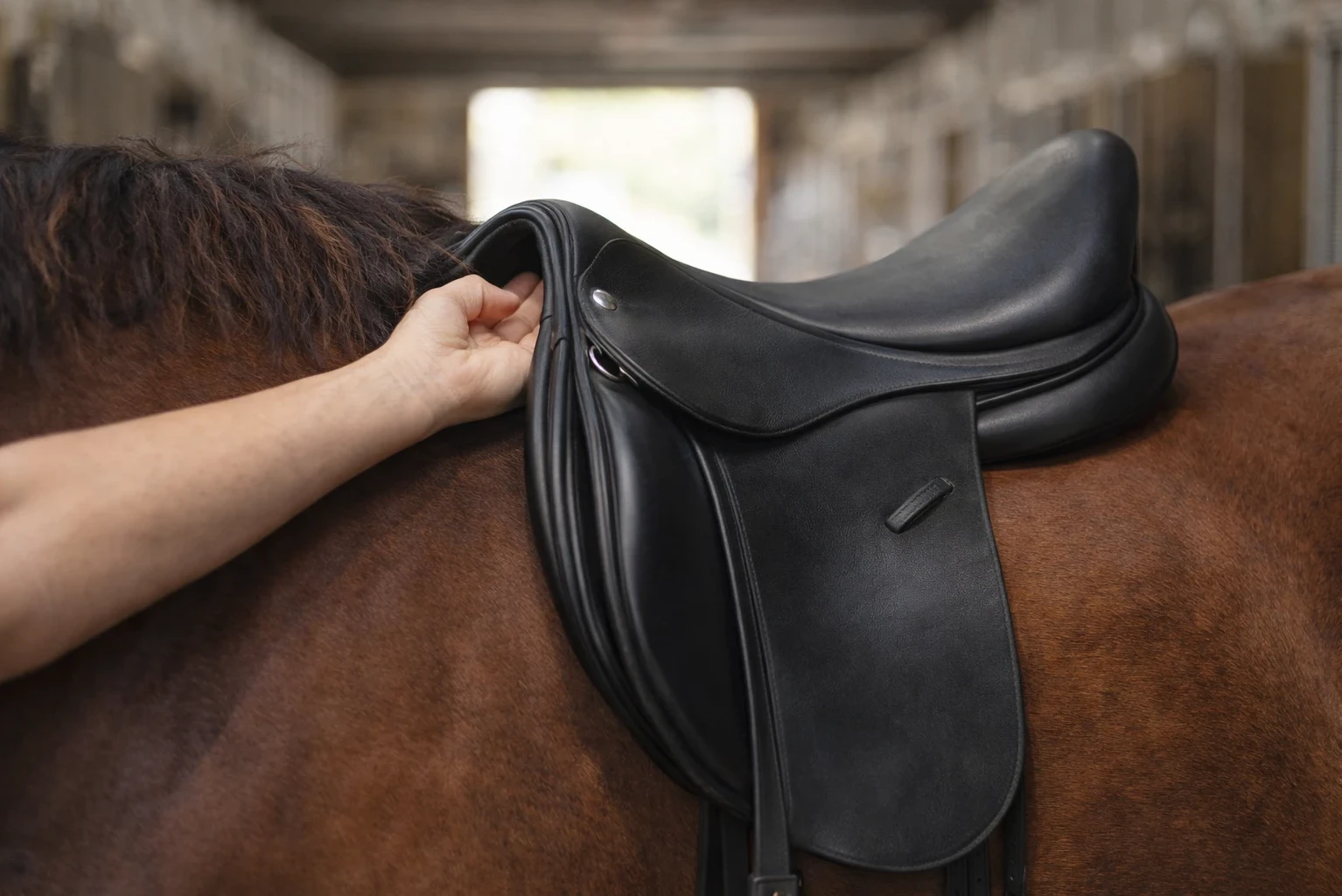
If you’re not sure about fit, there are a few simple checks you can do at home that work pretty well before you spring for a saddle fitter visit.
Checking Wither Clearance
Place the saddle gently on your horse’s back without a pad, then girth it up. Look for at least two fingers of space between the pommel and the withers, both standing still and with a rider mounted.
If it’s squishing down tight, things are too close for comfort. Insufficient clearance not only rubs the withers but can compress nerve tissue, leading to longterm soreness or behavioral problems.
Looking for Even Sweat Marks After Riding
Take a look under your saddle after a ride. Sweat patterns should be fairly even, with no dry spots or heavy patches. Uneven sweat usually means uneven pressure, which can spell discomfort for your horse.
Watch especially near the shoulders and back of the panels—dry spots surrounded by sweat indicate a bridging issue, while dark, overly wet patches point to pressure rubs or compaction.
Checking Panel Contact and Balance
Slide your hand under the panels, front to back, and feel for even contact. If you find bridging (a gap in the middle), slippage, or notice the saddle tips backward or forward when you ride, you likely need a new fit, or sometimes a new saddle.
For more detailed steps, check out my full dressage saddle fitting guide for more ways to check fit at home. Checking from both sides after mounting and riding a little helps you catch subtle imbalances that might be missed during a quick tackup.
Is It Worth Repairing an Older Crosby Saddle?
Sometimes repairs keep your Crosby going strong for a few years, but other times, putting that money toward a replacement is a smarter choice.
Cost of Common Saddle Repairs
Simple repairs like billet replacement cost between $100–$200. Reflocking is usually around $200–$300. Repairing a cracked tree or replacing panels might jump over $500, which is where repair stops being costeffective.
It’s best to compare the quote for all needed repairs with the cost of a good used Crosby. Don’t forget to factor in how many years you expect your current saddle to last after those repairs are done.
When Repairs Make Sense
If your saddle tree is solid, leather’s in good shape, and it fits your horse well, stick with repairs. Classic Crosby models are known for holding value when well-maintained.
In many cases, fixing up an older, trusted saddle is less expensive and more reliable than breaking in a brandnew one of unknown quality—especially if the repairs are minor in nature.
When Replacement Is the Better Investment
When you’re facing multiple major fixes, like a bad tree, damaged panels, and thinning seat, those costs start adding up fast. In these cases, shopping for a gently used or new Crosby can give you both comfort and peace of mind. If you’re comparing newer models, you can check current availability and pricing for Crosby dressage saddles here.
A newer saddle will offer updated features, fresher leather, and a more precise fit for both you and your horse.
What to Look for When Replacing a Crosby Dressage Saddle
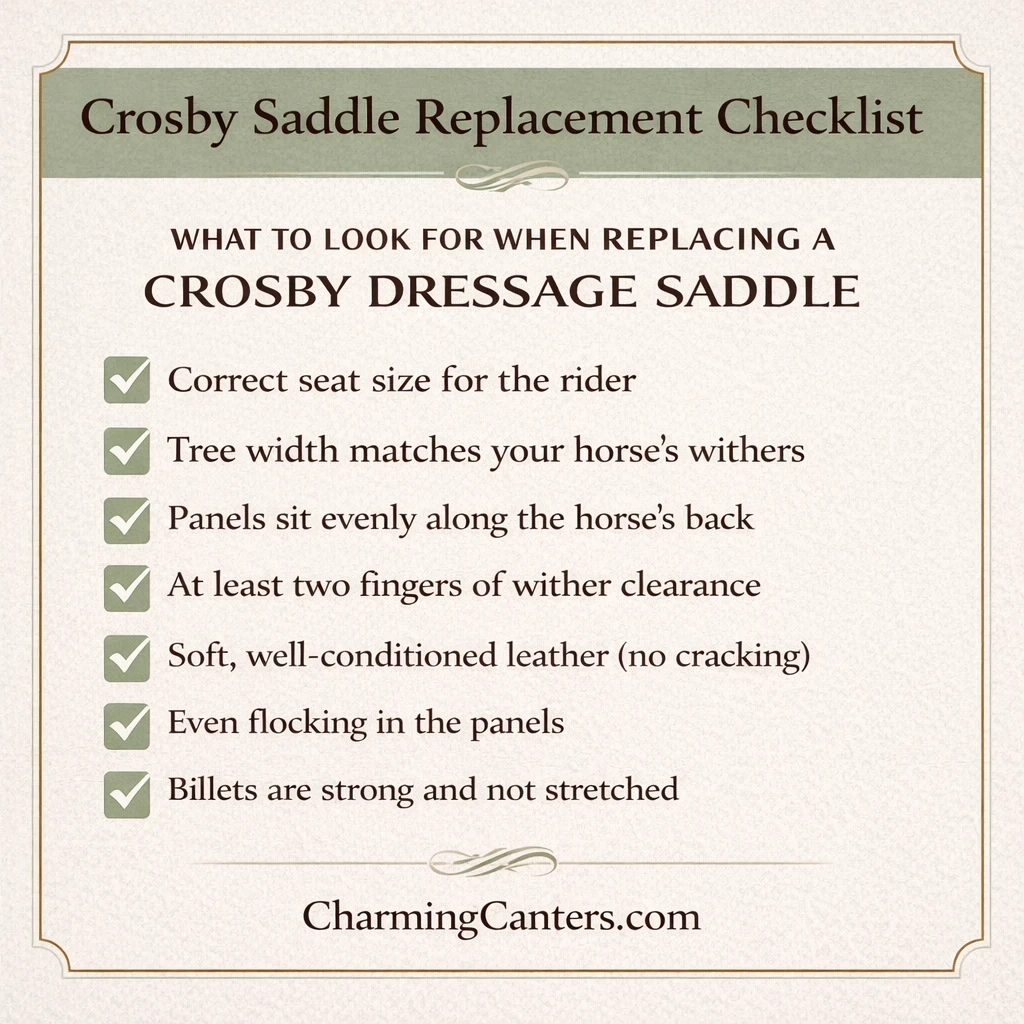
If you decide to shop for a new or used Crosby, there are a few details that deserve a closer look.
Choosing the Correct Seat Size
The seat should let you sit deep, with a hand’s width behind your bum and no pressure at the pommel. Doublecheck size—your riding comfort depends on it! People often try to save money by compromising on seat size, but an illfitting seat will cause more discomfort and frustration in the long run.
Checking Tree Width and Gullet Size
Tree width needs to match your horse’s wither shape. Crosby offers a range of options, so grab a flexible curve to measure your horse or work with a saddle fitter for the best match. Riders comparing models may also find my guide on how to choose the right Crosby dressage saddle helpful before buying.
Don’t rely solely on narrow, medium, or wide labels—they’re not universal between brands. Having accurate measurements for your specific horse ensures the new saddle fits both horse and rider from day one.
Leather Quality and Panel Design
Pick a model with soft but sturdy leather, and check that the panels are softly padded and sit evenly when you place the saddle on a flat surface. For more on this, see my Crosby saddle review page with handson examples.
Feeling the texture of the leather, checking for suppleness without brittleness, and looking at even color throughout gives you clues about overall care and past use of any used saddle.
Final Thoughts: Knowing When to Replace Your Crosby Saddle
Deciding to replace your trusty Crosby isn’t always easy, especially if it’s carried you through so many chapters already. Safety and comfort for both horse and rider come first.
If your saddle has seen better days, causes fit woes, or just doesn’t feel right anymore, it’s probably time for a change. If you’re considering upgrading, you can check current availability and pricing for Crosby dressage saddles here to compare models and see what riders are using today.
Give yourself permission to upgrade; your horse and your ride will thank you. You’ll find your rides smoother, your horse happier, and your time in the saddle even more rewarding with a wellfitted, newer Crosby.
Keep giving your gear a close, honest look, and don’t be afraid to change things up when it’s time—you and your horse deserve the best with every ride. Did you find this post helpful? If so, please leave your comments below!