
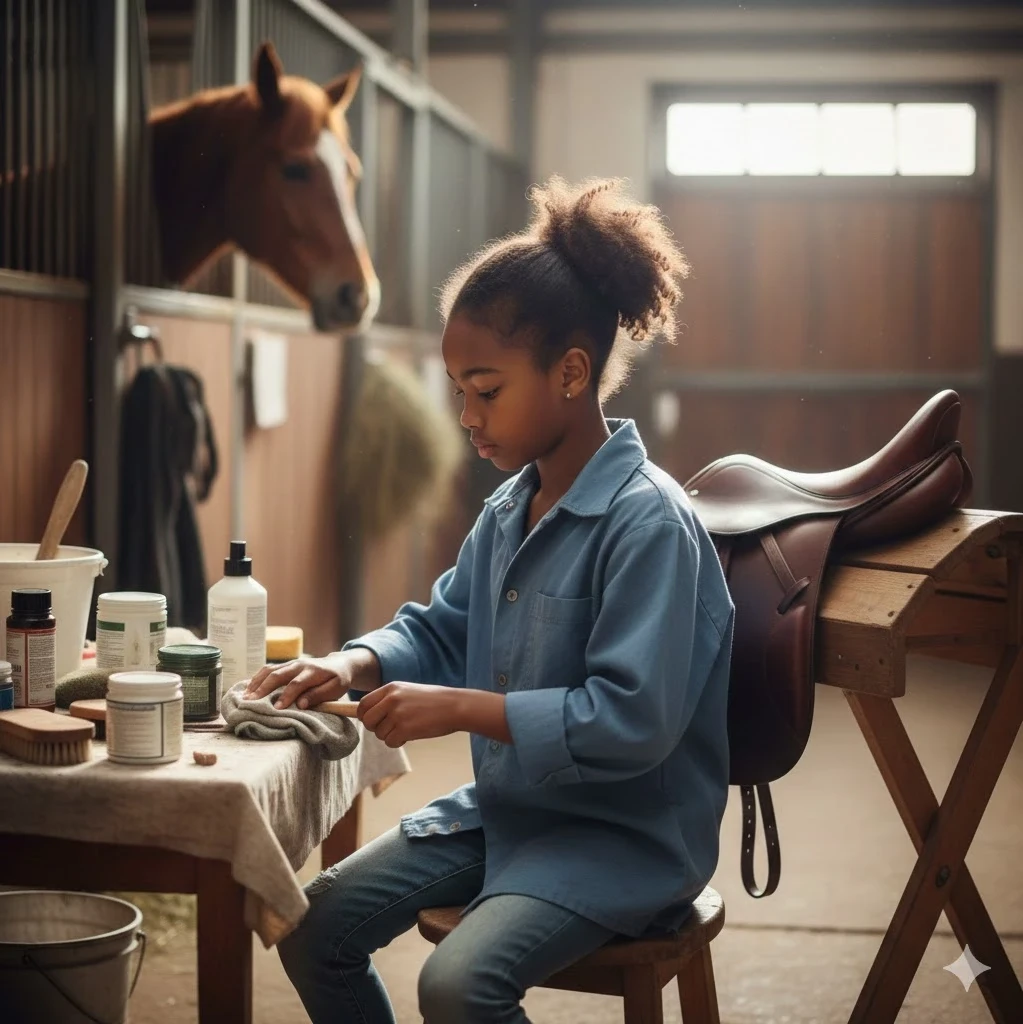
Weatherproofing techniques for saddles are essential for protecting your investment from moisture, temperature changes, and everyday wear—especially when caring for a youth or all-purpose English saddle used year-round.
Weatherproofing leather saddles is a topic that tends to fly under the radar, but from my own time around barns and trails, I can tell you that routine saddle care matters a lot more than many riders realize.
Leather is an awesome, natural material, but it isn’t invincible.
It needs some regular care to keep it working and looking its best. Protecting your saddle from rain, sun, and temperature swings can add years to its lifespan and save you repair costs, or sometimes even a replacement, down the line.
Just a friendly disclaimer for transparency sake. This post may contain affiliate links. I may earn a small commission if you purchase through my links, at no extra cost to you.
Why Weatherproofing Saddles Matters
Leather’s natural oils give it that signature feel and look. But weather—the daily up-and-down of rain, humidity, heat, and cold—can really mess with all that. If you’ve ever picked up a cracked, stiff saddle in the spring or come across moldy spots after a few rainy days, you know how annoying it is and how much effort it takes to bring it back.
Weatherproofing is about keeping leather flexible, safe, and comfortable for you and your horse. It’s also great for resale value and for keeping things working right if you ride in all kinds of conditions.
How Weather Affects Leather Saddles
Leather isn’t fully waterproof. It absorbs water, loses oils, gets stiff in the cold, and can even start developing mildew or mold if it’s left damp. UV rays from the sun can cause the leather fibers to break down and fade, which dries them out fast.
In my experience, areas with big swings in temperature or humidity do a number on saddles if you don’t have a good care routine.
Cold weather can stiffen leather and make it prone to cracking, and excessive heat dries it out just as quickly. Even dust and exposure to barn elements can gradually wear leather down, which means a little prevention goes a long way.
- Rain: Causes water stains, swelling, and can leach oils out of leather.
- Sun/Heat: Fades dye, depletes moisture and oils, and weakens fibers over time.
- Cold: Causes stiffness, shrinking, and cracking, especially if leather is already dry or not conditioned.
- Humidity: Attracts mold or mildew and softens leather, which messes with its shape and comfort.
Weatherproofing Techniques for Saddles
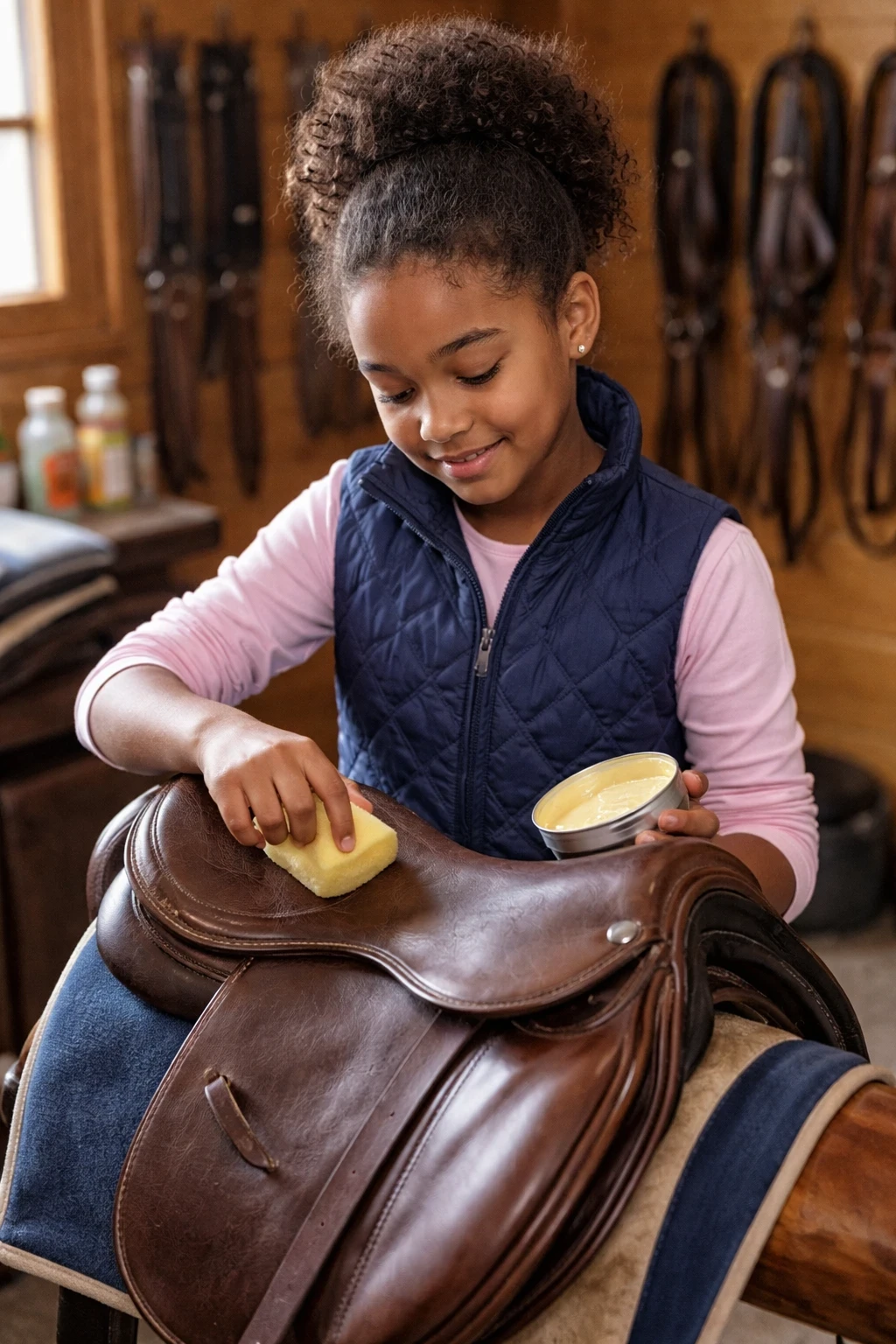
There’s a lot of advice out there, but I like sticking to a simple, honest routine. I rely on these steps to keep my gear safe, even when things get unpredictable with the weather. Consistent care doesn’t have to be complicated, and most important, it makes the saddle more comfortable for both your horse and you.
- Cleaning: Wipe down your saddle after every ride with a damp (not soaked) cloth to remove dust and sweat, then let it air dry away from direct heat.
- Conditioning: Leather conditioner is your friend. Use a small amount about once a month in dry weather, or after exposure to rain. Oiling sparingly helps when it’s super dry, but putting on too much oil attracts dust and weakens stitching.
- Waterproofing: Modern waterproofing sprays or beeswax-based balms add a water-resistant barrier. Apply after cleaning and conditioning, focusing on seams and the seat area. Avoid silicone-heavy sprays; they can interfere with breathability and cause long-term damage.
- Mold Prevention: Air circulation is key. When storing, keep your saddle in a well-ventilated spot, and wipe with a diluted vinegar solution (just a splash in water) if you spot any mold.
- Cover It Up: Waterproof saddle covers or even a simple clean towel can help during sudden rain showers. They’re easy to toss on, especially if a storm is coming in fast.
Best Storage Practices in Different Climates
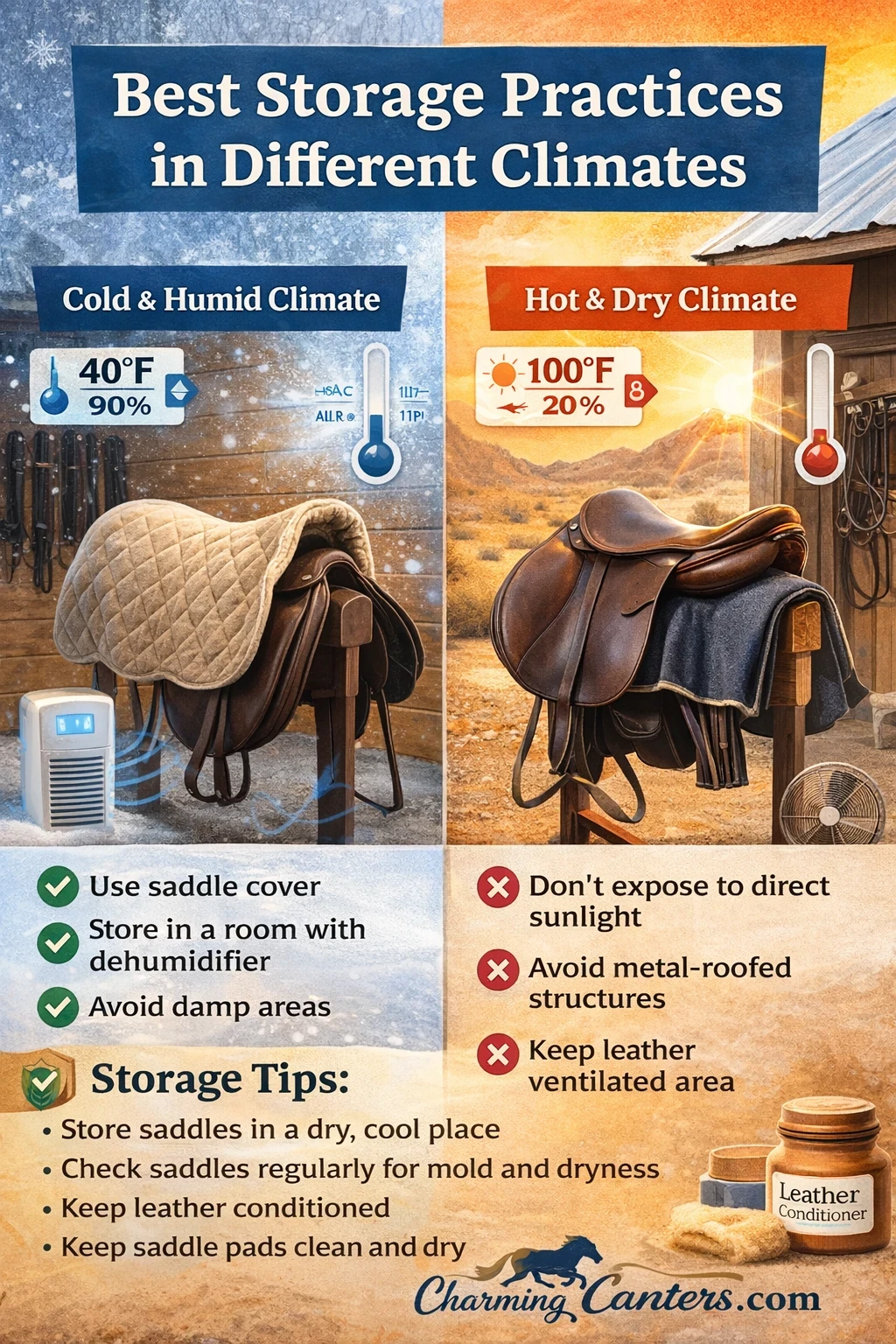
Where you live makes a big difference. I know folks in humid climates who swear by dehumidifiers in their tack rooms, and desert riders who fight sun and dust more than rain. Saddle care isn’t one-size-fits-all, so it’s smart to tweak your routine depending on your local conditions.
- Humid/Coastal Areas: Store saddles off the floor, use dehumidifiers if needed, and keep covers light so there’s airflow. Check for mold weekly.
- Cold/Wintry Climates: Avoid storing leather near heaters or direct heat sources, which can dry it out. Bring your saddle inside if the barn gets really cold or damp.
- Hot/Dry Regions: Store away from direct sunlight—a shaded, cool tack room is ideal. Condition more often when the air feels dry to the touch.
And in all climates, always hang your saddle on a wide, supportive rack to maintain its shape. A simple investment in the right rack saves a lot of heartache down the road. Dust covers and breathable sheets can also help control exposure to barn dirt and critters.
Daily, Weekly & Seasonal Weather-Protection Checklist
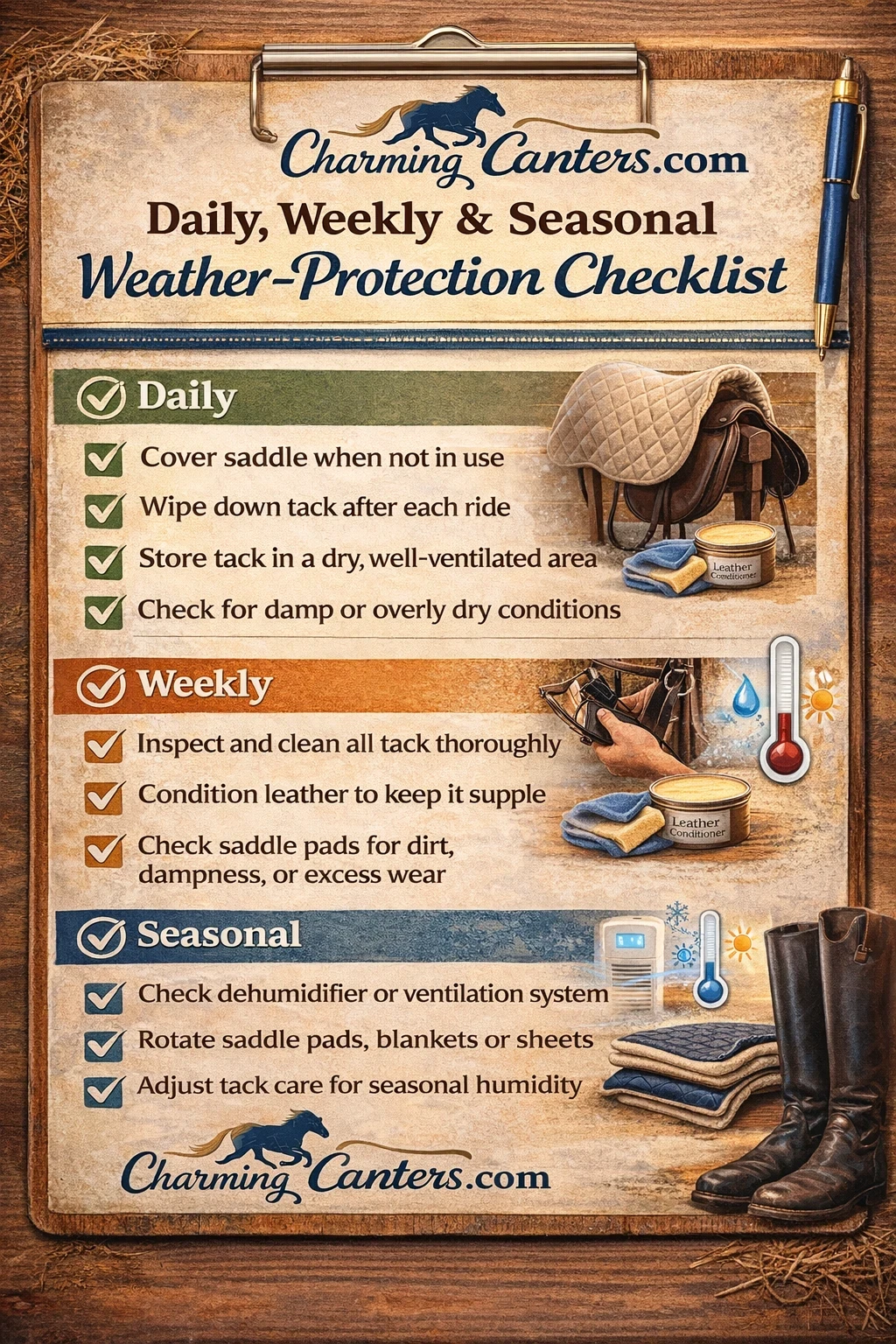
- Daily: Quick wipe-down, hang on a proper rack, cover when not in use or if it might rain.
- Weekly: Check for mold, dry spots, or dirt buildup. Reapply a water-repelling balm or spray if conditions have been rough.
- Seasonal (or after heavy weather): Full cleaning and conditioning, check stitching and metal fittings, and inspect the underside for soft spots or mildew. Air out thoroughly in a shaded area.
This kind of routine doesn’t just protect leather—it helps you spot a small problem before it becomes a big repair bill.
Common Weatherproofing Mistakes to Avoid
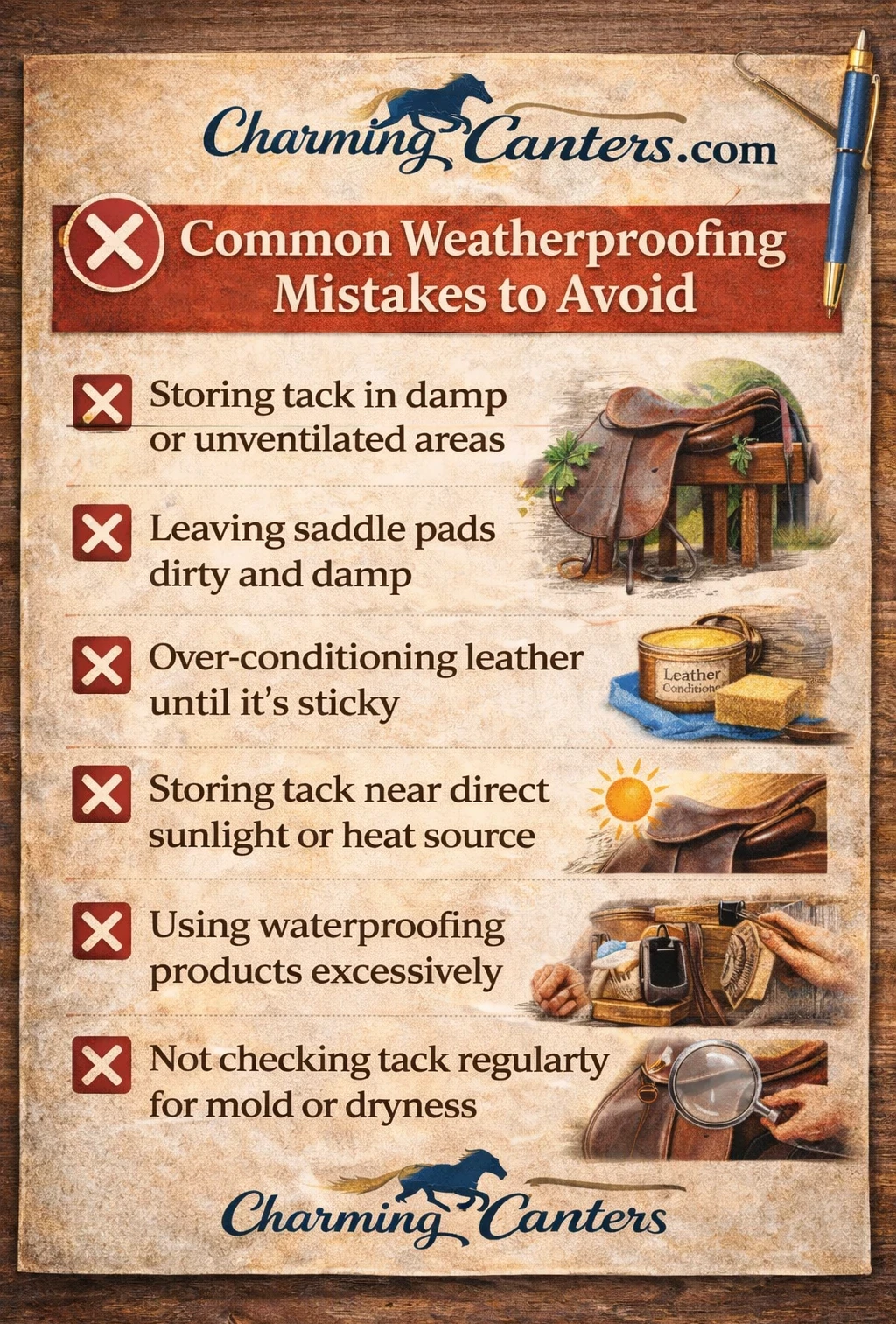
- Over-oiling or Under-conditioning: Too much product clogs leather’s pores, but skipping conditioning dries it out. Use products as directed and aim for balance.
- Ignoring Moisture: Storing a slightly damp saddle invites mold. Always let saddles dry naturally. Never rush the process with heat sources like hair dryers or heaters.
- Using Harsh Chemicals: Household cleaners, bleach, and strong soaps strip out oils and can make leather brittle.
- Skipping Routine Checks: Waiting until you see visible damage can mean it’s already too late for a simple fix. Small cracks and dry spots get worse quickly without attention.
Weatherproofing Tips for Youth and All-Purpose Saddles
Youth saddles and allpurpose models often use slightly different leather mixes or finishes, which sometimes makes care a bit easier, or a bit trickier. These saddles are more likely to see irregular use and get stashed away in damp corners. Being aware of how often these saddles are used—and how and where they are stored—is key to keeping them in shape.
- Check Smaller Parts: Stirrup leathers, billets, and flaps on youth saddles can dry or crack first. Condition these parts regularly even if you don’t see much obvious wear.
- Choose Lighter Products: Some heavy waterproofing waxes can be overkill for soft leathers used in everyday models. Stick to sprays or creams designed for softer grain leathers.
- Encourage Young Riders: Show kids and new riders how to cover and store saddles after riding to make it a habit early on.
Budget-Friendly vs Premium Protection Options
If you’re watching your wallet, you don’t need a huge investment. I’ve found a basic glycerin soap, a decent conditioner, and an affordable can of beeswax spray last ages and keep things in good shape.
There are also some solid DIY solutions for quick fixes, like using a slightly damp cloth and a bit of plain saddle soap, but remember that good leather deserves the right kind of care.
- Budget: Glycerin bar soap, mineral oil (in a pinch), beeswax-based waterproofing balm.
- Premium: Specialty leather cleaners, lanolin-rich conditioners, and branded waterproofing sprays that offer extra UV protection.
Sometimes, more expensive isn’t always better. But higher-end products can be worth it if your leather is custom, rare, or you ride in wild weather a lot. Premium products can add extra layers of protection and often have longer-lasting results, which is handy if you’re especially attached to your gear.
Signs Your Saddle Needs Immediate Attention
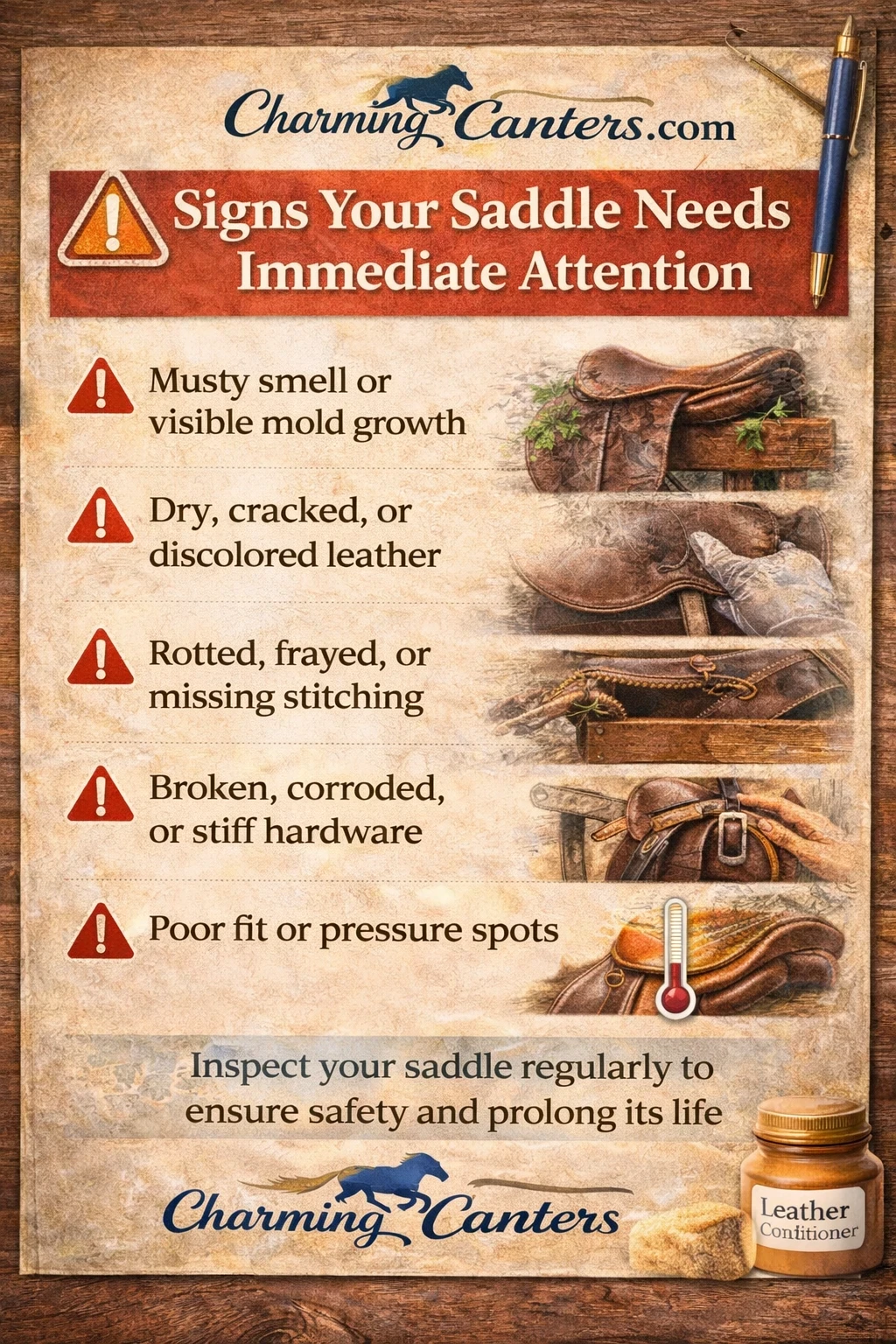
Keep an eye out for cracking, persistent mildew or a musty smell, or if the saddle squeaks or feels stiff even after conditioning. Other warning signs to check include loose stitching, rusted metal fittings, or a warped tree.
These often mean it’s time for some extra care, or maybe even a quick call to your favorite tack repair shop. Don’t ignore small details—the earlier you catch them, the easier and cheaper the fix will be.
Final Takeaway for Riders of All Ages
Taking an extra five or ten minutes each week to protect your leather saddle pays off huge in the long run. Besides looking after your investment, you’ll have a safer ride and a saddle that fits better and lasts longer.
If you’ve got questions, or you’re looking for product recommendations, drop me a message—I’m always happy to share more tips. And if you haven’t given your saddle a good check in a while, there’s no better time than now to kick your weatherproofing routine into gear.
Was this post helpful? If so, please leave your comments below.
This was such a thorough and practical read, and I really appreciate how you broke weatherproofing down into realistic routines instead of overcomplicating it. My youngest daughter loved to ride when she was in her teens. Saddle care is always important.
Your explanations around how rain, heat, cold, and humidity each affect leather differently really hit home—especially the reminder that damage often happens gradually, not all at once. I also liked how you emphasized consistency over perfection; those small habits like wiping down after rides and letting saddles air-dry properly really do make a long-term difference, especially for youth and all-purpose saddles that don’t always get daily use.
I’m curious—have you noticed certain waterproofing sprays or balms performing better in high-humidity areas versus dry climates, or does it mostly come down to frequency of care? And for riders juggling busy schedules, do you think a simplified “bare minimum” routine still offers solid protection if done consistently? This was a great reminder that saddle care isn’t just about preserving leather, but also comfort, safety, and respecting the investment we’ve made in our gear.
Hi Iris.
That’s such a sweet memory about your daughter riding. Those years go fast!
You’re right — leather damage usually happens slowly.
In humid climates, lighter conditioners and good airflow matter more than heavy balms (which can trap moisture). In dry climates, richer conditioners help replace lost oils. Sprays are fine for light rain, but consistency beats any single product.
And yes — a simple routine absolutely works: quick wipe after rides, air-dry fully, condition lightly every few weeks. Done consistently, that’s solid protection without overcomplicating it.
Hi Shalisha, this is such a good reminder as we head into the rainy season. I didn’t realize that silicone sprays could damage the leather’s breathability—I’ve definitely made that mistake before!
Quick question: If I get caught in a downpour at a show and my saddle gets absolutely soaked, is it better to condition it immediately while it’s damp, or should I wait until it’s 100% dry before adding any oil/balm? I’m always scared of trapping the moisture inside.
Hi Adrian.
Such a good question — and you’re right to be cautious about trapping moisture.
If your saddle gets soaked in a downpour, wait until it’s completely dry before conditioning. Applying oil or balm while the leather is still damp can seal moisture inside, which can lead to mildew, warping, or fiber damage.
Here’s the quick fix routine:
Gently blot off excess water with a clean towel (don’t rub hard).
Let it air dry slowly at room temperature — no heat, no sun.
Once it’s 100% dry, apply a light layer of conditioner if the leather feels stiff.
Rule of thumb: Dry first. Condition second.