If you’re venturing into the world of English riding, figuring out the differences between English saddles can be a bit of a puzzle. Whether you plan to jump, try dressage, or take up eventing, the right saddle has a big impact on your comfort and your horse’s performance.
I’m breaking down the basics of the different types of English saddles to help you find your way and ride with a lot more confidence.
Main Categories of English Riding Saddles
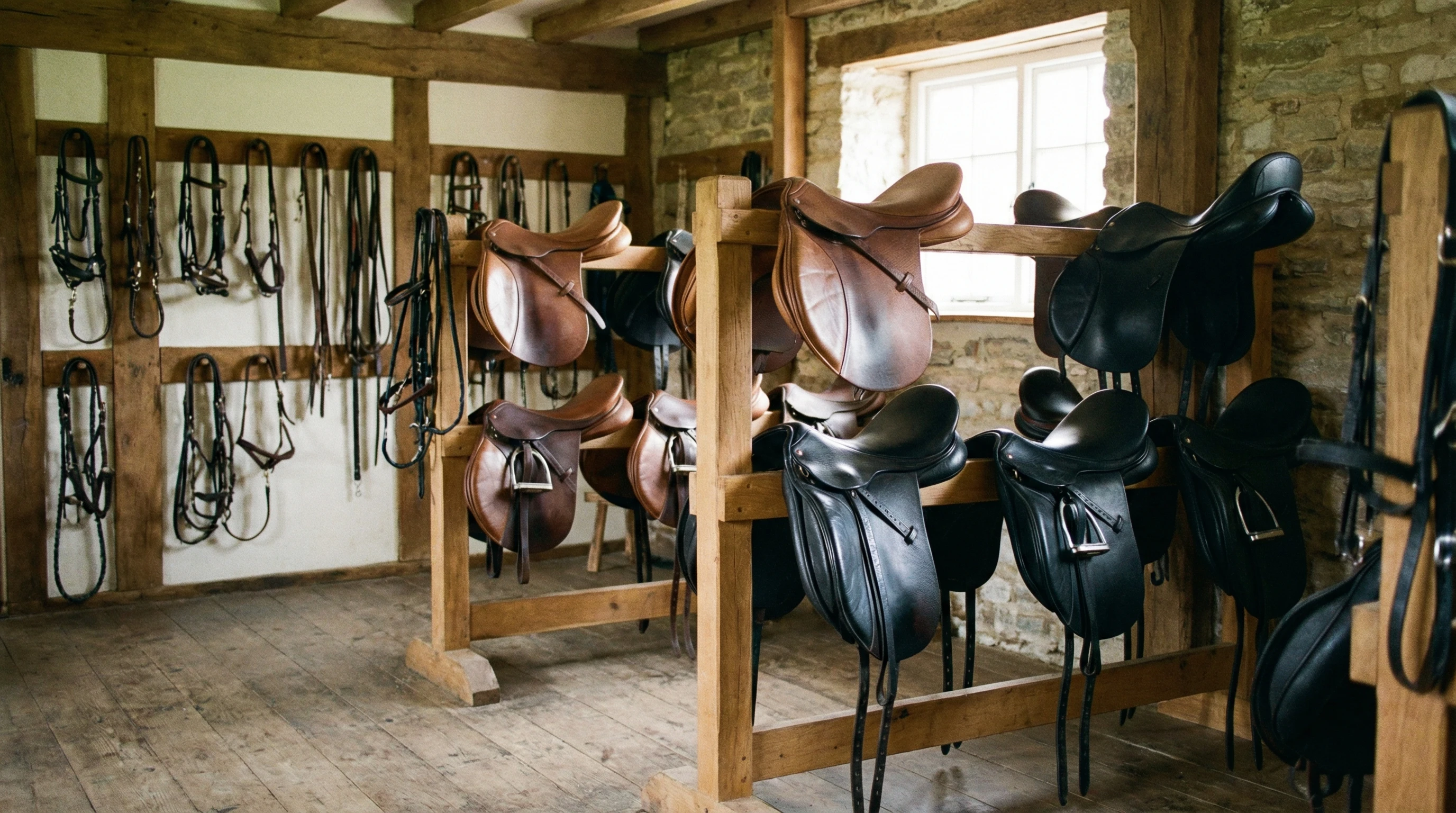
When most people picture English saddles, they think of something a bit flatter and lighter compared to Western saddles. English saddles are all about giving close contact with your horse, which is super important for balance and communication.
But within the English category, there’s a handful of specialized designs, each with cool features that make it worth considering depending on your disciplines and riding goals.
Here’s a quick rundown:
- All Purpose Saddles: Designed for riders who like to dabble in more than one discipline and want some flexibility.
- Jumping Saddles: Built for show jumping or hunters with forward cut flaps and slimmer seats.
- Dressage Saddles: Made for flatwork with deep seats and long, straight flaps.
- Eventing Saddles: Usually a mix or a set of both jumping and dressage saddles for different phases.
- Other Specialized Saddles: Like saddles for endurance, saddle seat, or polo.
All Purpose English Saddles: The Versatile Option
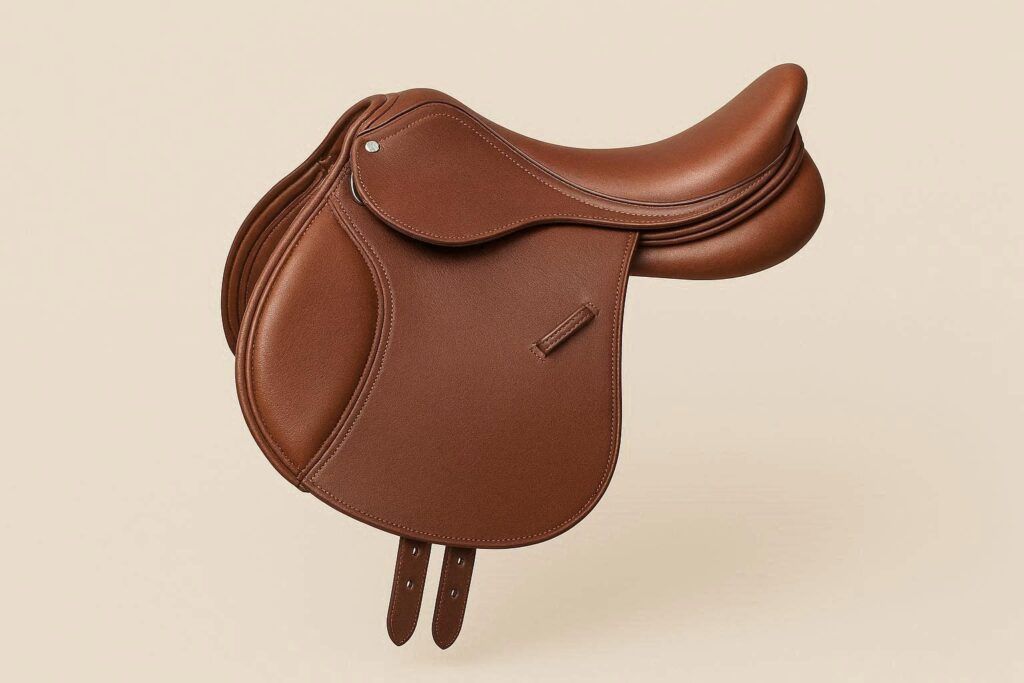
An all-purpose saddle (sometimes called a “general purpose” saddle) blends features from both jumping and dressage saddles. The flaps are cut slightly forward (but not as much as a jumping saddle) so you can adjust your leg from a longer dressage position to a short jump.
The seat is moderate, not too deep or flat, making it useful for trail rides, lessons, and local shows.
I find all-purpose saddles pretty handy for riders still figuring out their favorite discipline or folks who want a do-it-all option for riding inside and outside the arena. While you may outgrow its limitations if you specialize later, it’s a practical choice for the “jack of all trades” rider or for families sharing a saddle among multiple horses and kids.
They also tend to be easy to care for and are widely available both new and used, making them an excellent choice for someone new to English riding who is not ready to invest in a discipline-specific saddle quite yet. Most tack shops will carry several variations, so it’s easy to find something that works for you and your horse.
Jumping Saddles: For Taking Off Over Fences
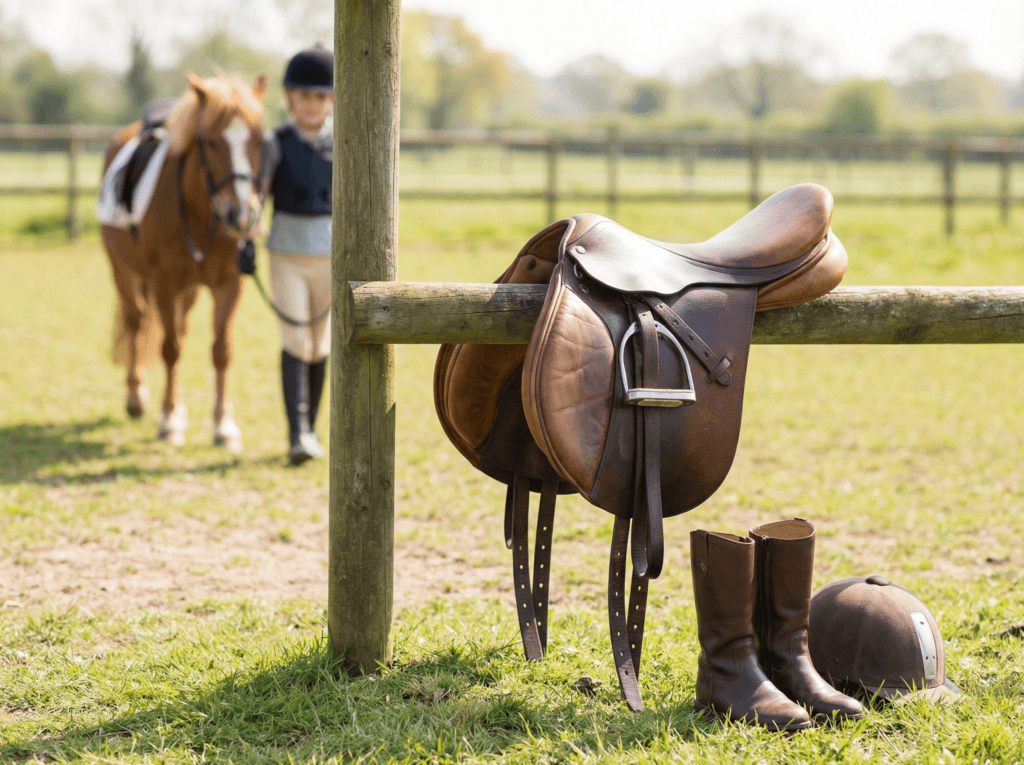
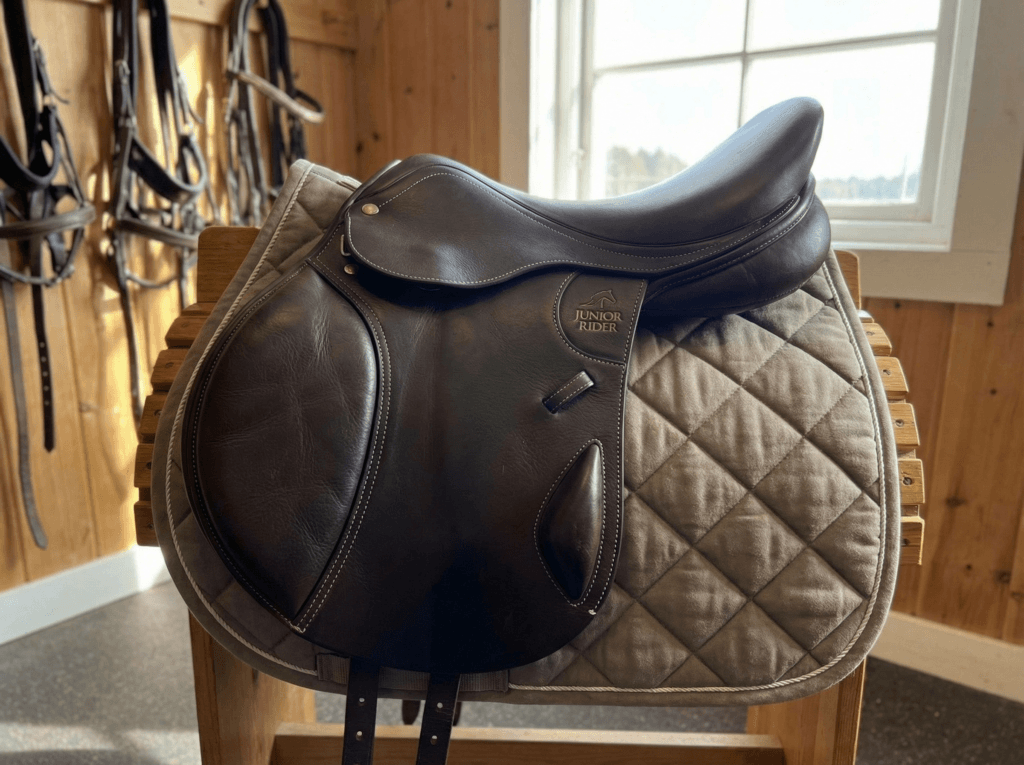
If you’ve ever watched show jumping or hunter rounds, you’ve probably noticed the rider perching more forward in the saddle. That’s because jumping saddles are tailored for these events with features that help you get up out of the tack and stay balanced as you approach or land over a jump:
- Forward cut flaps let you shorten your stirrups and shift your leg forward easily.
- Shallower seat keeps you agile so you can adjust your position quickly while jumping.
- Knee and thigh rolls offer extra support, especially as you tackle bigger jumps.
Many jumping saddles are on the lighter side and have soft padding to help take the shock as you land. Hunter/jumper and close contact saddles are subtypes in this family, with subtle differences; hunter types tend to have a plainer look, while jumper saddles might have more prominent knee blocks for security.
If you’re spending a lot of time over fences or hope to compete, a jumping saddle can really help you stay safe and effective. Additionally, these saddles are designed so the stirrup bars are placed a bit farther forward, making it easier for riders to adopt and maintain that all-important two-point position over jumps.
If cross rails and oxers are part of your regular riding, having a specialized jumping saddle gives you peace of mind and a better ride overall.
Dressage Saddles: For Flatwork and Precision
Dressage is all about communication and subtle cues, so these saddles are built for close contact and a deep, centered seat. Dressage saddles usually have a few features that really set them apart:
- Long, straight flaps, helping your legs hang down naturally for a longer line.
- Deep seat, keeps your hips directed and stable for more refined aids.
- Minimal padding along the knee so your thigh stays as close as possible to your horse.
Many riders pick a dressage saddle when they want to dedicate themselves to flatwork, but I also see them come up in other classes where you want to show off your horse’s movement and balance.
These saddles tend to have a more upright look and feel seriously supportive if you’re working on your seat and leg position. Advanced models may incorporate unique materials for lighter weight or extra grip.
Riders often comment that switching to a dressage saddle makes it easier to feel your horse’s back muscles in motion, making communication between you even more subtle.
For anyone hoping to train for higher-level dressage tests, a proper dressage saddle is practically essential and will let you focus on accomplishing those precise movements with your equine partner.
Eventing Saddles: Ready for Anything

Eventers have to do a bit of everything: dressage, show jumping, and cross-country. Eventing saddles are often “dual-purpose” styles, or riders might keep two saddles, one for dressage and one for jumping, if they compete at higher levels.
For amateur eventers or lower-level riders, a well-designed all-purpose or eventing saddle can help with most phases. If you start moving into bigger fences and more advanced dressage, though, having separate saddles is a game changer.
These usually combine the best features of both worlds: enough forward cut for jumps, but enough support for flatwork. It’s not unusual to see eventers use an all-purpose saddle early in their riding adventure, gradually adding or switching to discipline-specific saddles as skill and competition level increases.
Some brands even offer eventing saddles with easily adjustable flaps or removable knee/thigh rolls to really mix things up depending on the phase you’re tackling that day.
Lesser Known Types: Specialized English Saddles
While the big three—jumping, all-purpose, and dressage—cover most riders, there are a few other styles you might see if you’re exploring particular interests:
- Endurance Saddles: Built for super long rides and designed to keep you and your horse comfortable for hours in the saddle. The materials are often lighter and more cushioned, and the design focuses on airflow and flexibility. Riders tackling trail challenges or competitive endurance rides depend on these features for long-term health for both themselves and their horse.
- Saddle seat Saddles: Used for high-stepping breeds (like Saddlebreds) and have a flatter, longer seat to help show off action gaits. These saddles make it easy for riders to sit farther back, accentuating the dramatic movement of show horses during competitions.
- Polo Saddles: Super flat and built for quick movement, letting players stand and swing with ease. These have minimal padding and a compact fit, engineered to help the rider maneuver rapidly as needed in polo matches where agility and speed are key.
These saddles are much more specialized, so if you find your interests taking you down a unique path, it’s worth checking out these options. Ask your trainer or a knowledgeable tack shop worker if you’re curious about a discipline outside the most common ones.
Hands-on experience is the best way to figure out what works for both you and your horse’s body type and skills.
Things to Check Before Choosing a Saddle
Picking a saddle is more than matching it to your riding style. A comfortable fit for both horse and rider is really important for safety and avoiding soreness or injury. Here are a few factors worth paying extra attention to:
- Tree size and shape: The “tree” is the frame of the saddle. The wrong width or shape can create pressure points on your horse’s back or make it hard for you to sit evenly.
- Seat size: Saddles come in different seat sizes for a reason. Too small and you’ll feel cramped, too big and you’ll be sliding around.
- Flap length and placement: Your leg length matters. Riders with long thighs often need a longer or more forward-cut flap, especially for jumping or eventing.
- Padding and balance: Some horses have high withers, broad shoulders, or uneven backs. Panels and pads can sometimes help, but it’s best to make sure the saddle itself is balanced from the start.
Careful research or a fitting session with a saddle fitter helps you make the right call. Saddles are pretty personal for horse and rider, so trying several models and riding in them first is a smart move.
Always check your horse’s back after riding for pressure marks; a comfortable horse is a willing partner, and poor saddle fit is a top reason for many equine behavior and performance issues.
Asking for help from experienced riders or saddle specialists can save you from years of discomfort and wasted money on ill-fitting saddles.
Common Questions About English Saddles
Here are a few questions I get from riders just starting to find their way through all the saddle options:
Question: Can I use an all-purpose saddle for both jumping and dressage?
Answer: Yes, but you might hit some limits if you start getting serious in either discipline. All-purpose saddles are great for casual or beginning riders, but a dressage or jumping-specific saddle gives you extra leg support and balance as your skills improve. Switching to a discipline saddle as you progress will help you perform better and ride more comfortably in more advanced lessons or shows.
Question: Why do specialized saddles matter so much?
Answer: Different disciplines ask for different balance, movement, and positioning from both horse and rider. The right saddle makes those patterns feel more natural, safer, and comfortable for longer rides or higher-level moves. Specialized saddles are engineered to fit these needs as closely as possible, which helps improve your riding and creates a happier experience for your horse.
Question: How do I know my saddle actually fits?
Answer: A good saddle should sit evenly on the horse’s back, allow space over the withers, and stay stable as you ride. You shouldn’t see dry spots or ruffled hair after riding, and you should feel balanced and supported in the seat. If in doubt, a pro saddle fitter can check the fit for you. Remember to check in every few months as both your horse’s shape and your riding style may change over time.
Final Thoughts on Navigating English Saddles
Finding the right English saddle really depends on your riding style, your horse’s shape, and your own comfort and needs. All-purpose saddles are awesome for flexibility, while discipline-specific options can help fine-tune your seat and get more out of your rides.
Taking time to understand the differences sets up both horse and rider for happier, more comfortable rides, and a lot more fun in the saddle.
Whether you’re just getting started or ready to step things up, knowing the basics gives you an edge in making a smart choice. Keep asking questions, stay curious, and happy riding!
Was this post helpful? If so, I’d love to hear your comments below. And if you’ve decided you want to try Western riding, please check out my site, Horse Saddle Comparison. I review new and used Western saddles for all disciplines.
This is a fantastic and clear breakdown of English saddle types! As someone who has moved from a general-purpose to a dressage saddle, this guide perfectly articulates the “why” behind the design differences. The explanation of how flap length and tree width affect rider position and horse movement is particularly helpful for anyone making that first specialized purchase. The graphics and side-by-side comparisons make it incredibly easy to understand. A truly valuable resource for both new riders and experienced equestrians looking to refine their tack.
Thanks so much for your thoughtful comment! I’m glad the breakdown and visuals helped clarify the differences -and congrats on your move into dressage! It’s great to hear the explanation of flap length and tree width was useful. Happy riding!
I am extremely interested in learning as much as possible about choosing the best saddle(s), since I ordered my new young horse my family are wanting to start riding as well.
You have provided a nice variety of beautiful English Riding Saddles, I was wondering are English Riding Saddles a good choice for people of all sizes and ages?
After reading your article I understand how important choosing the right saddle is not only for the rider, but also for the horse as well.
Jeff
Hi Jeff. Thanks for your question.
Absolutely! Yes. English riding saddles can be a great choice for riders of many ages and sizes. The key is choosing the right style and fit for both the rider and the horse. English saddles come in a wide range of seat sizes, flap lengths, and designs (like all-purpose, close contact, or dressage), which makes them very adaptable for children, teens, and adults. When properly fitted, they offer good balance, comfort, and close contact, making them suitable for beginners and experienced riders alike.