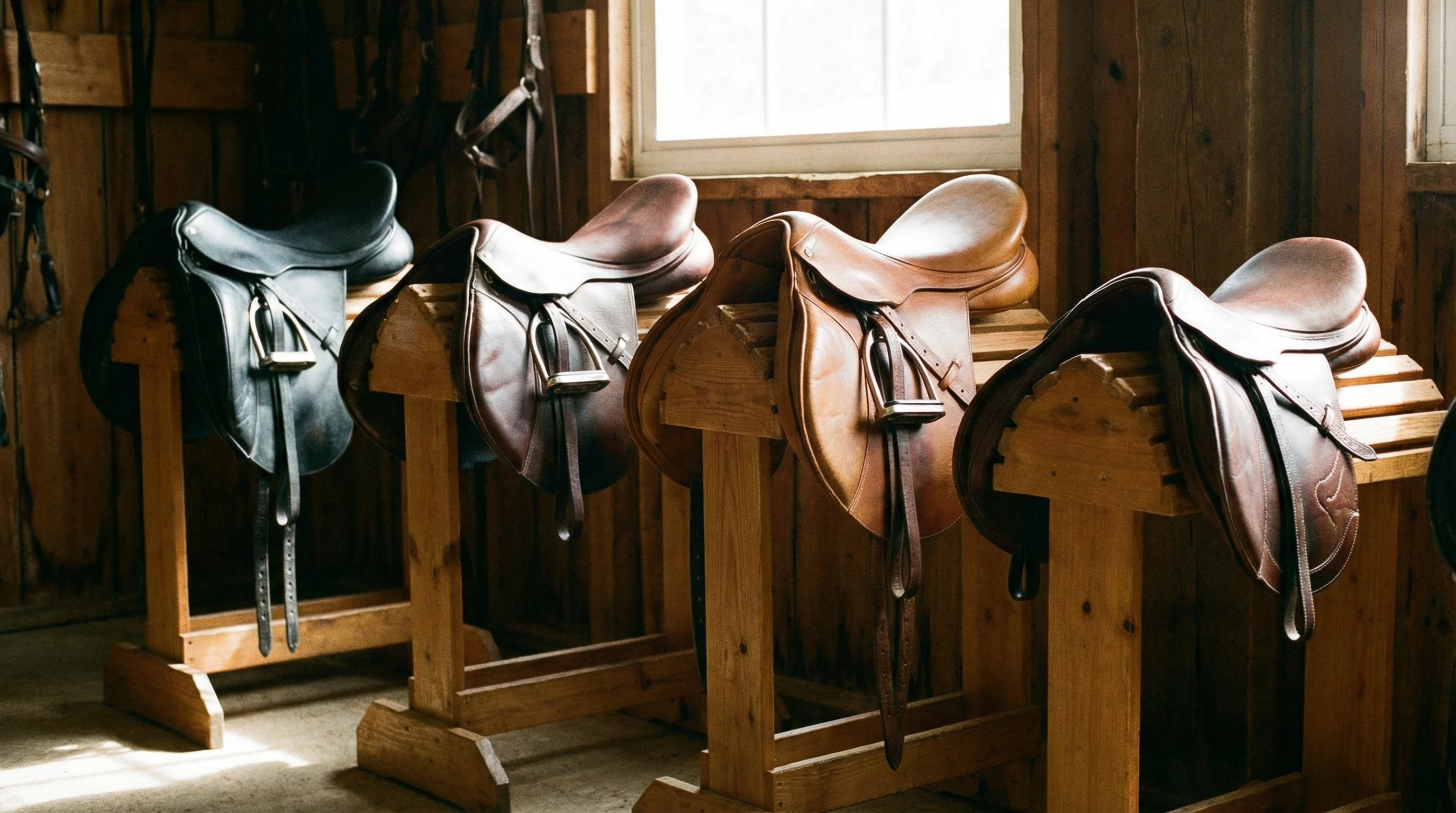
Finding the right English saddle for a narrow horse can be a real puzzle, especially if your horse has a slim build, tall withers, or a changing topline.
I know how tough it is to see your horse uncomfortable or slipping saddles, even when trying different pads and girths. If the fit isn’t right, both performance and safety suffer.
My goal is to make saddle shopping for narrow horses easier by breaking down how specialty saddles are built for these types, common fitting challenges, and which features truly matter for your horse’s comfort and your peace of mind.
Understanding Saddle Fit for Narrow Horses
Narrow horses feature lighter bone structure and smaller torsos. They commonly have high or prominent withers, a less rounded topline, and less width through the shoulder and barrel.
In saddle fitting terms, a “narrow” horse generally takes a saddle with a tree narrower than a medium.
Some brands call this “N” or “NM” (narrow/medium) and others will even offer extra-narrow options. Horses like Thoroughbreds, Arabians, and various young sport breeds often fall into this category.
Besides tree width, the shape of the tree itself matters. Some horses look narrow from above but have a flatter topline, while others show a deep, sharp-withered profile.
I’ve learned that grabbing a saddle with a narrow gullet isn’t always enough. You need to match the tree shape, too, because a mismatch can pinch or cause bridging, leading to discomfort for your horse.
Which Is More Important: Tree Width or Tree Shape?
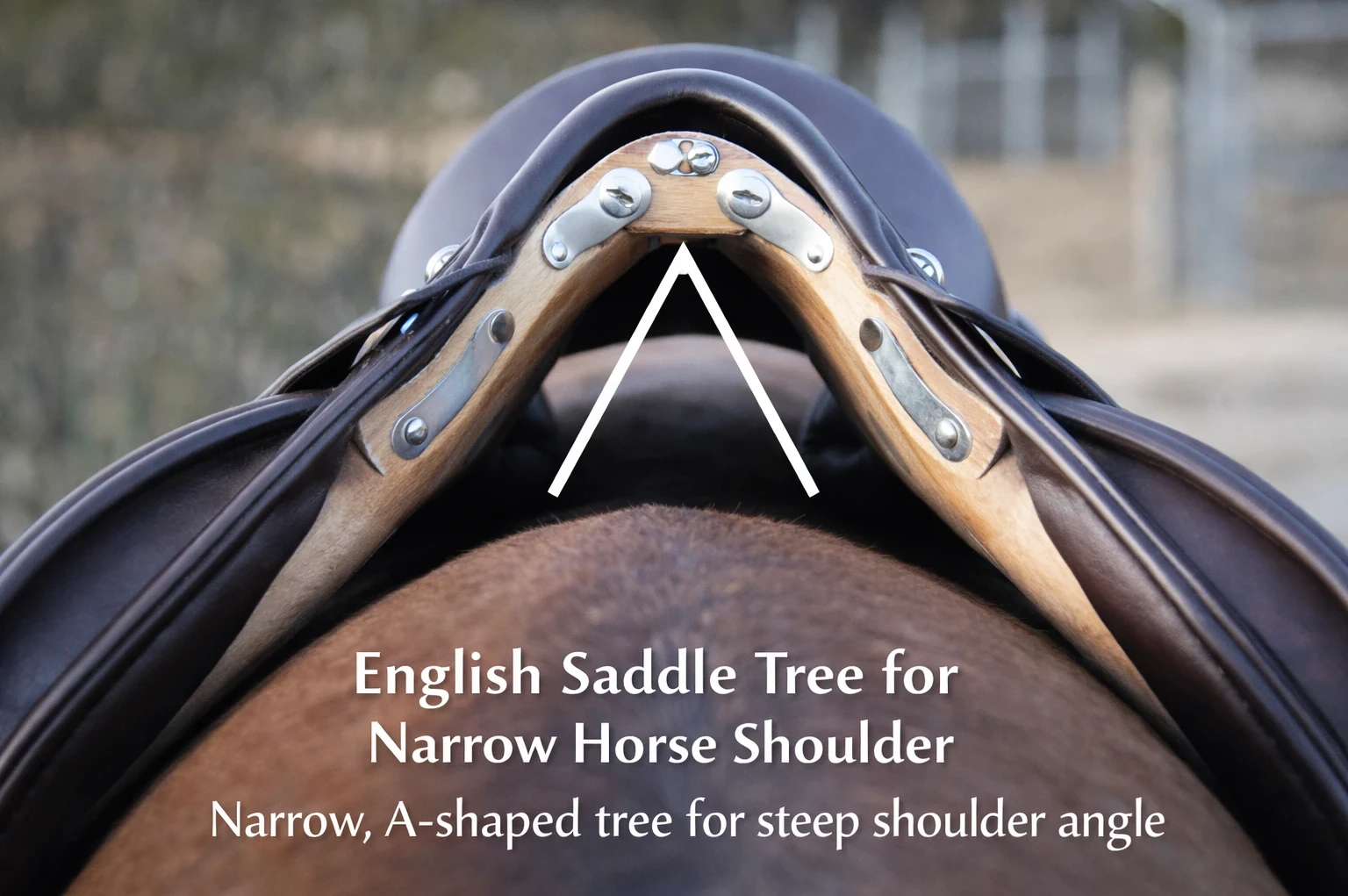
For narrow horses, tree shape becomes even more critical than tree width. Width gives you the starting point, but the shape of the saddle’s tree determines whether the saddle will rock, bridge, or pinch.
For example, a saddle could technically fit between the panels, but if it’s too curved or too flat for your horse’s back, you’ll have pressure points. A tree that tapers enough in the front but stays close to the back is most likely to fit a narrow, high-withered horse evenly across the topline.
If I’m unsure, I always recommend working with a reputable saddle fitter who can help measure both the width and the profile of your horse.
Many brands publish diagrams of their tree shapes, which can help you figure out whether they’re made for horses with high withers or those with more regular backs.
It’s a smart move to reference these when shopping.
Adjustable Gullet Saddles: Good or Risky for Narrow Horses?
Adjustable-gullet saddles promise flexibility, but not every design is a real solution for truly narrow builds. Sometimes even the most narrow gullet plate can turn out too wide for a sharp-withered horse.
Or, the gullet plate change doesn’t adjust the whole tree shape. You might still have trouble with bridging or rocking, which can frustrate both you and your horse.
The best adjustable systems for narrow horses use interchangeable steel plates that change more than just the measurement across the withers. I’ve seen good results with certain models from Wintec and Bates because they offer narrower gullet plates and the panel design works with slim frames.
Even so, I highly recommend trying the saddle on with your horse (ideally with a professional present) before purchasing—since not all these systems truly offer the right fit for the narrowest types.
Wintec 2000 HART All Purpose vs Pessoa Gen X Elita II Saddle
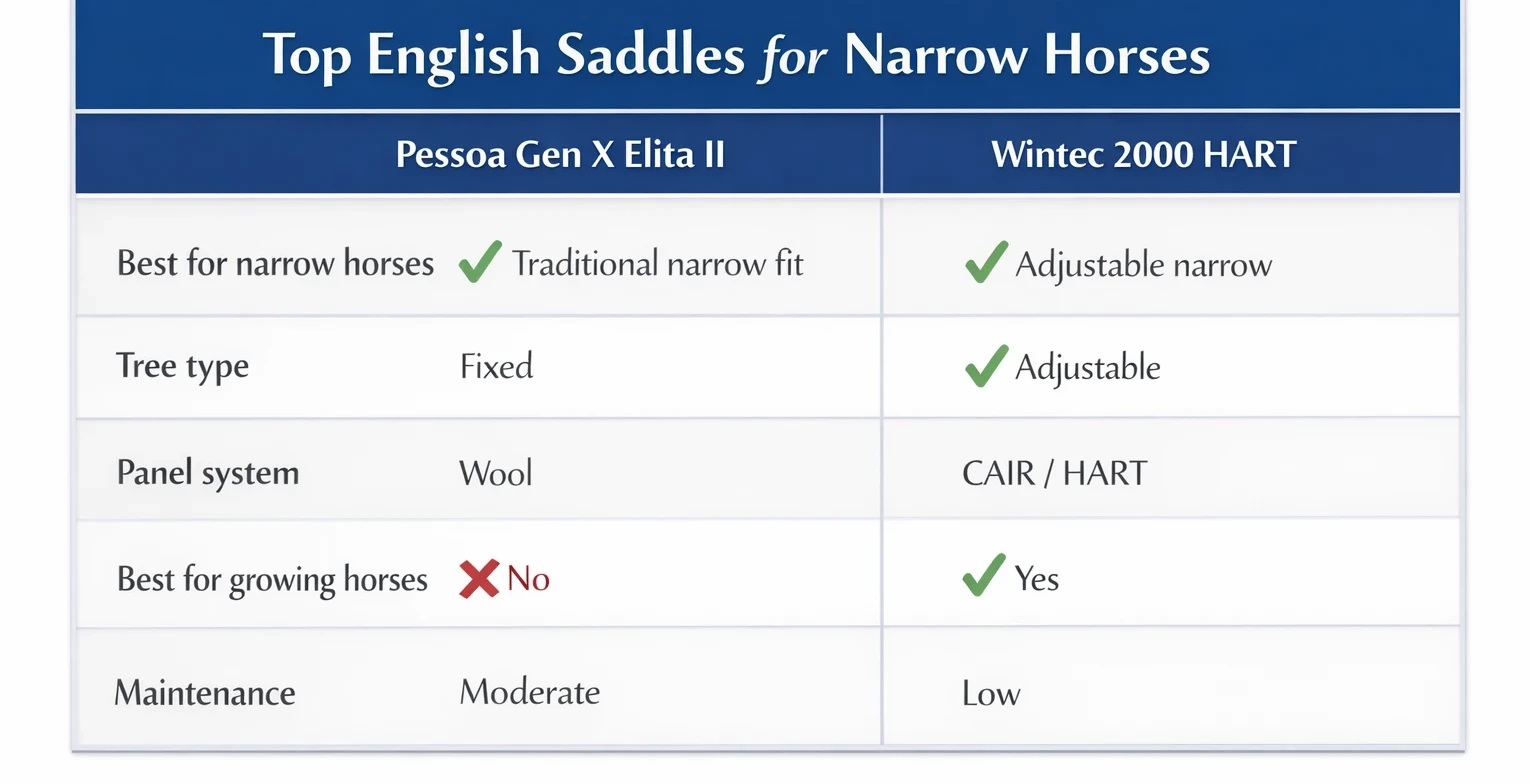
When you compare the Wintec 2000 HART All Purpose with the Pessoa Gen X Elita II, you see both are popular with riders of narrow, high-withered horses, but they offer very different rides.
- Wintec 2000 HART All Purpose: This synthetic saddle is lightweight and features the Easy-Change Gullet System, letting you swap between several narrow and extrana-rrow plates. The panels are wide enough to spread weight evenly while remaining trim, and they are flocked for some customization. Being synthetic makes it weather-resistant and easy to clean, too, which is especially handy for daily use. Horses with sharp withers and lean builds often move more freely in this model when it’s fitted well.
- Pessoa Gen X Elita II: This saddle sports a traditional leather design and uses the XChange Gullet System. The narrow plate is noticeably slimmer, making it an option for even the skinniest-backed horses. Pessoa’s tree shape frequently accommodates higher withers and a leaner topline, offering a more tailored fit if your horse is extremely narrow. Riders appreciate the close contact and balance, especially over fences, thanks to this saddle’s design.
Between these two, Wintec HART stands out for its easy adjustability, especially if your horse’s shape changes over time, while the Pessoa provides a classic leather feel and may be better for horses unlikely to widen much as they mature.
It’s worth mentioning that while there’s more innovation in synthetic saddles nowadays, nothing quite replaces the feel of a good leather saddle for many riders.
Wither Clearance: Why It’s Really Important
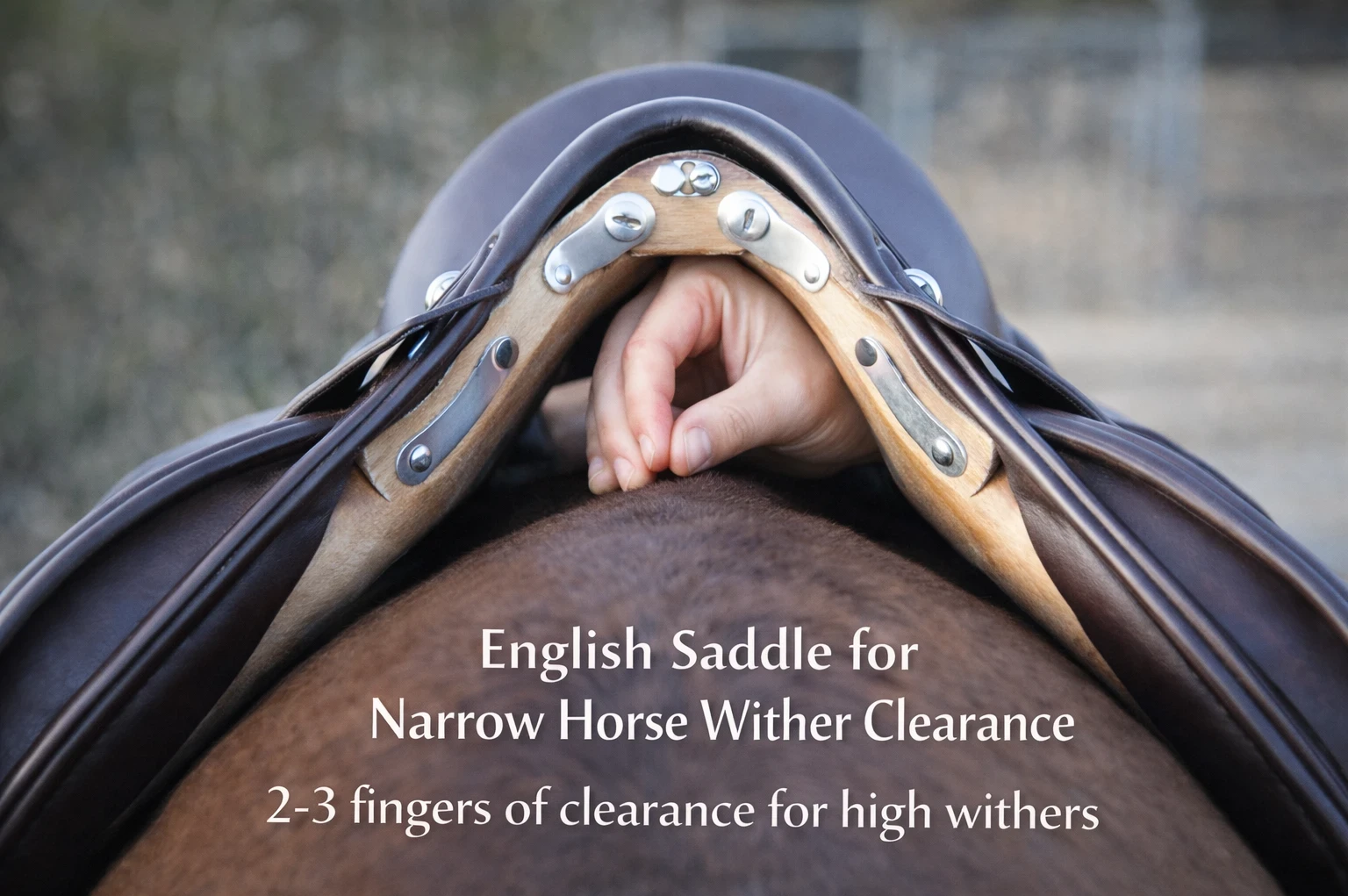
For narrow horses, especially those with high or angular withers, wither clearance is a must. You need a saddle that gives room through the gullet and doesn’t sink down onto the spine.
I always check for two to three fingers of clearance above the withers when I’m seated in the saddle, plus space along the sides. A saddle with a cutback or deeper front panel offers this kind of protection. Some saddles made for narrow horses now include a wider channel down the middle for full spinal clearance, so check for this detail.
Do Panel Types Matter? Wool vs Synthetic for Narrow Horses
Panel type can influence saddle fit, especially for slender or bony-backed horses. Wool-flocked panels can be adjusted by a saddle fitter and help fix minor fitting issues, making them a great choice for tricky, narrow backs or horses that are still growing.
Synthetic panels are less adjustable but tend to be lighter and simpler to maintain.
For horses with little muscle or a changing topline, I usually pick wool flocking because it’s easier to tweak as their back develops or they put on more muscle. That’s why most top-end saddles for narrow horses offer wool flocking as a feature.
It just gives you more flexibility in the long run.
Saddle Slip on Narrow Horses: Will It Happen?
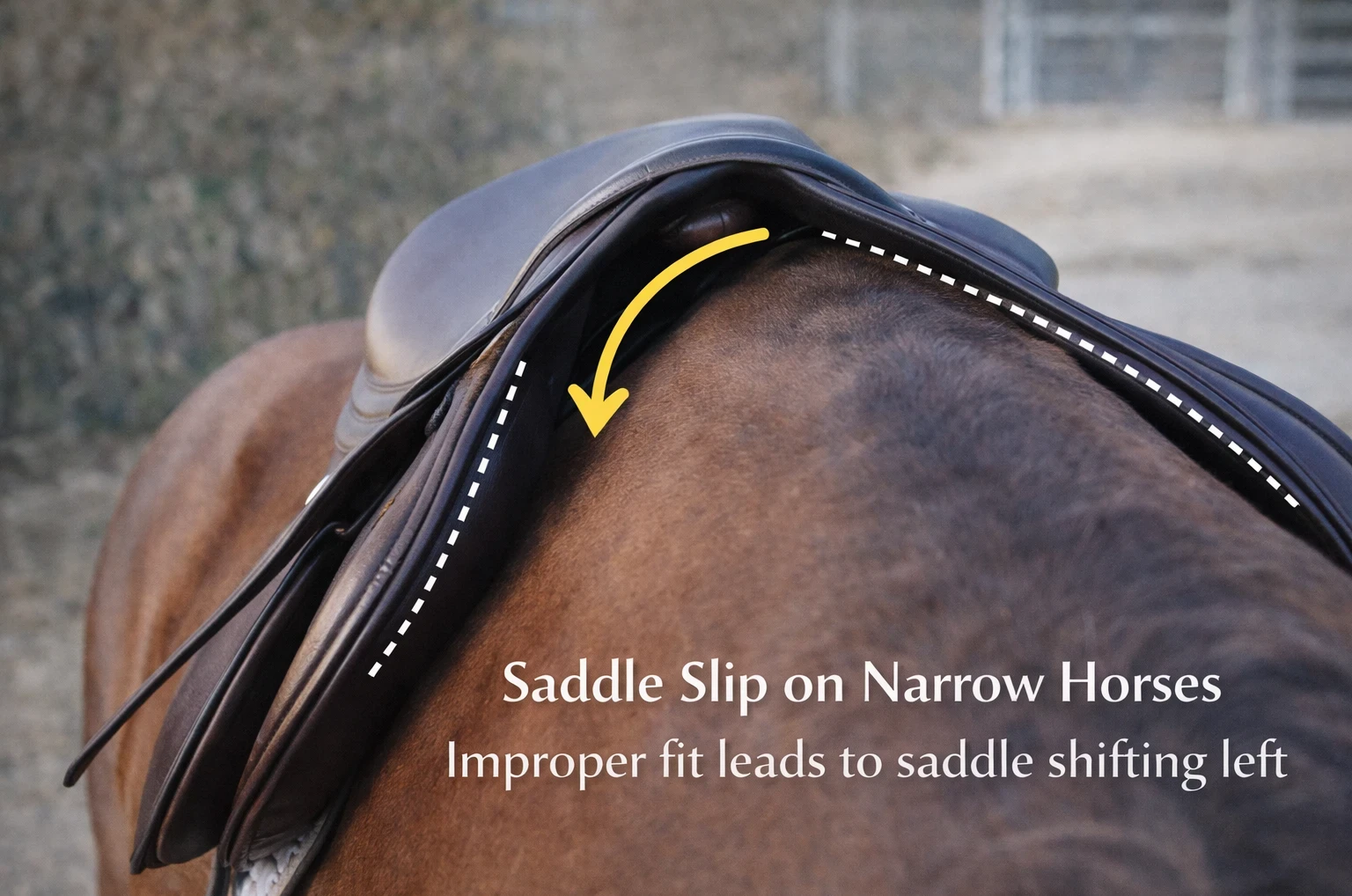
Saddle slip is a typical problem for narrow horses, particularly if the horse is also low in muscle around the shoulder or has a steep topline.
Even well-fitted saddles can shift to one side if the tree isn’t shaped correctly or if the panels are too rounded. Tools like grippy saddle pads, non-slip girths, and diligent checking of saddle balance all help.
But the primary solution is getting the tree and panel contours matched to your horse’s back. Some brands adjust their billets or girth positions to reduce shifting, and those details are worth examining when you choose a saddle.
Discipline-Specific or AllPurpose?
All-purpose saddles can work for many narrow horses, particularly if you participate in a range of activities or are still learning what you and your horse like best.
On the other hand, if you favor a specific discipline or compete often, a discipline-specific saddle (such as a close contact jumper or a straight flap dressage) often provides a more secure rider feel and can improve fit for your narrow horse.
I tend to suggest starting with an all-purpose saddle if your horse is still developing, but moving to a discipline-specific option becomes a good idea as your goals solidify and your horse’s build matures.
Best Saddle for Developing Narrow Horses
Saddles with adjustable gullets and wool flocked panels are the smartest pick for narrow horses that are still filling out, like young ones or those coming back from a layoff.
These allow you to alter the fit as your horse gains topline, which saves money and effort over the long run. I suggest models such as the Wintec 2000 HART for this reason.
For horses shown more frequently, it’s worth considering a Pessoa Gen X Elita II especially if your horse is almost done maturing. Making smart choices early can help you avoid costly mistakes later as your horse’s shape changes.
Key Takeaways for Narrow Horse Saddle Shopping
- Measure both width and shape, and get help from a professional fitter when possible for the best results.
- Pick a saddle with tree and panel options designed specifically for narrow, highwithered horses, not just a “narrow” gullet width.
- Wool flocked panels offer more adjustability. Synthetic panels are lighter but less responsive to shape changes.
- Wither clearance is super important—look for cutback or deep panels and a wide spinal channel for your horse’s comfort.
- Adjustable gullet saddles can work if the system provides true options for narrow shapes and widths.
- Balance an all-purpose saddle with your discipline needs, and don’t hesitate to switch it up as your horse’s build matures and your riding goals develop.
Choosing a saddle for a narrow horse might take extra effort and research, but the payoff is huge when you spot your horse moving more freely. You’ll get more enjoyment out of every ride and help keep your horse happy for years to come.
Shopping for a saddle—especially for a growing or narrow horse—can feel overwhelming. You’re not alone.
I’ve put together beginner-friendly saddle guides that explain fit in plain English, with visuals and checklists you can actually use. You can read it in my post, Best English Saddles For Beginners.
Was this post helpful? If so, please leave your comments or questions below.