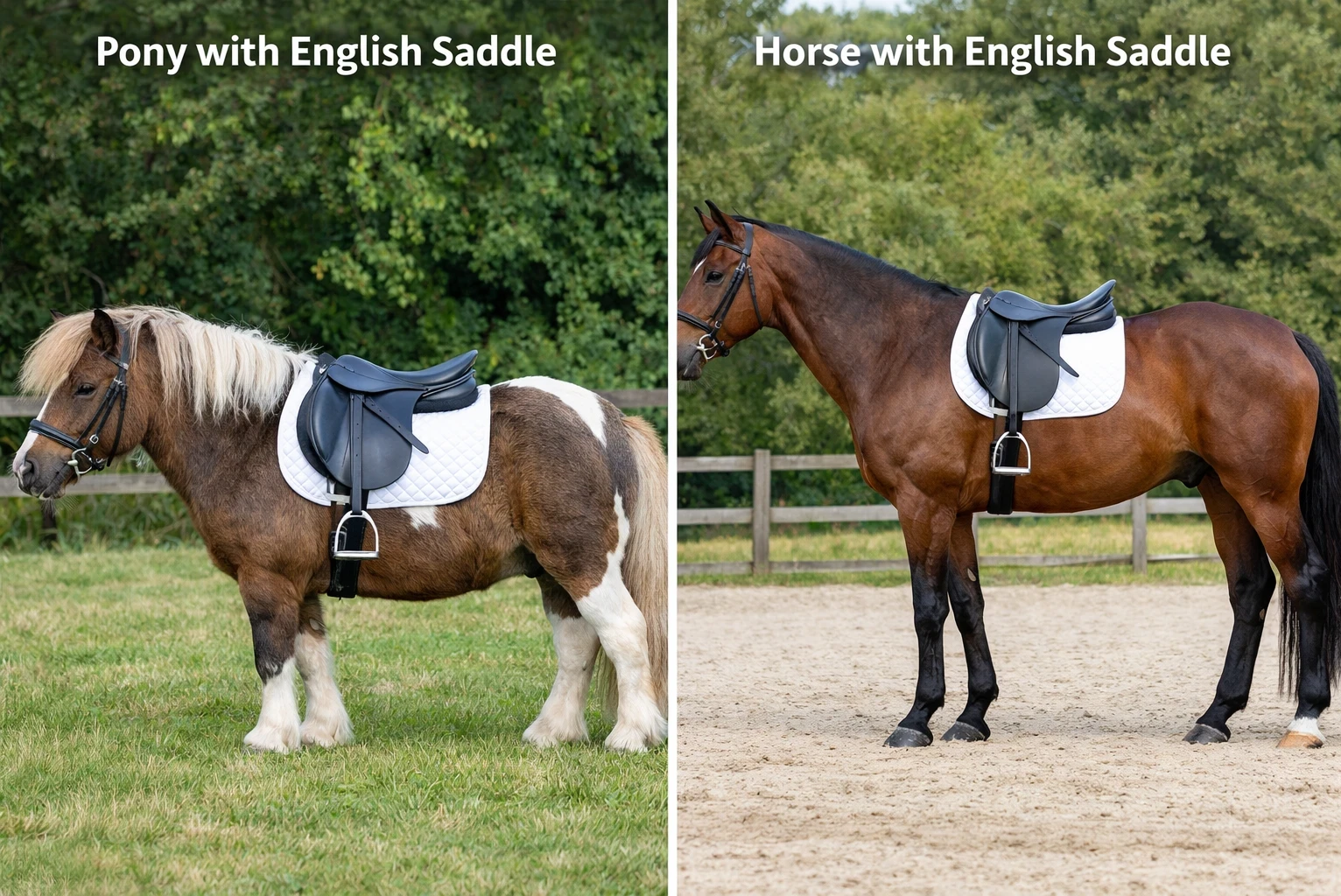
What’s the difference between pony and horse english saddles? Choosing an English saddle might seem straightforward, but when you’re working with both ponies and horses, it pays to know how the details can affect fit and comfort.
If you’ve ever wondered why certain saddles just seem to work better for smaller or larger mounts, or why saddle shopping for your pony feels totally different from finding one for a horse, you’re in the right spot.
Here’s a breakdown of what sets English saddles for ponies and horses apart, and what to keep in mind if you ride or care for both.
Just a friendly disclaimer for transparency sake. This post may contain affiliate links. I may earn a small commission if you purchase through my links, at no extra cost to you.
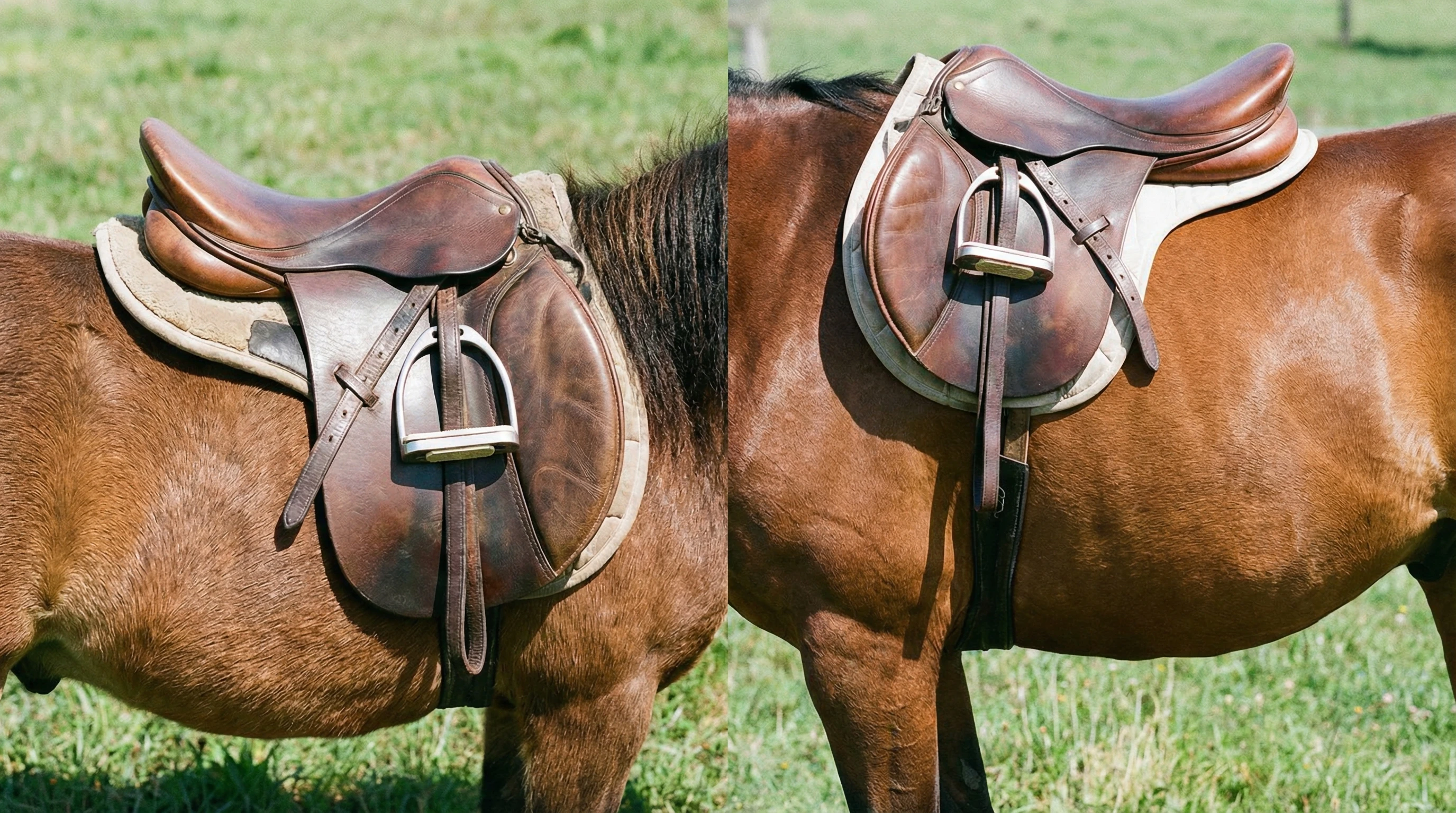
Why English Saddles Aren’t One Size Fits All
English saddles come in many shapes and sizes, all designed to balance the rider and support the horse or pony underneath. Horses and ponies have their own unique bodies, so it’s important to find a saddle built for the size and shape you’re working with.
A saddle that fits your friend’s 15.3hh horse probably won’t sit right on a 13hh pony. Forcing a poor fit can lead to pressure points, discomfort, or even long-term issues for your mount.
Rider size, age, and experience also matter.
Children often start out riding ponies before growing into horses, and their shorter legs and lighter weight affect both saddle style and sizing needs. Saddle makers take this into account, creating various options for riders at all stages.
Main Differences Between Pony and Horse English Saddles
When I check out saddles for ponies and full-sized horses, a few core differences always stand out:
- Seat Size: Saddles for ponies usually start around 14” and stop around 16”, matching up with the smaller, often younger riders. Horse saddles generally run bigger, usually from 16” up to 18” or more, for teens and adults.
- Tree Size and Shape: The tree is basically the skeleton of the saddle. Pony saddle trees are narrower and shorter to sit comfortably on a compact back. Horse saddles have longer, more widely arched trees to support a bigger body.
- Panel and Flap Length: You’ll find shorter panels and flaps on pony saddles. These avoid overpowering a small frame and help shorter riders maintain contact. Horse saddles get longer and sometimes wider for longer legs and bigger ribcages.
- Weight: Pony saddles are lighter since both the animal and rider tend to be smaller. Lugging around a heavy jumping saddle isn’t practical for a pony or for a kid rider.
- Gullet Width: Gullets, the open channel underneath, are narrower on pony models to provide spinal clearance without flaring out too far on a narrow back. Horses with bigger withers and more width need a broader gullet for comfort.
All these differences play a big role in how secure and comfortable a ride will feel for both pony and rider or horse and rider.
What Fit Looks Like on Ponies vs. Horses
Fit is always the biggest deal. I’ve seen how dramatic the difference can be between a well-fit and badly-fit saddle, especially on rounder ponies or widebacked horses. See my post, “What is the Impact of an Ill-Fitting Saddle on a Horse”.
Ponies often have flatter or rounder backs, meaning some traditional horse saddles just won’t sit evenly. They might pinch at the front or bridge over the middle, causing the saddle to slip or making the pony sore.
Horses, especially larger warmbloods or thoroughbreds, may have pronounced withers and a longer back, needing more length from the saddle tree and panels. (See my post, “How to Choose the Right English Saddle For My Thoroughbred”.
If you put a pony saddle on a horse, the seat is too short and pressure won’t distribute right, making things uncomfortable for both horse and rider.
Here are a few signs a saddle isn’t fitting the way you want:
- Pony’s saddle slides forward or backward, or sits high in back.
- Horse’s saddle pinches at the withers or makes dry spots after a ride.
- Girth tends to slide or creep instead of staying snug.
- Rider feels offbalance or too perched up.
Always aim for a saddle that sits flat and balanced with even contact on both sides. There shouldn’t be any pinching or rocking, as that can indicate pressure points that cause soreness with use.
How To Choose the Right English Saddle for Each
If you’re picking a saddle for a pony, look for brands or models built with ponies in mind, not just a scaled down version of an adult horse saddle.
There are lots of kid-sized jumping, all-purpose, and even dressage saddles that account for shorter legs and lighter builds. It really helps to chat with a saddle fitter if you’re unsure about the shape or size you need.
They can really make it easy to match a saddle to your pony’s back.
For horses, focus on girth groove (placement for the girth), wither clearance, and good distribution along the back. Testriding in a few models and checking for pressure points can help a lot.
Flexible or adjustable tree saddles are trending, and these can sometimes close the gap between horses with similar but not identical backs. See my post, “Adjustable vs Fixed Tree Saddle Comparison.”
Some key tips:
- Measure both seat size (for the rider) and tree/panel width (for the horse or pony).
- If your pony is super round, consider saddles that resist slipping forward or rolling.
- For widebacked horses, look for a broad gullet and supportive panels that won’t pinch.
- Avoid going too small on a horse or too big on a pony. The balance will be off and it won’t feel secure or comfortable for anyone.
An expert saddle fitter can make all the difference. When in doubt, bring in someone with experience to size up your horse or pony for the right fit.
Recommended Saddles for Ponies vs Horses
Wintec 500 HART Pony All Purpose Saddle
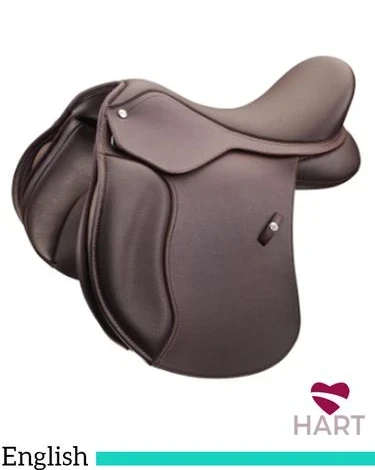
Why is this a good pony saddle?
Benefits:
- Comfortable and secure deep seat — supportive seating helps young riders feel confident and balanced for flatwork, hacking, or arena lessons.
- HART (Horse And Rider Technology) — performance system that enhances rider comfort and helps cushion both horse and rider during the ride.
- Super-soft panels that mold to the pony’s muscles — provides close contact and reduces pressure points for improved pony comfort.
- Lightweight and easy-to-handle — makes tacking up and transporting easier, especially helpful for kids and lesson barn use.
- Durable, weather-proof synthetic build — easy care and maintenance — just hose off after a ride; great for everyday use.
- Changeable stirrup keeper — allows for small customizations and a bit of personalization to match style or tack setup.
- Versatile all-purpose design — suited for general riding, including flatwork, cross-training, and beginner jumping.
- Good value for quality — often more affordable than traditional leather saddles while still offering
Bates Pony Elevation+ Saddle
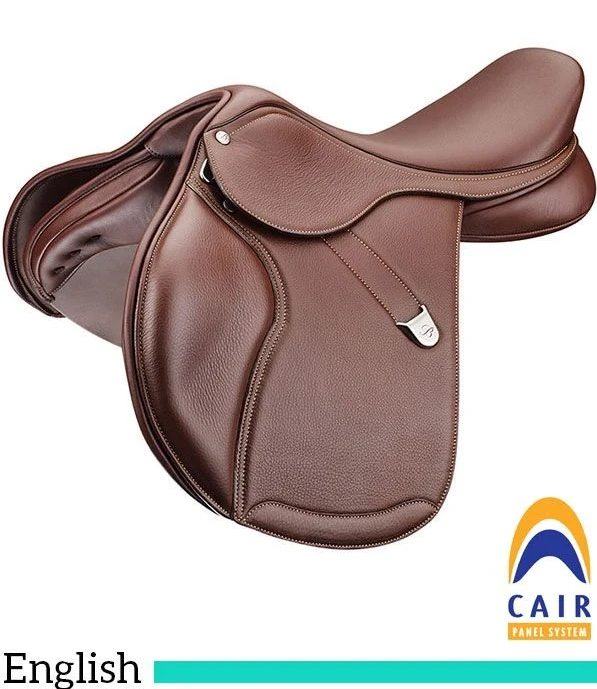
Why is this a good pony saddle?
Benefits:
- Ultimate comfort for ponies: Designed with ultra-close contact panels and deep seat to enhance comfort and performance for smaller equines.
- Balanced and secure ride: Deep seat and excellent balance help young riders feel secure whether on the flat or over fences.
- Enhanced rider stability: Deep seat and ergonomic shape promote better rider position and confidence.
- Superior fit customization: EASY-CHANGE® Fit Solution and gullet system let you adjust the fit as your pony’s shape changes, for optimal comfort and performance.
- Even weight distribution: The CAIR® Cushion System uses air-filled panels that conform to the pony’s back and spread weight evenly, helping reduce pressure points.
- Grippy, comfortable leather: Premium double-lined leather (Opulence or Luxe options) provides excellent grip and long-lasting comfort for rider and pony alike.
- Adjustable support options: Features like adjustable Flexiblocs and recessed stirrup channels let you fine-tune leg support and rider position.
- Wide bearing surface: Panels designed to maximize contact and reduce pressure help enhance freedom of movement and comfort for the pony.
Recommended Horse Saddles
Wintec 2000 Wide All Purpose HART
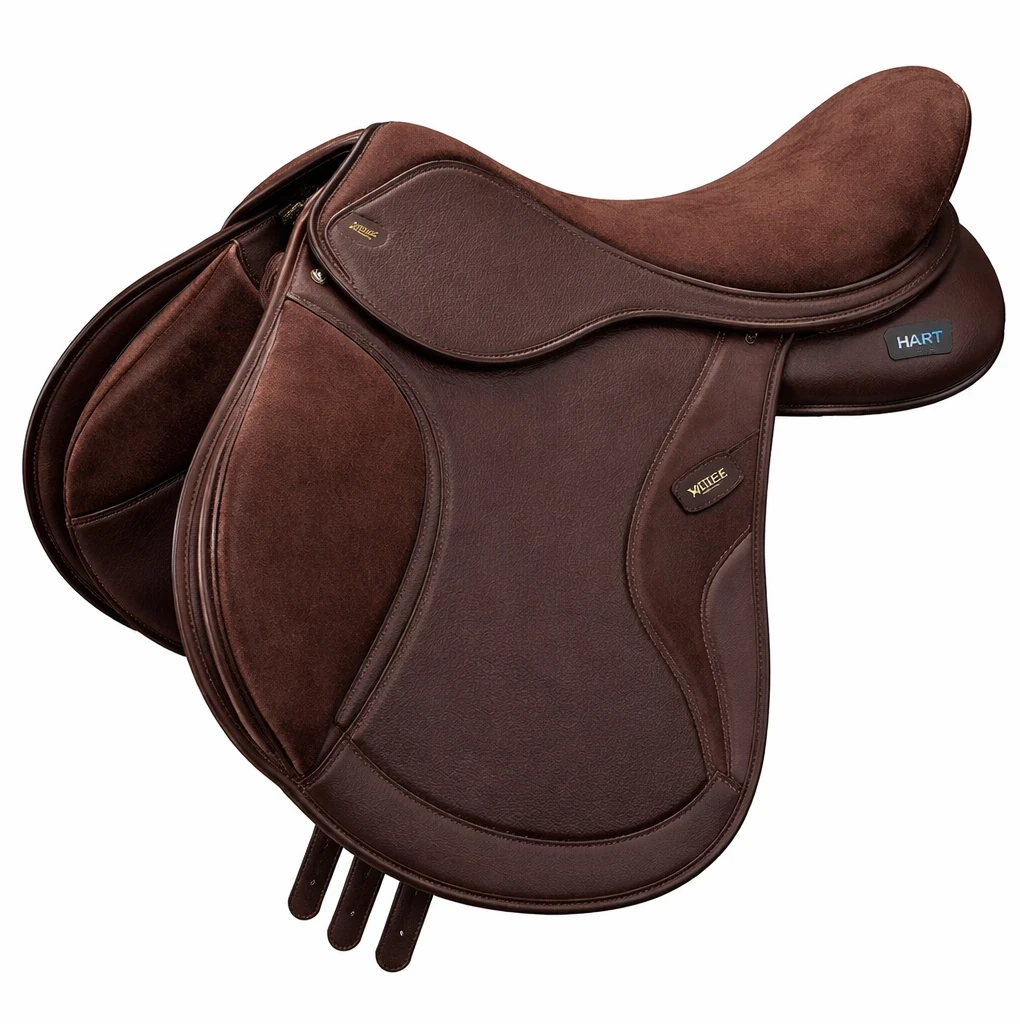
Why is this a good horse saddle?
Benefits:
Protective cushioning through the CAIR® Cushion Panel System: Uses air to distribute the rider’s weight fluidly across the horse’s back.
EASY-CHANGE Gullet system and the EASY-CHANGE Riser system: Riders can select the optimal gullet width for the horse’s current shape and muscling, and make adjustments within the saddle panels for optimal balance and clearance.
Ergonomic flex through the lightweight and durable Elastiflex Tree, which provides the lateral flexion to work with the horse’s muscular movement in every stride.
Ergonomic Stirrup Bar: Places the buckle of a stirrup leather in a recessed position to reduce bulk under your thigh.
Adjustable Flexibloc System: Enables you to customize thigh support to your preference.
Quick-change billet system: Allows customization by a saddler or saddle fitter and provides the assurance that billets can be returned to factory standard for the life of the saddle.
Adjustable Y-girthing: Allows for an ideal adjustment and promotes saddle stability.
Bates Wide All Purpose Heritage CAIR Saddle
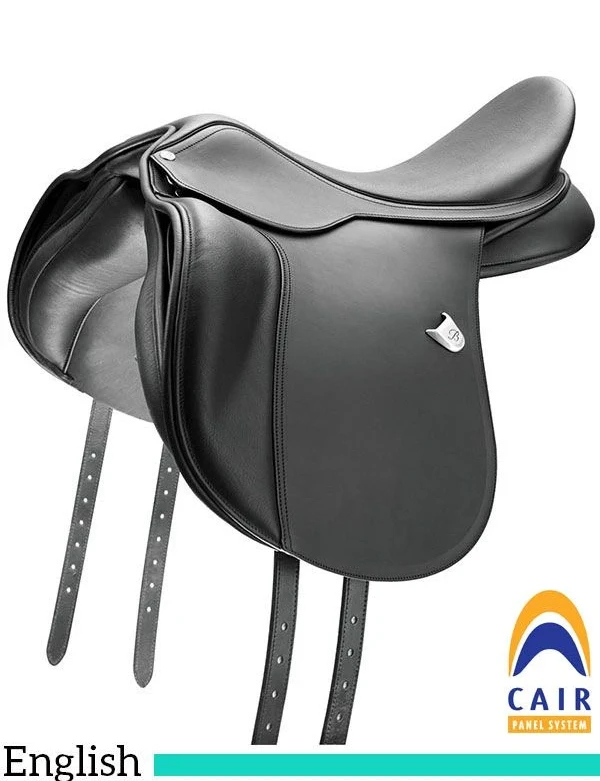
Why is this a good horse saddle?
Benefits:
- Superior comfort for wider horses — designed with a wide tree and performance panels to support broader backs and working muscles while maximizing shoulder freedom.
- Even weight distribution — the CAIR® Cushion System uses air panels instead of traditional flocking, reducing pressure points and spreading weight evenly across the horse’s back.
- Improved horse movement & performance — the air cushion technology and large panel footprint help promote freer movement, better self-carriage, and less discomfort under saddle.
- Customizable fit — EASY-CHANGE® Fit Solution & Gullet System lets you adjust the tree width (and panel risers if equipped) so the saddle can adapt as your horse’s shape changes.
- Deeper, balanced seat — the deep seat and narrow waist help riders sit more securely and balanced in all-purpose or flatwork riding.
- Heritage leather comfort & grip — premium traditional leather is supple and grippy, offering comfort for the rider and a classic look that develops a rich patina with use.
- Enhanced stability — the adjustable Y-girthing system promotes even girth pull and helps stabilize the saddle for consistent performance.
- Versatility across disciplines — suitable for flatwork, leisure riding, and light jumping, making it a true all-purpose choice.
- Ergonomic design features — includes molded knee inserts and ergonomic stirrup bars for rider comfort and correct leg alignment.
Extra Features Worth Thinking About
Not all English saddles are created equal, and there are some nextlevel cool features that make a real difference depending on your needs:
- Adjustable Gullet Systems: Saddles with interchangeable gullets are handy for horses and ponies whose shapes change through growth, work, or weight changes.
- Knee Blocks and Thigh Rolls: These help stabilize lessexperienced riders or offer extra grip for jumping. Pony saddles sometimes come with smaller or removable blocks for flexibility.
- Lightweight Materials: Synthetic or ponylite models make it easy for kids to carry and tack up, ideal for riding schools and young riders.
- Short Girth Straps (Billets): Pony girths are shorter, so check that the billets on your saddle match up with this!
Some brands do a great job catering to the needs of both ponies and horses, so mixing and matching features is worth a look. If you stumble upon something that works, stick with it—comfort and confidence for you and your mount are what matter most.
Common Problems and How To Tackle Them
- Saddle Slipping: This pops up much more often on ponies, especially barrelshaped ones. Look into nonslip pads, girths with elastic on both sides, and saddles that offer a forward balance.
- Poor Wither Clearance: Horses with high withers can experience pinching. Prioritize saddles with higher pommels or cut back designs made for horses with prominent withers.
- Rider Outgrowing the Saddle: A kid might fit a 15” seat just fine at age 9, but by age 12 or 13, it starts feeling cramped. Check fit every year and don’t be afraid to move up a size for both the rider’s and pony’s comfort.
Practical Examples & RealWorld Advice
At riding schools, I often witness families where kids are constantly swapping between ponies and horses as they grow. Keeping a few quality saddles in pony and horse sizes is practical, especially for clubs or home barns with multiple riders and mounts.
If you’re tight on budget, a gently used saddle from a reputable brand offers great value, but always doublecheck that the structure is sound and the saddle fits both pony and rider.
Don’t forget about regular saddle checks.
Backs can change shape with growth, age, season, or workload, so what fits in May might need tweaking by October. If you notice new white hairs, dry spots, or grouchiness during saddling, reevaluate fit with a pro before things get worse.
Pay close attention to how your pony or horse reacts before and after riding.
Sometimes subtle behavioral changes or just a little extra reluctance to be saddled can hint at fit problems that are easy to fix before they grow. Observing these signs shows you’re keeping an eye out for your mount’s well-being.
Frequently Asked Questions
Here are some things I get asked all the time about English saddles for ponies and horses:
Question: Can you use a horse saddle on a pony?
Answer: It’s really not a good idea. A toolarge saddle won’t balance or fit either pony or rider properly, and could cause soreness or even injury.
Question: Can an adjustable tree solve all fit problems?
Answer: Adjustable trees help, but they won’t fix every fit issue—especially if the saddle is too long or the seat size is wrong for the rider.
Question: How often should saddle fit be checked?
Answer: At least twice a year, or any time you notice signs of discomfort or physical changes in your pony or horse.
Question: What if my child keeps outgrowing saddles quickly?
Answer: Consider buying quality used saddles and swapping out as they grow. Some local tack shops offer trade-in programs or consignment options that can help you keep up without breaking the bank. Comfort and fit matter more than sticking with the same saddle forever.
Final Thoughts
Paying attention to these small details can make a real difference in comfort and confidence, whether you’re schooling a pony or taking your horse on a hack.
Having the right English saddle for ponies and horses makes everyday rides smoother and supports good long-term health for your mount.
When you stumble upon a model that works for both you and your horse or pony, that peace of mind is tough to beat. Regularly check fit, stay open to adjusting as needed, and you’ll help your horse or pony stay happy and healthy for years of rides to come.
Did you find this post helpful? If so, I’d love to hear your comments below.