
Dressage is one of those horse riding disciplines that looks calm and graceful on the outside. But it comes with its own set of risks and safety concerns, especially when kids get involved.
As much as parents want their children to grow as confident riders, safety is always on everyone’s mind. Knowing what really matters keeps the riding fun and accident-free for young dressage fans.
This post may contain affiliate links. I may earn a small commission if you purchase through my links, at no extra cost to you.
Dressage Safety Basics For Kids
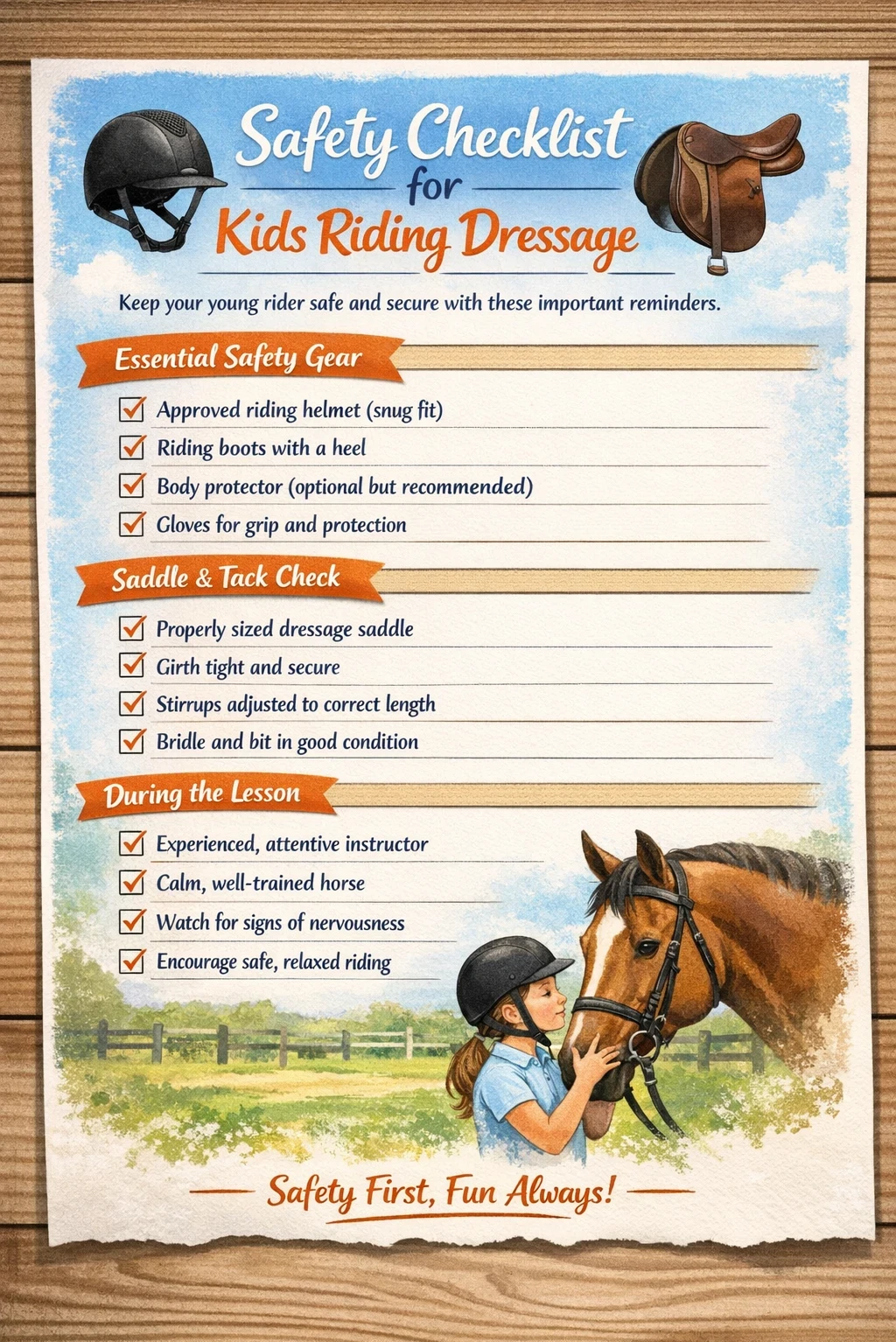
Dressage might look less risky than jumping or racing, but safety is just as important. From the way the tack fits to the temperament of the horse, every detail deserves attention.
One thing I’ve noticed is that an accident-free ride comes down to a bunch of little safe choices, not just one big rule.
Even in the most controlled arena, falls can still happen. Horses might spook, a stirrup might slip, or a child may lose balance while learning new moves. Dressage riding focuses on poise and subtle communication, so it’s friendly for beginners, but it’s not a zero-risk activity by any stretch.
The quiet pace may seem harmless, but children can be surprised if a horse reacts suddenly, even in experienced hands.
What Age Is Right For Kids to Start Dressage?
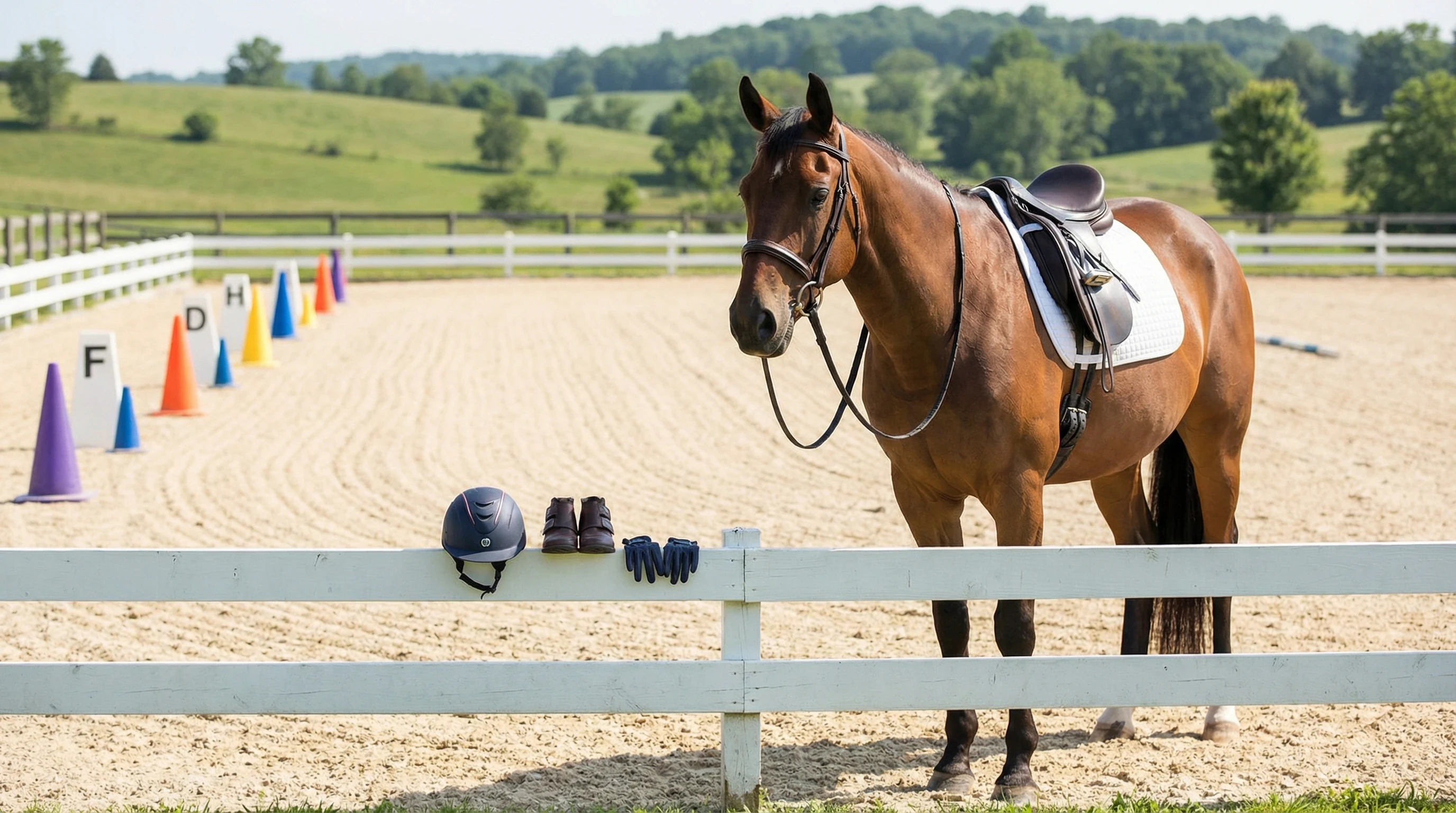
Most riding schools offer lessons to kids as young as 5 or 6, but some kids might not be ready to handle a horse or pony until a little older. It’s really about attention span, maturity, and physical strength more than just age.
For dressage, kids need to be able to concentrate through the lesson, follow directions, and have the core strength to sit upright for a while. If a child is easily distracted or struggles to sit still, waiting a year or so is totally fine.
Child development varies. Some youngsters are ready at six, eagerly focusing on the instructor and showing enthusiasm for horses. Others benefit from an extra year or two to build up strength and self-confidence.
Look for signs of readiness such as listening well, caring about animal safety, and showing patience during tasks like grooming and tacking up. Involve your child in short stable visits or basic handling lessons if you want to help them prepare.
Must-Have Safety Gear For Young Dressage Riders
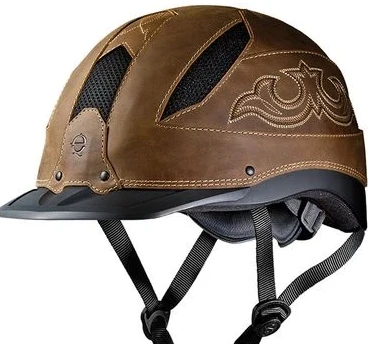
- ASTM-Approved Helmet: Never optional, always the first thing to buy. Helmets protect against falls and even bumps from low ceilings or trees in the arena.
- Paddock Boots or Tall Boots: Proper boots prevent slipping through stirrups and protect toes from hooves.
- Body Protector (Optional, but recommended): These vests absorb shock in the event of a fall and are worth considering for extra peace of mind.
- Gloves: Gloves prevent blisters and give a better grip on the reins, which is pretty handy for beginners.
Hand-me-down gear is great for saving cash, but always check for cracks, wear, or damage, especially on helmets. Once a helmet has been dropped hard or is more than five years old, it’s time for a new one.
Helmets lose their protective properties over time, and even small falls can damage the inner shell in ways that aren’t always visible. It’s smart to invest in a helmet fit by a pro at a tack shop.
Gloves and boots should fit snugly, closing up any chance that slippery banners or uneven weather can throw your child off their game.
During chilly months, thermal layers under the regular gear keep kids warm. However, be careful that extra layers don’t make the fit of helmets or body protectors too tight.
Some gear brands even make child-sized options designed for cold weather so there is no compromise on safety.
How Saddle Fit Impacts Safety (And Confidence)
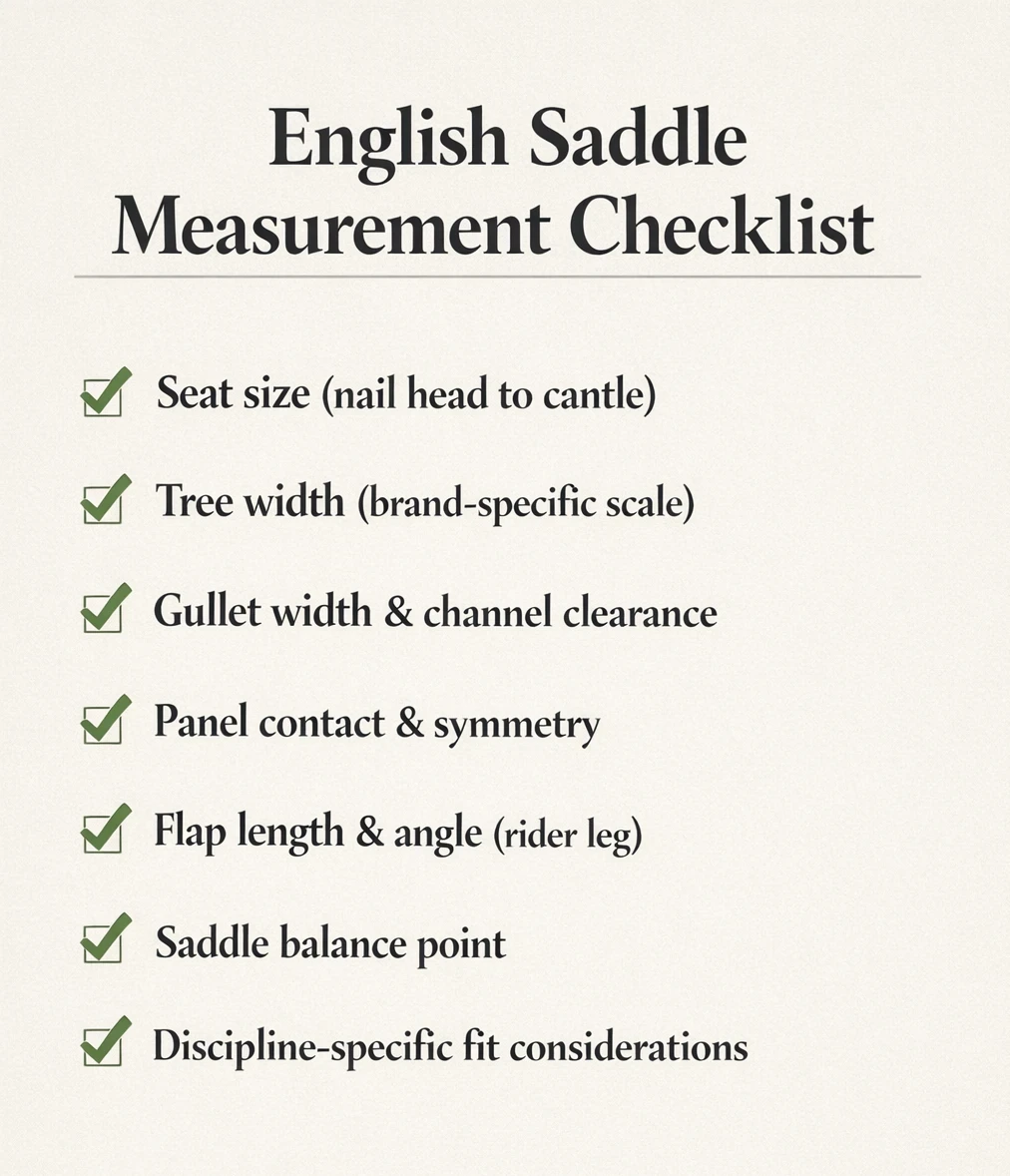
Kids need a saddle that fits them, with no exceptions. See my post, “How to Read English Saddle Measurements Correctly.” A saddle that’s too big can cause a child to slide around, lose balance, or feel insecure.
Too small, and they can’t move their legs correctly. Both situations can zap confidence and even cause accidents. Please read my post, “How to Check English Saddle Fit for Young Horses.”
It’s really common for stables to use adult saddles for kids, especially when they’re starting out. If this is the only option, adding a seat saver or a special childfriendly pad can help, but a properly sized child’s saddle is always safer and supports better riding posture.
Growth spurts sneak up fast. Recheck saddle fit every few months; sometimes more often for very young kids. Look out for knees hanging awkwardly over the edge of the saddle, or a struggle to reach the stirrups easily.
A poor saddle fit makes it harder for a rising dressage star to ride confidently and work on their position.
Instructors and parents should regularly give saddles and girths a once-over before lessons. Watch for worn leather or loose stitching, and check the alignment so the rider sits naturally and feels safe.
Well-fitted tack encourages your child to keep learning and improves balance and security at every stage.
Choosing Safe and Steady Dressage Horses For Kids
Not every horse is a good match for kids learning dressage. Look for mounts known for their calm, unflappable attitudes. Seasoned lesson ponies and older dressage horses usually have the mellow personalities needed for young riders.
Fast, unpredictable, or green horses aren’t the best pick, even if a kid is confident.
Many barns let kids start with ponies before moving up to horses, and that’s a smart route. Ponies offer more security for little legs and boost confidence faster. Always watch the first few interactions. Does the pony stand quietly while being groomed?
Does it walk calmly beside your child to the arena? These signs help set the tone for safe dressage lessons in the long run.
The Role of Instructors and Supervision
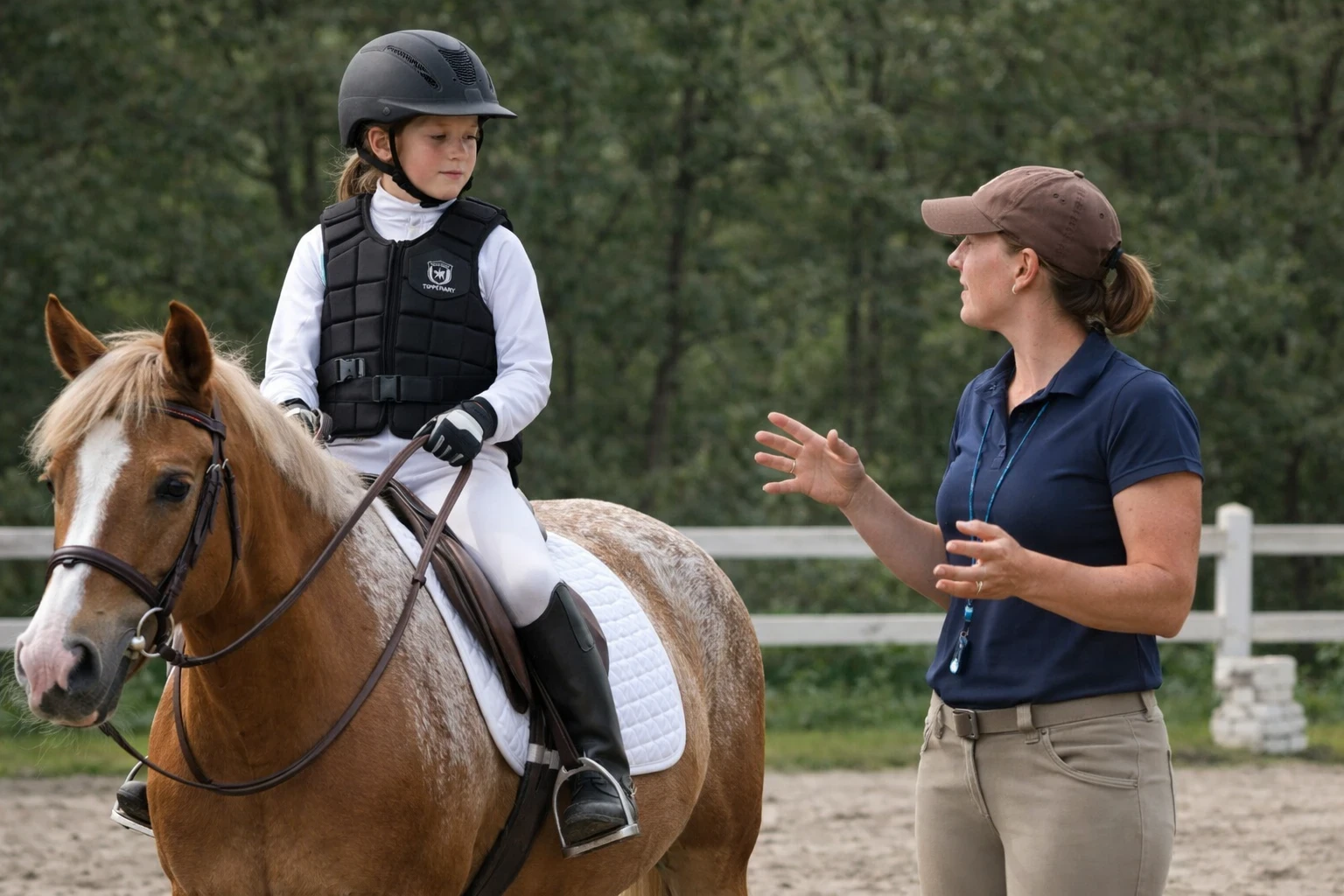
The experience and attitude of a child’s instructor make a huge difference. A good instructor teaches more than technique. They spot small safety issues before they become big ones.
Qualified dressage instructors are trained to adjust the lesson for the child’s experience level, mood, and even the temperament of the horse that day.
Supervision is important from tacking up to untacking. I always watch for instructors who check all straps, girths, and stirrup lengths themselves, even after a parent or child sets things up. This double-checking builds good habits and trust.
All-in-one care by the instructor—watching for both riding mistakes and visible nerves—creates a supportive environment where kids aren’t afraid to speak up. Quality supervision is just as important in the barn aisle as in the arena, especially during mounting and dismounting, which is when many small slips or tumbles happen.
Common Dressage Injuries and How to Prevent Them
- Minor Falls: Usually result in bruises. Prevented with helmets, soft arena footing, and close supervision.
- Sprained Wrists/Ankles: Caused by falls or feet caught in stirrups. Proper boots and safety stirrups lower this risk.
- Stirrups-Related Accidents: When a foot gets stuck. Quick-release stirrups or toe stoppers are super useful.
- Back or Groin Strain: From riding in a poorly fitted saddle or using poor posture. The right saddle and regular checks help.
Proper warmups and cool-down stretches can also help prevent muscle strains. Encourage your child to keep good posture and let their instructor know right away if they feel uncomfortable. Having a chat about any aches after riding helps catch minor issues before they become real injuries. The right routine minimizes downtime and builds your child’s awareness of their own limits, which keeps riding fun in the long run.
How Often Should Tack Be Checked for Growing Kids?
Stirrups, girths, bridles, and saddle fit all need routine checks, at least every month if your child is growing quickly. Always check before every ride for any signs of worn leather, loose stitching, or cracked buckles.
These small checks make a real difference to long-term safety. Asking your child to help with pre-ride checks teaches responsibility and sharpens their eye for detail—every rider grows safer that way.
Dressage Lessons vs. Casual Riding: Which Is Safer?
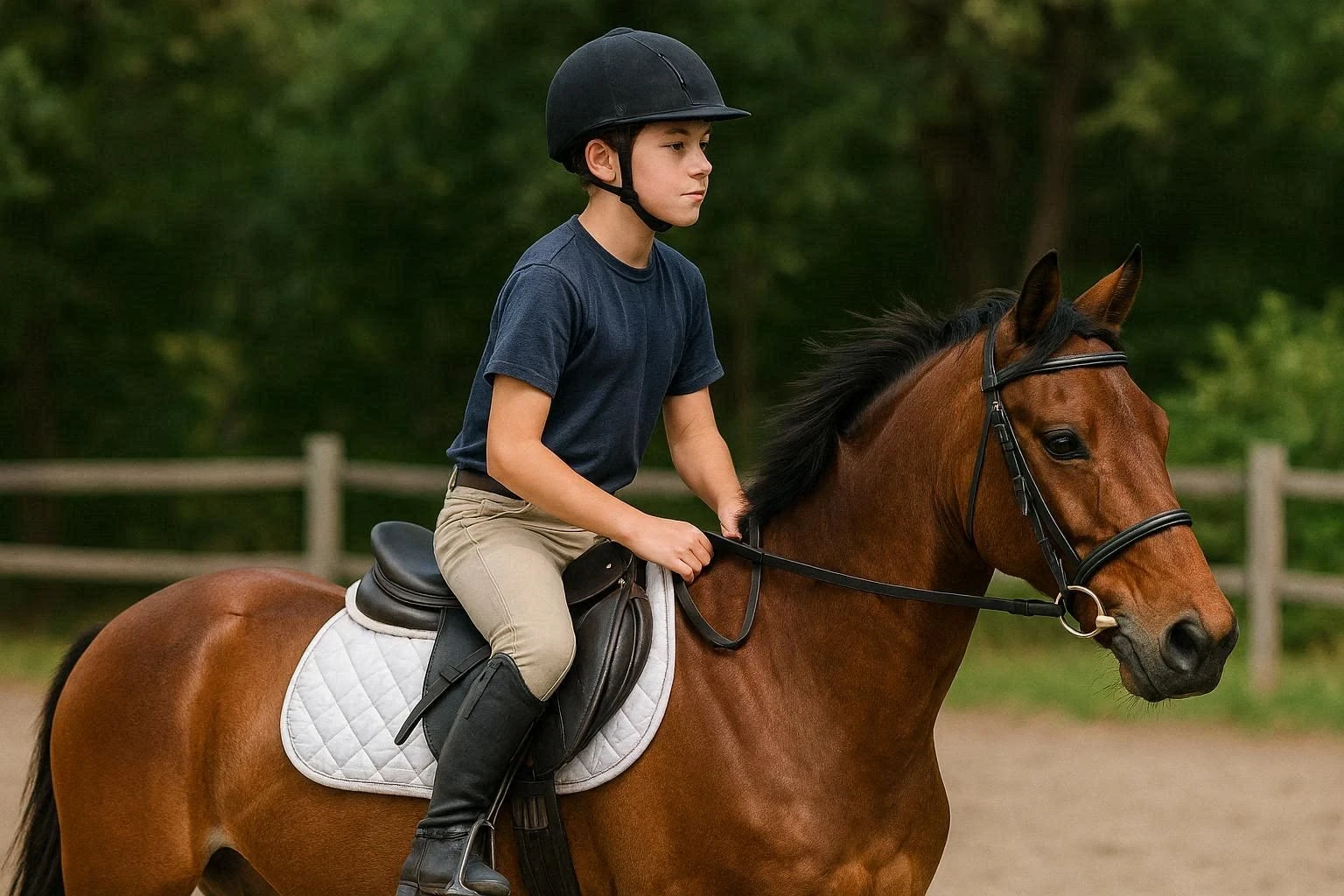
Organized dressage lessons have more structure and supervision than casual or trail rides, and for most kids, that makes them safer. The controlled environment, predictable routines, and trained horses are all positives.
Trail rides often introduce distractions and unpredictable risks, such as wildlife, loud vehicles, and rough ground, so waiting until the child has built strong basic skills in the arena is a smart move.
Dressage builds gradual skills through repeated routines, giving young riders time to gain confidence. When a child is ready, they can try short, closely supervised hacks that let them use those arena skills in a new setting. But until then, the lesson ring is where safety comes first.
Signs Of Trouble During Dressage Lessons
- Child fidgets, looks around nervously, or avoids mounting up
- Visible fear when a horse moves quickly or makes sudden sounds
- Leaning forward or gripping too tightly with legs and hands
- Reluctance to ride the same horse again after a lesson
These little warning signs can mean a child has lost confidence or feels unsafe, even if they’re not saying so outright. Chat with both your child and the instructor if you see any of these happening.
Insights from instructors are valuable, since they can spot patterns in behavior that parents might miss. Open communication is the best tool for keeping riding positive and stress-free.
Monoflap vs. Doubleflap Saddles for Kids
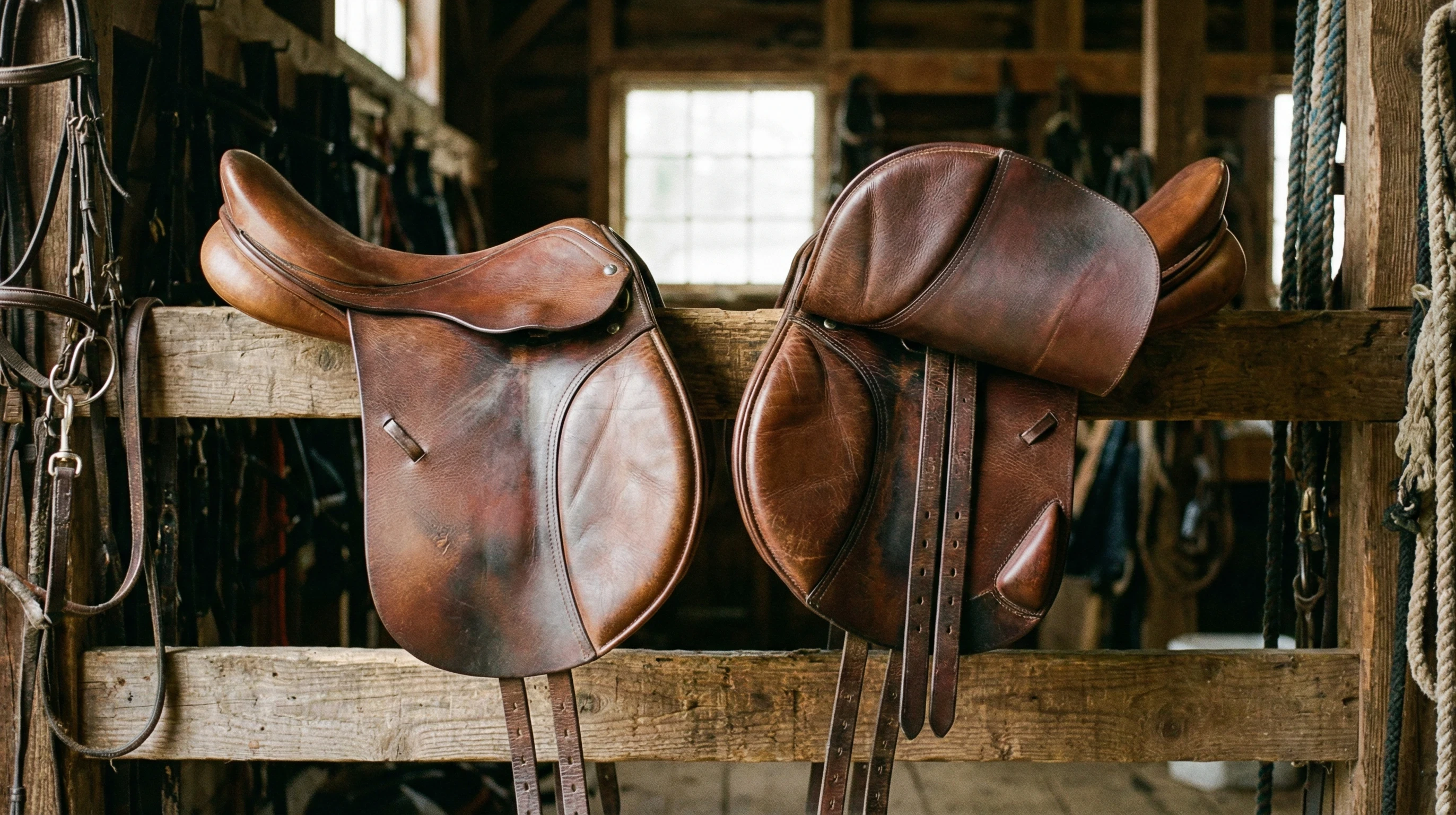
For beginners, most instructors use whatever saddle is available and fits the child best, whether monoflap or doubleflap. Both are totally fine for young riders as long as the saddle is the right size.
Some kids like the close contact feel of a monoflap, while others might prefer the sense of security a doubleflap gives. Read my post, “How to Choose Between Monoflap and Double Flap Saddles.” The real priority is good fit, not the flap style. Let the instructor match the equipment to your child’s needs; comfort breeds confidence.
Ways to Support Nervous Kids Who Stay Quiet
Some children hide their fear to avoid letting down parents or instructors. I’ve found it helps to check in after lessons. Ask open, low-pressure questions like, “How did you feel that time?” or “Was anything hard today?”
Watching for body language like stiff shoulders, quiet voices, or a sudden drop in enthusiasm is helpful too.
If your child is nervous, stick with confidence-building activities like groundwork or leading before getting back in the saddle. Building trust with one horse and one instructor over several weeks can help most shy riders enjoy dressage at their own pace.
Encouragement, patience, and sometimes a favorite treat after riding can give even anxious kids a boost.
Frequently Asked Questions
Is dressage safer for children than jumping or eventing?
Dressage usually involves less speed and no jumping, making it safer than disciplines that rely on fast movement or obstacles. That said, any riding discipline has risks, so supervision and the right safety measures are always needed.
At what age can my child safely start riding dressage?
Most kids are ready to begin lessons around 6 to 8 years old, when they can listen, follow instructions, and physically handle the activity. Every child is different, so consider maturity and size more than age alone.
Does saddle fit affect my child’s confidence?
Absolutely. A well-fitting saddle lets your child focus on riding instead of worrying about slipping or falling. Bad fit can make a child tense up or develop bad habits, which can change how they feel in the long run.
How do I spot a safety issue during lessons?
Look for loose tack, a child who seems upset, or distractions in the environment. Never hesitate to ask the instructor about anything that doesn’t feel right.
What can I do to make riding fun and safe?
Set achievable, low-stress goals and help your child celebrate every improvement. Remind your young rider that everyone, even professionals, started as a beginner. Get them involved in barn chores or horse care—it builds respect for safety while deepening their love for horses.
What if my child wants to quit after a fall?
Give them time to talk and decide at their own pace. Sometimes, watching other riders or helping in the barn can ease them back into the saddle. Stay calm and keep your focus on your child’s comfort.
Wrapping up, dressage can be a wonderful way for kids to connect with horses and grow as riders. With the right attention to safety and encouragement, young riders can thrive while staying secure every step of the way.
Did you find this post helpful? If so, I’d love to hear your comments below.
Thanks for this really helpful guide on dressage safety for kids. I’ve read a few of your other articles as well, and I really like how you keep everything practical and easy to understand, especially for parents who might be newer to the sport. Are there any safety mistakes you see most often with beginner riders? I love the charts you put on your article and perhaps a common mistakes chart would be awesome too.
Hi Kevin.
Thank you so much — I’m really glad you’re finding the guides helpful! Safety is such an important part of the journey in dressage, especially for kids and families who are newer to the sport.
One of the most common mistakes I see with beginner riders is assuming a “one-size-fits-all” approach to safety gear and tack — every child and every horse is different, so proper fit and regular checks make a huge difference. I also often see riders jumping ahead before the basics (like secure heels, proper helmet fit, and consistent balance) are truly solid.
A “common mistakes” chart is a great idea — I’ll definitely consider adding something like that in a future update!
Thanks again for the thoughtful comment!
To be honest, I really don’t know much about horseback riding but, this article came at just the right time. Thank you for breaking it down in such an easy to understand way. My granddaughter is only 6 and has recently become interested in horses and ponies, and I’ve been torn because the lessons and equipment seem expensive, especially if she ends up losing interest. Safety is my biggest concern since I don’t know much about riding at all.
My question is, for a complete beginner that young, is it better to start with lesson programs that provide the equipment, or should we buy basic safety gear like a helmet right away before she starts?
Hi Jason.
That’s such a sweet age to start! For a 6-year-old beginner, it usually makes sense to start with a lesson program that provides the basic equipment — especially the helmet — so you can both get a feel for riding without a big upfront cost. Most quality programs use properly fitted safety gear and teach kids how to use it right, which is the most important thing.
If she really loves it and keeps going, then investing in your own helmet and boots (proper fit matters!) can be a great next step. But to begin, let the instructors guide you on gear — safety first, and only buy what you’ll truly need as she grows!
Thanks for stopping by. Let me know if I can help you further.