
Reading English saddle measurements accurately makes a big difference in comfort, confidence, and overall riding performance. I’ve seen so many riders, myself included, end up frustrated with a saddle that just doesn’t fit right, even though it looked “correct” online or on paper.
Understanding exactly how English saddle measurements work doesn’t need to be confusing. With a clear grip on what each measurement means and how to check them, buying or upgrading a saddle gets a lot less stressful.
This post may contain affiliate links. I may earn a small commission if you purchase through my links, at no extra cost to you.
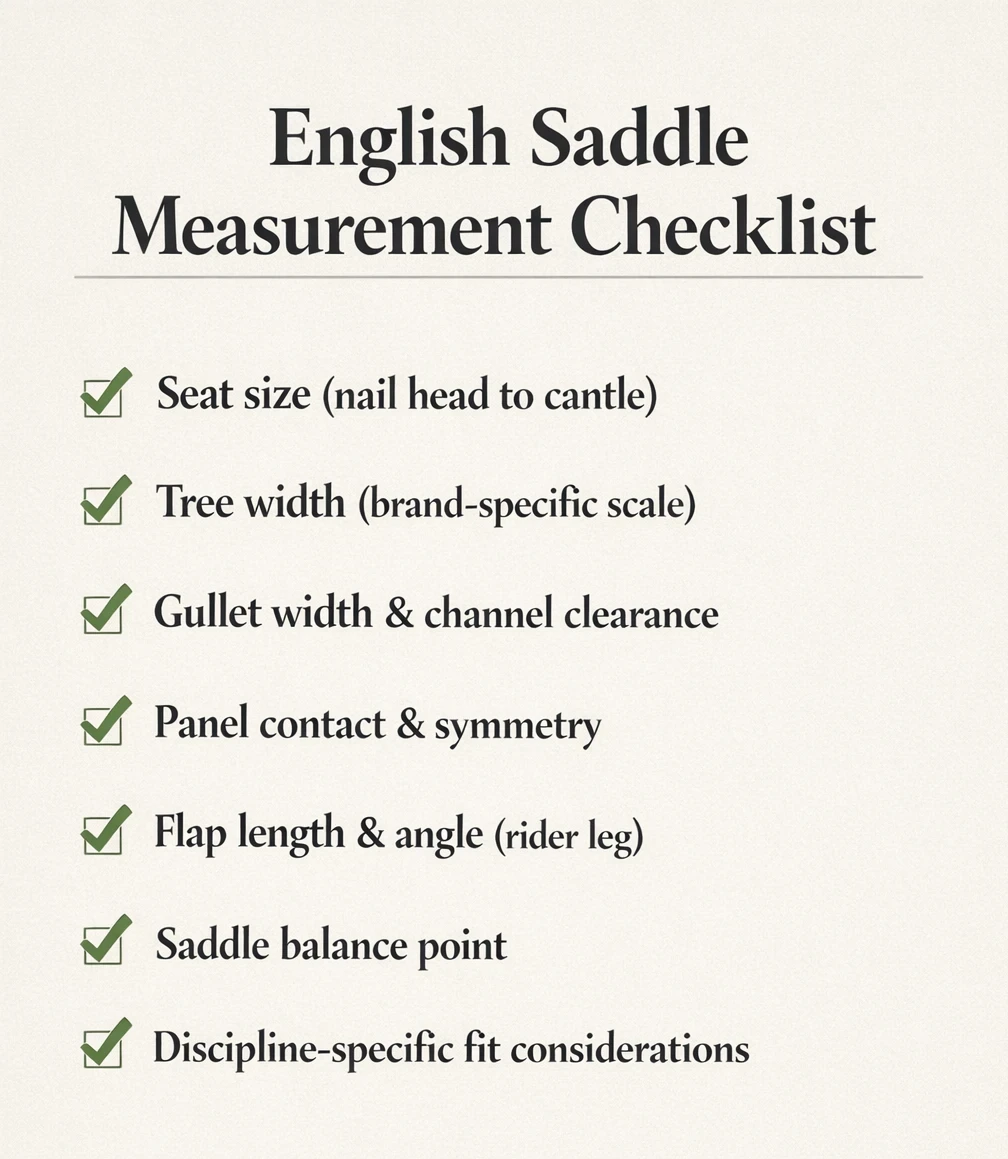
Seat Size & Rider Fit: What Really Matters?
If you’ve shopped for English saddles, you’ve probably run into sizes like 16.5”, 17”, or 17.5” and wondered what those numbers check.
These seat measurements refer to the length of the saddle seat, not the width or depth, and they make a big difference in how you feel when you ride.
- What does a seat size actually measure? It’s the distance (in inches) from the fixed nailhead near the saddle’s pommel (front) diagonally to the center of the cantle (back). This isn’t about how wide the seat is, just how long it is.
- Why does it matter? A seat size that’s too small makes you feel perched or cramped, while one that’s too big can feel insecure or slippery.
Sometimes riders ask, “Should I go by my pants size, height, or what?” Usually, seat size is matched to the rider’s thigh length and general build, not just overall height or weight.
For example, most adult riders end up around a 17” or 17.5” seat, but someone tall with long femurs might need bigger, and a more petite rider might ride comfortably in a 16.5”.
How To Measure an English Saddle Seat Correctly
Grab a firm tape measure. Put it at the center of the nailhead on one side of the pommel. Run it diagonally, not straight back, to the center, top edge of the cantle.
This is the “seat size”—and it’s the measurement you’ll see described when you shop. Some brands measure straight to the deepest point of the seat, but the standard is nailhead to cantle.
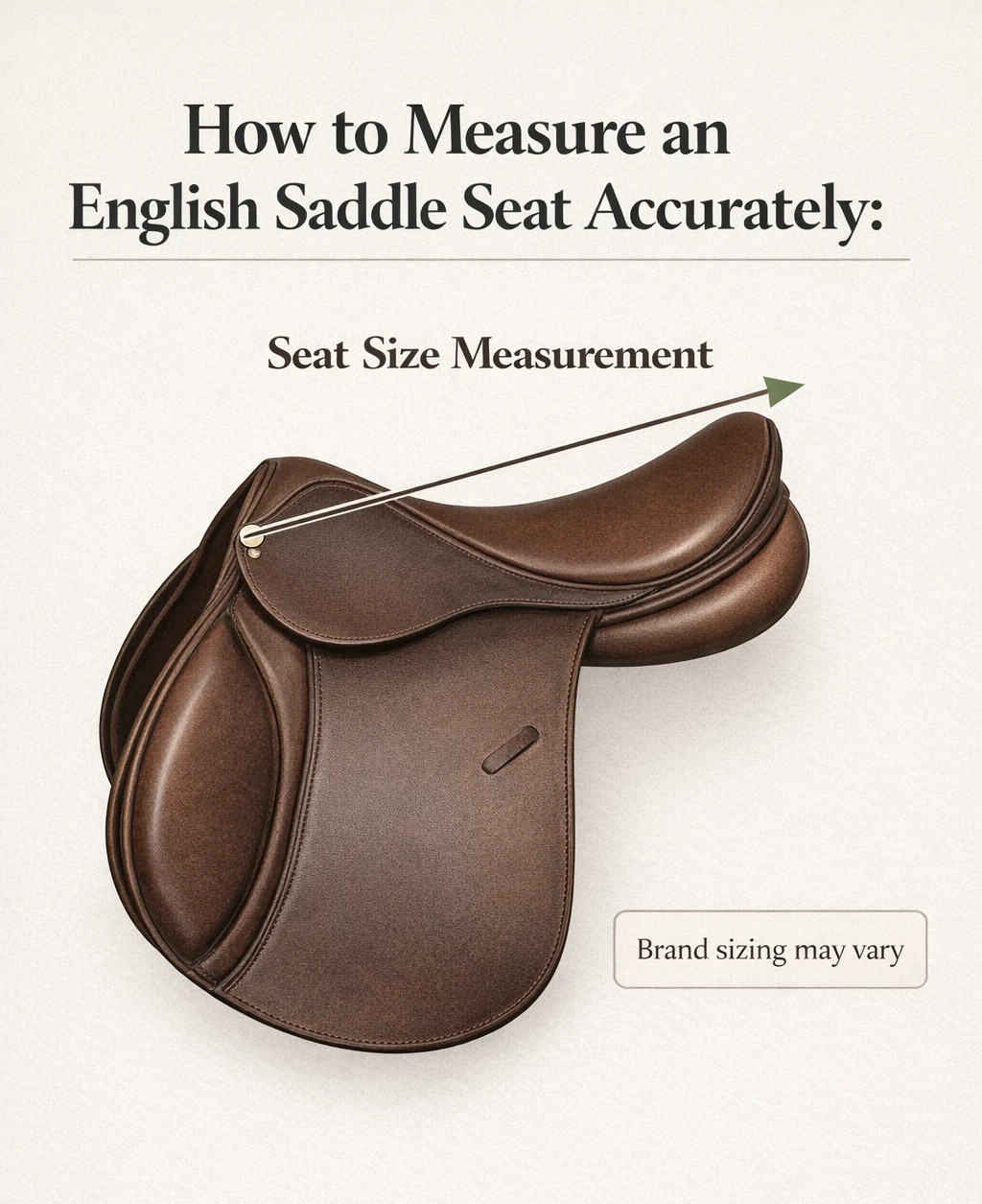
Don’t get tripped up when comparing seat sizes between brands. Each maker shapes their seats differently. A 17” in one brand might feel roomier or snugger than a 17” in another. Always look at actual measurements and, when possible, sit in the brand and model you’re shopping for.
Classic Seat Size Guide for English Saddles
- 16–16.5” – Often works for very petite adults or juniors moving up from pony sizes
- 17” – A good starting point for most average-sized adults
- 17.5” – Often better for taller adults or riders wanting a bit more space
- 18” and above – Best for tall, longlegged, or fullerfigured adults who struggle to get comfortable in standard seats
Reading Tree & Width Measurements (Narrow, Medium, Wide…What?)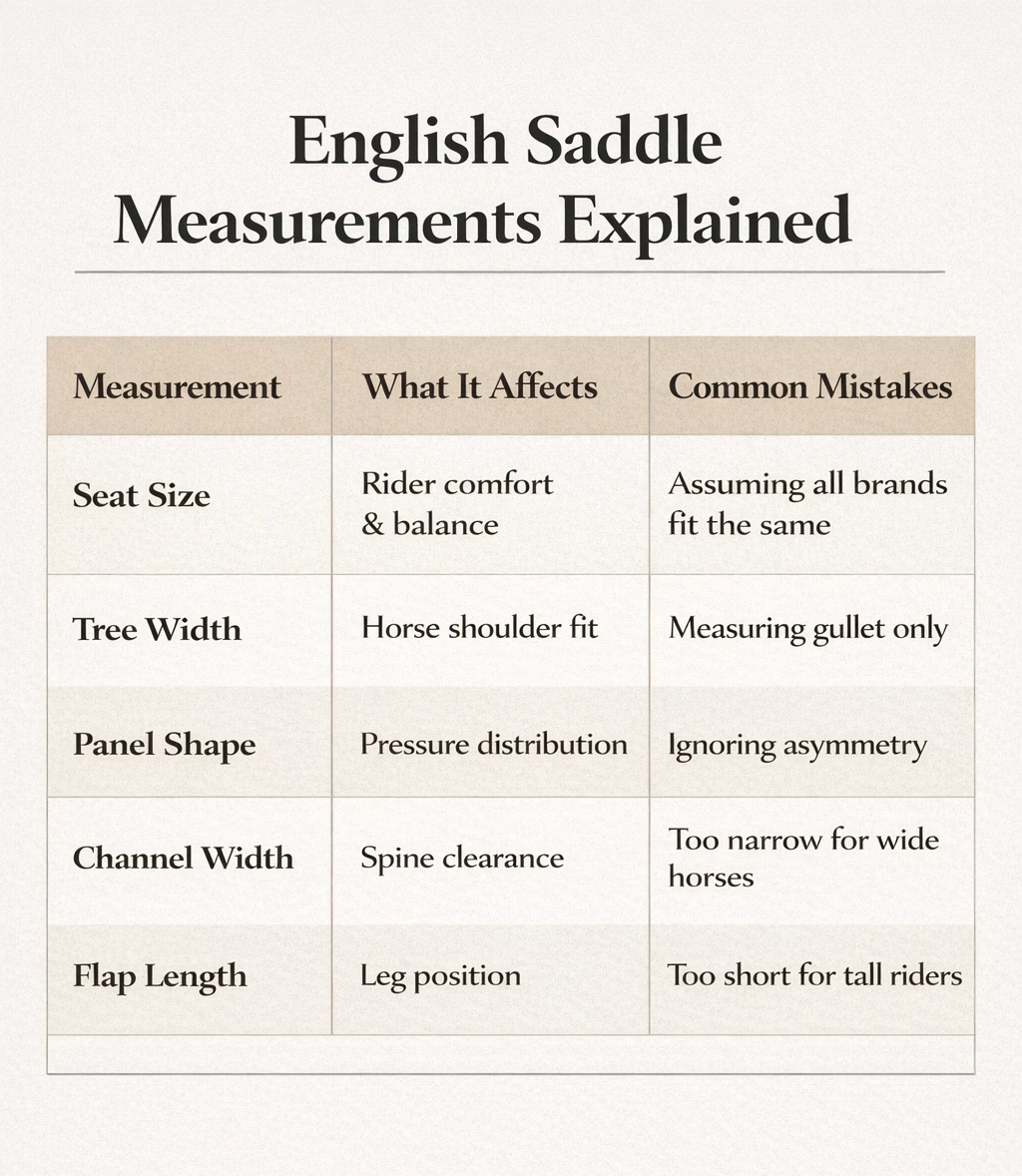
Seat size is just part of the story. The next big thing is tree width, which has everything to do with how the saddle fits the horse’s back. Tree width describes how wide the part of the saddle that sits over the horse’s spine is, so think of this as the horse’s “shoulder room.”
- What do tree sizes mean? You’ll see terms like Narrow, Medium, Medium Wide, and Wide. These describe how much room the saddle tree gives the horse at the withers and shoulders.
- Are tree widths the same across brands? Definitely not. Saddle makers don’t use one universal measurement. One brand’s “Medium” might be another’s “Medium Wide.”
- What about gullet width? Sometimes, you’ll see tree or gullet width measured in inches or centimeters between the points (the front edges) of the tree, up by the pommel. This can help, but even exact measurements can feel different when the panel and saddle shape change between brands.
- Does saddle discipline affect tree width? Totally. Jump saddles sometimes have slightly narrower gullets for close contact, while modern dressage saddles usually offer a wider channel to distribute weight more evenly.
So, measuring tree and width is about more than just taking a number. The horse’s wither shape, back muscle, and curvature all play a role.
Always take a wither tracing or use a saddle fitting tool if you’re not sure which width fits your horse. Getting professional advice or a custom fitting may also help, especially for horses with unique back conformation.
Panel, Gullet & Channel: The “Invisible” Measurements
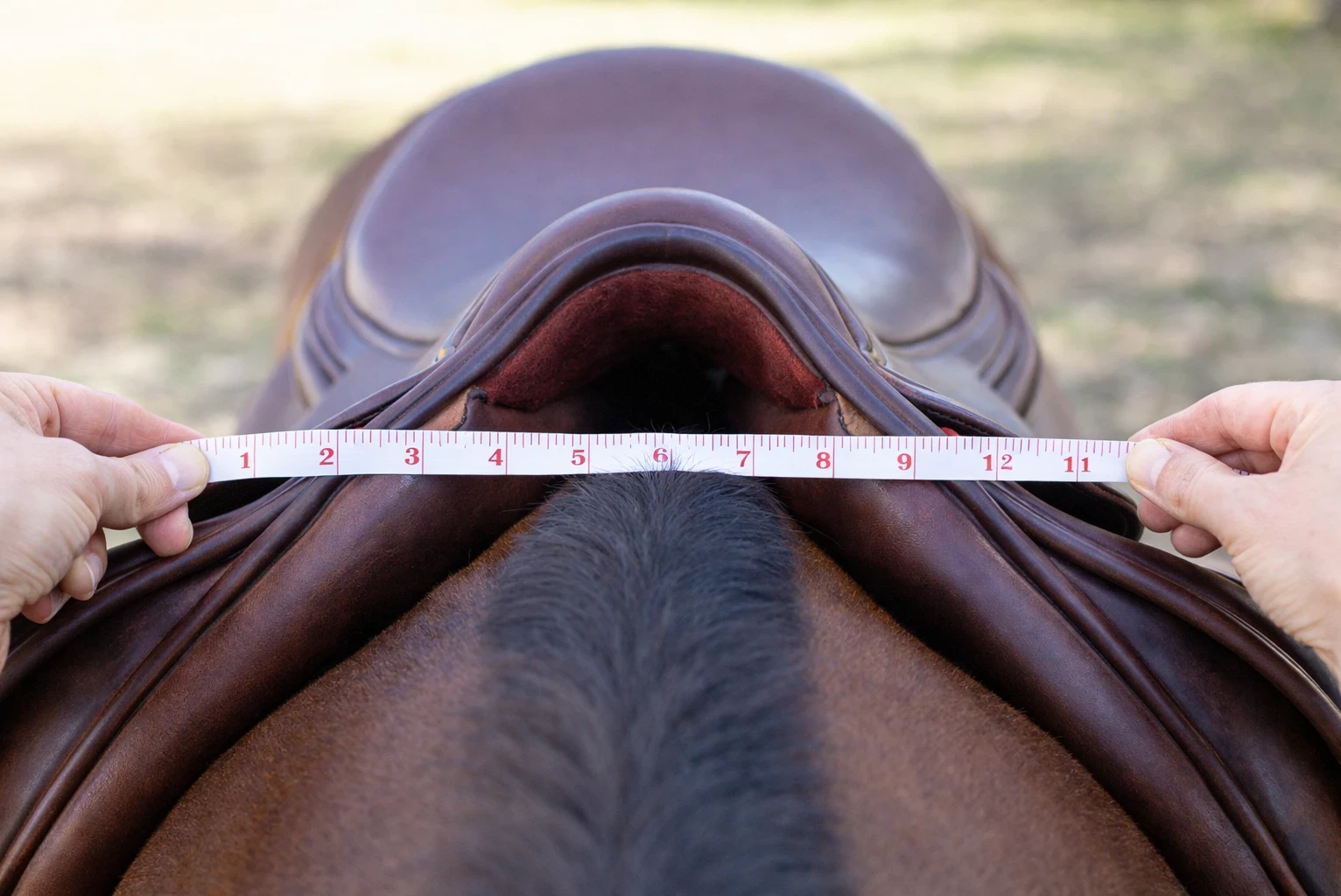
The gullet (channel) and saddle panels are often overlooked, but they really impact both horse comfort and safety. Before I get into the specifics, I invite you to read my post, “English Saddle Fit for Young Horses.”
- How do I measure gullet and channel width? Set the saddle upside down. Measure the space between the panels at the front, middle, and rear. These should be wide enough to clear the horse’s spine by a couple of fingers at every point.
- Why does panel shape matter? Even with “perfect” seat and tree measurements, a deep or bulky panel can change the balance and feel. It can also put pressure where you don’t want it.
- Can two saddles with the same size fit differently? Easily! Panel thickness, stuffing, and the angle of the tree points all play a role. One 17.5” widetree can feel totally different on your horse or under you, compared to another.
I’ve seen horses go much better in one saddle than another, even when the measurements look identical. That’s why trying a saddle on the horse and doing a quick “two-finger” gullet clearance check can really help confirm fit.
If you’re shopping for a specific type of riding, like eventing or hunters, the panel design can be the difference between a happy horse and a grumpy one. Here’s a post on how saddle flap design affects fit.
Dressage vs Jumping vs All-Purpose Saddles: Decoding the Differences
Seat size and tree width are part of every English saddle, but different styles (like dressage, jump, and all-purpose) can throw you off if you’re not expecting the differences. Here’s a helpful post on how dressage saddles fit differently.
- Dressage saddle fit: These usually have deeper seats and longer, straighter flaps. They tend to feel more spacious (especially front to back) than a jump saddle of the same “size.” Lots of riders go down half an inch in seat size for dressage compared to jumping.
- Jump saddle fit: Jump saddles have flatter seats and forwardcut flaps, so your thigh lands in a different place. Sometimes, you might want a bigger seat if you like lots of room to move.
- Flap length and angle: Tall riders or those with long thighs should check flap length (measured from the stirrup bar to the bottom of the flap) and flap angle. If your knee pokes over the flap when riding, the flap is probably too short or too straight.
All-purpose saddles blend some of the features of both, aiming to give flexibility for flatwork and small jumps. However, the fit should still be checked to make sure you get comfort for both you and your horse.
Buying Used or Online: Staying Smart With Measurements
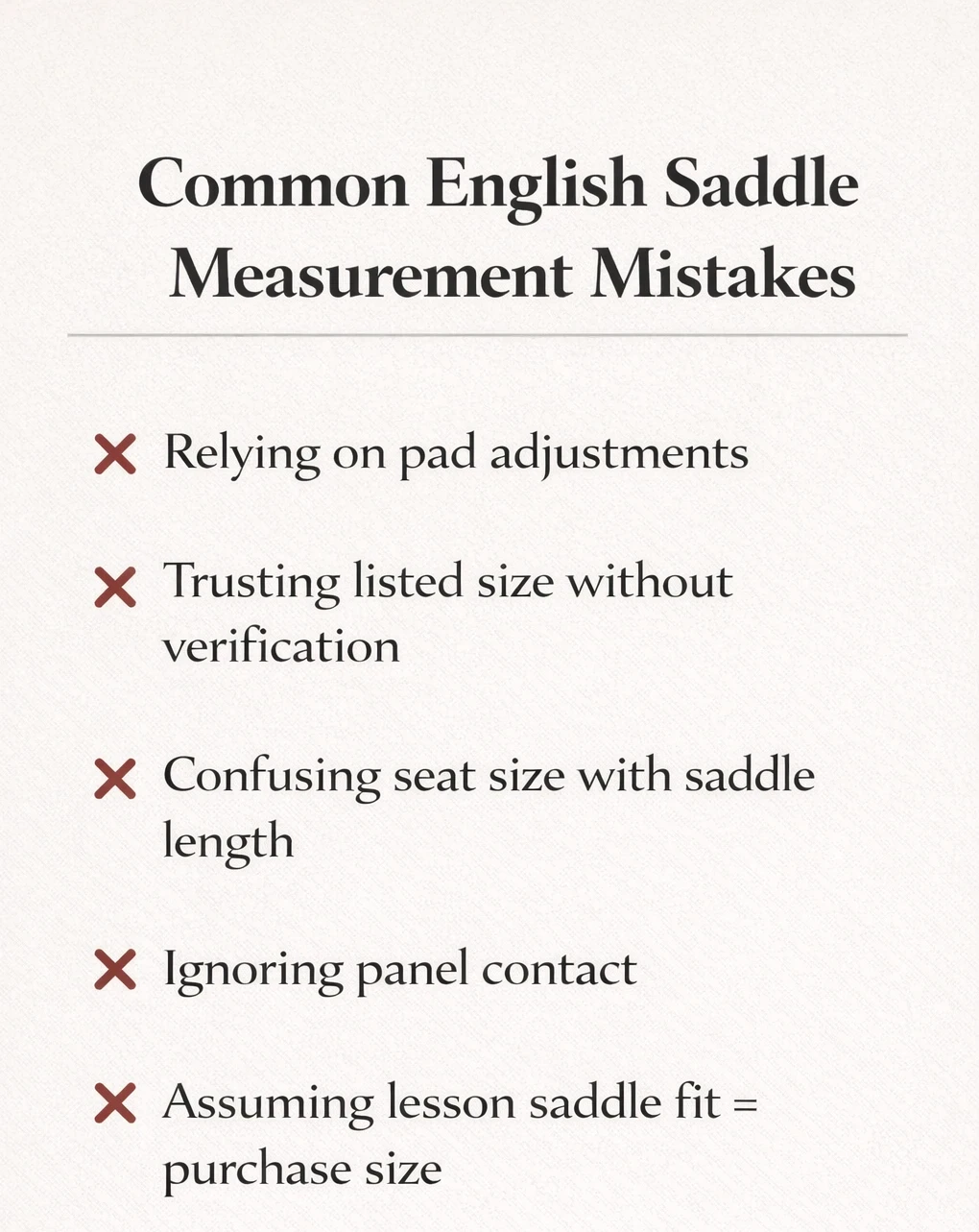
Shopping for a used or new-to-you saddle online can be really nerve wracking if you don’t trust the measurements you see. Not all sellers measure the same way (or correctly).
So doublechecking is super important before handing over your money.
- Always ask for a photo of the tape measuring the seat—nailhead to cantle.
- Request pictures of the saddle upside down, showing the gullet width near the pommel and at the back.
- If the tree size isn’t stamped, ask for tree pointtopoint measurements in inches or centimeters.
- If you’re still not sure, ask if you can send a wither tracing to compare.
Sometimes, a saddle will “measure right” but still feel wrong because the balance, twist, or panel shape just doesn’t suit your body or your horse’s back.
Trying the saddle in person, if possible, or having a generous trial period, always helps reduce surprises. When shopping online, doublecheck all details and look for sellers with good return policies.
Rider vs Horse Fit: Which Comes First?
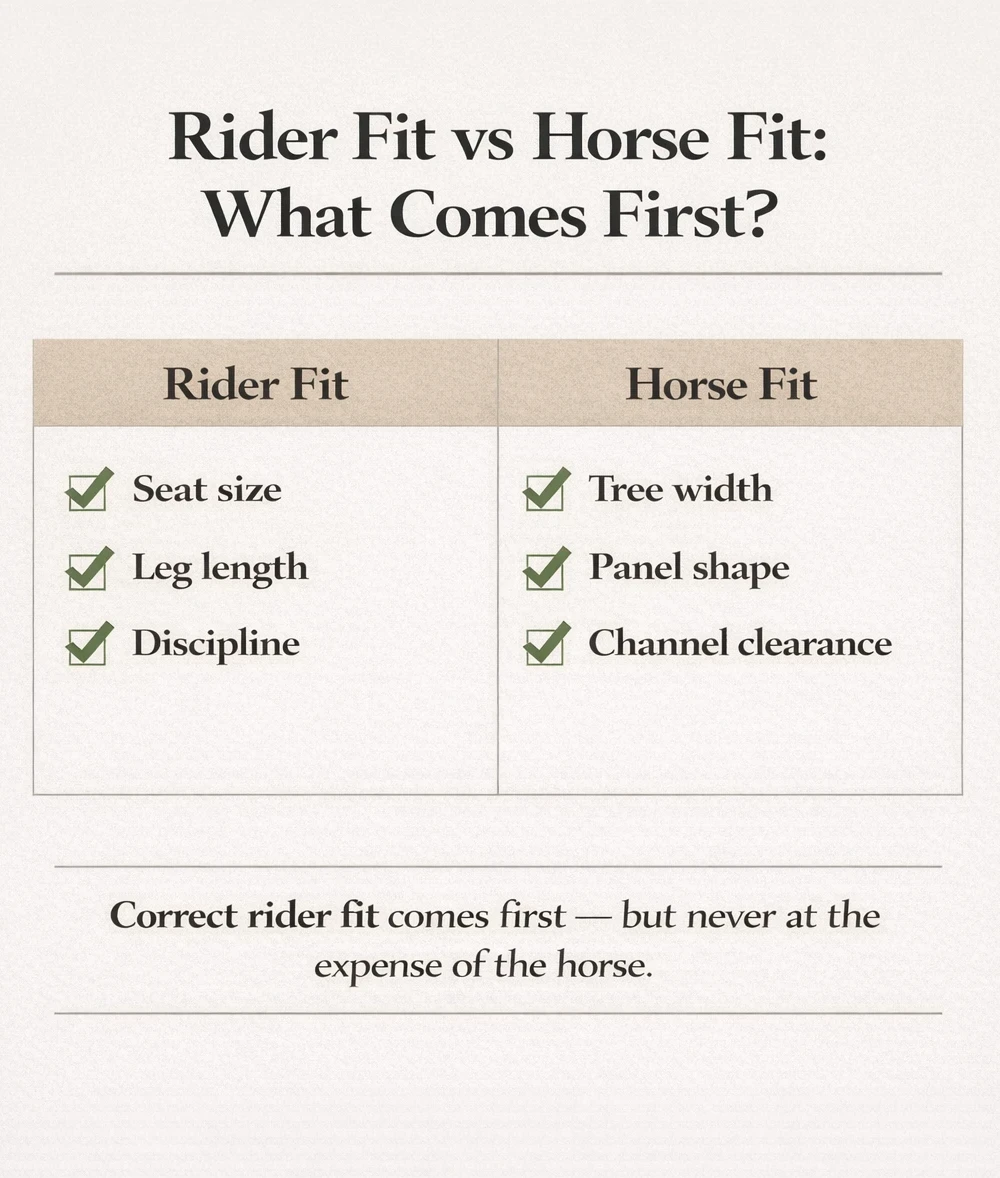
It’s tempting to focus on your own comfort in the saddle, especially if previous saddles left you pinched or sliding around. But if the saddle’s tree width or panel shape don’t suit your horse, both of you will struggle.
Usually, I narrow down tree width to fit my horse’s shape, then pick the right seat size and flap that works for my leg length and build.
- If panel or tree are wrong for your horse, pads only offer minor relief; they can’t fix a truly poor saddle fit. Here’s a post on how leather saddles mold to rider and horse.
- If seat or flaps are wrong for you, riding is less comfortable, but you might get by with small tweaks, especially if only slightly off.
Remember, the key is both comfort and safety for horse and rider. Working with a fitter can help ensure both get what they need for happy riding.
Quick Fit-Checking Checklist for Online Shoppers
- Check clear seat size (nailhead to cantle photo) and tree or gullet measurement from the seller.
- Request upsidedown gullet photos to confirm channel width is generous enough for your horse’s spine.
- Ask about panel shape or thickness, especially for horses with flat, curvy, or wide backs.
- If buying for a tall or leggy rider, confirm flap length and cut, not just the seat!
Doublechecking these basics helps avoid expensive fit mistakes, especially if you can’t try before buying. When in doubt, reach out to an experienced saddle fitter. It’s worth the peace of mind.
English Saddle Recommendations (Fit-First Choices)
- Best for Generous Seat Sizes: Bates and Kent & Masters usually offer true size, roomy seats with lots of flap options for riders needing extra space.
- Great Saddles With Adjustable Gullets: Wintec and Bates have super adjustable gullet systems. Pretty handy if you have a young horse or several horses with different shapes.
- Best Budget Options With Reliable Fit: Collegiate and Thorowgood often deliver solid comfort and clear sizing under $1,200, plus easy to understand fit guides.
- Best Dressage Saddles With Clear Measurement Guides: Bates, Wintec, Prestige, Fairfax, and Albion publish super detailed sizing info and offer trials; helpful for first time buyers who want prolevel accuracy.
Frequently Asked Questions
How do I know which seat size fits me best?
Sit on a saddle in your usual breeches. With your butt in the center, aim for about a hand’s width (width of your palm) behind you before the cantle. If you’re squished or have too much room, try a size up or down.
Can a saddle be made wider or narrower?
Some saddles (especially with adjustable gullets) can have the tree width changed. For fixedtree saddles, a good fitter can sometimes adjust the flocking slightly, but big tree size changes aren’t usually possible.
Why does my seat size in a dressage saddle feel different than in a jump or allpurpose saddle?
Dressage seats are deeper and usually longer. Many riders go “down” half a size from their close contact seat for a similar feel. Always try both in person if possible.
Do I need to buy brand new to get the right measurements?
Not at all. Lots of great used saddles are out there. Just make sure you check real measurements (photos are great) and, if possible, plan for an inperson trial on your horse.
Did you find this post helpful? If so, please leave your comments or questions below.
What part of English saddle measurement do riders most commonly misunderstand when buying a saddle?
How has an incorrect seat size affected your balance or confidence in the saddle?
Why do you think saddle measurements vary so much between brands, even when the seat size number is the same?
Should rider fit or horse fit take priority when choosing a saddle, and why?
How helpful do you think you could find online saddle listings when accurate measurements and photos are provided?
Hi S. J. Thanks for your questions.
Most riders misunderstand seat size vs actual fit — many think a 17” will feel the same in every brand, but shape, depth, and how it’s measured (from nailhead to cantle) can make a huge difference in comfort.
Wrong seat size can throw off your balance — too small feels cramped and perched; too big feels insecure and makes you slide, which definitely affects confidence and stability.
Measurements vary by brand because there’s no universal standard; the same “number” can feel roomier or snugger depending on how the seat is cut and how the tree is shaped.
Horse fit should come first — if the tree width and panel shape don’t suit your horse, neither of you will be comfortable. Then you adjust seat size for the rider’s comfort.
Accurate online listings can be very helpful — clear seat measurements and good photos (especially of the gullet and underside) make it much easier to judge fit before buying.
I hope this helps.
Such a clear, confidence-building breakdown of English saddle measurements. I really appreciate how you explain seat size as nailhead to cantle and why that diagonal matters, because that detail trips up so many buyers online. The comparisons between brands, disciplines, and panel designs were especially helpful, your reminder that a 17” isn’t always a true 17” across makers is spot on. I also love the practical tips for shopping used, like asking for upside down gullet photos and wither tracings. It’s advice riders can actually use, not just theory. The way you balance rider comfort with horse fit, and explain why the horse’s needs usually come first, is refreshing and responsible. This post takes a stressful topic and makes it feel manageable, even empowering. Bookmark worthy for anyone saddle shopping or reassessing fit. Perfect resource for beginners and experienced riders alike navigating confusing saddle specs with confidence.
Thank you so much for such a thoughtful and encouraging comment! I’m really glad the explanations around seat measurements, brand differences, and used-saddle tips were helpful—and that the balance between rider comfort and horse fit came through clearly. Saddle shopping can feel overwhelming, so it means a lot to hear that this made the process feel more manageable and empowering. I truly appreciate you taking the time to share your feedback!