
Preventing Saddle Injuries in Children is an important topic in English riding. Saddle-related injuries happen more often than many parents realize, especially among children, youth, and teens who ride using English saddles.
These injuries can range from mild discomfort all the way to issues that keep young riders out of the arena for weeks or longer.
Knowing how to spot risk factors and take steps to prevent problems is important for keeping young equestrians safe and making riding enjoyable for everyone involved. For more in-depth information how to identify saddle fit problems, please see my post, “How To Identify An Ill-Fitting English Saddle: Signs And Symptoms.”
Just a friendly disclaimer for transparency sake. This post may contain affiliate links. I may earn a small commission if you purchase through my links, at no extra cost to you.
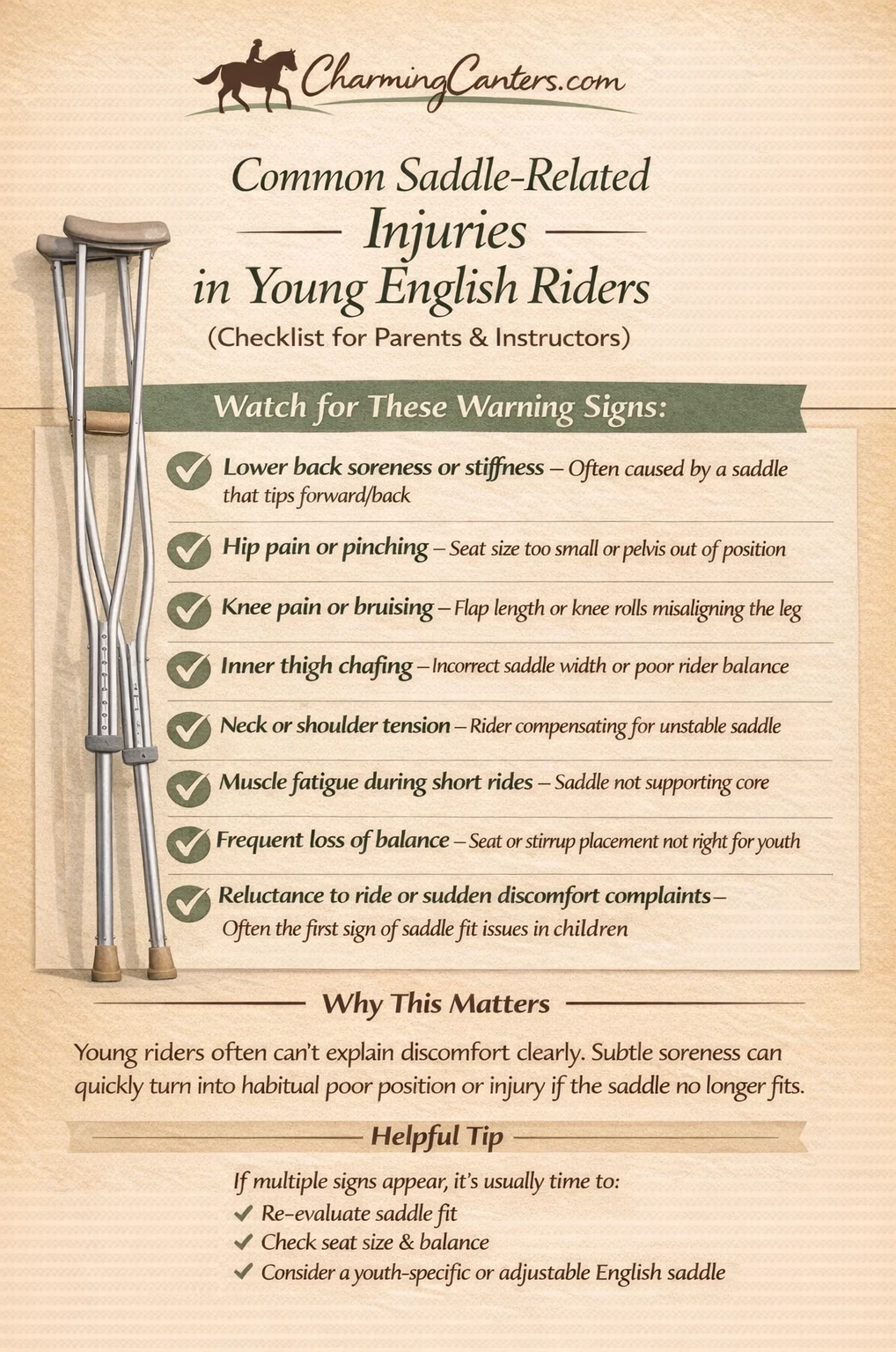
Why Saddle Related Injuries Happen to Kids and Teens
English saddles are designed for close contact and precision. Unlike some Western options, they offer less padding and support. Kids and teens are still growing, with sensitive muscle groups and joints.
A poor fit or bad riding habits can quickly pile up to aches, pains, or worse. Common saddle related injuries in young English riders include:
- Saddle sores: Irritation or blisters on the inner thigh or seat bones, often from friction or pressure.
- Pinched nerves or bruising: Caused by edges of a poorly fitting saddle putting pressure on nerves or blood vessels.
- Back or pelvic pain: Resulting from awkward positioning or lack of support.
- Knee pain: Often from riding too long with short stirrups, which puts strain on young joints.
Understanding why these happen helps spot early warning signs and avoid bigger issues as time goes on.
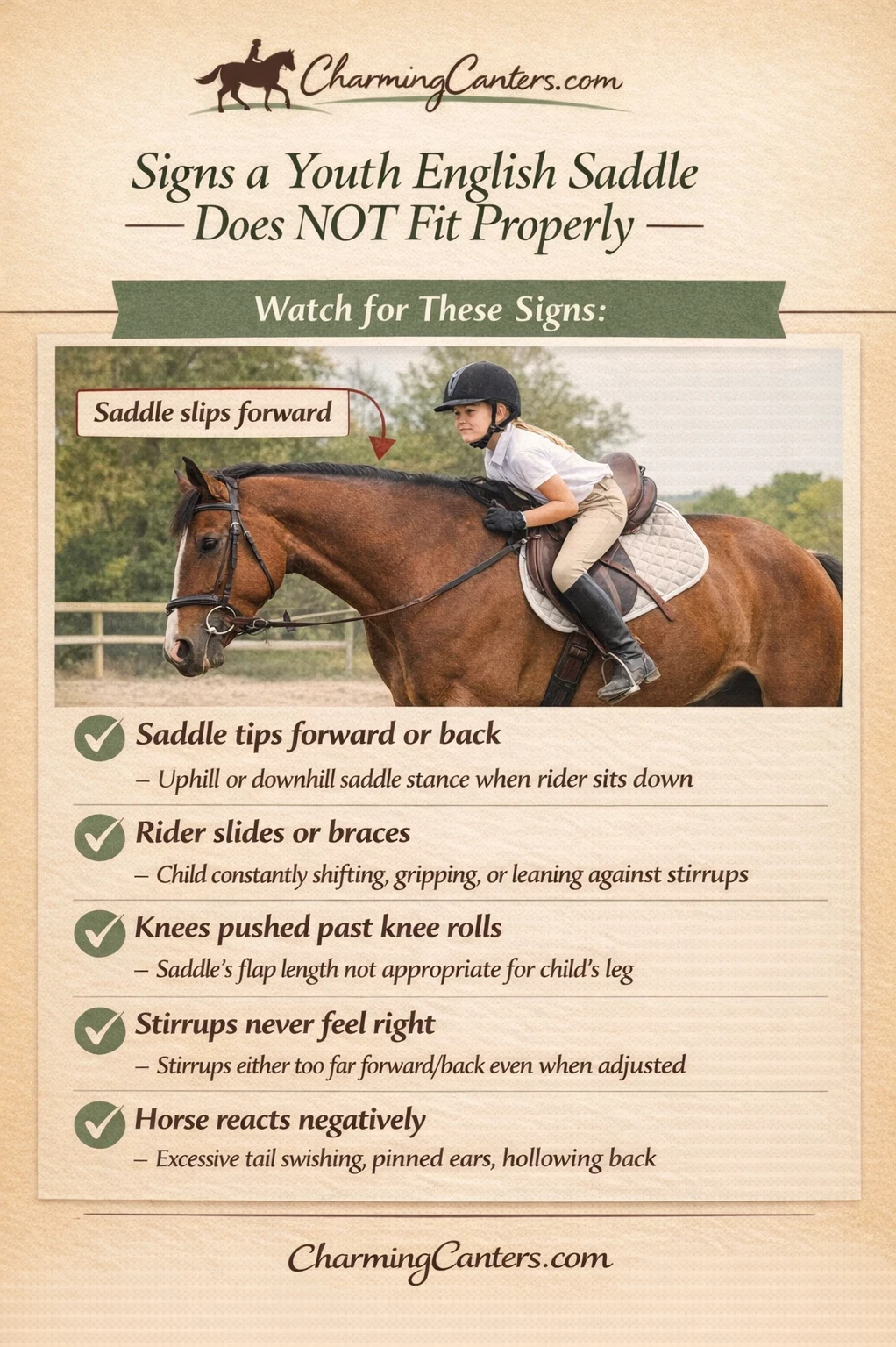
Signs a Youth Saddle Does Not Fit Properly
Getting the Right Fit: Picking an English Saddle for Kids
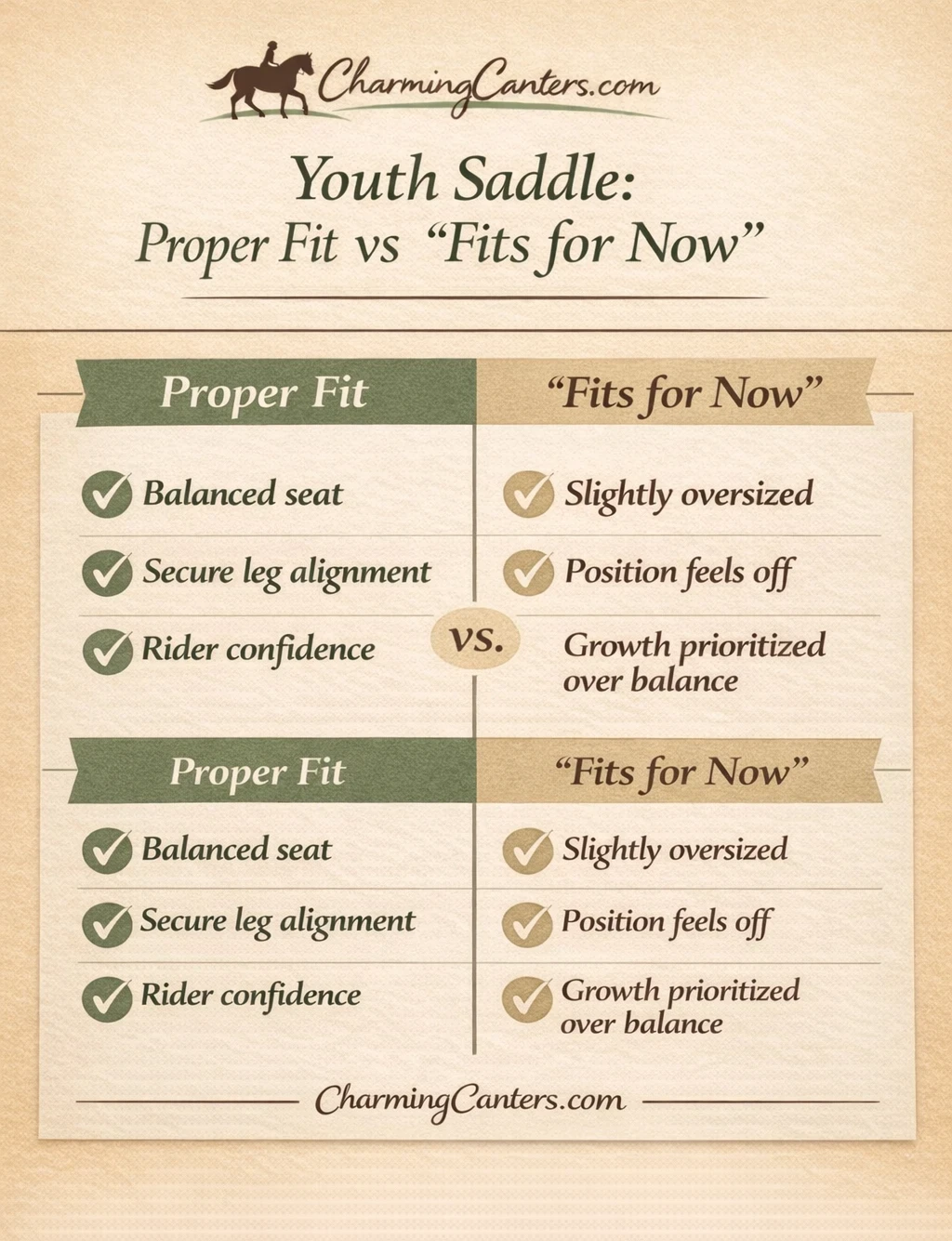
Fit is the first thing I look for when helping kids start riding with English saddles. The wrong saddle can cause problems really fast. Here’s what I check for in a good fit for children and teens:
- Seat Size: Kids shouldn’t be swimming in the saddle or crammed in. They need about a hand’s width of space behind them when sitting in the deepest part of the seat.
- Flap Length: The saddle flaps need to match the kid’s leg length. If they’re too long, kids may have trouble reaching the stirrups, and if they’re too short there isn’t enough support.
- Gullet Width: The saddle’s gullet (the channel over the horse’s spine) should be wide enough to avoid pinching, protecting both horse and rider.
- Padding and Grip: Look for saddles with cushioned seats and grippy leather for extra stability and less sliding.
It’s worth checking saddle fit every few months, especially for kids going through growth spurts or those riding different horses. Growth in kids can come all at once and completely change what saddle fits best.
So regular checks are key. Some tack shops will even offer free or discounted fitting checks for growing riders.
Youth Saddle: Proper Fit vs “Fits for Now”
Building Healthy Riding Habits From Day One
Even with perfectly chosen tack, young riders need smart riding habits to stay comfortable and prevent injury. Here are the basics I always reinforce in the arena:
- Correct Posture: Balanced shoulders, straight backs, and relaxed hips go a long way. Hunching or leaning forward adds strain, especially with a flat English saddle.
- Proper Leg Position: Encourage heels down and knees relaxed. Kids often grip too tightly with their knees or let their toes point out, leading to knee pain and saddle sores.
- Take Frequent Breaks: Young riders should avoid long stretches in the saddle. Five minute breaks to stand or stretch every 20 to 30 minutes make a real difference in comfort and energy.
- Stay Hydrated and Dress Right: Moisture wicking breeches and padded underwear help reduce friction, while water breaks help with muscle cramps and tiredness.
Regular reminders help these tips become second nature. Something as simple as adjusting stirrup length or standing in the stirrups every few laps can make rides much more comfortable for kids.
Routine Checks: Tack, Horse, and Rider
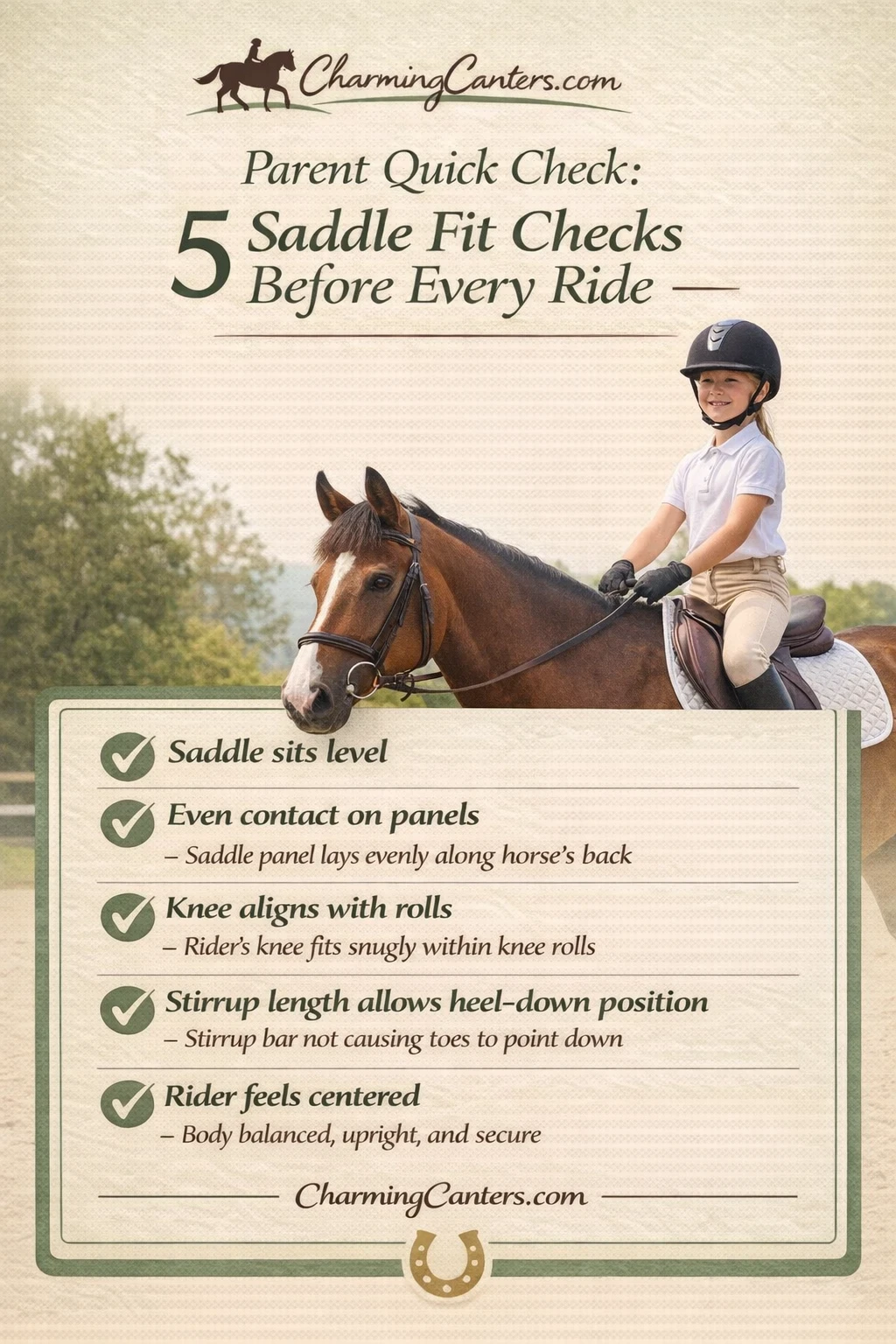
Keeping an eye out before and after each ride is the best way to stop issues before they turn into injuries. Here’s my quick checklist for keeping things safe and comfy for young English riders:
- Saddle Condition: Check for loose stitching, worn padding, or sharp edges that could dig into a child’s leg or seat.
- Stirrup Leathers: Make sure they’re not twisted, stretched, or uneven. If one leather is longer than the other, it can make riders lopsided in the saddle.
- Horse’s Back and Sweat Marks: Uneven sweat patterns or signs of soreness can mean the saddle isn’t sitting right or has moved during riding. Spotting these early can prevent soreness or injury for both horse and rider.
- Rider Comfort: Ask kids about any pain or numbness. If they mention tingling, sore knees, or aching backs, take it seriously and tweak tack or riding time as needed.
Being open and talking after each ride lets kids know they can share anything weird or uncomfortable before it becomes a big deal.
Advanced Tips for Extra Safety and Comfort
Playing it safe is an ongoing process. After covering the basics, there are some extra tricks to make riding in an English saddle even safer for children:
- Use Half Pads or Gel Pads: These give a little extra softness and help spread out pressure points, which is especially useful for new riders or sensitive horses.
- Try Different Saddle Models: Some English saddles have a deeper seat or extra kneerolls for more security and less sliding around. This helps younger kids feel steadier and more in control.
- Get a Pro Fitting: Many tack shops offer professional saddle fitting services. Bringing in a specialist every year or so can spot issues before they become real problems.
- Stirrup Selection: Lightweight and wider base stirrups give extra stability for young riders and can help prevent foot or ankle discomfort.
Taking the time to get the right setup pays off with more confident, happier rides. Less complaining about sore legs or backs means more fun in the saddle and more progress as a rider.
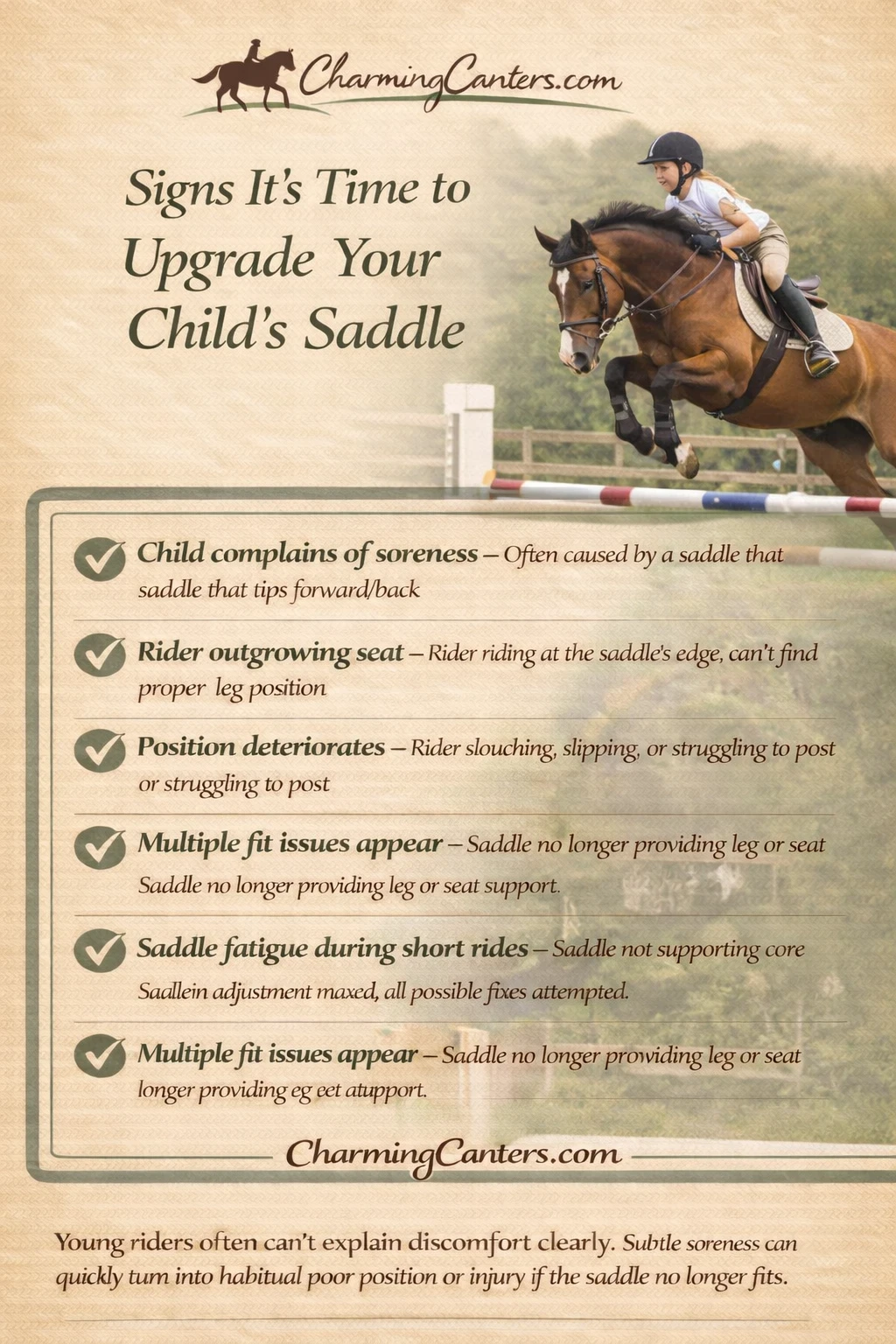
Signs It’s Time to Upgrade Your Child’s Saddle
🐴 Best English Saddle Picks for Young Riders
⭐ Beginner / Entry-Level Saddles
- Wintec Kids Saddle – Very popular for young riders learning basics; synthetic, easy-care, with safety handle and adjustable panels — great first saddle.
- Henri de Rivel Vegan‑X Junior Close Contact Saddle – Synthetic leather, weather-resistant, and lightweight — perfect for lessons, trail rides, pony club, and summer camps.
- Kincade Child’s Leather Close Contact Saddle – Traditional leather option with memory-foam panels for comfort and balance.
🐎 Mid-Range / Growth-Oriented Saddles
- Bates Elevation Pony w CAIR – For a 10-year-old rider, a Bates Elevation saddle offers security, comfort, and excellent horse fit with features like a deep, supportive seat for stability, grippy leather for confidence; Adjustable Gullet, and CAIR panels for perfect pony comfort and even weight distribution
- Henri de Rivel Memor‑X Close Contact Youth Saddle – Excellent for riders progressing in lessons; memory foam and removable knee blocks help position.
Higher-Quality / Specialty Options
- El Campo Shorty SKL 1211-7104 – Premium saddle with adjustable features — good choice if you want something that can “grow with” the rider.
- English Jumping Leather Saddle for Kids – A more traditional jumping style that supports forward seat and jumping position as experience increases.
What Parents Ask Most About Saddle Safety for Kids
Parents have a lot of questions about keeping their kids comfortable and safe on English saddles. Here are some of the most common, along with straight up advice:
Q: How do I know if the saddle actually fits my child?
Watch how your child sits. There should be at least a finger’s width of space in front and behind them in the seat. Their feet should rest comfortably in the stirrups with heels down, knees bent naturally, and no pinching or weird balancing acts required.
Q: Are there special saddles designed just for kids?
Yes, many brands make child sized English saddles with narrower seats, shorter flaps, and lighter materials. These tweaks make it much easier for kids to stay secure in the saddle and avoid straining muscles that are still growing.
Q: What are signs my kid needs help with their saddle or riding?
Pay close attention to complaints about sore knees, numbness, or red spots on the skin after riding. Unusual walking, limping, or not wanting to ride often means something is off with saddle fit or riding routine. Don’t brush off repeated discomfort; it can almost always be fixed with some troubleshooting.
Q: Can a bad saddle cause long term problems?
If you ignore ongoing saddle issues, things can get worse, leading to posture problems, joint pain, or kids not wanting to ride at all. Taking the time to check fit and talk with your child can stop nearly all these problems before they turn serious.
Q: Should kids ride in a saddle pad only or bareback sometimes?
I suggest waiting until they have a solid seat and good balance before trying bareback. Always supervise and keep first sessions very short. Even then, using a saddle that fits well is much safer for regular riding, especially for beginners.
The Final Word: Making Riding Safe and Fun for Young English Equestrians
Comfort and safety go hand in hand with English saddles, especially for kids and teens just finding their stride. Check fit, encourage good habits, and always listen to concerns.
A little planning, plus gear that really works, keeps young riders healthy, safe, and happy in the saddle. When you’re unsure about something, talk to a coach or professional at a tack shop.
Sometimes all it takes is a tiny tweak for a much better, safer ride. Enjoy the adventure and help your child make the most of every moment with their horse!
Did you find this post helpful? If so, I’d love to hear your comments below.