
If you’re feeling a bit nervous about picking out a Wintec Pro Pony Dressage Saddle for your growing rider, you’re not alone. Many parents, young riders, and lesson families go through this tough decision-making process.
The same questions pop up time and again:
Will this even fit our pony?
How do I get the seat size right for my child?
What makes this saddle different from a leather one?
Here’s a straightforward, practical guide from a parent-friendly, trainer-backed perspective so you can make this decision with clarity and confidence.
Affiliate Disclosure: This article may include affiliate links. If you choose to purchase through them, I may earn a small commission at no extra cost to you. It helps support CharmingCanters.com so I can continue creating helpful, independent resources for parents and young riders.
If you’d like a full breakdown of performance, materials, and long-term value first, you can read my detailed Wintec Pro Pony Dressage Saddle review here.
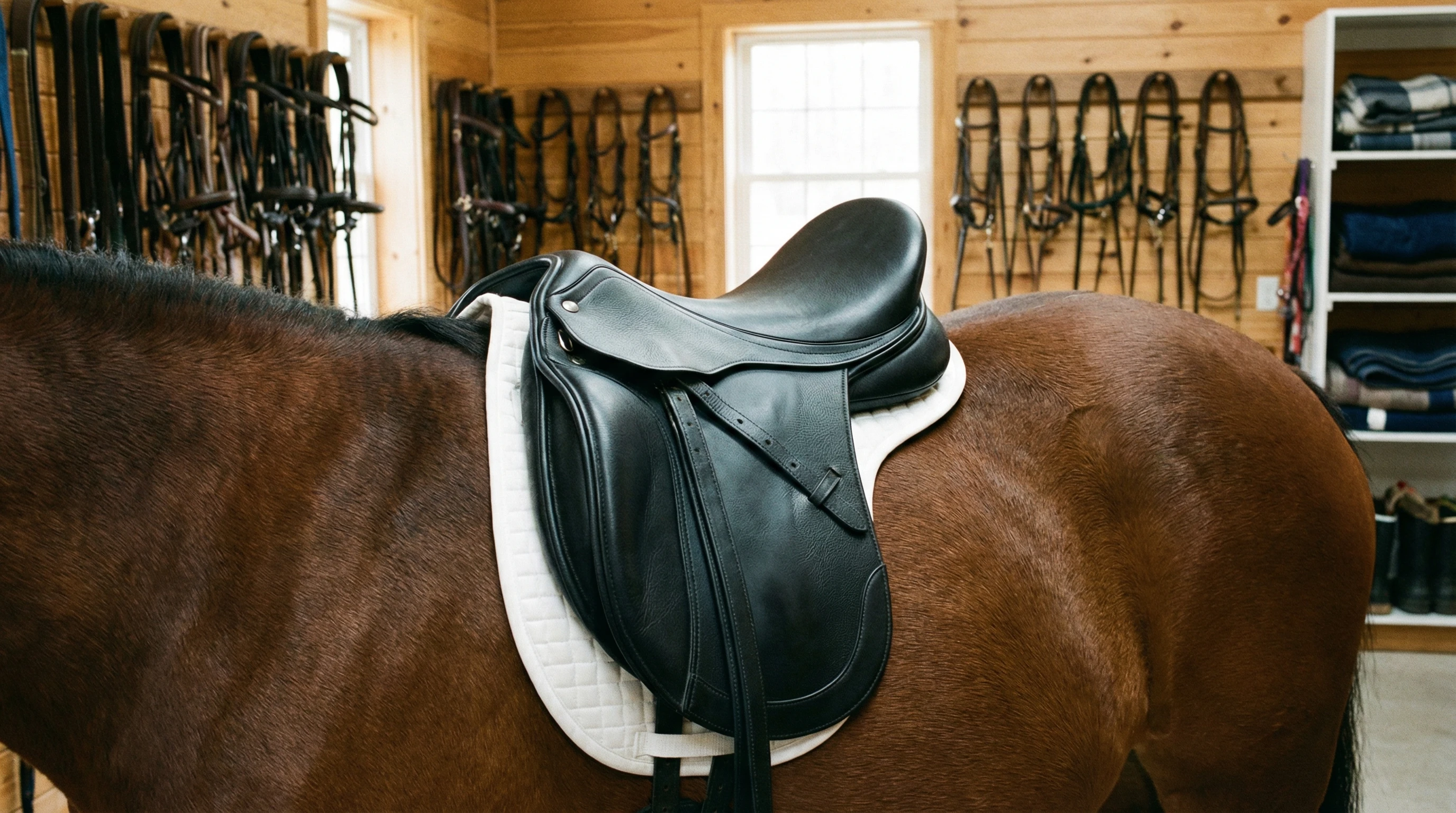
Who Is the Wintec Pro Pony Dressage Saddle Designed For?
The Wintec Pro Pony Dressage Saddle is built especially for young dressage riders who’ve outgrown their all purpose saddle or are ready to move up from a starter saddle.
👉 If you’re still comparing brands, you may also want to read my guide on how to choose an Arena Pony Dressage Saddle.
It helps kids between roughly 7 and 14 years old work on a correct seat as they begin to take dressage more seriously. Parents buying for lesson kids, showing families, or very petite riders appreciate that this model is crafted for small bodies and widebacked ponies.
Ideal Rider Age and Experience Level
This saddle works best for riders who want to start focusing on their dressage basics: strengthening leg position, practicing deeper seat work, and keeping posture tidy. Think about kids going from lesson walktrot to beginner training tests, or those riding a round pony and are too small for the average adult saddle.
What Type of Pony Conformation It Fits Best
Wintec Pro Pony Dressage Saddles are shaped for ponies with broad backs, low withers, and that famously hard-to-fit round barrel. The gullet and panel shape helps it sit evenly on wide, flat-backed types and native breeds, rather than on narrow, shark-fin types. If you’ve ever noticed saddle pads bunching up or the saddle rocking side to side, this shape might be just what you need.
When It’s Not the Right Choice
Ponies or horses with narrow, pronounced withers, swaybacks, or extra long backs might not be a great match. If your rider is transitioning into a more traditional leather close contact option, you may want to read my HDR Galia Saddle Review 2026.
If your child is nearing adult height and inseam, they’ll soon outgrow the proportions. Also, some barns or riders who want only traditional leather tack may not love the synthetic look or feel.
Step 1 – Choosing the Correct Seat Size for a Young Rider
Picking the right seat size is one of those issues that trips up most parents. Too small, and your child feels crammed in with no room to stretch. Too large, and they slide around, struggling to ride securely and with proper form.
How to Measure Seat Size for Kids
Seat size is measured in inches (15” or 16” are most common for this saddle). Most kids between 7-11 will often suit a 15” seat, while tweens or teens with longer legs might go for a 16”. To get a good idea, have your child sit in their current saddle with feet in stirrups and check for about a hand’s width behind their seat.
Signs the Seat Is Too Small
- Knees stick way past the knee rolls
- Child can’t sit deep in the saddle
- Pony’s movement bounces them out of the tack
Signs the Seat Is Too Large
- Child slides forward and can’t keep legs under them
- There’s more than a hand’s width behind them
- Kid struggles to post or feels lost in the seat
Can a Child Grow Into This Saddle?
This is a major question for parents. Growth considerations are one of the biggest mistakes families make, which I cover more deeply in my guide to choosing the best English saddle for a growing child and pony.
If your rider is close to moving up a seat size, it’s fine to go slightly larger, but not so big they can’t sit properly. Most kids fit the 15” for several years. If you want the saddle to last, keep an eye on growth spurts in both leg length and seat. A 16” can sometimes bridge the late childhood to early teen gap, but check with your trainer for best results.
Step 2 – Understanding the Interchangeable Gullet System
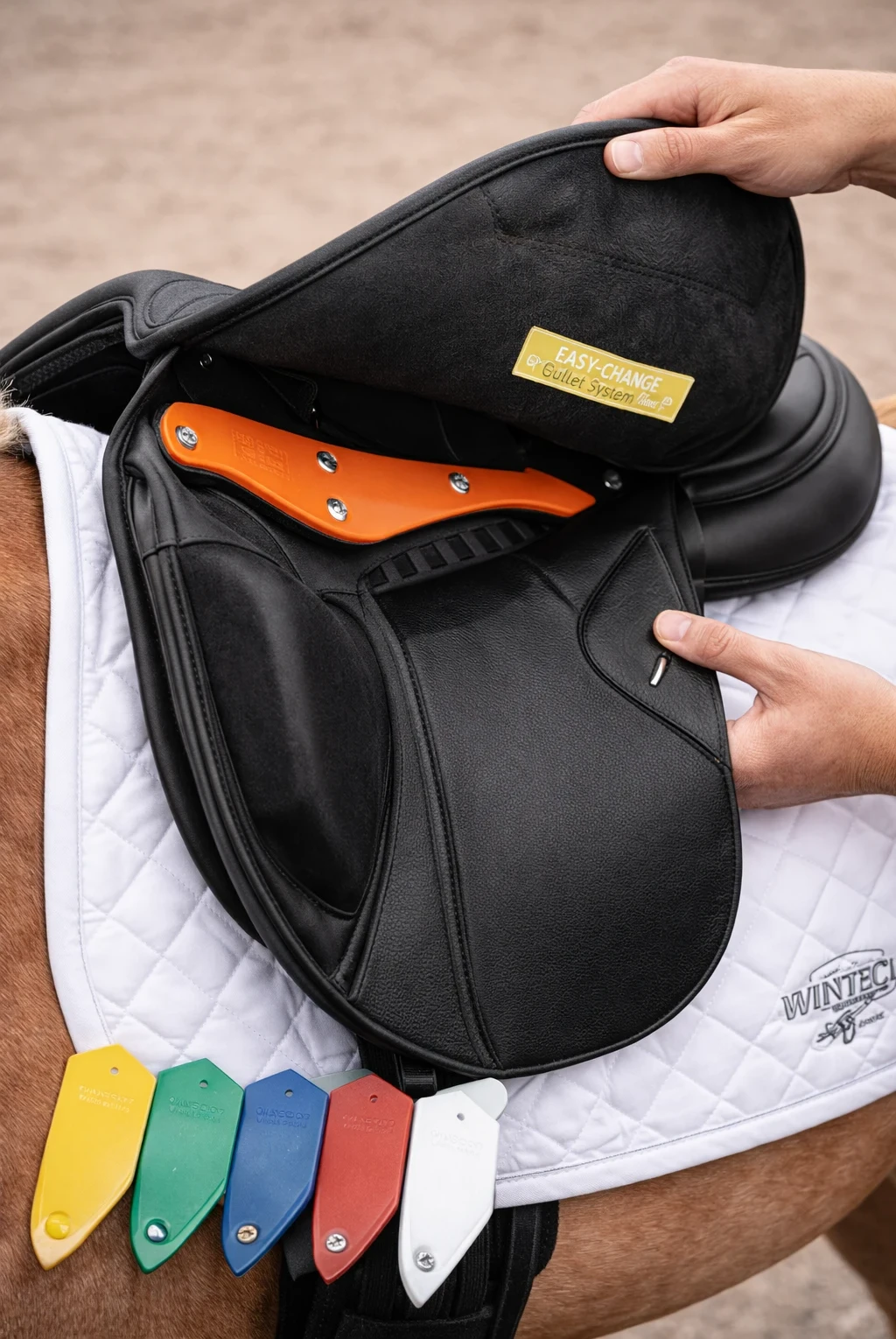
The gullet system is probably the feature that confuses most first-time Wintec buyers. The good news is, it can really save you from an ill-fitting saddle as your pony changes or grows.
How the EasyChange Gullet Works
Wintec’s EasyChange gullet system lets you swap out the metal gullet plate inside the saddle’s tree to widen or narrow the fit at the withers. So if your pony fills out, or you swap ponies with the same saddle, you can adjust it at home or with a fitter. There’s no need for a new saddle.
Which Gullet Width Most Ponies Need
Most child-size ponies—like Welsh, Haflinger, or chunky crossbreds—need a wide (red) or extrawide (white) gullet. Some native breeds will go up to XXW (black). If you’re coming from an old leather saddle, measure the wither clearance with your hand and compare to Wintec’s color chart. Your saddle fitter or trainer can help as well.
How to Tell If the Tree Is Too Narrow or Too Wide
- Tree Too Narrow: Saddle will perch up, tip backward, or pinch the withers.
- Tree Too Wide: Saddle drops onto withers, rocks side to side, or sits too low in front.
Does the CAIR Panel System Affect Fit?
Instead of wool flocking, Wintec uses air-filled CAIR panels under the saddle. CAIR panels help distribute weight evenly (handy on short pony backs), and they can help with minor fit problems. Some ponies prefer the softer, flexible feel, though if your pony is especially sensitive or the panels feel too “bouncy,” talk to your fitter about adding balance shims.
Step 3 – Evaluating Pony Back Shape and Saddle Compatibility
Ponies can be tricky: so many have mutton withers, broad spines, or short, flat backs that make fitting a challenge. Before you buy, match your pony’s shape to the saddle you’re considering.
Fitting Flat-Backed or Round Ponies
The Wintec Pro Pony Dressage is made with a broad, flat tree and panel, which helps it stay secure on a round, low-withered back. If your pony always tries to roll regular saddles, this model is worth a look because it feels more stable in place.
Wither Clearance and Channel Width
Look for 2–3 fingers of wither clearance at the front, and a nice wide channel running down the middle to protect the pony’s spine. If the channel is narrow, your pony may get sore quickly. Flip the saddle over and check this out before using regularly.
Checking for Bridging or Rocking
Place the saddle gently on your pony’s bare back, and press at the pommel and cantle. It should sit flat and even, not “bridge” across the middle or “rock” back and forth. If you want a deeper look at how saddle balance affects rider alignment, my Dressage Saddle Fitting Guide for Adults explains this in more detail.
Saddle pads should not prop it up artificially. If you’re using extra thick pads to make it fit, something isn’t right.
Step 4 – Position and Support for Developing Dressage Riders
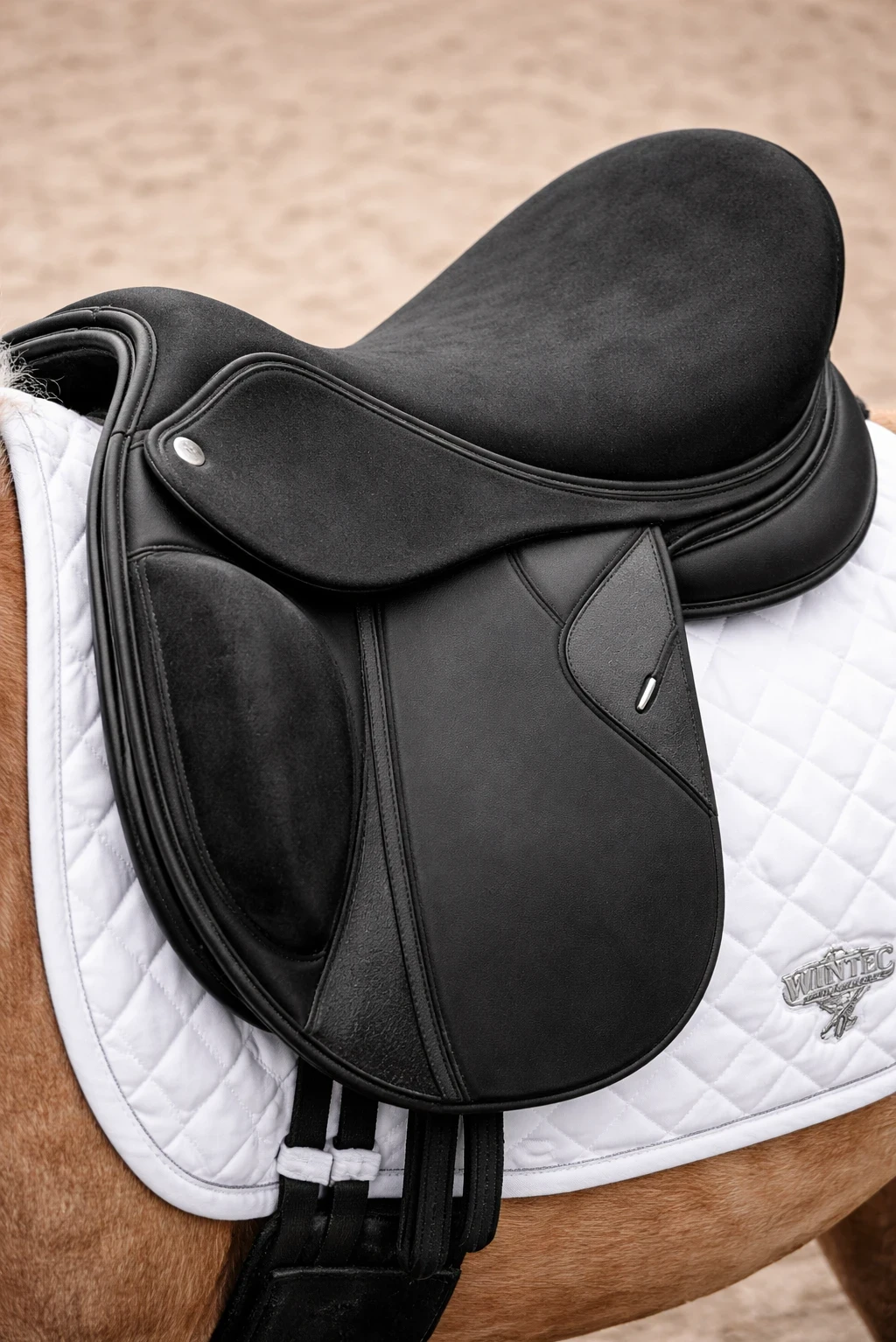
Your main goal is to help your child develop a secure seat and effective leg; a saddle that fits and supports is a big advantage.
Seat Depth and Security
The Wintec Pro Pony Dressage has a moderately deep seat that helps riders sit centered and supported during lessons, tests, and everyday rides. The seat isn’t “sticky,” so kids can still post easily without getting stuck in place.
If you’re comparing features across beginner-friendly models, you can also see how this saddle stacks up against other options in my Best Dressage Saddles for Beginners guide.
Knee Block Support for Young Legs
This saddle uses supportive, but not overwhelming, knee blocks just the right size for shorter legs. The blocks guide a vertical leg position; ideal for teaching correct basics without locking the rider in.
How It Encourages Proper Alignment
The flatter twist and balanced seat make it easier for young riders to find their “dressage posture” and stay comfortable. Kids who usually have to struggle with a too big or unbalanced saddle find this one helps them keep their heels, hips, and shoulders lined up more naturally. Trainers often comment on how much more easily kids keep the correct position.
Synthetic vs Leather – Is the Wintec Pro Pony Worth It?
Parents often ask if synthetic really stacks up, especially for the price. Here’s how I see the pros and cons for families and lesson barns.
Durability and Maintenance
Synthetic Wintec saddles are tough to scratch up, weather is no matter, and you can hose them off if needed. That’s a huge plus for muddy pony days or accidental spills. They age really well compared to a soft leather pony saddle, which demands more care to keep it looking decent.
Weather Resistance for Lesson Barns
If you’re buying for a barn or your child rides outside year-round, Wintec is a great pick. No need for special cleaners, no stress about cracking or fading, and much lighter to lift. Some parents say it’s the only way they trust their $900 investment to last through daily use.
Budget Comparison to Leather Pony Dressage Saddles
Wintec Pro Pony Dressage Saddles usually run about $800–$1,000 new. Leather alternatives, especially from European brands, typically start at $1,200 and go up from there. For parents aware that their kids might outgrow the saddle quickly, the ability to resell or easily adjust fit is a big cost saver.
Common Mistakes Parents Make When Choosing This Saddle
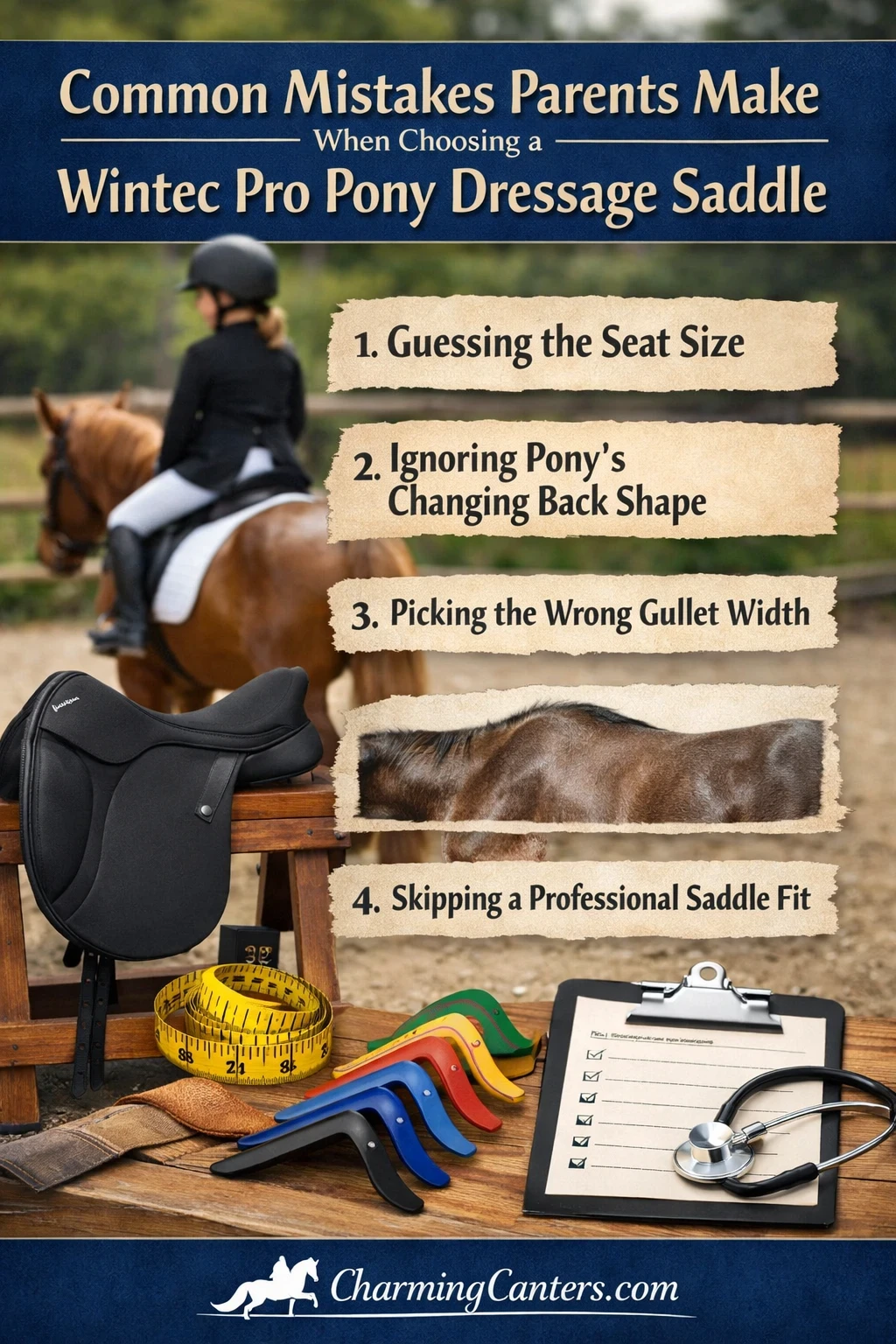
Even caring parents can slip up when it comes to picking saddles. Here are the missteps I see most often:
Guessing Seat Size
It’s easy to choose a size based only on age, but kids come in all shapes and heights. Always measure or have your child sit-test if possible. If you’re uncertain, check with your trainer or local tack shop.
Ignoring Pony Topline Changes
Ponies can change shape fast with work, age, or season. If your pony is filling out or losing muscle over the back, make sure to double-check the gullet width and saddle’s overall fit at least every six months.
Skipping Professional Fit Checks
You want to avoid pressure points and sore backs. Getting a quick check from a professional fitter or trainer before you start riding regularly is worth the peace of mind. Some retailers offer free fit checks with purchase—be sure to ask about this option.
Quick Decision Checklist Before You Buy
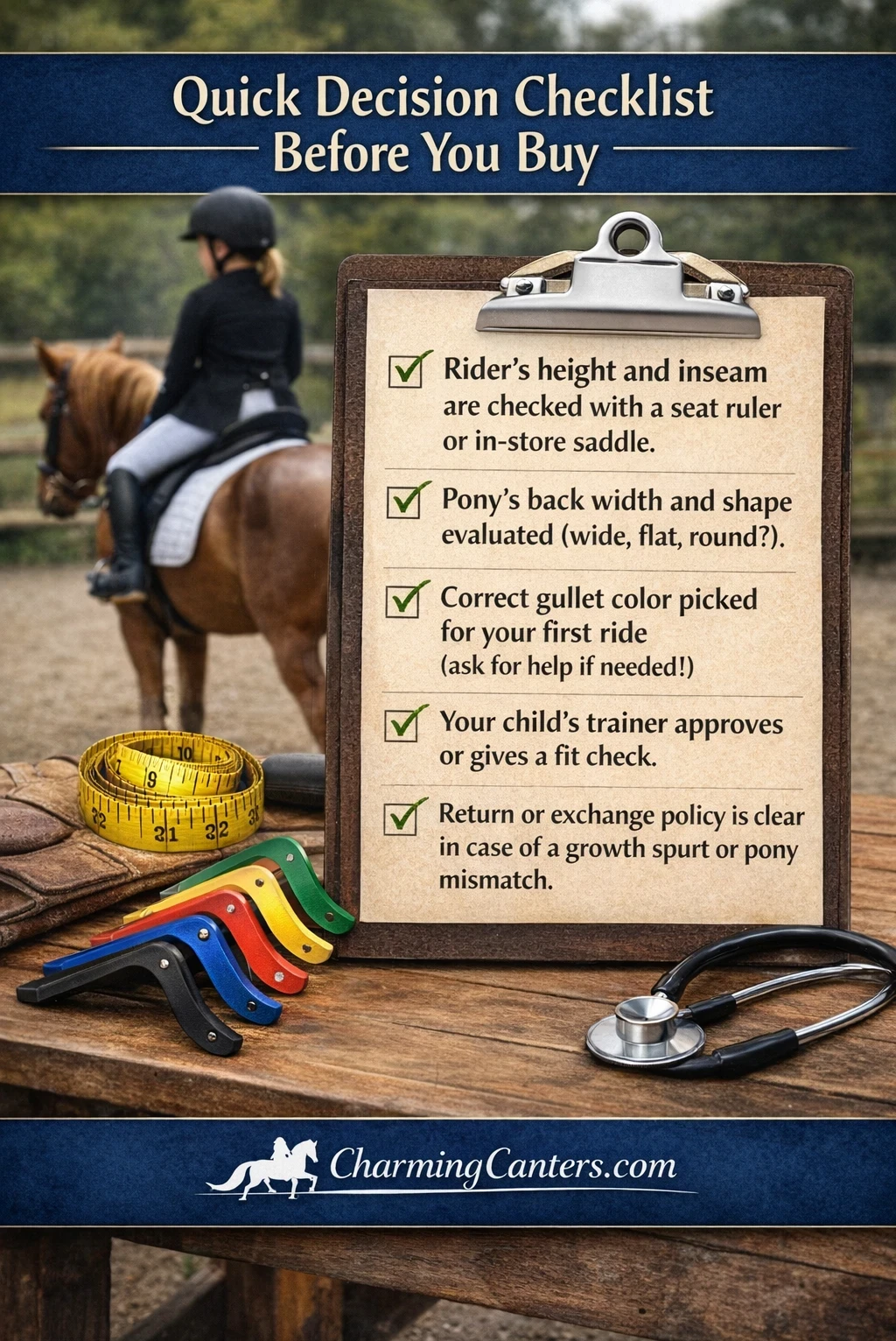
- Rider’s height and inseam are checked with a seat ruler or in-store saddle.
- Pony’s back width and shape evaluated (wide, flat, round?).
- Correct gullet color picked for your first ride (ask for help if needed!)
- Your child’s trainer approves or gives a fit check.
- Return or exchange policy is clear in case of a growth spurt or pony mismatch.
Final Verdict – Is the Wintec Pro Pony Dressage Saddle Right for Your Rider?
The Wintec Pro Pony Dressage Saddle is a solid, parent-friendly choice if your child rides a wide or flat pony, wants authentic dressage support, and you’re looking for a product that’s tough and weather-resistant. It stands out if you value adjustability and don’t want to stress out every time you clean tack.
If your pony is especially narrow, your child will soon outgrow the seat size, or you’re dedicated to the full-leather look and feel, it could be worthwhile to check out other options. If you’re unsure, try to get a demo or always ask your child’s trainer for a second opinion.
Checking seat size, gullet width, and pony shape all make the process go smoother. You’ll set your kid up with the right foundation for their dressage riding adventure if you pay attention here. For a head start, it’s useful to see what’s in stock or available to try at your local tack shop.
👉 For more sizing help and comparison guides, you can explore my detailed Wintec Pro Pony Dressage Saddle review and my parent-focused guide to choosing the best English saddle for a growing child and pony.