Choosing the right saddle for a young or developing rider can feel like a high-stakes decision—especially when it needs to support both correct rider position and horse comfort. With so many sizing charts, fit recommendations, and opinions to sort through, it’s easy to feel overwhelmed before you even get to the buying stage.
If you’re considering the HDR Galia Close Contact Saddle, you’re likely trying to balance quality, fit, and price without compromising safety or confidence. This guide breaks down how to choose the right HDR Galia for your rider and horse, so you can move forward with clarity and confidence.
Affiliate Disclosure: This article contains affiliate links. If you choose to purchase through links on CharmingCanters.com, a small commission may be earned at no additional cost to you. This helps support the site and allows us to continue providing independent, rider-focused saddle guidance.
If you’re still deciding whether this saddle is a good overall option, you may also want to read the HDR Galia Saddle Review 2026, which breaks down performance, construction, and long-term value.
Who This Guide Is For (And Who It Isn’t)
Riders the HDR Galia Is Best Suited For
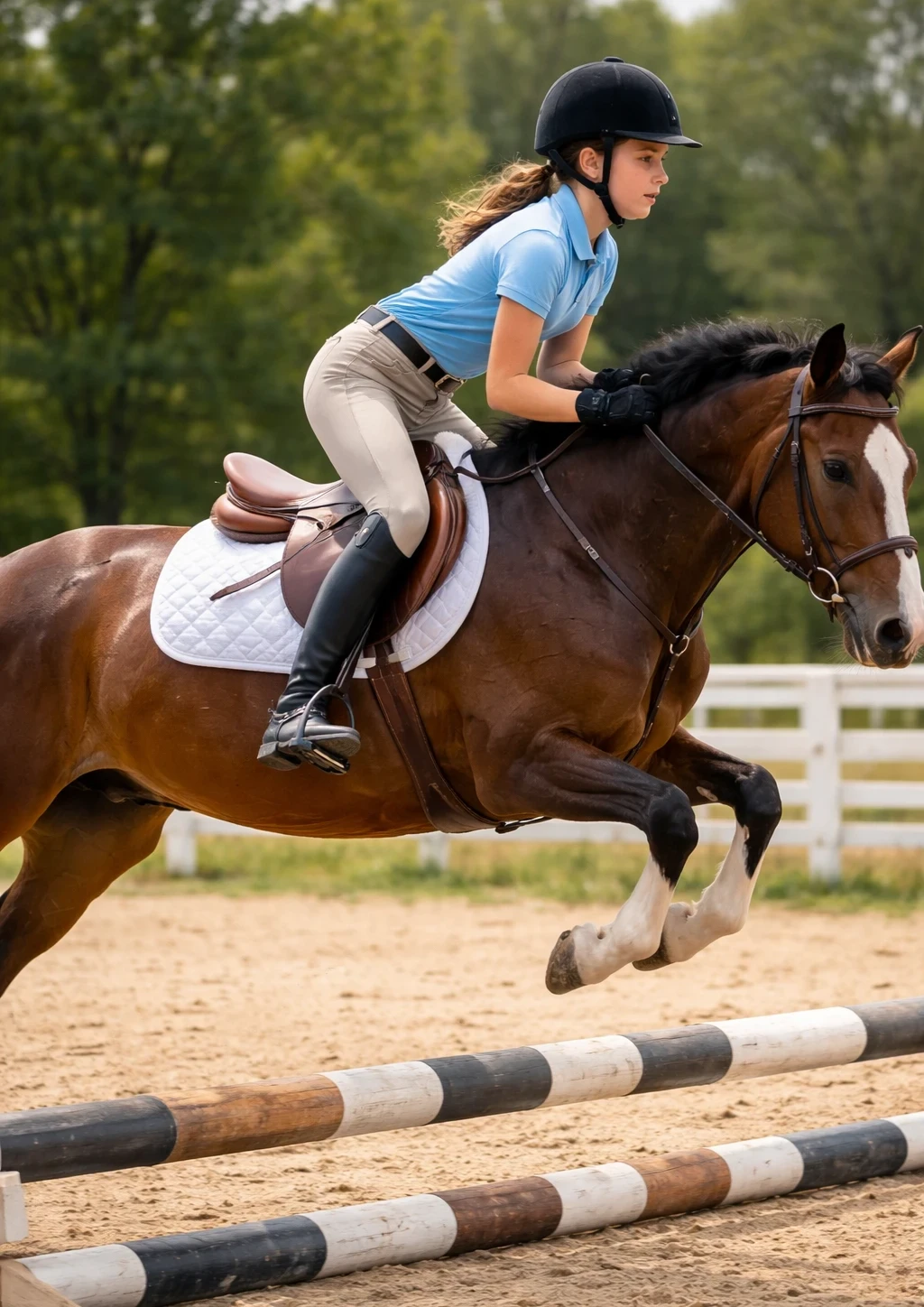
The HDR Galia really shines for a specific group of riders. If you have a youth or teenage rider who’s ready to upgrade from a synthetic or pony saddle into their first leather close contact saddle, the Galia is well worth considering. It’s also popular with lesson barns and families where two or more siblings might share a saddle, since its fit and design tend to work for a pretty broad range of junior or petite adult riders.
- Younger riders moving up: Those who’ve outgrown their “beginner” tack and want a saddle that will support their growth for the next few years without feeling too advanced or technical.
- Lesson and local show riders: Perfect for kids or teens taking regular lessons, showing locally, or dabbling in a bit of everything, from equitation to small jumper classes.
- Developing riders building confidence: If your rider is still working on independent balance, learning diagonals, or their first small courses, this saddle offers support without being restrictive.
When the HDR Galia May Not Be the Right Choice
There are some situations where the Galia isn’t the best solution. If your rider is consistently jumping above 2’6″, riding in higher-level show circuits, or needs super specific support from their saddle, this model might feel limiting. It also isn’t a great fit for certain horses and ponies.
- Advanced jumpers: Kids competing at rated shows with major height and technical demands probably need a more specialized saddle, something with more advanced balances or adjustable blocks.
- Wide or flatbacked horses: Ponies and horses with extra broad or mutton-withered shapes might end up with pressure points, since the Galia’s tree won’t suit every extreme back type.
- Highly customized needs: If you’re after adjustable knee or thigh blocks, special seat widths, or highly customized balance, you might want to keep shopping.
For families comparing entry-level saddles across brands, this breakdown of common mistakes when choosing an English saddle for a growing child can also help clarify what features matter most at each stage.
Understanding Rider Stage Before Choosing a Size
Why “Buying for Growth” Can Hurt Position
It sounds pretty logical to size up so your kid won’t “outgrow” their saddle right away, but in practice, buying a seat that’s too big can make riding a lot harder. Young riders in an oversized seat often struggle with balance. Their legs swim around, making it tough to keep heels under hips, and they end up fighting for security rather than building strong habits. It’s better to focus on what fits now, rather than what might fit in two years.
This is a common issue with youth saddles, and it’s one of the reasons proper fit matters more than brand—something explained further in this guide to choosing the right English saddle for a growing rider.
Matching Seat Size to Rider Height and Leg Length
Seat sizing for youth and petite adults is pretty straightforward. Most under-5′ riders do well in a 15″ seat, while 5′ to 5’4″ might prefer a 16″. Once your rider is 5’4″ or up or wearing adult breeches, a 16.5″ or 17″ could work.
It’s less about age and more about where their legs hit the saddle flap and how well they can keep their knee in the right spot. If your rider sits and there’s more than a handwidth behind their bottom, or they aren’t able to keep their legs down without their knees floating off the flap, the seat is likely too big.
If it looks cramped or they are sitting on the cantle, it’s too small.
Horse & Pony Fit Considerations Parents Often Miss
How the HDR Galia Fits Average-shaped Horses
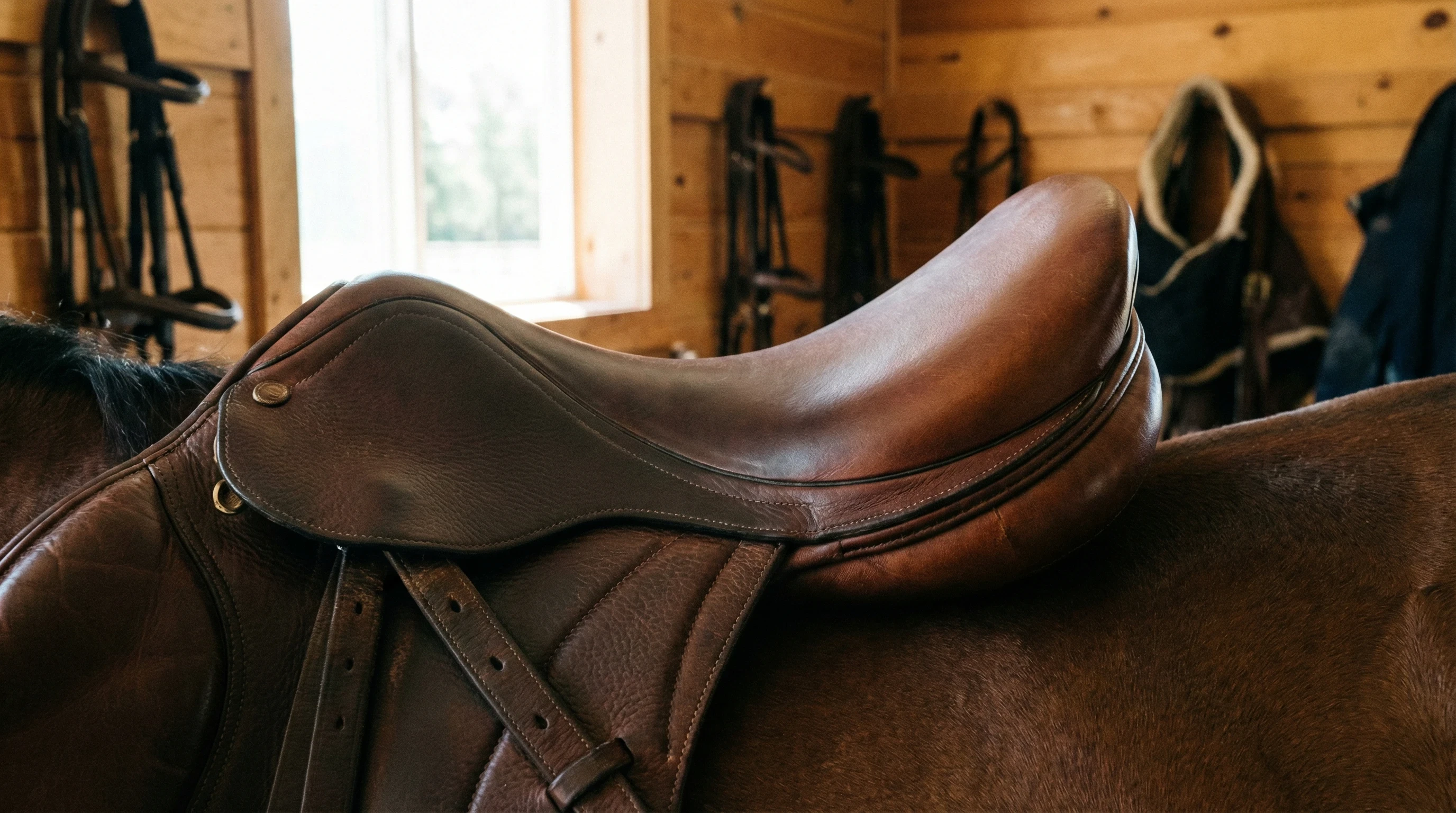
The Galia comes with a moderate-width tree and a panel shape that fits most average lesson horses and ponies. This means it won’t dig into the withers or rock on backs that have a little shape but aren’t super flat or extra shark-finned. For kids riding at barns with plenty of medium to medium-narrow ponies and horses, this is pretty handy. It’s not going to fit every back type, but it covers a lot of lesson program favorites without special modifications.
If you’re unsure whether your horse or pony falls into the “average fit” category, this English saddle fitting guide for adults and lesson horses explains how to spot common fit red flags.
Pony Considerations: Back Length and Shoulder Freedom
Ponies can be tricky to fit because their backs are short, and they need their shoulder free to move. The Galia’s panels are short enough for most medium and large ponies, but if you ride a small pony or one with a really compact back, always double check panel length and gullet placement. If the saddle hangs off the back or looks pinched over the shoulder, it’s time to try something shorter or broader.
Balance, Security, and Rider Confidence
What the Seat and Flap Design Feels Like for a Developing Rider
The seat on the HDR Galia is gently shaped, not too deep, not too flat. That gives young and developing riders a spot to sit without feeling “stuck” or unable to post or jump. The flap isn’t crazy forward or super long, so it naturally helps kids keep their leg in the right spot, supporting both flatwork and small jumps.
Helping Young Riders Feel Secure Without Being “Locked In”
Security is about feeling safe, but it’s also about allowing movement. The Galia’s seat and padded knee area give a gentle “hug,” but don’t force the leg into one fixed place. That helps beginners learn by feel, build their confidence, and make mistakes without feeling trapped. This flexibility encourages better long-term riding habits.
How Long Most Riders Use the HDR Galia
Realistic Longevity for Growing Riders
Most kids or early teens will use an HDR Galia as a “stepping stone” saddle. Families usually get a couple of years out of it, often from ages 9 or 10 up through their early teens, or until a growth spurt pushes them into a bigger seat or more advanced riding.
Resale Value and Budget Reassurance for Parents
You’re probably wondering about resale if your rider is still growing. The good news is entrylevel leather saddles like the Galia generally sell pretty quickly, especially if you keep it clean and conditioned. If you’re unsure what “properly maintained” really means, I walk through a simple daily and weekly routine in my guide on how to care for your HDR Galia close contact saddle, so you can protect both longevity and resale value.
Lesson barns and other families are often hunting for these, so your investment is less likely to collect dust later on. That’s a nice budget buffer if you need to upgrade in a year or two.
Common Parent Mistakes When Choosing the HDR Galia
Choosing Too Much Saddle Too Soon
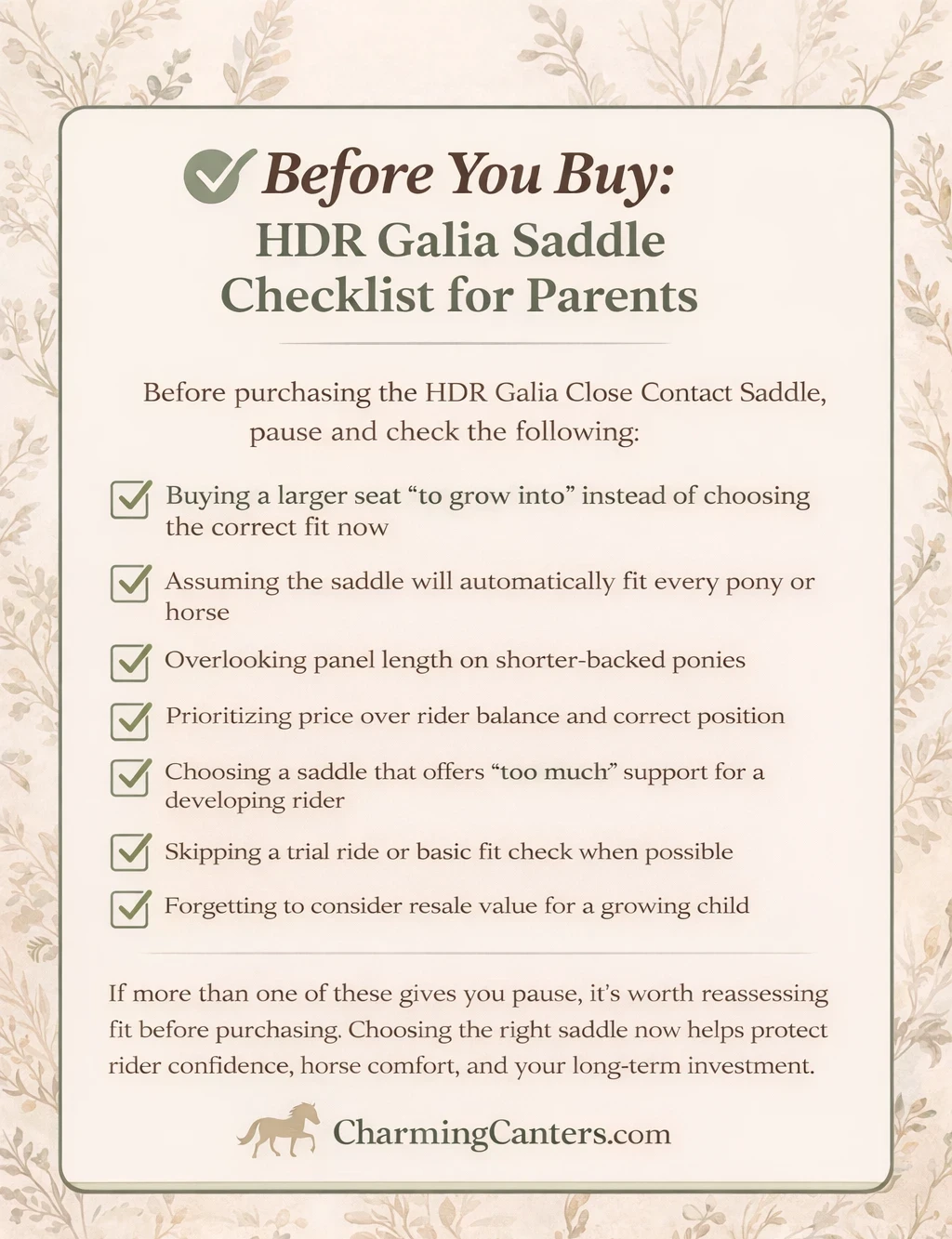
It’s common to want to “get ahead” by buying a bigger or more technically advanced saddle, but younger riders need a saddle that fits their body and ability now. Too much saddle can actually slow progress, especially if the seat, flap, or blocks make it hard to learn correct basics.
Overlooking Horse Comfort in Favor of Rider Growth
It’s easy to focus on the rider’s next stage and ignore the horse’s comfort. A too long or too narrow saddle can cause your lesson horse or pony real discomfort, leading to unwanted behavior or even soreness. Horse welfare should always be part of the decision process, even for growing kids.
If saddle fit questions keep coming up, this general guide to proper English saddle fit can help you evaluate balance, panel contact, and comfort before committing.
Is the HDR Galia the Right Choice for Your Rider?
A Simple Yes/No Checklist
- Is your rider ages 8–15 and between 4’6” and 5’5”?
- Are they still learning basic seat, balance, and small courses?
- Are you working with an average lesson horse or easy-to-fit pony?
- Will the saddle be used for local showing, lessons, or shared among family?
If you answered yes to most of these, the HDR Galia may work well for you. If not, or if you have a horse with special fit needs, or a rider progressing fast into advanced jumping, keep looking.
Next Steps If You’re Still Unsure
Professional saddle fitters and trainers are a great resource and can usually check fit right at your barn. Trying a few seat sizes before buying is always smart.
If you’d like a deeper breakdown of construction, materials, balance, and long-term performance, the HDR Galia Saddle Review 2026 walks through exactly how this saddle holds up in real riding situations.
Wrapping Up: Final Thoughts for Parents
Picking a saddle can feel stressful. The truth is, fit and comfort matter a lot more than price or fancy details at this stage. The HDR Galia is a reliable and approachable close contact option for growing, learning riders with average fit lesson horses and ponies. Trust your gut, don’t size up too much, and focus on what fits your family for now and for the next chapter ahead.
Where to Track Current HDR Galia Sizes and Availability
Ready to find your size or see what’s in stock? I keep track of current pricing and sizes here: Check HDR Galia Close Contact Saddle Availability.
Great breakdown — this was really helpful, especially the details about fit and rider position. The deep seat and forward flap sound ideal for jumping, but I’m curious: would this saddle still work well for someone who rides multiple disciplines, or is it best suited mainly for jumping?
Also, how important is professional saddle fitting with this model if you’re buying online?
Thanks so much — I’m really glad the fit and rider-position sections were useful for you!
To answer your questions:
1) Multidisciplinary use:
The HDR Galia can absolutely work for a rider who does more than just jumping — it’s not only a jump saddle. The deeper seat and slightly forward flap do make it especially nice for stadium and cross-rails because you get that secure position and freedom for your leg.
That said, if you’re spending a lot of time in dressage or really flat-work-focused disciplines, you might find a more balanced all-purpose or dressage-biased saddle more supportive in the long run. It ultimately comes down to where most of your miles are spent and your personal comfort.
So in short:
• Great for a jump-focused rider who also does flatwork and maybe some low-level dressage.
• OK for true all-purpose use if you want one saddle for everything.
• Might be less ideal if your main focus is high-level dressage.
2) How important is a professional fitting if you’re buying online?
Super important — especially with this saddle. Saddles that are a bit more performance-oriented (like the Galia) have less margin for error in fit. Buying online without any fitting guidance is kind of like buying a tailored suit without measuring first — you might get lucky, but you might end up with something that pinches, bridges, or otherwise doesn’t match your horse or your position.
A professional fitter can help you:
✅ confirm panel shape matches your horse’s back
✅ check balance once you’re in the saddle
✅ assess your position so you’re not compensating
✅ avoid long-term back or movement issues
If you can have a fitter at least do a virtual consult or review photos before you buy — that’s a huge bonus even if you’re ordering online.
I really appreciated how thorough this post was in breaking down what makes the HDR Galia close contact saddle a good fit for young or developing riders and average‑shaped lesson horses. The explanation about why “buying for growth” can actually hinder balance and confidence really stood out, and I liked the clear checklist to help parents decide whether this saddle matches their needs. I’m curious about how you would recommend checking fit for a horse with slightly unusual conformation, since average‑fit saddles don’t always suit every back type. Would you suggest any particular measurement tips before trying a Galia?
Hi Hanna.
Great question—and honestly, this is exactly where “average fit” saddles like the HDR Galia need a little extra attention.
For a horse with slightly unusual conformation, I’d keep it simple and focus on a few key checkpoints before you even try the saddle:
1. Do a quick wither tracing (super helpful)
Use a flexible curve (or even a bent hanger) about 2 inches behind the shoulder blade
Trace that shape onto paper and compare it to the saddle’s front arch angle
This gives you a much clearer idea if you’ll need regular vs. wide before trying anything
2. Check basic proportions
Make sure the saddle won’t run past the last rib (especially important for short-backed or compact horses)
If your horse is uphill, downhill, or has big shoulders, this matters more than people think
3. Look at wither clearance + panel contact
Aim for about 3 fingers of clearance at the withers with a rider up
Panels should sit evenly—no rocking, no gaps, no “bridging”
4. Pay attention to shoulder freedom
Horses with bigger shoulders or unusual movement patterns often struggle most here
When in doubt, slightly more room is safer than pinching
Quick real-world tip (this is the big one):
If your horse isn’t a classic “average lesson horse,” I’d treat the Galia as a starting point, not a guaranteed fit. Try it, check movement under saddle, and don’t skip a quick trainer or fitter check if something feels off.
That little bit of extra prep can save you from the most common mistake—thinking a “close enough” fit is good enough. Hope this helps.