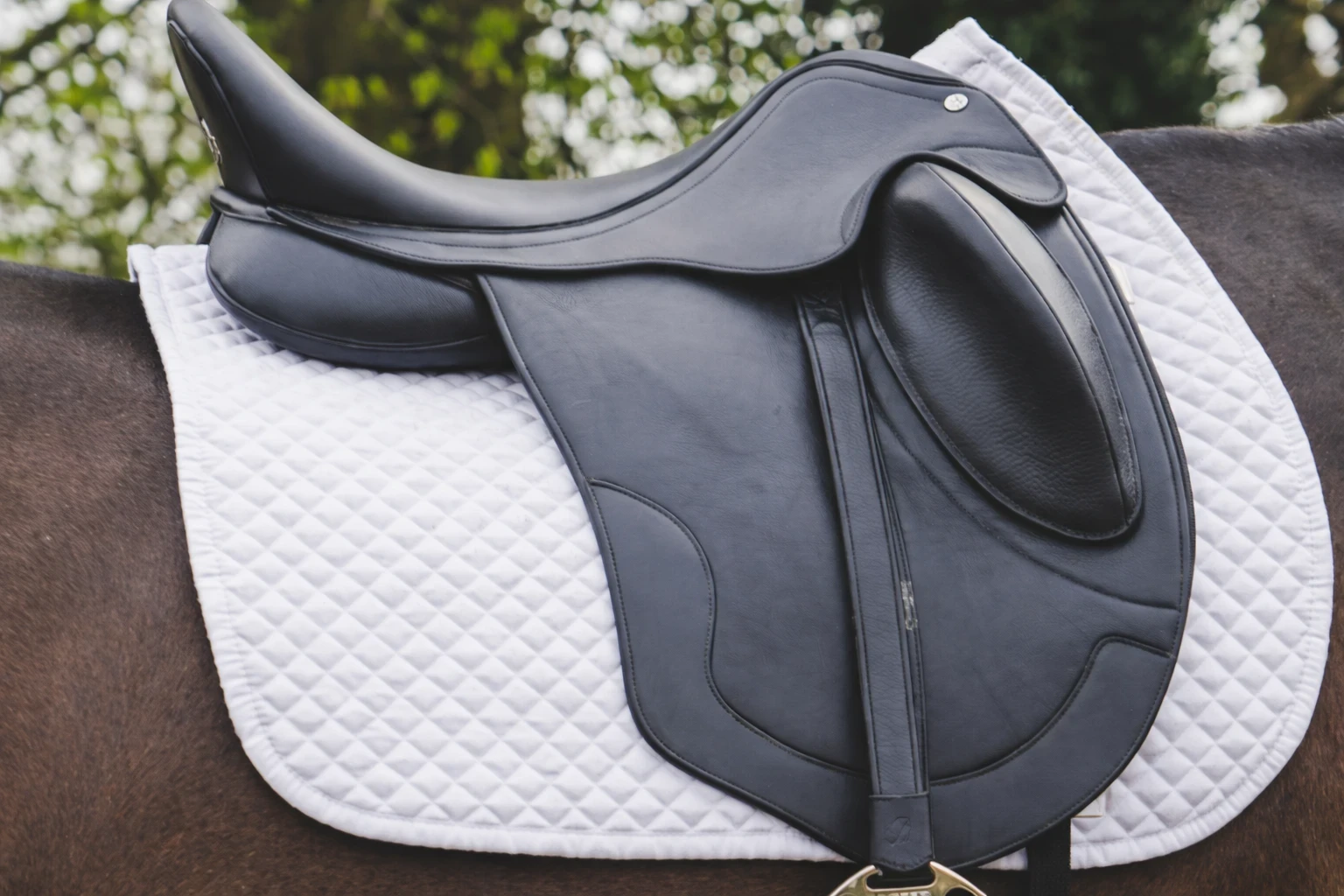
Thoroughbreds are famous for their athletic build and spirited personalities. Finding an English saddle that fits your Thoroughbred properly can feel a bit overwhelming, especially since their unique shape can make saddle fit a real pain.
I’ve spent a lot of time working with Thoroughbreds, and I’ve picked up plenty of practical tips that I think will help take some guesswork out of the process.
Here’s my straightforward guide for choosing the right English saddle for your Thoroughbred, filled with details you’ll actually find useful.
Understanding Thoroughbred Conformation and Saddle Fit
Thoroughbreds have some distinctive traits: high withers, a long sloping shoulder, and a back that isn’t always perfectly level. These features are great for speed and agility, but they do make saddle fitting a bit more challenging compared to other breeds. As a result, owners have to pay special attention to saddle choice and fit as their horses develop.
Why English Saddles Slide Forward on Thoroughbreds
If your saddle seems to creep up the withers mid-ride, you’re not alone. Thoroughbreds tend to have less pronounced shoulders with a forward groove, plus those high, narrow withers.
That combo doesn’t hold a saddle back as effectively, especially if the girth groove sits a bit forward compared to the preferred saddle placement. Even high-quality saddles can end up perched on the neck after some brisk cantering rounds if the fit is off.
Do Thoroughbreds Usually Need Narrow, Medium, or Wide Trees?
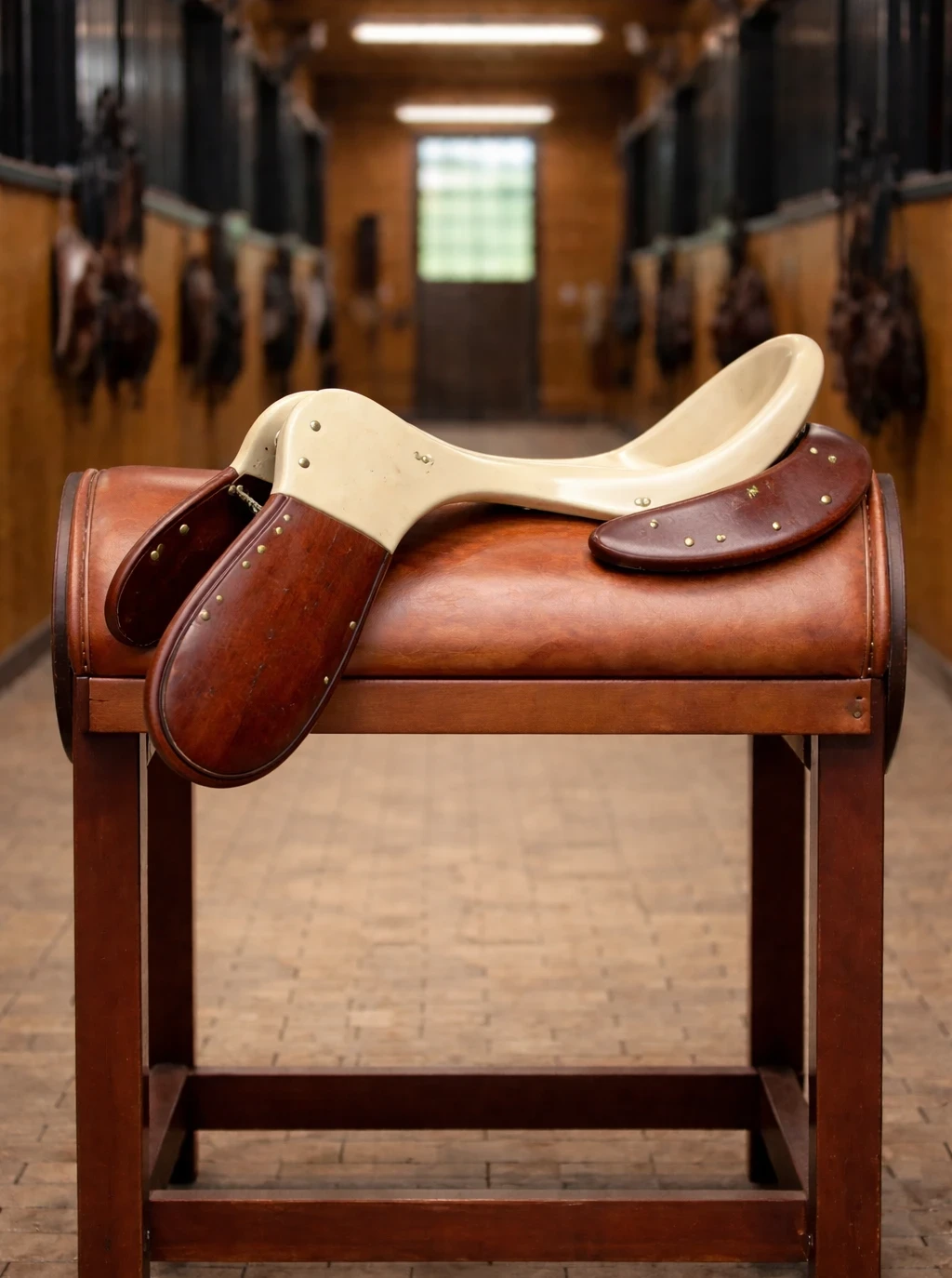
Most Thoroughbreds are happiest with a medium or medium-narrow tree. A super wide tree often sits too low or rocks over the spine. High-wither Thoroughbreds with “A-frame” backs will often do better with trees built for narrower horses.
But always check actual fit, since muscle and age play a part too. The amount of muscle your horse has or develops, particularly with training or during seasonal changes, may mean you’ll need a different width over time.
How High Withers Affect English Saddle Fit
High withers call for thoughtful saddle design. See my post, “How To Choose The Best English Saddle For High Withers.” Without enough clearance or the wrong panel shape, the saddle can pinch or put too much pressure along the spine.
Look for deeper channels under the saddle and pommels with extra height instead of low, flat fronts. Some brands offer models specifically designed to accommodate the higher geometry of Thoroughbred withers.
These can make a world of difference in your horse’s comfort and ability to move freely.
Best Panel Shape for a Thoroughbred’s Sloping Shoulder
Thoroughbreds rarely have a flat, horizontal shoulder. Saddles with slim, more angled panels and a cutaway or forwardcut design tend to fit better across the upper back.
Too much panel bulk just bridges or bumps awkwardly on these sloping lines. Pay attention to the panel length as well, as a shorter panel can reduce interference for Thoroughbreds with a shorter coupling or upright shoulder conformation.
How Much Wither Clearance Is “Enough”?
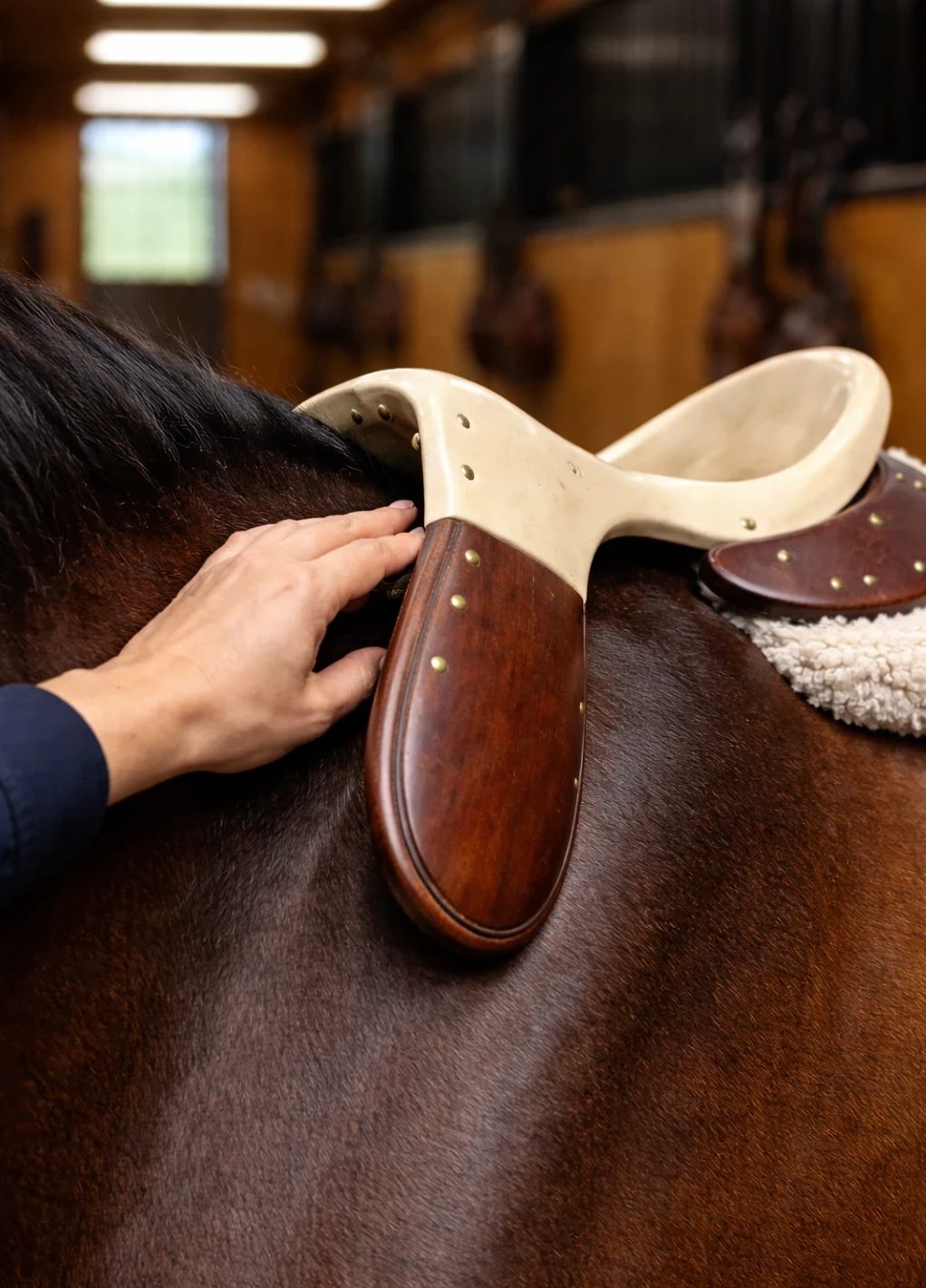
You’ll want to see at least 2–3 fingers’ worth of vertical clearance at the withers and good space along the sides after you sit in the saddle. The saddle should never rest or press on the wither bone, even during movement.
Make sure to check clearance both before and after you mount, because weight in the saddle will compress the panel flocking and lower the saddle on your horse’s withers.
Why Your Saddle Might Bridge on a Thoroughbred’s Back
Bridging, where the saddle touches in front and behind but floats in the middle, happens when the saddle tree or panels are too straight for the natural dip in the horse’s topline, or when flocking is too hard.
Thoroughbreds who lack muscle or have a sway or dip in their back are especially prone to this issue. Check your horse’s back after a ride for uneven sweat marks, which can indicate poor contact or bridging.
Should You Get a Cutback Pommel for High Withers?
Cutback pommels, which feature a notch at the front, are a classic choice for high-wither Thoroughbreds. They help avoid uncomfortable pinching and keep the saddle from sitting right on top of the wither bones. Some modern dressage and all-purpose saddles now offer cutback or half-cutback options for a more universal fit.
Tree Structure, Adjustability, and Saddles Materials
Are AdjustableTree English Saddles Better for Thoroughbreds?
Adjustable trees are pretty handy if your Thoroughbred is gaining muscle, changing shape with age, or coming off the track. They let you tweak the fit as the horse changes, which means fewer new saddles over time.
To learn more about adjustable trees, see my post, “Adjustable Vs Fixed Tree Saddle Comparison.”
Just know that not every adjustable saddle fits a really high wither perfectly. So, always check in person if possible. Some adjustable models have removable gullets, making it easy to size up or down as your Thoroughbred’s back changes throughout their training, diet, or conditioning cycles.
A-Frame vs. Hoop Trees for TBs
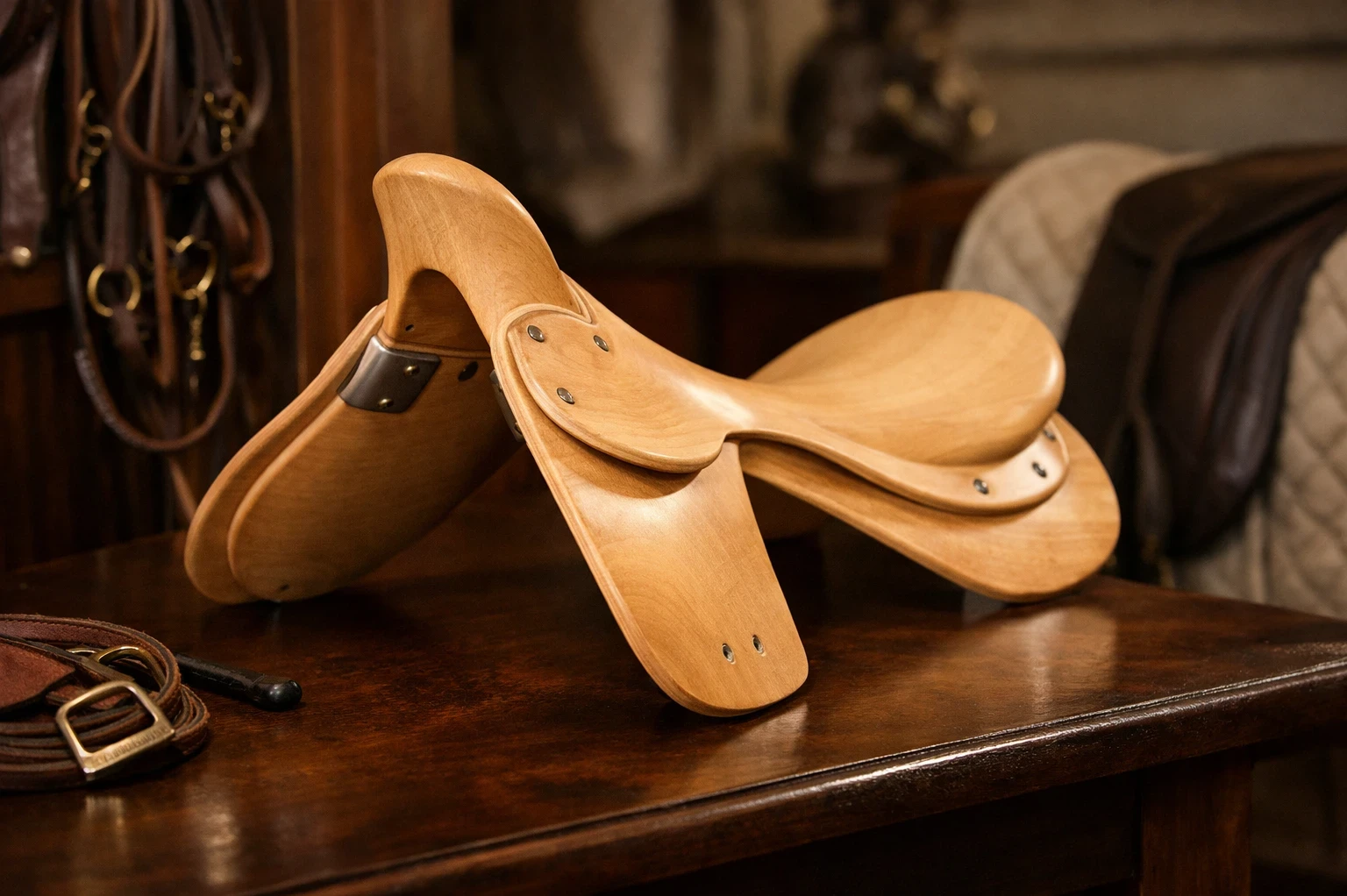
For most Thoroughbreds, A-frame trees (which are more V-shaped and upright) are the usual pick. Hoop trees (wider, flatter, more Ushaped) are more common in broad-backed horses like cobs or drafts.
However, if your TB has a beefier, rounder back, a medium-width hoop tree could work. It’s all about matching the tree shape to the unique geometry of your horse’s withers and shoulders.
Can Flocking Adjustments Help With Fit?
Wool flocked saddles are super useful for Thoroughbreds, since you can easily have the panels adjusted to fill dips, soften bridging, or rebalance the seat over developing muscle.
Foam flocked panels can’t be custom stuffed, so they’re less flexible for tricky TB backs. Some saddle fitters specialize in reflocking and can come to your barn to check and tweak your saddle panels to help maintain top performance and comfort for your horse.
Are Synthetic Saddles Worth Considering?
Synthetic saddles like Wintec and Thorowgood are lightweight and often have adjustable gullets. These are a solid option if you’re working with a younger or frequently changing Thoroughbred, or if you want a less expensive second saddle for crosstraining.
See my post on “English Synthetic Saddles Advantages” for a more deep dive into synthetic saddles.
Synthetic saddles are generally easy to clean, which is an added bonus when you’re at muddy events! Plus, synthetics often dry quickly and are not as susceptible to water damage as leather models.
Rider Fit and Balance on a Thoroughbred

It’s not just your horse that matters. Rider fit affects comfort and success, too. You want to feel secure and balanced so your Thoroughbred can move freely under you.
Saddle Balance and Thoroughbred Movement
Poor saddle balance can put you in a chair seat or tip you forward, which really blocks a Thoroughbred’s flowing stride and can even make them tight or cranky. A well-balanced seat lets them move free through their back and keeps your riding much more enjoyable. If you feel like you’re constantly fighting your position, look back to saddle fit for a solution.
Why Your Thoroughbred Feels Hollow or Resistant Under Saddle
If your TB starts to hollow their back or toss their head under saddle, double-check fit and balance first. Sometimes it’s a sign that the saddle is tipping too far forward, pinching the withers, or has bridged panels. Even behavioral issues can often be traced to discomfort from a poorly fitting saddle.
Does Seat Size Matter on a TB?
Absolutely. Riding in a seat that’s too small crams you behind the motion, and an oversized seat makes it harder to stay planted over a more athletic stride. Try to find the size that puts you in the saddle’s center and keeps your leg hanging naturally at the girth. Don’t be afraid to test a few sizes, and remember that seat size may differ between disciplines and brands.
DisciplineSpecific Concerns: Dressage, Jumping, and AllPurpose Saddles
Dressage vs. Jumping Saddles for Thoroughbreds
If you’re a dressage rider, aim for a saddle with a deep seat, long flaps, and high wither cutback. See my post “Dressage Saddle Comparison Guide” which helps riders evaluate saddle fit, seat depth, tree type,and panel design so they can choose a saddle that supports correct position while keeping the horse comfortable and balanced.
Jumping saddles should have a forward cut, short panels, and enough clearance to let the shoulder move easily over fences. Some show horses do best with a specialty fit for each discipline.
If you regularly jump and do flatwork, consider owning both types for an all-in-one solution.
Are All-Purpose Saddles Okay for Thoroughbreds?
All-purpose saddles are a decent choice for casual riders or new owners, especially if your Thoroughbred isn’t in heavy training. Just make sure the wither clearance and panel shape still work for your horse, as the “one-size-fits-all” approach doesn’t always pan out with TB conformation. Always prioritize fit over the convenience of a multi-purpose model.
Saddle Features That Help With Stride Length
Saddles with open fronts, ample panel drop, and slim panels really let Thoroughbreds open up and move freely. If you notice your TB shortens their stride under saddle but is loose and big on the lunge, check that the saddle isn’t blocking the shoulder or pinching behind the wither. Comfort and freedom of movement are essential for maximizing performance.
Budget and Buying Tips
New vs. Used Saddles for Thoroughbreds
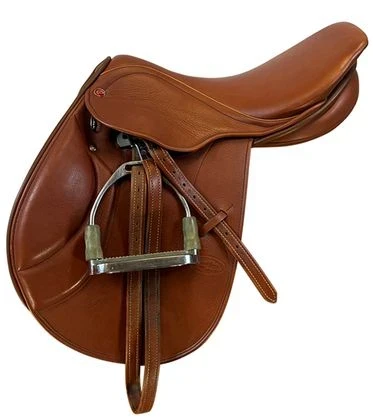
Used saddles are common with TB owners because you can often get better quality for the same price. Just check for soundness: no warped trees, damaged panels, or loose stitching.
Buying new is great if you want warranty coverage and tailor-made specs, but be sure the fitter understands Thoroughbred anatomy. Sometimes, used saddles can even be pre-broken in, which many horses appreciate for their softer feel right out of the gate.
Should You Hire a Saddle Fitter?
I think a good saddle fitter pays for themselves in saved time and horse comfort, especially for hard-to-fit Thoroughbreds. They catch little issues you might miss and can recommend loads of options within your budget.
If you’re short on funds, even a remote or virtual consult helps. Professional fitters also tend to know which local or online shops stock TB-friendly brands and models.
How To Tell If a Saddle Fits Without a Fitter
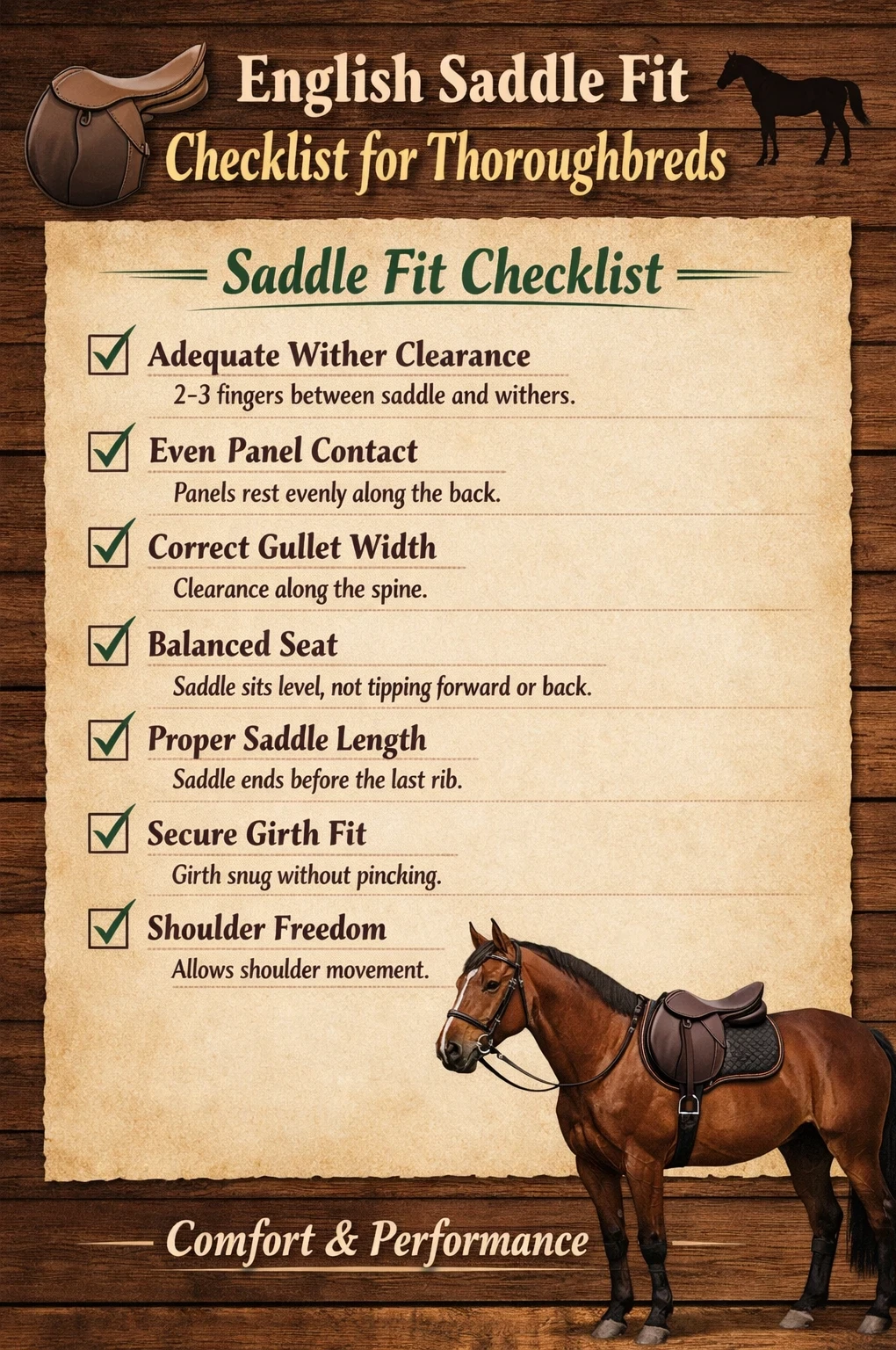
If you’re checking fit yourself:
- Check for even contact along the panels.
- Look for consistent wither clearance and room along the sides.
- Sit in the saddle and look for bridging or rocking.
- Watch your horse’s behavior. Signs of soreness, refusing to move forward, or saddle sores usually mean something’s off.
Common Saddle-Fitting Mistakes With Thoroughbreds
Sticking with a lowpommel, flat saddle for a highwither TB is a quick way to cause pain. Don’t use pads to “make up” for a poor fit; these just mask the problem. Watch for tree width, as going too wide can be just as awkward as going too narrow. Never underestimate how quickly a Thoroughbred’s muscle covering can change, so check fit regularly.
Best English Saddle Features For Thoroughbreds
- HighWither Clearance: Look for deep gullet channels and high pommels, which prevent pressure on the withers.
- Adjustable Gullets: Makes it easy to modify the width if your Thoroughbred’s shape changes.
- Wool Flocking: Allows for ongoing adjustments as your TB builds muscle or loses condition.
- Forwardcut Panels: These are great for longershouldered Thoroughbreds or those who need full range in front.
- Balanced Seat: A deeper, wellbalanced seat keeps both horse and rider comfortable and centered, especially over TBs with longer backs.
Example English Saddles That Work Well for Thoroughbreds
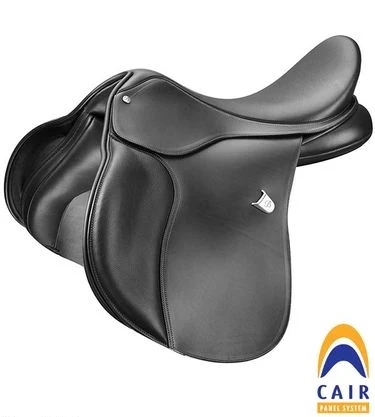
- Bates All Purpose + Adjustable CAIR System: Plenty of wither clearance, adjustable gullets, and easycare synthetic options.
- Wintec: Known for synthetic options and CAIR panels, with specific models (like some Wintec Pro) designed to fit high withers without tipping
- Stubben Genesis Jump: Woolflocked, cutback pommel design, and fits most TBs with athletic jumping builds.
- Prestige Roma Dressage: Midrange leather, comfortable seat, and tree shape that fits many TB backs for dressage work.
Frequently Asked Questions
Question: Can I use a half pad to help my TB’s saddle fit better?
Answer: Half pads can offer shortterm help, especially with mild bridging or minor clearance issues, but they aren’t a fix for serious fit problems. Always address the root cause with tree, flocking, or hardware adjustments.
Question: Why does my new saddle fit perfectly at first but now rocks after a month?
Answer: Thoroughbreds can change shape fast if they’re building muscle or coming back into work. Regular checks and flocking adjustments help keep the saddle fitting nicely as they transition.
Question: Is it really necessary to spend extra on a custom saddle for my Thoroughbred?
Answer: Not always. Many offtherack saddles (especially those with adjustable trees, cutbacks, and wool flocking) work just fine for lots of TBs. Try standard options first, and only go custom if nothing else works.
Matching the right English saddle to your Thoroughbred takes observation, patience, and a bit of trial and error. Focusing on wither clearance, adjustability, and quality materials goes a long way.
By paying attention to both your horse and your own position, you’ll set up both you and your TB for comfortable, successful rides every time.
Was this post helpful? If so, please leave your comments below!
This article is an absolute godsend for Thoroughbred owners. You’ve perfectly pinpointed the unique challenges—the prominent withers, sloped shoulder, and often narrow, flat back—that make fitting so tricky. The emphasis on finding a saddle with a narrow, forward-facing tree and sufficient shoulder clearance is the most critical advice. The suggestion to look for an adjustable gullet system for young or changing Thoroughbreds is also brilliant practical wisdom. This guide turns a daunting process into a manageable checklist. Thank you!
Hi Cian.
Thank you so much for your kind words! I’m really glad the guide was helpful for you and your Thoroughbred. Your thoughtful feedback means a lot, and I hope it continues to make saddle fitting feel more manageable
This is a fantastic guide for TB owners! I often find that even when the gullet width is correct, the long, high wither profile of a Thoroughbred causes the saddle to ‘bottom out’ or lack enough clearance at the back of the wither. In your experience, do you find that specific tree shapes (like a ‘u-shaped’ vs ‘v-shaped’ headplate) make a bigger difference than just adding a corrective riser pad?
Hi Leah.
Thanks so much — I’m really glad you found the guide helpful! You’re absolutely right — Thoroughbreds with long, high withers can still have clearance issues even when gullet width checks out. In my experience, tree shape does make a noticeable difference: a more open (U-shaped) headplate often helps lift the panels a bit better over high withers compared to a narrower (V-shaped) one, which can sit closer and be more prone to “bottoming out.”
Corrective pads can definitely help fine-tune the fit, but I usually see the best results when the tree and panel shape are already well-matched to the horse’s conformation — then pads are just that final touch rather than the main fix. Ultimately, it’s about balancing tree shape, panel contour, and padding to suit each individual TB.
Hope that’s helpful!
I found this to be well written. It has detailed explanations about how the saddle should fit and even a checklist to make sure the reader gets it right. I liked especially that you wrote this with the new person in mind, that they would learn the basics along with the finer points. Was this simply well researched or do you have years of experience in the field? If a new person wanted to get into horseback riding how would they know, having no experience, which saddle to buy? I saw your description of the backs but if I looked at five horses at a stable I wouldn’t be able to tell which is which. They would all look tall and broad to me.
Hi Robert.
Thank you — I’m so glad the checklist and beginner focus were helpful. The goal of the article is to combine solid research with practical fitting principles that trainers and saddle fitters consistently use.
For someone brand new to riding, the key is not trying to “eye-ball” five horses and guess their back shape. Instead, start with basics: check wither height, feel whether the back is more flat or curved, and most importantly, work with a trainer or experienced saddle fitter. Beginners aren’t expected to identify conformation instantly — that skill develops over time. In the beginning, guidance from someone knowledgeable is the safest and smartest way to choose the right saddle.