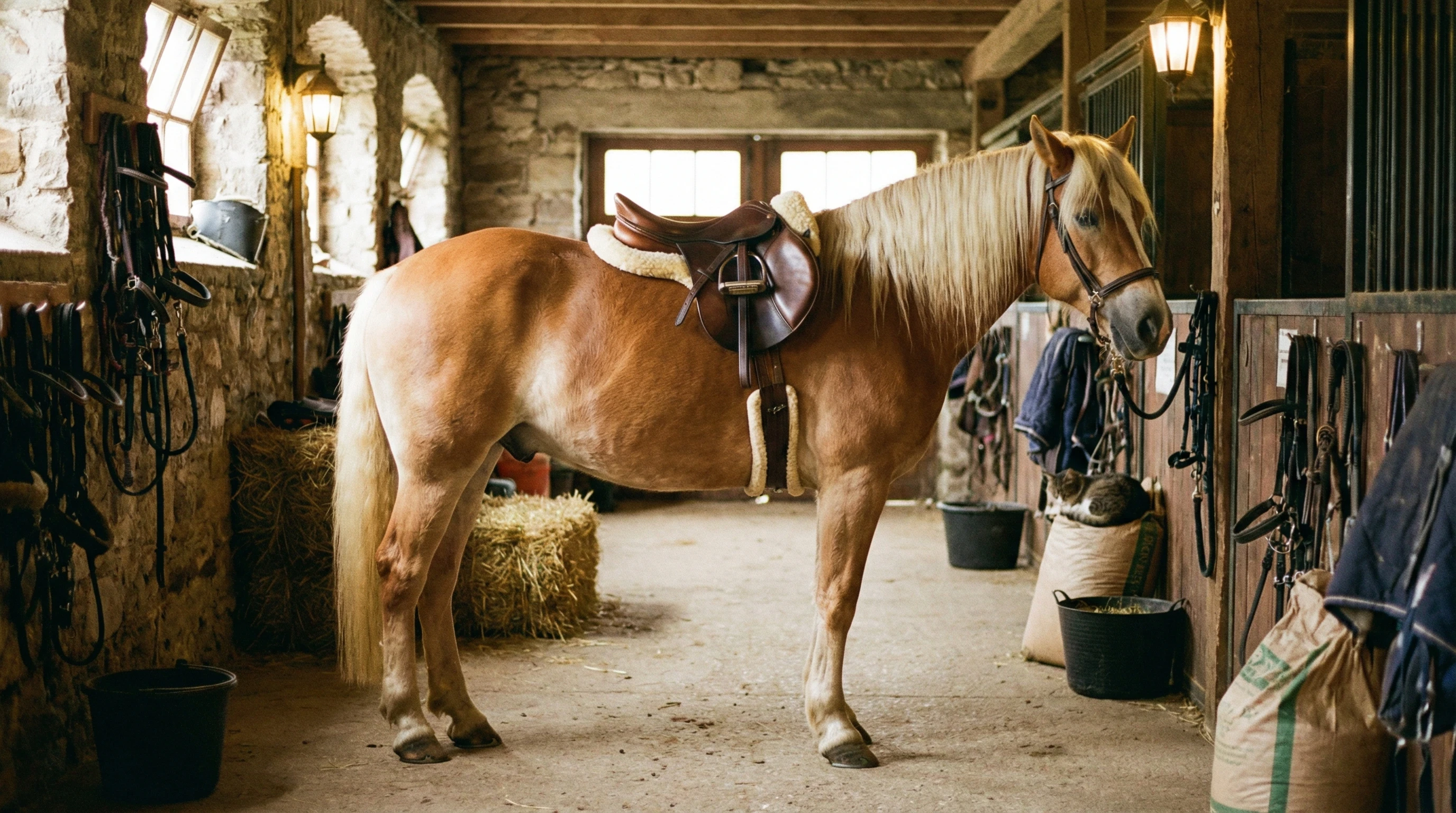
Finding a properly fitting English saddle for a Haflinger can feel intimidating at first. These ponies are known for being pretty round-barreled and wide across the back, which often makes standard saddles tough to fit.
You may find my related post, “English saddle fit by horse breed” helpful. Definitely check it out.
Now… back to these darling haflingers which are so hard to fit…
You’ll notice that some saddles want to slip forward or feel tippy, and your Haflinger might not look too pleased about it either. I’ve gathered my experience and the things I’ve learned from saddle fitters to help you cut through the confusion and pick what works best.
Why Haflingers Are Tricky to Fit
It all starts with the Haflinger’s unique shape. Their bodies are much wider and rounder than the average riding horse, and it comes with a few quirks:
- Wide shoulders: Haflingers often have broad, wellmuscled shoulders. Saddles meant for narrower horses just don’t clear this area without causing a pinch or sliding around.
- Flat backs: Compared to other breeds, Haflingers’ backs tend to have less curve and sit pretty flat from withers to croup. Standard English saddles with curvy panels can rock from front to back.
- Low or moderate withers: Haflingers sometimes have withers that are low and broad. Saddles with standard gullet shapes may put pressure over the spine and won’t feel stable.
- Round barrel shape: The combination of a wide, rounded ribcage and flat back often means that girths and saddles don’t “lock in” the way they might on a more Aframelooking horse.
So getting a secure, even fit takes some research, but it pays off in comfort for you and your Haflinger.
Haflinger Conformation Overview
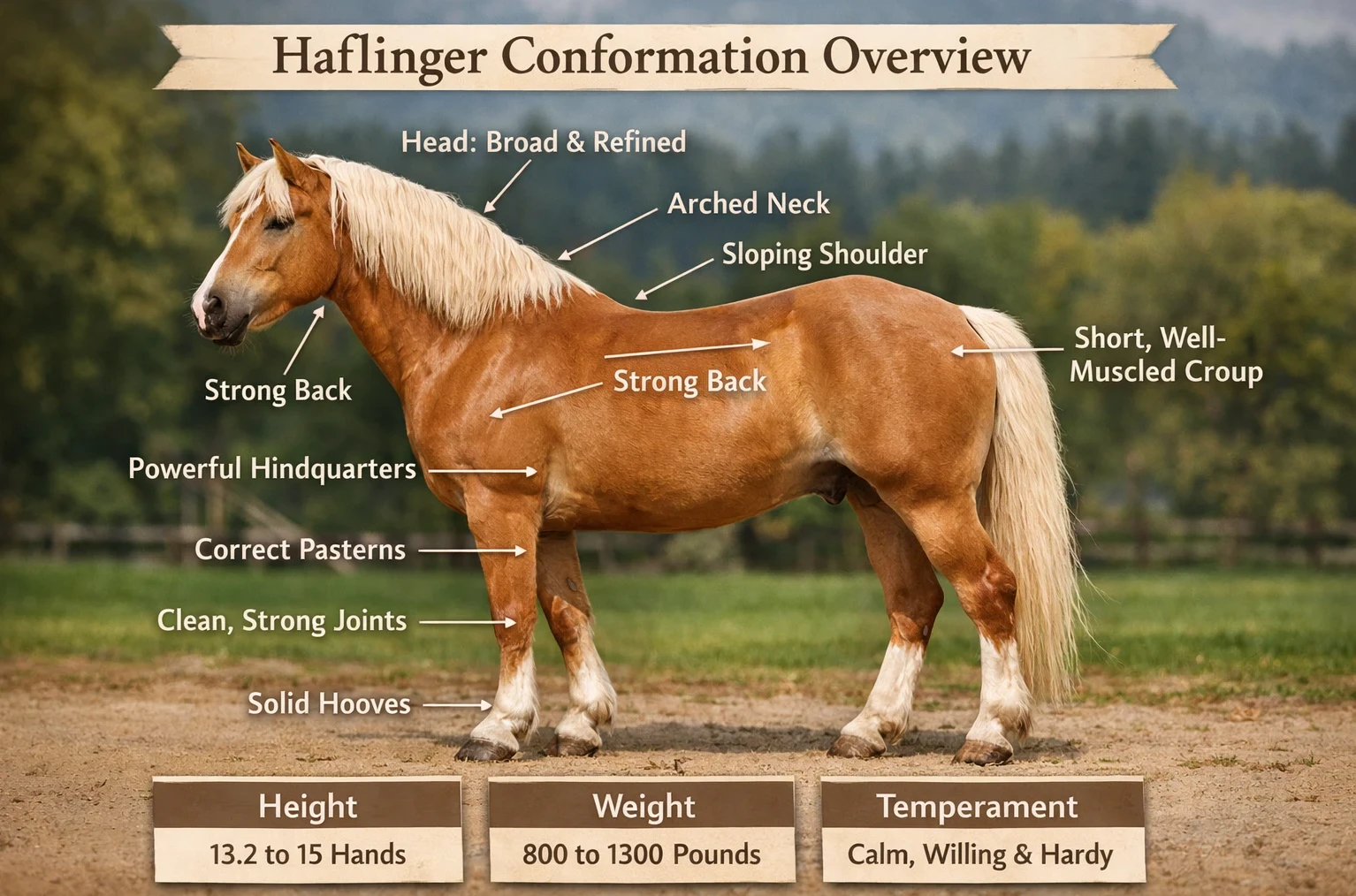
Knowing what you’re working with is the first step. Here’s what stands out in Haflinger conformation when it comes to saddle fit:
- Shoulder angle: The angle and depth of the shoulder influences where the saddle sits and how much it may slide forward.
- Back length: Haflingers tend to be a bit shortbacked, so extralong panels can bump into the loins or even the hips.
- Spine width: Their spinal processes can be broad and flat. A saddle with too narrow of a channel may pinch.
- Weightcarrying capacity: Haflingers are built strong, but their muscle and fat distribution means you won’t want excessive weight from a heavy, illfitting saddle.
Besides these points, Haflingers’ strong backs and unique build mean you should always check for fitting issues after riding for a while.
Notice if your horse’s attitude shifts, or if you see rubbing or hair changes along the back. These small clues can help you tweak fit before discomfort becomes a problem.
Saddle Tree Types Explained
This is where things get interesting. If you’ve ever wondered why some English saddles don’t feel right on your Haflinger, it nearly always traces back to the saddle tree.
See my posts, “Adjustable Vs Fixed Tree Saddle Comparison” and “The Anatomy of an English Saddle” for in-depth explanations on saddle trees and how they affect your horse.
But here are the basics:
- Hoop trees vs Aframe trees: Most Haflingers are much more comfortable in a hoop tree. A hoop tree is rounder at the front, while an Aframe tree (which suits highwithered, narrow horses) creates lots of pressure points and slips forward easily on a Haflinger.
- Extrawide vs wide: Many Haflingers need a wide or extrawide tree. Some even need saddles that go beyond extrawide, depending on their condition. However, “wide” isn’t the same with every brand, so careful measurement is pretty important.
- Why narrow trees cause pressure points: A tree that is too narrow will pinch at the shoulders, bridge through the back, and create soreness. I’ve seen Haflingers get grumpy and resist the saddle just from this mistake alone.
Panels & Channel Width
Next to tree shape, the saddle’s underside panels and channel are huge factors in getting a comfortable fit for your Haflinger:
- Flat vs curvy panels: A flatbacked Haflinger needs flat or low-profile panels that follow their shape. Curvier panels will rock like a teetertotter, causing the saddle to tip or wobble.
- Minimum channel width: Aim for a channel at least 3.5 to 4 inches wide. This helps avoid pinching and allows the spine to move freely. A toonarrow channel is an instant dealbreaker for most Haflingers.
- Importance of even contact: Flip over the saddle and look across the panels. There should be consistent contact with the back except for the spine’s relief area. If you spot gaps or bridging, this often means the saddle isn’t matching the Haflinger’s topline.
Remember to check under the saddle after a ride – even sweat marks and hair patterns tell a story. If you see uneven sweat or dry spots, it may be time to reevaluate your fit or consult a fitter.
Balance & Rider Position
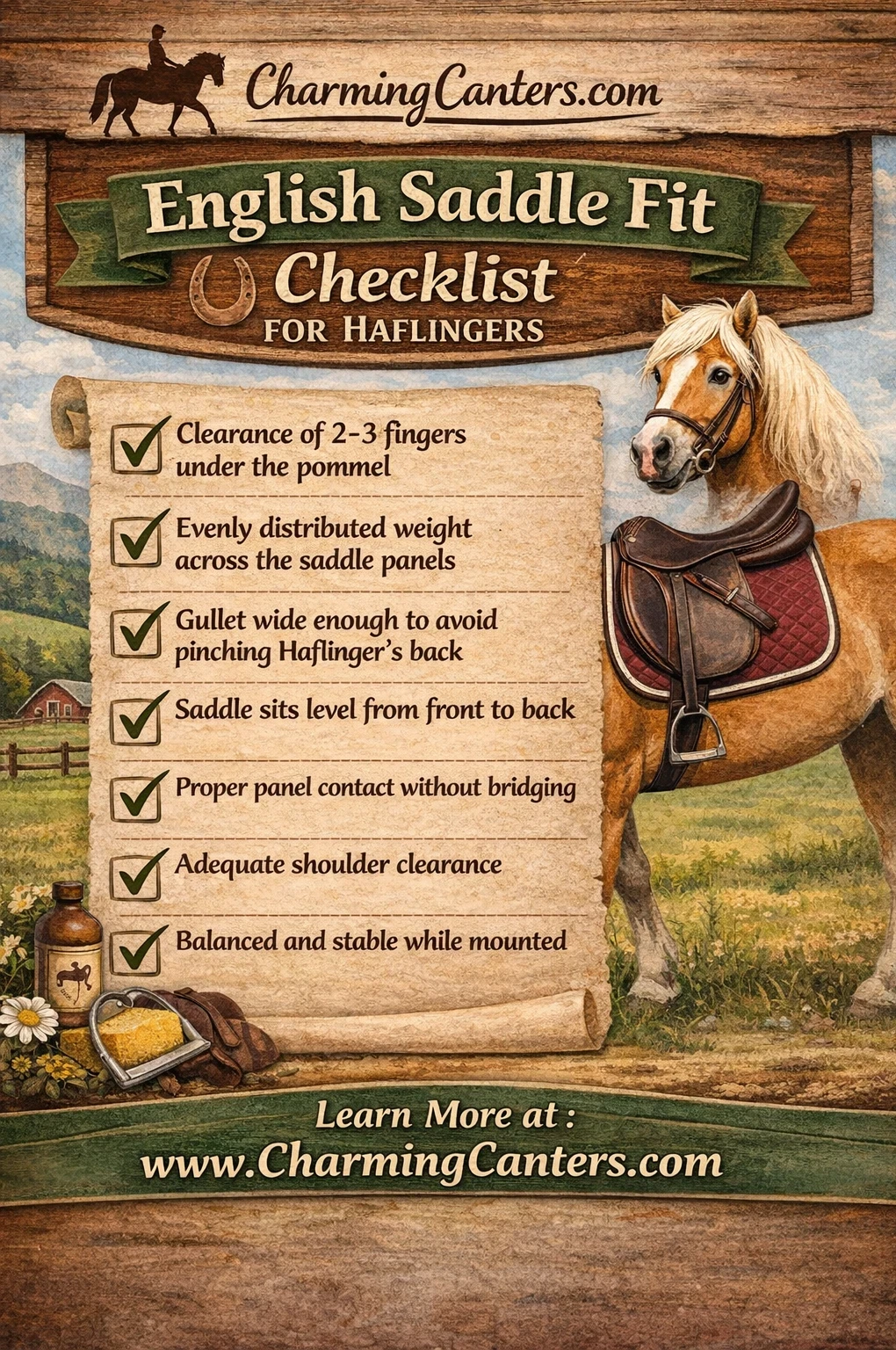
Balance matters a lot more than some might think. A poorly balanced saddle can make you feel like you’re always having to fight to stay in the middle, and it’s no fun for your horse either.
Here’s what usually pops up:
- Forward tipping saddles: If your saddle tends to slide up the neck or tip forward, it’s probably too narrow, too curvy, or both. I often see this happen especially with regular English saddles that aren’t built for flat-backed horses.
- Seat balance: Smooth and level balance helps you find your center. You shouldn’t feel pitched forward or backward. Sitting in a chairlike seat is a sign the panels are matching your Haflinger’s back well.
- Girth placement issues: With round Haflingers, girth points may slide forward. If this happens, your saddle will drift up toward the shoulder. Saddles with front strap options or point billets can help stay put.
Sometimes, riders compensate for a tippy saddle by changing their posture, which leads to discomfort for both horse and human in the long run. Prioritize a balanced seat—your Haflinger will thank you for it.
Adjustable vs Fixed Trees
I get questions about whether a saddle with an adjustable gullet can really work for Haflingers. See my post, “Adjustable Vs Fixed Tree Saddle Comparison.”
Here’s what I’ve learned:
- When adjustable works: Some adjustablegullet saddles go up to extrawide or even larger, which can be a lifesaver for a changing topline (like youngsters or hard keepers). Just make sure the whole tree is broad enough, not just the gullet plates. Check fit each time you change widths.
- When it doesn’t: If the basic saddle shape is too curvy or the panels are too narrow, changing the gullet width won’t fix the problem. An adjustable tree needs to be genuinely made for broad, flat backs to help Haflingers.
- Fit checks after adjustment: After tweaking the gullet, set the saddle on bare back. Look for even contact, stay aware of any bridging or pinching, and ask your Haflinger to move so you can spot sliding or rolling.
Keep in mind that some adjustable saddles sacrifice comfort or stability for flexibility. It’s always best to test in person and see how your Haflinger responds—sometimes a fixed tree built for wide, flat backs is the most reliable route.
How to Test Fit (Step-by-Step)
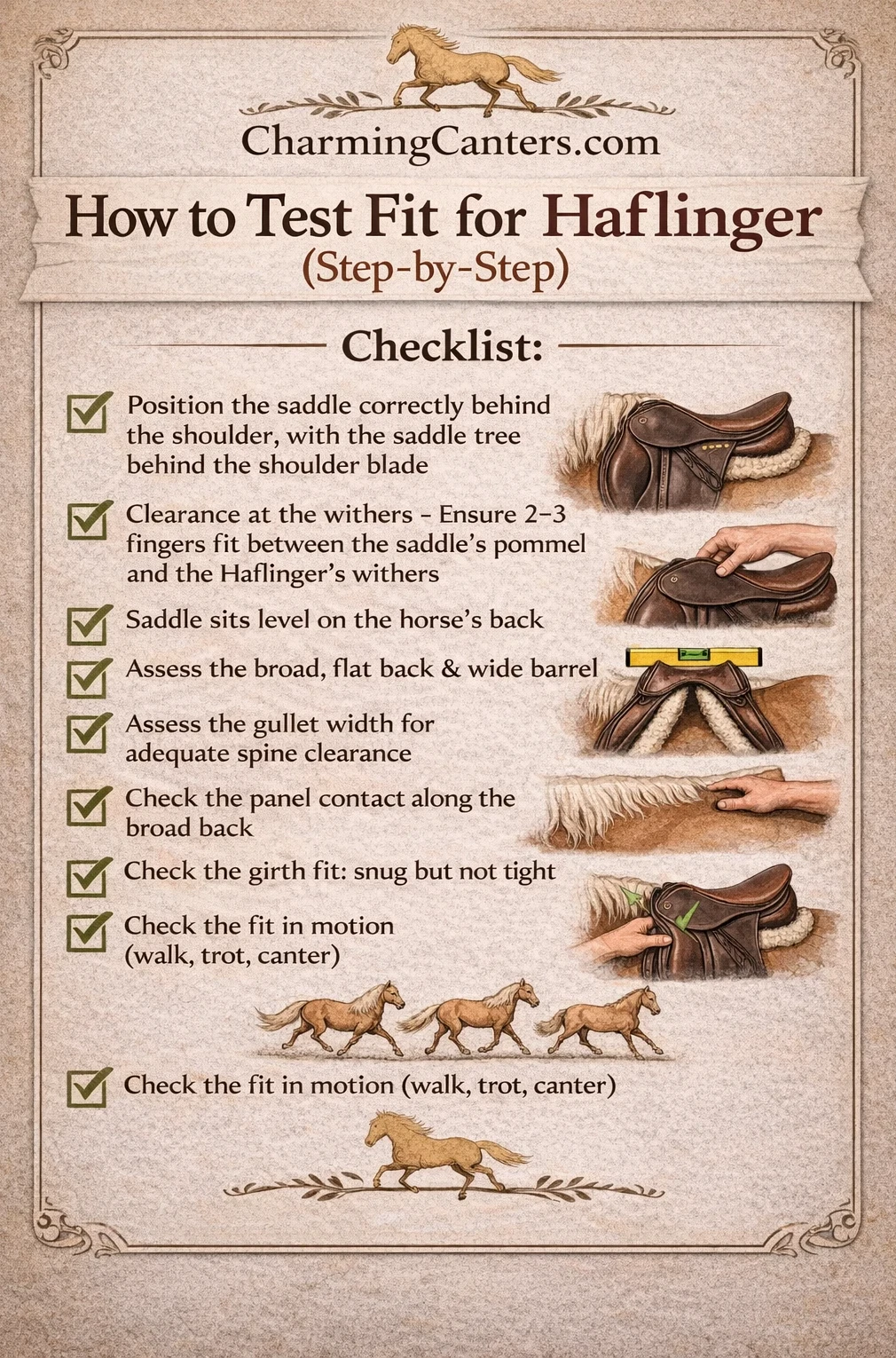
Trying out a saddle on a Haflinger goes beyond just sliding it on and saddling up. Here’s how I recommend checking the fit:
- Without pad: Start by placing the saddle right on your Haflinger’s back, no pad, and check for even panel contact, space at the withers, and channel width over the spine.
- With pad: Next, add your regular pad and see whether the saddle now feels tighter or is sitting too high off the back. This is useful for spotting pinch spots that may develop during riding.
- Under rider: Sit in the saddle quietly and ask someone to check if you’re sitting centered or if anything tips, rocks, or shifts. The saddle should remain where it started, without scooting forward.
- After riding check: After you’ve ridden for a bit, pull the saddle and check for dry spots (which can signal bridging), ruffled hair, or any pressure points. A happy Haflinger will move freely and won’t have dry patches from the saddle’s underside.
Additionally, walking and trotting your Haflinger in hand as well as under saddle can show you where issues crop up. Is the saddle moving side to side? Does your horse suddenly pin its ears or stretch its neck oddly? These are all clues that the fit still needs adjusting.
Frequently Asked Questions About Haflinger Saddle Fit
Why do English saddles slide or tip forward on Haflingers?
Most of the time this means the tree shape is too narrow, too curvy, or the panels are not flat enough. It’s a really common problem because Haflingers just don’t have the same topline as the average English horse.
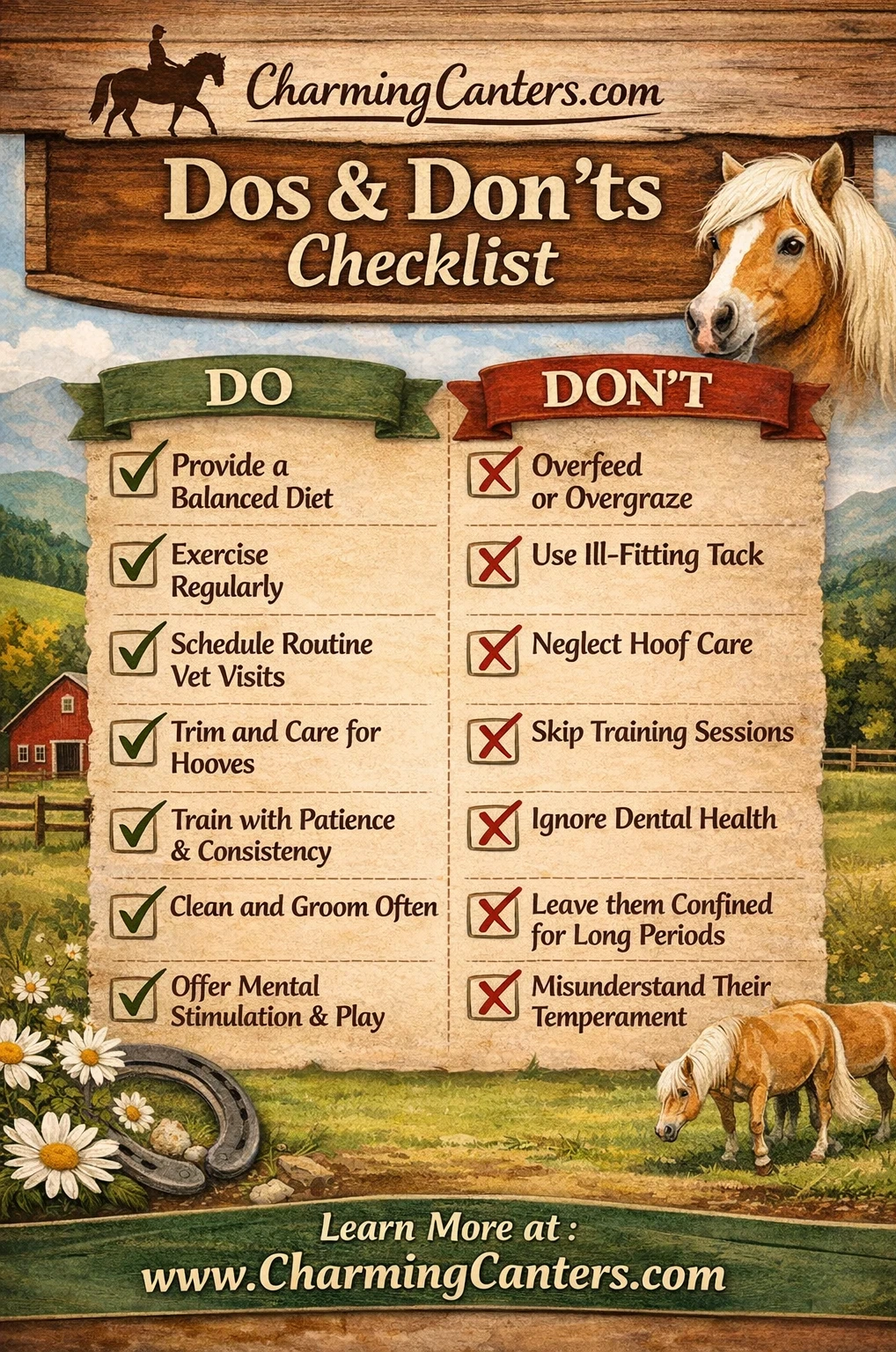
Check List of Dos & Don’ts for Haflingers
Do Haflingers need extrawide or hoop trees?
Many Haflingers do best with extrawide or even wider trees, and most prefer a hoop tree over the standard Aframe. Always measure your own horse, as there’s some variation.
Are adjustablegullet saddles good enough for Haflingers?
Some can work, but only if the whole tree and panel design is made for wide, flat backs. Just opening the gullet plate on a narrow or curvy saddle doesn’t make it fit right.
How wide should the channel be for a Haflinger’s spine?
A channel at least 3.5 to 4 inches is usually needed. This gives the spine plenty of room and avoids pressure, especially for broadbacked Haflingers.
What panel shape works best for a flat, round back?
Panels should be as flat as possible to match your Haflinger’s contour. Curvy panels usually cause bridging or rocking. Now, if you’re fitting a wide, flat-backed horse, you may also find our guide on English saddles for draft horses helpful.
Can I use a regular Aframe saddle tree?
This shape doesn’t usually work for Haflingers. They need a broader hoop tree to get even contact and stay clear of the spine.
Do Haflingers usually need special saddle pads?
Sometimes a pad with support or shims can help with minor fit tweaks, but a properlyfitted saddle is way more important. Avoid overpadding, since it can make things tighter or cause slipping.
How can I tell if my saddle is bridging?
A bridging saddle leaves gaps in the middle of the panel when you look at it from underneath. Dry spots after riding often show where the saddle isn’t contacting the back evenly.
Are woolflocked panels better than foam for Haflingers?
I’ve found woolflocked panels can be easier to adjust and can mold better to a Haflinger’s back. But good foam panels, if the shape is correct, can work too. Regular checks matter more than panel fill.
What signs mean my saddle does NOT fit my Haflinger?
Read my post on, “What Is The Impact Of An Ill-fitting Saddle On A Horse” which describes the signs your English saddle doesn’t fit.
Look for hair ruffling, dry patches after riding, lots of saddle movement, ears pinned when tightening the girth, short or choppy stride, or soreness along the back. These are pretty clear signs that a different saddle or big adjustment is needed.
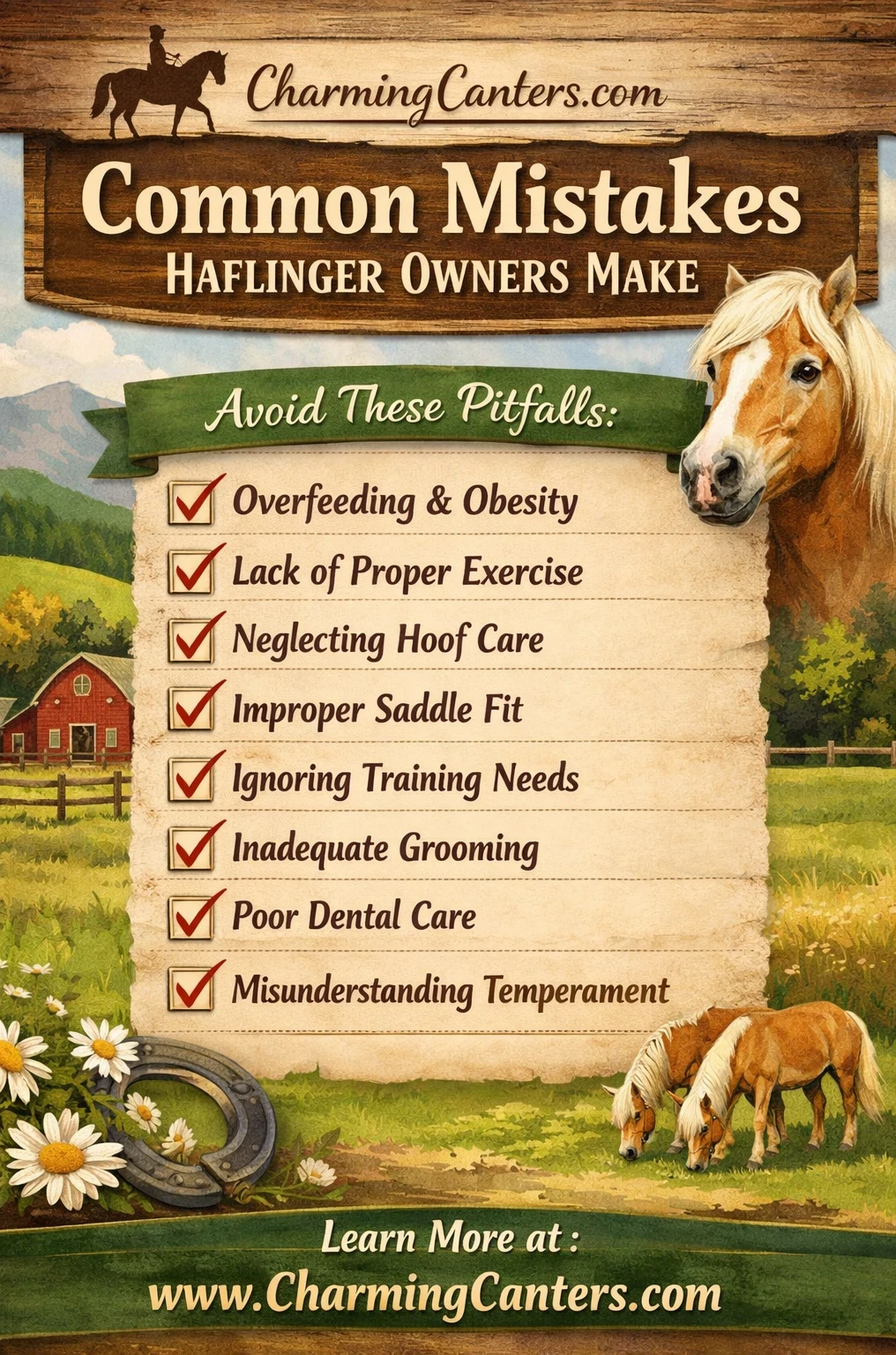
Common Mistakes Haflinger Owners Make
If you’re ever unsure, check in with a professional saddle fitter who specializes in wide, round-barreled horses. They can help spot subtle issues and make sure you and your Haflinger are riding in comfort for years to come.
Patience and a careful eye really pay off when finding the perfect saddle fit for your loyal, sturdy Haflinger friend. Before I wrap up, I want to give you a few saddle recommendations for your haflinger.
Saddle Recommendations for Haflingers
As I stated earlier, Haflingers often benefit from wide trees, adjustable fit options, and panel systems that suit a wider, flatter back. Here are our top picks:
Wintec 2000 All Purpose Wide Saddle
- 🧠 Why it works: Designed specifically with a wide tree and HART panels that help distribute weight and contour to a broader horse’s back—excellent for Haflingers.
- 👍 Easy-care synthetic and adjustable features make it good for riders who want low-maintenance gear plus wide-fit versatility.
Wintec Pro Wide Endurance Saddle
- 🧠 Why it works: Super-soft panels and wide tree offer comfort for broad-backed horses. The Y-girth system helps keep the saddle stable on rounder bodies.
- 👍 Great if Haflinger owners want comfort for long hacks or trail riding.
Premium Wide Options (All-Purpose & Dressage)
- 🧠 Why it works: Adjustable width system and wider tree help fit horses with broader backs. Good for riders doing multiple disciplines.
- 👍 Excellent brand reputation and quality leather.
- 🧠 Why it works: Dressage-focused with a wide channel and panels designed to accommodate a larger shoulder and back surface.
- 👍 Great choice for Haflingers that do more flatwork and dressage-style riding.
Why These Brands Work for Haflingers
✅ Adjustable or Wide Tree Options
Haflingers often need extra room through the channel and gullet because of their broad shoulders and flatter backs. Saddles with wide trees or changeable gullets help achieve a better match.
✅ Panel Shape Suited to Flat or Round Backs
Flexible panels or those molded to contour help maintain even contact on a rounder topline—ideal for avoiding pressure points.
✅ Good Balance & Weight Distribution
Wider options often include panel and girthing systems that stabilize the saddle on flatter backs, reducing tipping or rocking—common issues for Haflingers and similar breeds.
Was this post helpful? If so, please leave your comments below.
Wow, finally an article on choosing a saddle for a Haflinger. This is a fantastic resource for this unique breed. You have focused on a very important point regarding saddle types that complement a Haflinger’s movement and comfort. This kind of specialized information is hard to find.
By the way, for a Haflinger with a very flat back profile, what specific adjustments in flocking or pad choice do experienced fitters often make to achieve better stability?
Thanks so much — I’m really glad you found the article helpful and appreciate your kind words!
Great question about flat backs — many experienced fitters will look at adjusting the saddle’s flocking so the panels make even contact front-to-back (especially with wool flocking, which can be packed to better match your Haflinger’s topline) and ensure the saddle isn’t rocking or bridging.
They’ll also often use correction or shim pads to fine-tune balance under the saddle without creating new pressure points. A good fitter can help you decide whether these tweaks or a different tree shape will give you the most stability and comfort for your horse.
This is such a helpful and well-explained guide — thank you! Haflingers can definitely be tricky to fit with a standard English saddle, and your tips on tree shape, panel design, and checking for balance are spot on.
I especially love the practical step-by-step fit check and the reminder that a proper saddle fit is more important than adding extra padding. Great post for anyone riding a Haflinger!
Hi Monica.
Thank you so much — I really appreciate that! Haflingers can absolutely be a challenge, and I’m glad the step-by-step fit check and balance tips resonated. You’re exactly right: correct fit always matters more than piling on padding. Thanks for taking the time to share such thoughtful feedback