Picking an English saddle for a horse with high withers comes with its own quirks. Horses with high withers are often built with that sleek, sharp shoulder and a spine that seems to peek right out at you.
Finding a saddle that works for them is rarely as simple as picking a size off the rack.
Getting a solid fit makes a noticeable difference in your horse’s comfort and willingness to move. Plus it cuts down on time spent struggling with saddle pads or dealing with sore spots.
Here’s a little transparency: Our website contains affiliate links. This means if you click and make a purchase, we may receive a small commission. Don’t worry, there’s no extra cost to you. It’s a simple way you can support our mission to bring you quality content.
What Makes a Horse “High Withered” and Why Saddle Fit Gets Tricky
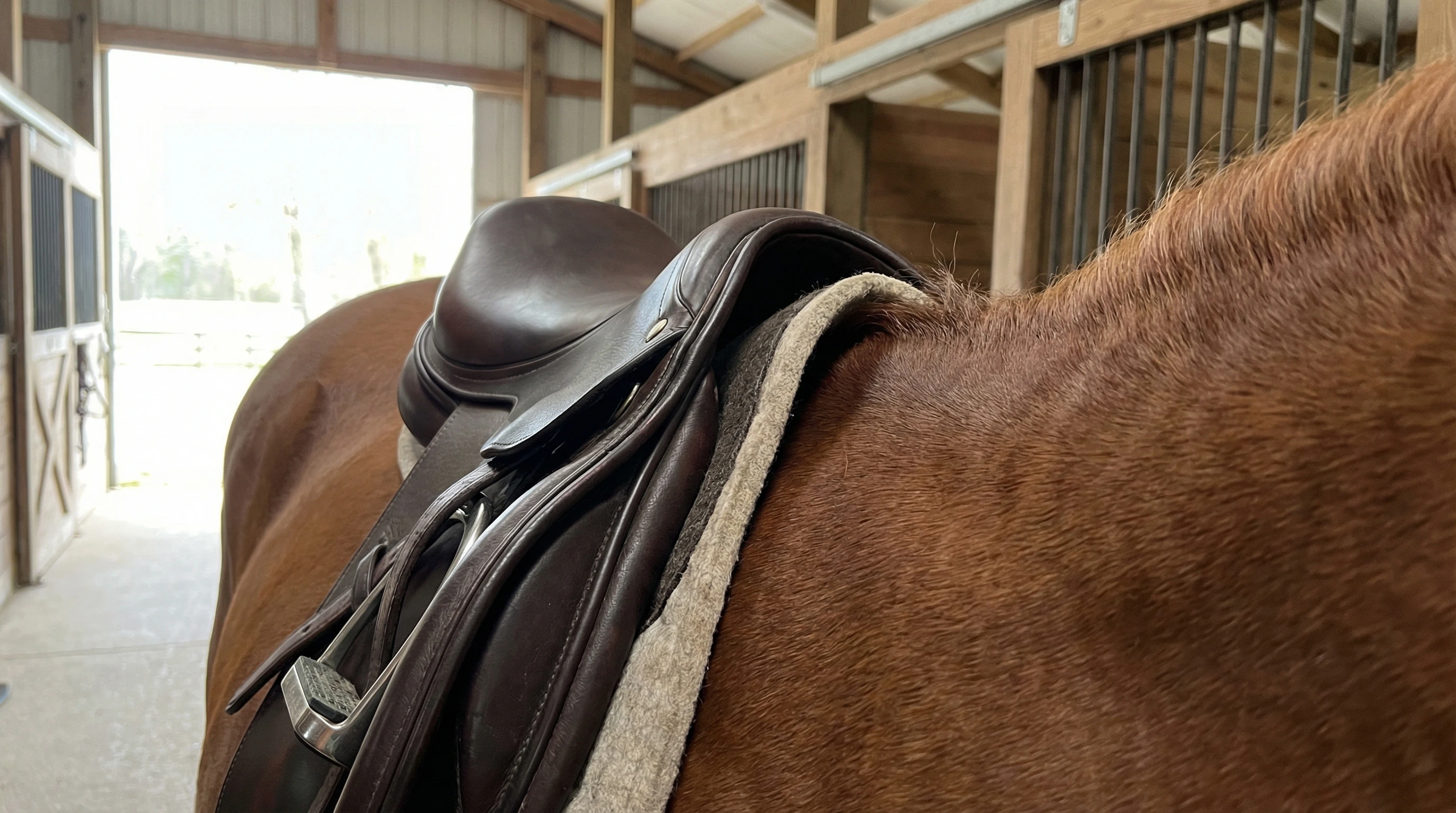
Some horses have naturally higher withers – the ridge between their shoulder blades bumps up more sharply than average. Thoroughbreds, Saddlebreds, and older horses often display this shape.
But it can show up in any breed. High withers might be genetic, or they may show up as a horse loses topline muscle with age, injury, or changes in work.
Saddle fit becomes harder because most English saddles are built with a rounder tree meant for average horse backs. Sliding one of these onto a high-withered horse often means the pommel will rest directly against the withers or perch at an odd angle, risking pinching, rubs, and sliding problems.
The unique shape of high withers simply demands an approach different from standard saddle fitting.
Why Does My English Saddle Pinch or Rub My Horse’s Withers?
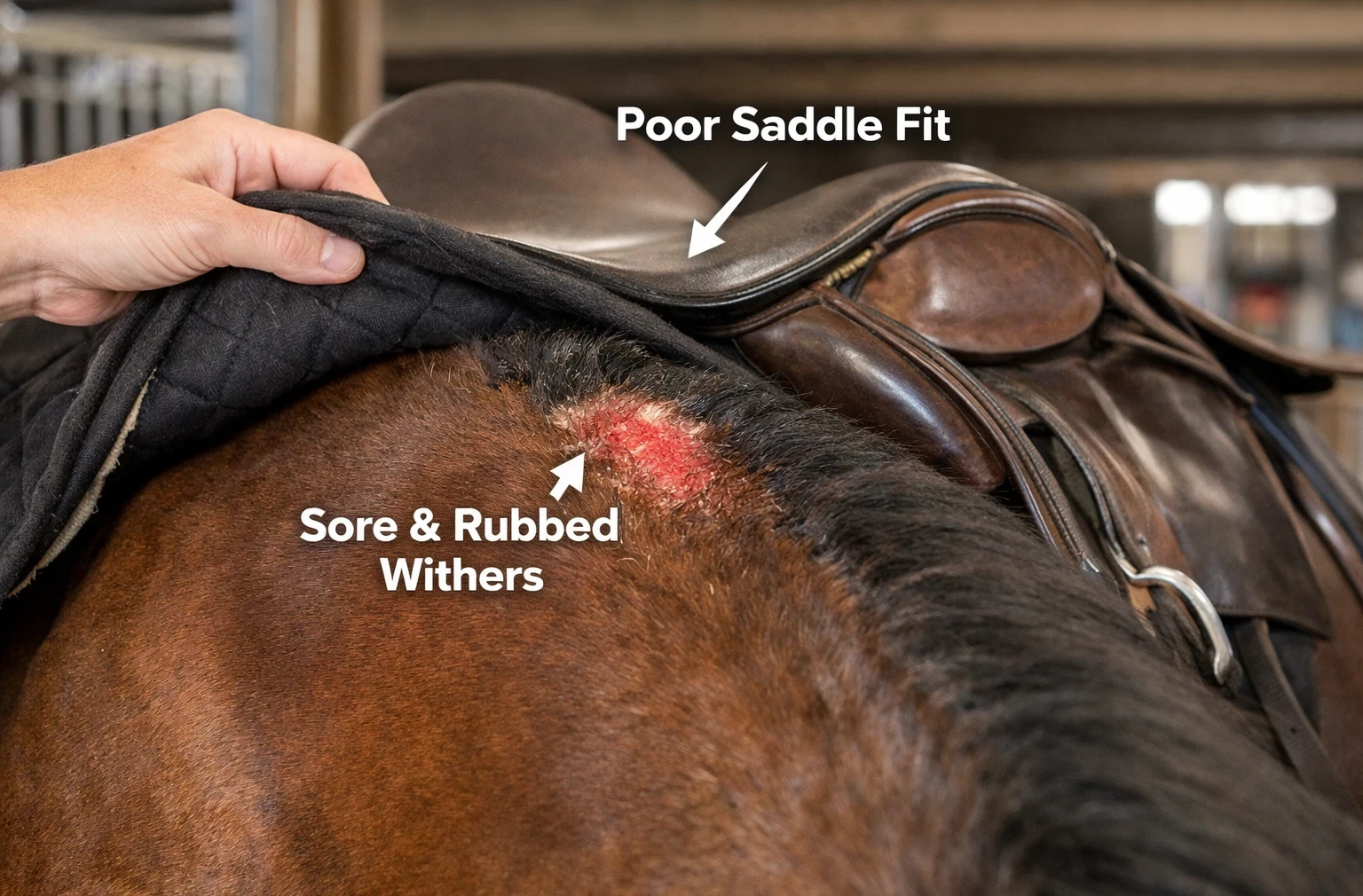
High-withered horses generally have less natural padding between the saddle tree and their spine. This pushes the tree down closer to the withers, where the lack of muscle doesn’t provide much cushion.
If the saddle sits too low, wither rubs – hair loss or sores – can quickly develop right on top of the withers. A narrow tree tries to “bridge” over the withers, but ends up pinching the sides hard, while an extra wide saddle might shift and jam the pommel right into the delicate wither area.
For more information on saddle fitting, please read my post, “How To Identify An Ill-Fitting English Saddle: Signs And Symptoms”.
Old, broken-down saddles or panels with collapsed foam only add to the problem, removing any needed lift. Even if you buy a brand new saddle made for “standard” shapes, it may simply curve the wrong way or lack the height needed to keep your horse happy.
How Much Wither Clearance Should an English Saddle Have?
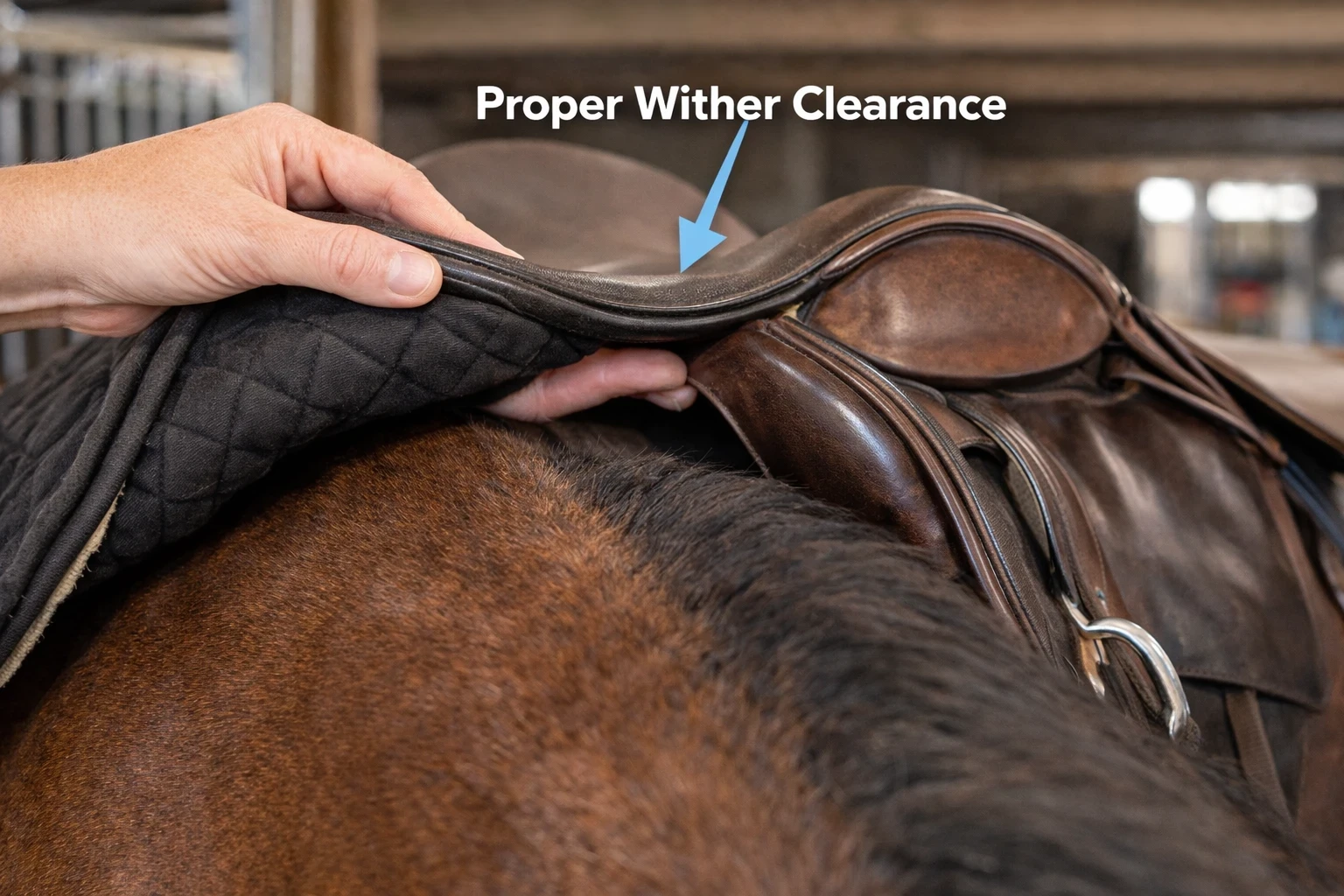
When you tack up, there should always be about two to three fingers’ vertical clearance between the top of the withers and the saddle’s pommel. Make sure to double-check this distance once the saddle is girthed up and again with a rider in the seat, as your weight does compress padding and can shrink the gap.
There should also be enough space along the entire length of the channel, ensuring no contact between the saddle and the horse’s spine.
Clearing the withers with space first prevents friction and soreness and lets your horse stretch their neck and back comfortably. If you notice any contact, or see a dip along the spine instead of a clear “tunnel,” your saddle fit needs reviewing.
Sometimes just a small adjustment does the trick; other times, you’ll need a saddle made with high withers in mind.
Best Tree Shape for High Withers
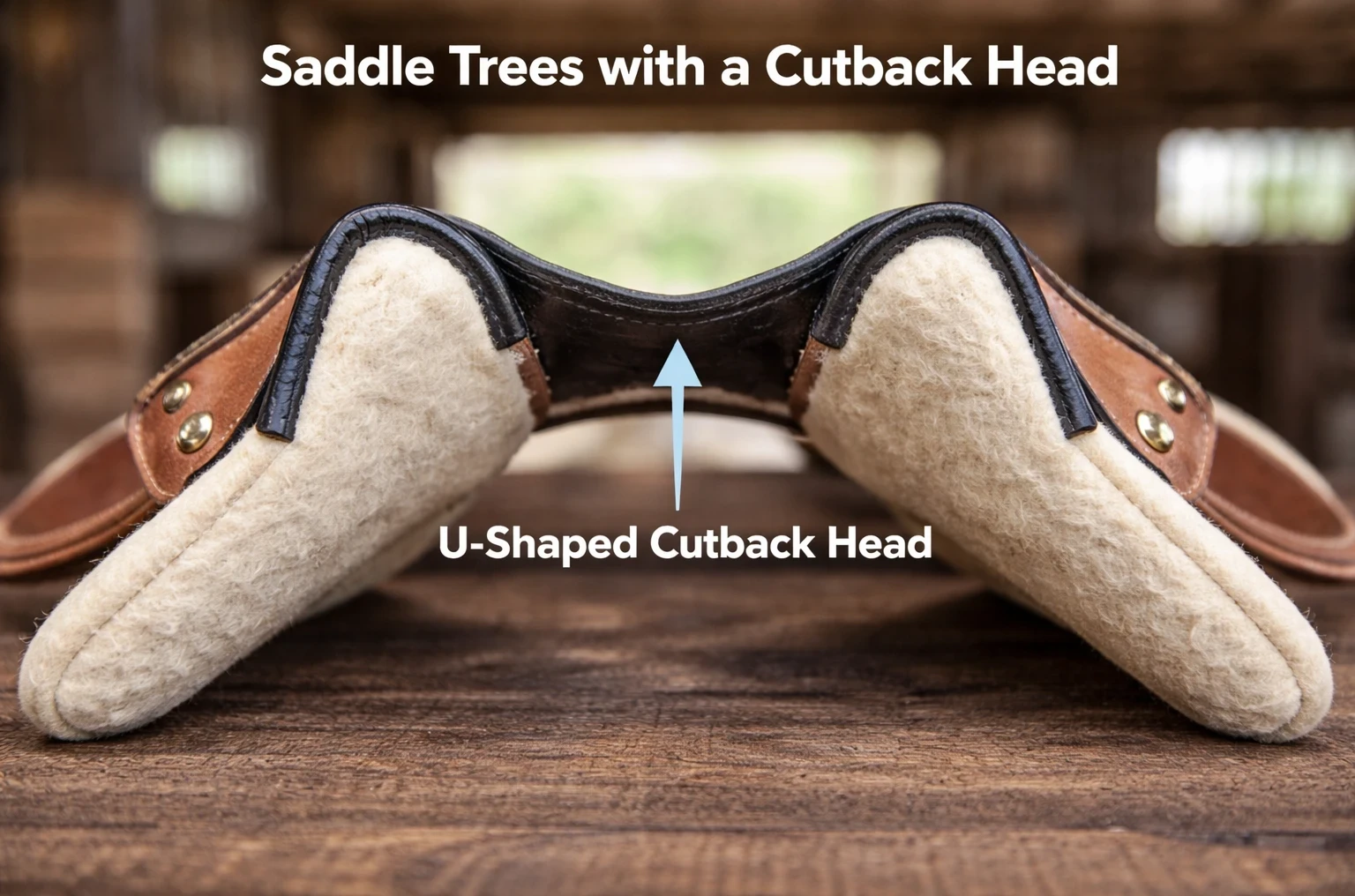
Saddle trees with a cutback head – meaning a U-shaped, open pommel –give more room to the withers. Many older saddles and those designed for gaited or Saddlebred horses follow this style.
But plenty of modern manufacturers now have updated trees tuned for sharp-backed horses. Deeper trees, often labeled “high wither,” “Thoroughbred fit,” or just “TB fit,” are also popular picks for this body shape.
Trees that run flatter in the side panels, but do not scoop up too much at the pommel, create steady clearance up front. These usually work best paired with a narrow or medium width since most high-withered horses are on the slimmer side.
If you aren’t sure how to pick a tree from a label, it’s wise to bring in an experienced saddle fitter with tools to measure your horse’s angles and help you game plan for the best fit.
They can spot subtle details about your horse’s back and match brands to their build accurately.
Are Adjustable Gullet Saddles Good for High Withers?
Adjustable gullet saddles are a popular choice thanks to a metal plate that can be swapped to change the tree’s width in the front. They’re useful if your horse is changing shape, or if you ride several different horses.
Some riders get excellent results with these saddles for high withers, though they aren’t a cure-all.
If the saddle’s underlying tree isn’t tall enough at the front, or if the panel shape under the seat doesn’t contour just right, no amount of swapping gullets will fix insufficient wither clearance.
Look closely for models that market high-wither or cutback options, and always try the saddle on before sealing the deal. Some adjustable gullet models still run wide or too standard-shaped, missing the mark for true high withers.
Wool vs Foam Panels: Panel Type for High Withers
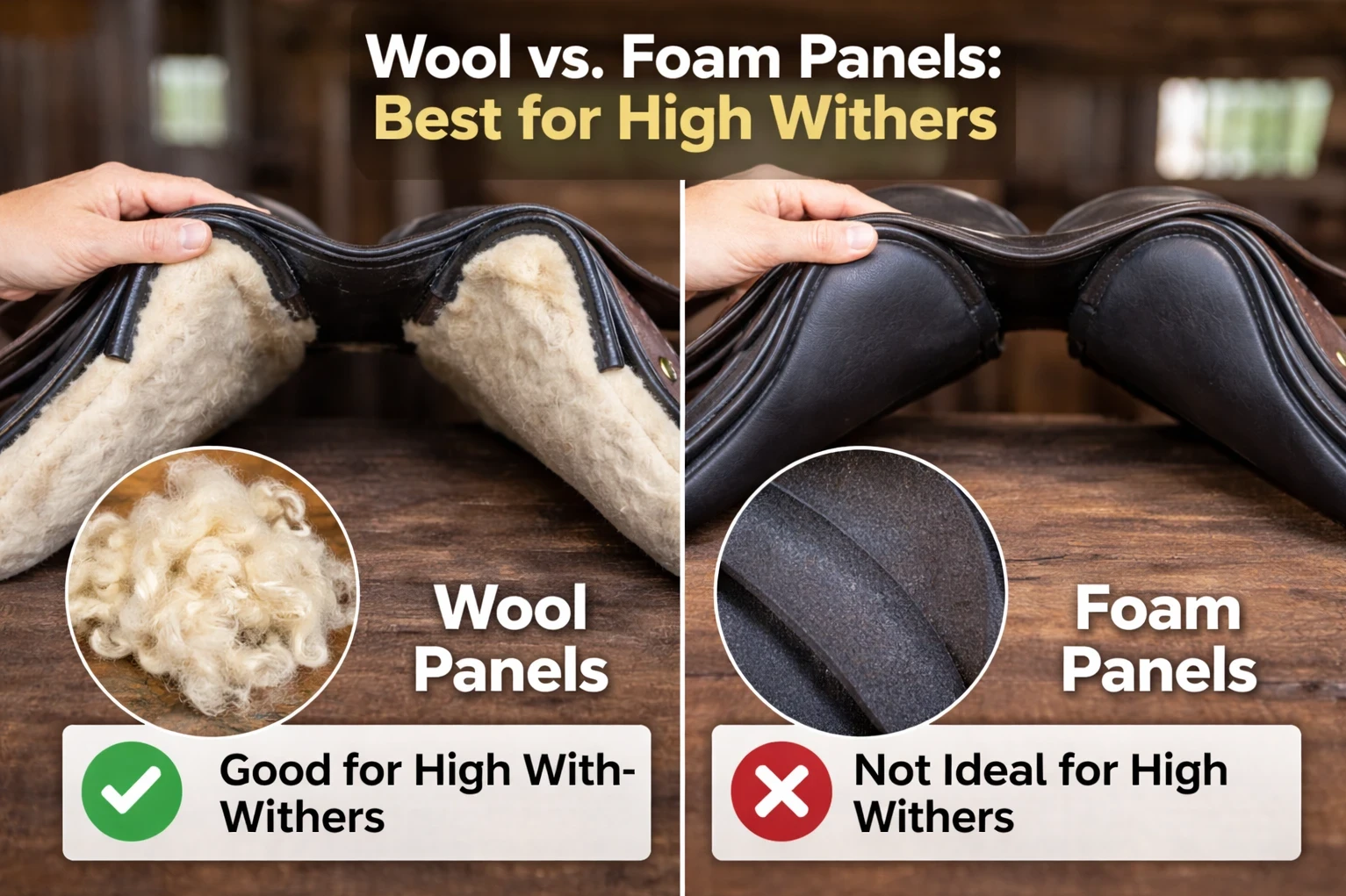
Wool flocked panels have a real advantage in fitting a unique horse. Wool can be re-stuffed and shaped to better follow your horse’s wither outline, and a skilled fitter can add more near the shoulders for precise lift and balance.
This flexibility dramatically pumps up comfort for high-withered horses.
Foam panels, by comparison, can’t be adjusted. Foam simply compresses where there’s the most pressure. On high-withered or bony horses, the foam wears down swiftly where you need it most—leaving you without the lift or cushioning you counted on.
While some foam saddles now start out extra lifted, woolflocked panels generally give you far more fit potential if your horse is tough to suit.
Top English Saddle Styles for High Withered Horses
Certain English saddle types naturally offer better fit potential for high withers:
- Cutback Saddles: Designed specifically to clear prominent withers, they’re a proven starting point for hard-to-fit shapes.
- Dressage Saddles with Deep Trees: If the panels give a good channel down the spine, these work well with high withers.
- Close Contact Jump Saddles: Look for narrow or high-wither designs from brands known for TB fit. Not all close contact saddles are flat—many are made with deeper panels in front for added support.
Pony and cob saddles occasionally include high-wither options as well. Check the manufacturer’s fitting guides and be prepared to try out a few before landing on the best match for your horse’s movement and back shape.
How to Spot Bad Saddle Fit on High Withers
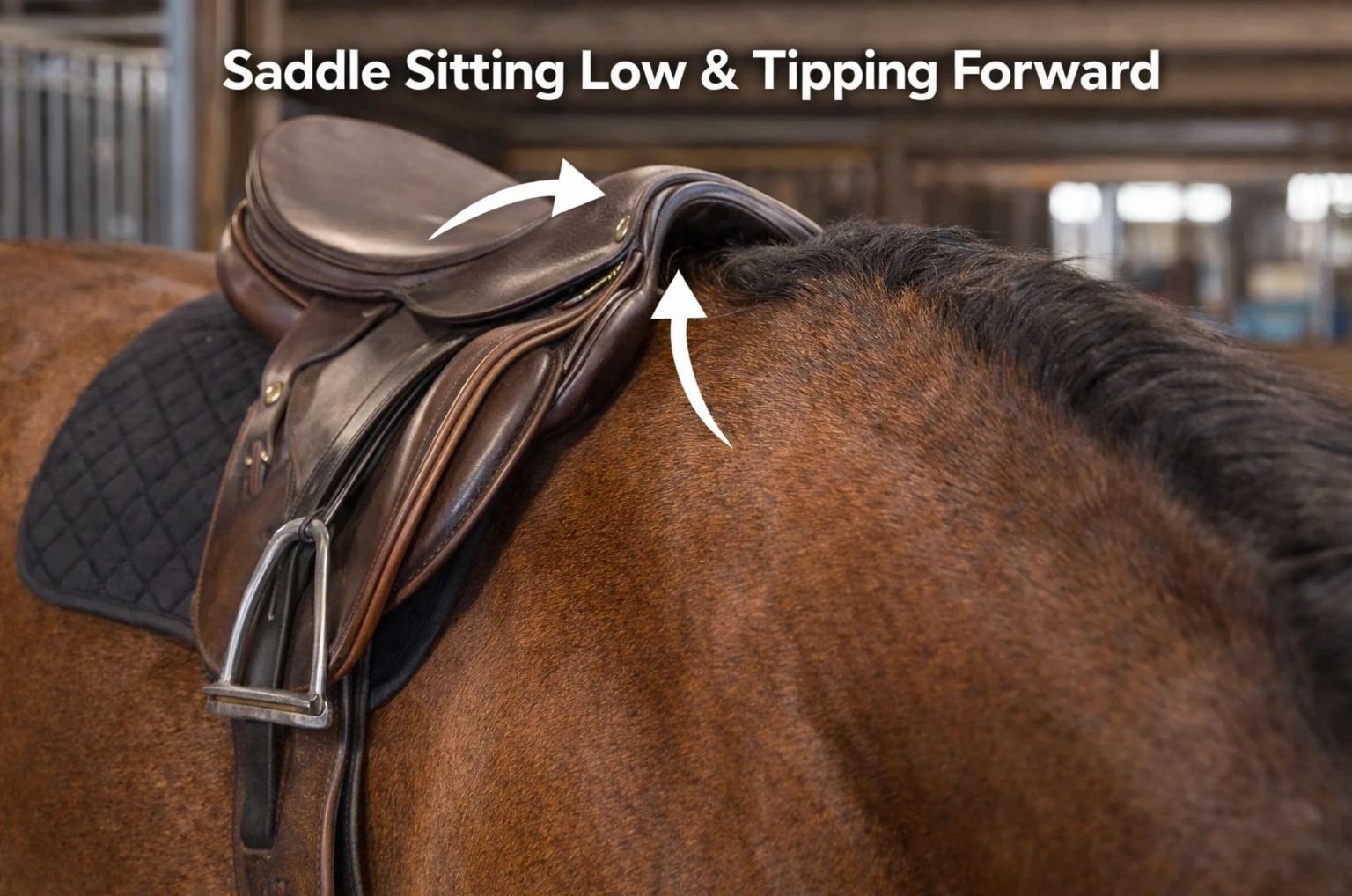 Soreness, missing hair, swelling, or sweat marks and dry spots after riding are classic signs of bad saddle fit. If your saddle sits low in front, tips forward, or rocks side to side, something’s off.
You might see hollowness in your horse’s back, a quickened or restricted stride, or stalling on hills. Even subtle cues – like uneven sweat patterns – can tip you off to pressure points that are worth addressing early on.
Behavioral clues are just as important.
If your horse fidgets endlessly at the mounting block, pins their ears, or bites at the saddle, listen up – these are their ways of telling you about discomfort. If you’re ever unsure, a saddle fitter or an experienced trainer can be a real asset with high-withered horses.
Why Does My Saddle Rock or Tip Forward?
High-withered horses sometimes have a pronounced dip right behind the wither. If a saddle isn’t designed for this, it may “bridge” (touching only at front and back but not the middle) or rock (seesawing under your weight).
If your saddle is too wide, it might tip its nose down so the pommel drives into the withers. One that’s too narrow can perch awkwardly and be unstable as you ride.
This rocking isn’t comfortable for the horse and usually makes you feel less balanced too. If you spot daylight under the saddle at the mid-back area, you’re probably facing a bridging situation.
Having a professional take a look while you ride, in addition to when your horse is standing, will catch tricky issues early and save both you and your horse frustration in the long run.
Can Saddle Pads or Risers Fix High Wither Saddle Problems?
Saddle pads, shims, and risers come in all shapes and materials—some have special wither cutouts or targeted lift along the front edge. A wither relief pad works shortterm to offer more clearance if you’re waiting on a saddle refit, or if you only ride lightly and saddle fit issues are minor.
That said, pads really are a temporary fix. If a saddle is pressing directly on the withers, or dipping down steeply in front, a pad might reduce pressure a bit but won’t solve the source of the problem.
Piling on pads may even cause new tight spots elsewhere. If you keep layering shims to fix wither pain, it’s usually time for a more suitable saddle rather than just more padding.
Extra Tips for Choosing a Saddle for High Withers
Bring Your Horse. Try saddles on with a simple pad and girth, and always ask for a test ride if you can. Plenty of manufacturers now offer trial or return policies because fit can be so personal.
Ask for Fitter Help. Even if your barn has a tack shop nearby, a certified saddle fitter can offer peace of mind and specific advice.
Adjust with Time. If your horse is young, coming back from injury, or developing, stay adaptable and check your fit two or three times per year.
Choosing the right English saddle for a high-withered horse depends on clearance, balance front to back, and stability when you ride. Putting in this extra effort gives your horse long-lasting comfort during every ride and boosts your confidence knowing your equine partner is happy and pain-free.
Frequently Asked Questions
What’s a “cutback” English saddle tree, and who benefits most?
Cutback trees offer extra space in the pommel, rising up and away from the withers; they’re the go-to for high-withered and narrow horses such as Thoroughbreds or Saddlebreds.
Do I need a special girth for high wither horses?
Normally, a standard English girth works if your saddle sits properly. If the girth slides forward or back, try a contoured girth shaped to fit your horse’s barrel.
How often should I check saddle fit as my horse ages?
Every time your horse’s weight, age, or muscles change shape, check the fit. High-withered horses dropping topline can shift body shape quickly and need extra attention.
Was this post helpful? If so, please leave your comments below.
Your guide on choosing the best English saddle for high withers is super clear and feels genuinely helpful for riders who struggle to find the right fit, I especially liked how you explain why standard approaches don’t always work with high-wither conformations. That said, what’s one specific test or fit-check you always recommend riders do in person before buying a saddle, and why? That kind of tip could get readers sharing their own fitting stories. All in all, it’s a practical, supportive piece that really speaks to a real pain point for horse owners!
Hi Lori Lynn.
Thanks so much for the thoughtful feedback — I’m really glad the guide resonated!
One specific check I always recommend in person is the withers clearance test: place the saddle on your horse without pads, then slide your hand (flat, fingers together) between the withers and the gullet. You should feel consistent clearance from front to back without pinching — basically 2–3 fingers’ width under light pressure. This helps ensure the tree isn’t sitting too low or rubbing the high withers, which is a common issue riders miss until they’re already home.
It’s a simple, tactile test that often sparks great stories when riders compare what they thought fit vs. what actually worked in real life. Thanks again for reading and sharing!
This is another great article! I’ve done quite a bit of horseback riding around Calgary and Banff, and I’ve learned pretty quickly how important proper saddle fit is, especially when you’re out on longer rides with changing terrain. I’ve ridden horses with higher withers before and had issues with saddles sliding forward or creating pressure points, which can turn an otherwise great ride into a frustrating one. Once I started paying more attention to tree shape and panel clearance, like you mentioned, the difference was huge, both for comfort and stability.
I’m curious if there are certain English saddle brands or models that tend to work better for high withers without needing a lot of extra padding? I’ve tried a few that looked fine at first but didn’t hold up as well once I got out riding around Calgary. Thanks again for sharing this, it definitely makes the whole saddle selection process feel less overwhelming.
Hi Kevin.
Thank you so much for your comment. I love hearing that this resonated with your real riding experience around Calgary and Banff! You’re absolutely right: high withers plus varied terrain really highlight fit issues fast.
Focusing on tree shape and panel clearance usually makes the biggest difference for stability and long-ride comfort.
As for brands, many riders with high-withered horses have good luck with models designed for more wither clearance and deeper panel channels, especially those with adjustable gullets or more refined panel shaping — often without needing excessive padding.
I always recommend test riding when possible, since even a “high-wither” design can behave differently once you’re out on real terrain. Thanks again for such a thoughtful comment — I’m so glad the article helped make saddle shopping feel less overwhelming!