
Getting saddle fit right for young horses is pretty important for their comfort and development. Young horses are still growing, changing in shape surprisingly fast, and a saddle that fits well today might not work for them in a few months.
Learning how to check English saddle fit for your young horse saves you a lot of trouble, helps avoid soreness, and keeps riding both fun and safe.
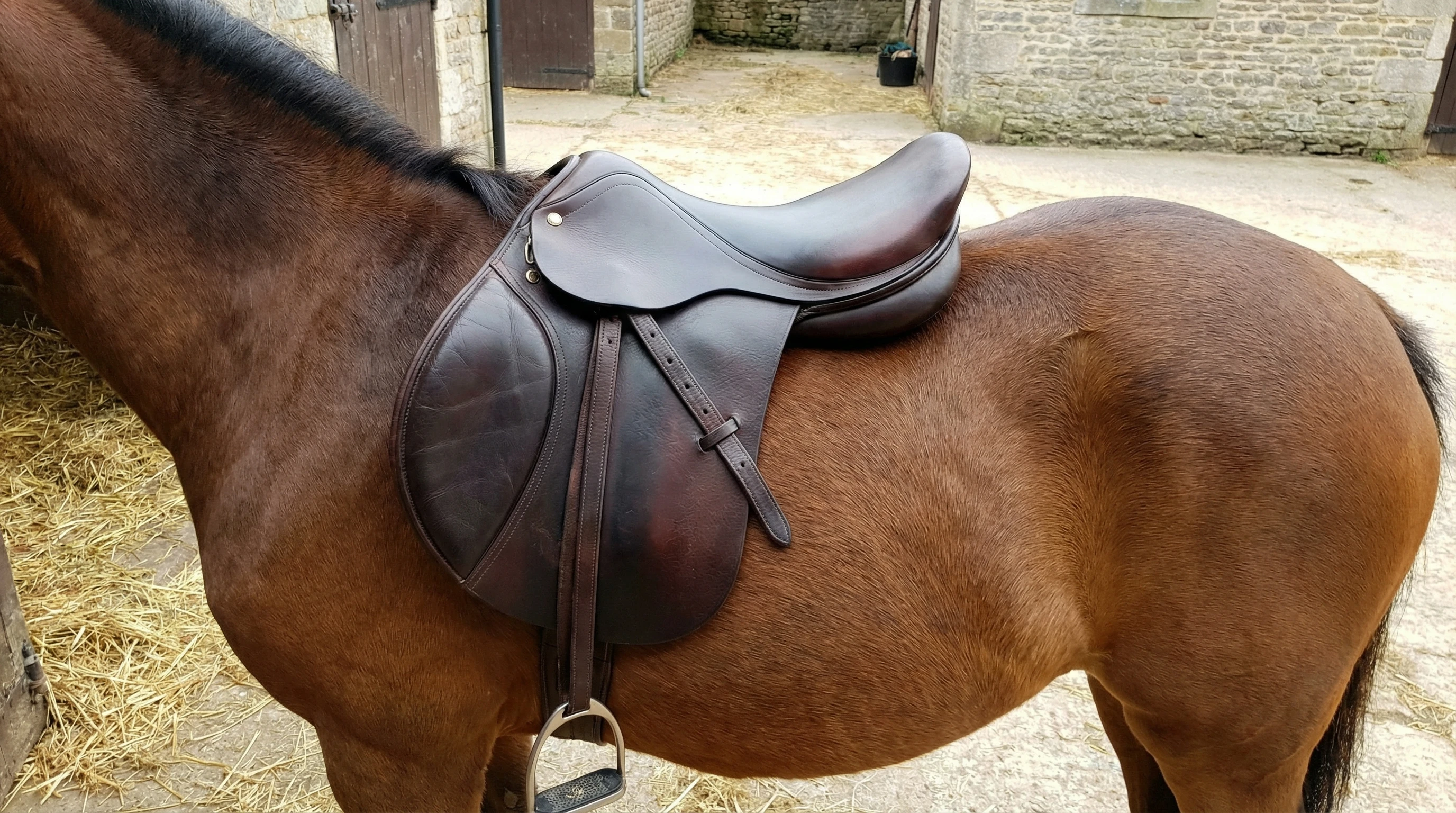
Why Saddle Fit for Young Horses Matters
Young horses can change shape almost overnight, especially when they’re growing, getting fitter, or just starting under saddle. A saddle that fits poorly puts uneven pressure on sensitive backs and can lead to pain, resistance, or even injuries that affect their attitude about being ridden.
Younger horses are also learning how to move and balance themselves.
An English saddle that fits well gives them enough room to move and lets them use their muscles properly. It’s not just about comfort. It’s about preventing problems as your horse develops.
Remember, a young horse that learns good movement patterns early on sets the foundation for a lifetime of healthy riding.
Will the Saddle Still Fit as My Horse Grows?
Honestly, most young horses go through several stages where their backs, shoulders, and withers grow and change. Even if you find a saddle that seems perfect right now, there’s a pretty good chance you’ll need to re-adjust or swap saddles as your horse matures.
Tree width, panel shape, and gullet clearance all become very different as a horse fills out. You migh find my other post helpful, “The Anatomy of an English Saddle.”
Some people choose an adjustable saddle or use different pads and shims to tweak fit as their horse grows. That can help. But there’s no substitute for regular, hands-on checks to make sure the saddle isn’t pinching or leaving gaps.
Owners sometimes find themselves surprised by how often adjustments are needed, especially during growth spurts or increased training intensity.
English Saddle Fit Checklist for Young Horses
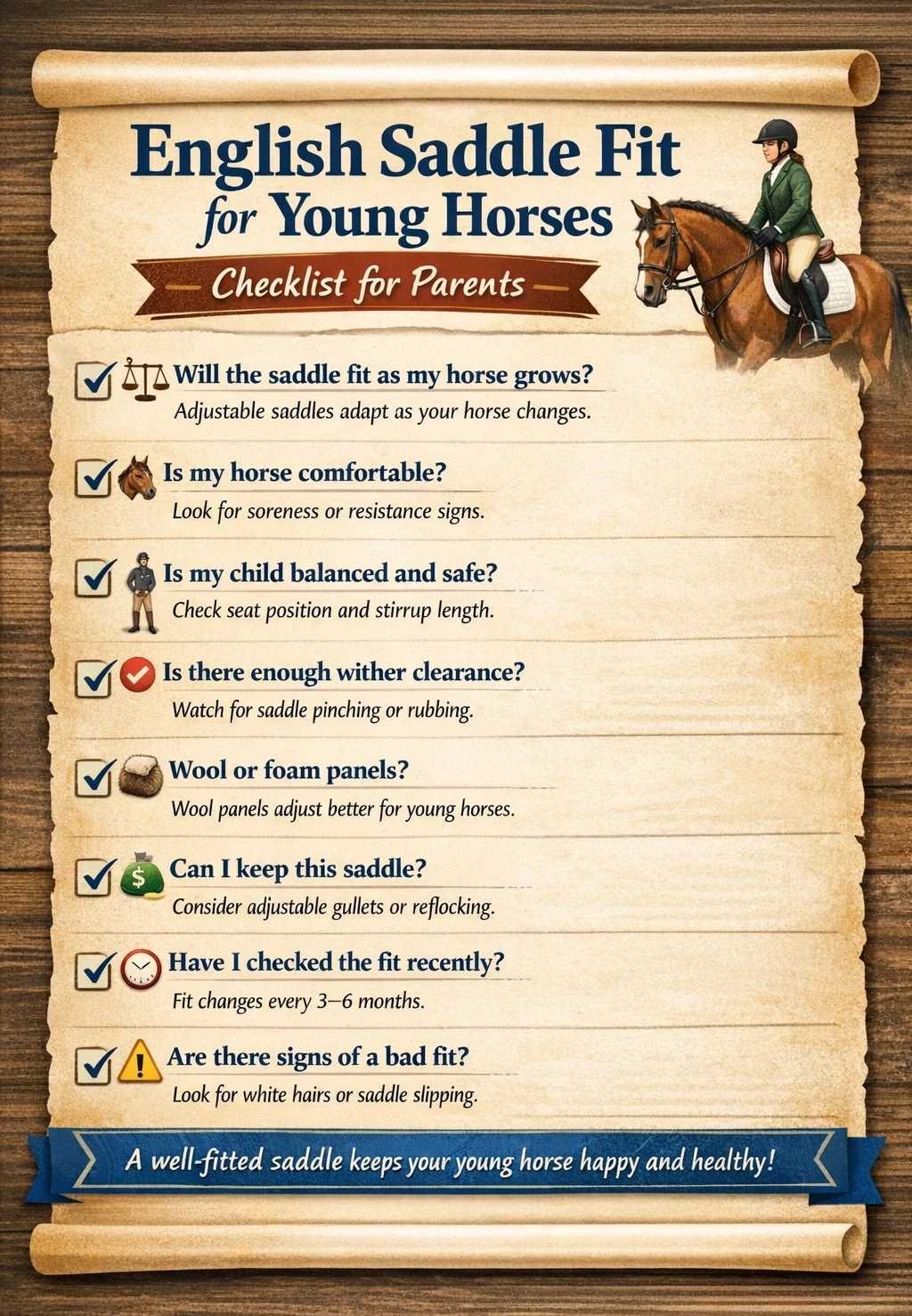
- Wither Clearance: Make sure there’s at least two to three fingers’ width between the withers and the underside of the pommel.
- Spine Clearance: Look for a channel that keeps the saddle clear of the horse’s spine the whole way down, so there’s no pressure in the middle that could cause soreness.
- Shoulder Freedom: There shouldn’t be anything blocking the shoulder blade when the horse moves. Try sliding your hand under the front of the saddle as someone else moves your horse’s leg forward.
- Panel Contact: The panels under the saddle should sit evenly along the back, not bridging (lifting in the middle) or rocking.
- Tree Width: The tree (the hard frame inside the saddle) shouldn’t be so tight that it squeezes your horse, or so wide that it drops down and sits on the withers.
- Balance: The seat should be level when viewed from the side, not tipping you forwards or backwards.
Safety and Balance: How Saddle Fit Impacts Young Riders
A saddle that fits your horse well makes a big difference for riders, especially kids. Good fit helps your child stay balanced, feel secure, and develop good posture.
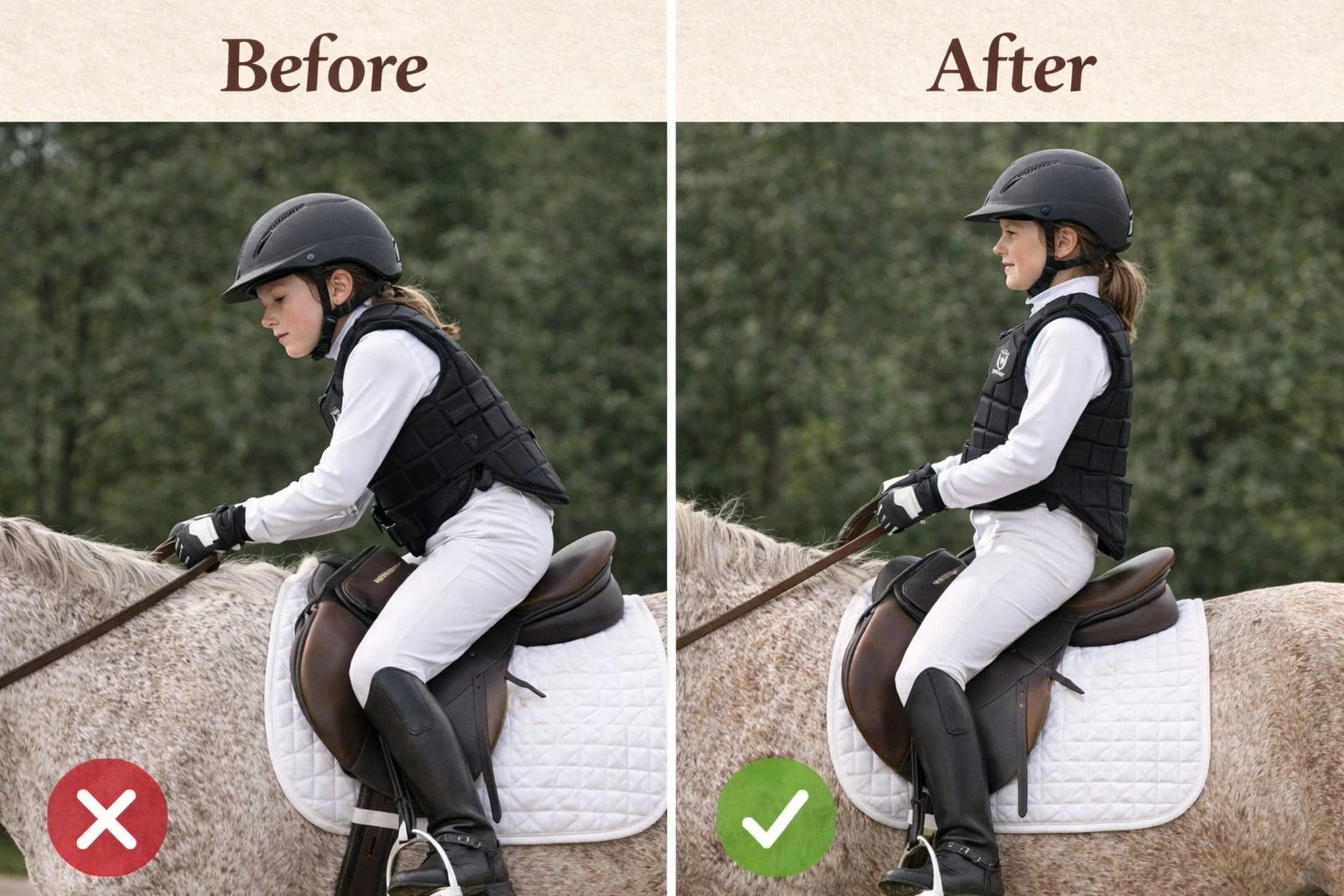
If the saddle is perched too high, slips sideways, or tips the rider forward, it can make learning to ride way harder than it needs to be, and might even cause falls.
Even a small amount of pressure in the wrong place can make a horse twitchy or reactive under saddle. That makes it tricky for beginner riders to feel safe and confident.
Taking the time to check fit reduces those headaches and builds trust between horse and rider. Early habits formed by young riders often stick for life, so starting with a safe, comfortable set-up is crucial.
Wither and Spine Clearance: Why These Details Matter So Much
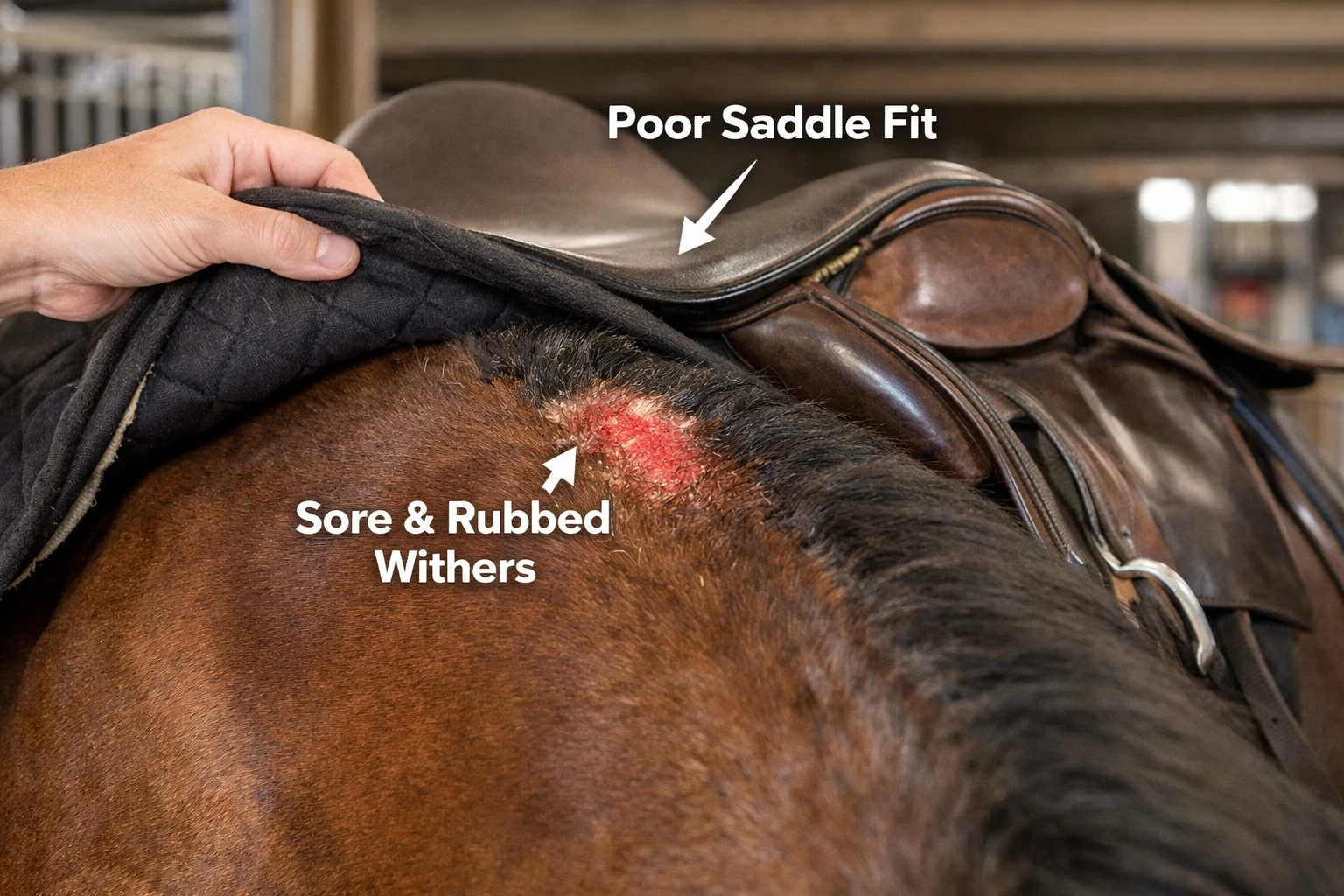 The withers and spine are two super-sensitive spots where pressure hurts most and can cause real damage if the saddle presses down. Look from the front of the saddle and run your hand down the channel.
You should feel open space above the withers and no part of the panels or gullet touching the spine.
You might also find my other post helpful, “How To Identify An Ill-Fitting English Saddle: Signs And Symptoms”.
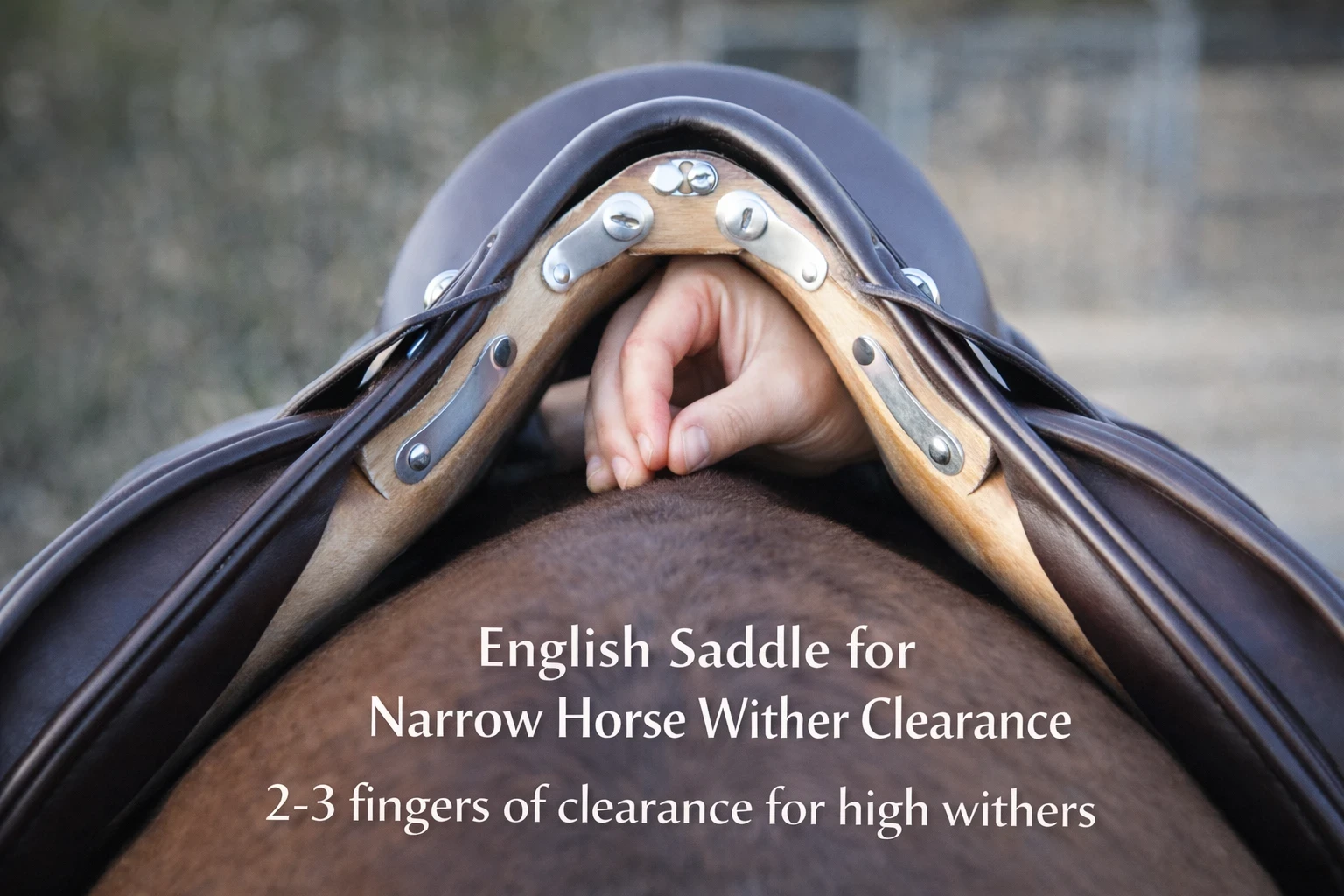 For horses that are narrow or haven’t muscled up yet, this can be a challenge. In those cases, pads with extra wither clearance or a carefully chosen half pad can temporarily help.
But these shouldn’t be used as a permanent fix for an ill-fitting saddle. Always look for long-term solutions and keep monitoring as your horse builds muscle.
Choosing Wool or Foam Panels for Developing Backs and High Wither Horses
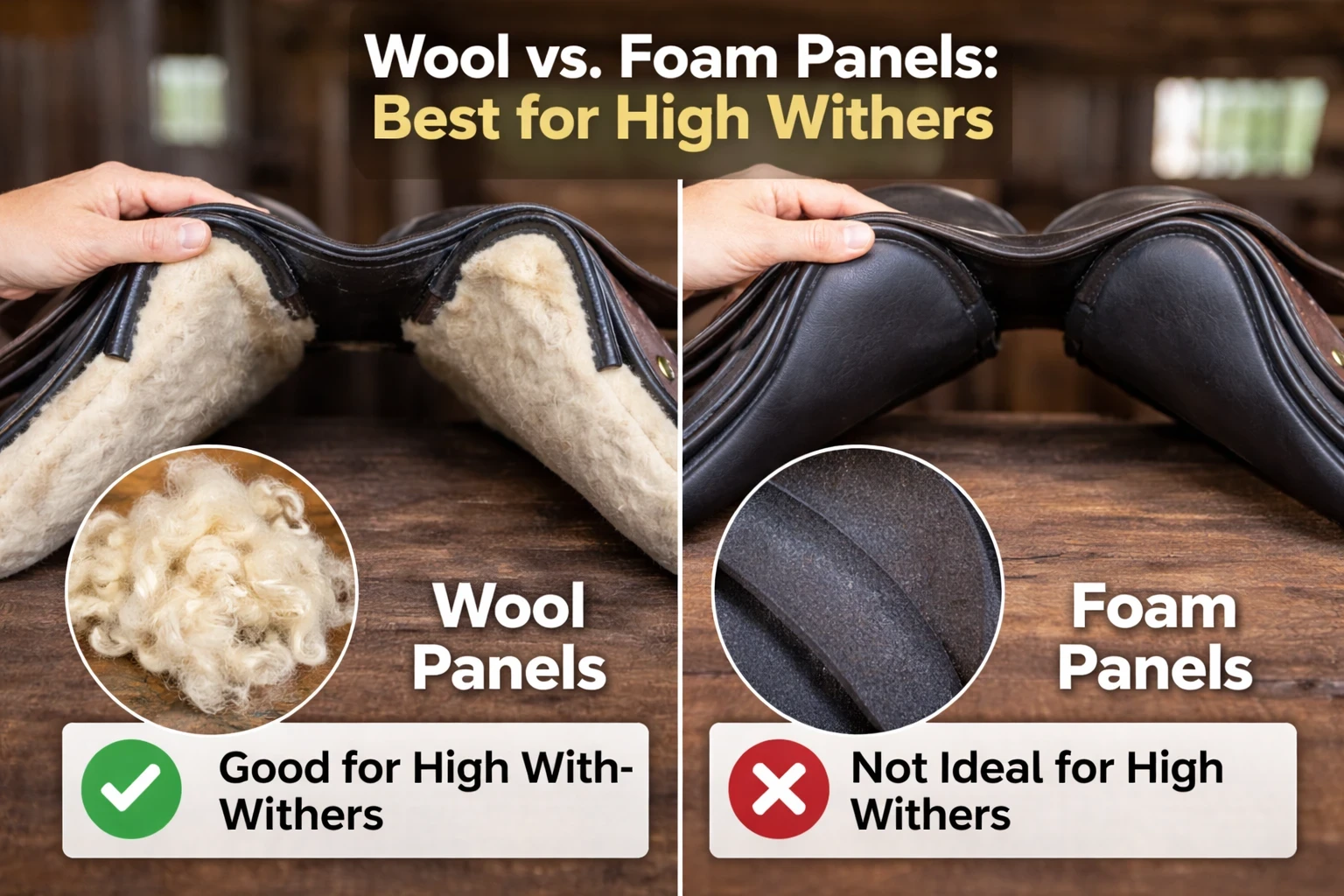
English saddles usually have either wool flocked or foam panels. Wool panels can be adjusted and re-flocked by a saddle fitter, which is pretty handy when your horse is changing shape.
Foam panels are more “set,” so they don’t conform or adapt over time.
For young horses, or horses with high withers, I usually prefer wool panels because they allow minor tweaks as backs grow and change. Foam panels can still work, but you have fewer options for custom-fitting as your horse fills out.
Just know that wool may need regular maintenance, such as checking for lumps and settling. Many owners find that wool flocking, while requiring a bit more upkeep, pays off by keeping their horse happier in the long run.
Do I Need to Keep Buying New Saddles?
Most people with young horses go through more than one saddle before their horse finishes growing. Some folks get around this expensive problem by using adjustable saddles, changeable gullets, or lots of shims and pads. Those work for a while but have limits.
For more information on adjustable saddles, see my post, “Adjustable Vs Fixed Tree Saddle Comparison”
You might be able to buy or borrow a decent used saddle and have it adjusted for your horse temporarily. Or, you can work with a fitter who can help you spot when it’s time for a new or different saddle.
Keeping an open mind, and setting a budget for tack changes, helps take the stress out of this process. There’s an entire community of horse owners who swap, trade, or sell gently used saddles.
Sometimes this is the most wallet-friendly route as your horse grows.
How Often Should You Check Saddle Fit?
Checking your saddle’s fit every few months is a good habit, especially if your horse is still filling out. Look for changes after growth spurts, muscle development from new training, or if you notice any new bumps, rubs, or changes in behavior.
In between professional checks, run your hands along your horse’s back after rides.
Check for uneven sweats, ruffled hair, or any heat or soreness. These can all point to fit issues worth investigating sooner than later. Having a checklist or calendar reminder can be helpful so checks aren’t overlooked amidst a busy riding schedule.
Warning Signs of a Poor Saddle Fit
- Sore or dry patches under the saddle area
- Visible swelling, lumps, or cuts
- Hollowing, bucking, or tail swishing during rides
- Pinning ears, resisting, or biting while tacking up
- Rider always slipping to one side
- White hairs showing up (these are pressure spots)
Any of these mean it’s time to have another look at your saddle or call in a fitter. Early changes are easier and safer for your horse, and your wallet. Don’t ignore these signs as they can escalate quickly into bigger health problems or make your horse reluctant to be ridden.
Is it Worth Working With a Professional Saddle Fitter?
Getting an experienced saddle fitter involved, especially for young, growing horses, pays off in the long run. Saddle fitters spot problems you might miss, adjust wool flocking, and can sometimes help you find better options.
They’ll check your horse standing and moving, with and without a rider, and help ensure any new saddle is a good match.
You can look up a list of certified saddle fitters in your country, or ask your barn owner or vet for recommendations. It’s a pretty good investment in your horse’s overall training and long-term soundness.
A pro can answer questions, compare saddle brands, and give you an honest opinion without being attached to a particular sale.
Extra Tips for Saddle Fit Success
- Take Photos: Snap pics of your horse’s back every few months to track changes. You’ll be surprised how much they morph!
- Keep Notes: Write down your saddle adjustments, use of pads, and any changes in behavior you notice over time.
- Use Girths and Pads Wisely: A badly chosen girth or toothick pad can throw off even a well-fitted saddle. Choose tack that supports a close fit, not extra bulk.
- Include Your Trainer: Sometimes your trainer or instructor can spot subtle changes in your horse’s movement or attitude that might indicate a fit problem. Don’t be afraid to ask for a second set of eyes.
- Consult Other Owners: Chatting with other young horse owners can reveal what worked for them. Often, you’ll stumble upon used saddle deals or get tips on local fitters.
Frequently Asked Questions About Young Horse Saddle Fit
How do you know when to switch or refit a saddle?
Look for signs of discomfort or obvious growth, like a new muscle ridge behind the shoulder. If your horse’s back changes shape, or if your saddle sits lower or higher than before, it’s time to check again.
Sometimes, even small changes can throw off saddle fit, especially during rapid growth phases.
Are adjustable or changeable saddles really worth it?
They’re a smart buy if your horse grows like a weed or if you ride lots of different horses, but they still need professional fitting to double-check safety and comfort.
Over time, keeping extra gullets or shims on hand can make it easy to make minor tweaks without buying a whole new saddle each season.
Can I use thicker pads to make a saddle fit longer?
You can sometimes use a pad or shim for minor tweaks, but using them to “make up for” a bad fit isn’t going to help in the long run. A wobbly saddle is never good news and can make you or your horse uncomfortable faster than you’d expect.
Is it okay to use secondhand saddles for young horses?
Absolutely; just double-check fit and have them reflocked or adjusted as needed. A lot of great quality saddles can be found used, and horses don’t care if it’s fancy or brand new as long as it fits!
When in doubt, compare saddle fit notes with experienced riders or your saddle fitter. There’s no need to stress, just stay proactive and keep your horse’s comfort a top priority.
Did you find this post helpful? If so, please leave your comments below. Be sure to check out my post: “How To Identify An Ill-Fitting English Saddle: Signs And Symptoms”.
This is incredibly useful.. wow.. checking saddle fit for young horses. And a very detailed checklist for checking the wither clearance, spine clearance, and panel contact. This gives owners a real clear, actionable steps they can take right in the barn aisle.
I think that the long-term impact that you mentioned is what makes this article so important. A poorly fitting saddle does not just cause temporary soreness; it can affect a young horse’s muscle development, movement patterns, and overall attitude toward being ridden for its entire life. Investing time in a proper fit from the start is an investment in the horse’s future comfort and performance.
You mention that wool-flocked panels can be adjusted by a saddle fitter as the horse changes, which is a big advantage for a growing animal. For an owner using a foam-panel saddle on a young horse, what are the most reliable signs that the saddle has been outgrown and can no longer be adequately adjusted with pads?
Thank you so much for the thoughtful feedback – I’m really glad the checklist felt practical and easy to use in real life. You’re absolutely right that early saddle fit has long-term effects well beyond short-term soreness.
In answer to your question…
For foam-panel saddles, some reliable signs a young horse may have outgrown it include persistent pressure spots or dry patches after riding, reduced wither or spine clearance even with appropriate padding, bridging or rocking that padding no longer corrects.
In addition, changes in attitude, like reluctance to move forward or tighten through the back are signs your horse may have out outgrown foam-panel saddles. If you’re needing increasingly thick or corrective pads just to make the saddle usable, that’s often a clear signal it’s time to reassess fit with a professional.
Great question – and thank you again for such an insightful comment and question.
Hello Shalisha!
Thank you for this thoughtful guide — it made a topic that always seemed technical and a bit intimidating actually feel understandable. I’ve never worked much with saddles or young horses, but the way you explained why fit matters so much (especially for developing bodies) really clicked for me. It’s easy to overlook how early discomfort can affect a young horse’s movement and confidence, so your emphasis on careful checking really stood out.
I do have a few questions as I think through this more: when you’re checking fit, are there common signs beginners tend to miss that are easy to overlook at first glance? And for someone who might not have a trainer or saddle fitter available regularly, are there simple checks you’d recommend doing weekly to make sure the fit stays good as the horse grows? Thanks again for breaking this down in such a practical way — it definitely gave me a much clearer picture of what to look for!
Angela M 🙂
Hi Angela.
Thank you so much for the kind feedback — I’m really glad the guide helped make saddle fit feel less intimidating, especially with young horses.
Common fit signs beginners often miss include small changes in movement (shortened stride or stiffness), uneven sweat patterns, a saddle that tips slightly forward or back, mild behavioral changes during tacking, and gradual muscle changes behind the shoulder.
If you don’t have regular access to a trainer or saddle fitter, a few simple weekly checks can go a long way:
Run your hand under the panels to feel for even pressure
Check wither and spine clearance (both standing and with a rider)
Step back to confirm the saddle sits level
Feel your horse’s back after untacking for tenderness
Watch for any new resistance or stiffness under saddle
With young horses, frequent quick checks are key — their bodies change fast, and catching small issues early helps keep them comfortable and confident as they develop.
I hope this helps.