
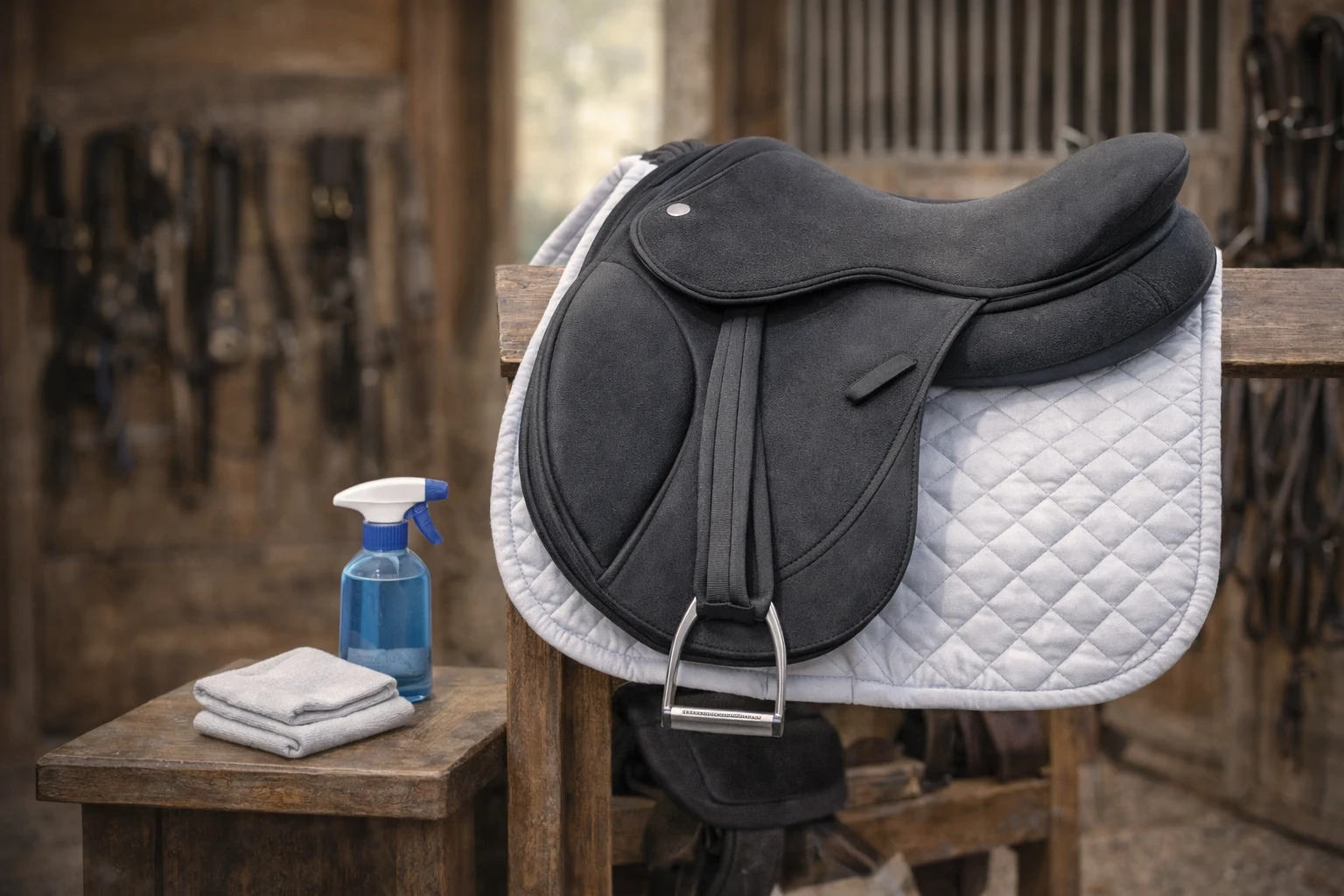
Keeping your Wintec Pro Pony Dressage Saddle in top shape is something a lot of parents and new saddle owners ask. Synthetic saddles like the Wintec Pro Pony Dressage are well-known for being easier to look after than leather, but they’re definitely not “care free.”
If you want this saddle to last through busy pony club seasons, growth spurts, and resell for a good price later, a bit of regular care goes a long way. Here’s a full guide, with quick routines and practical tips to take the worry out of saddle cleaning and maintenance.
Just a quick heads-up for transparency: this article contains affiliate links. If you choose to buy through one of them, I may earn a small commission at no extra cost to you. It helps support CharmingCanters.com so I can keep creating helpful resources for parents and young riders.
If you’d like a full breakdown of features, pros, cons, and who this saddle fits best, you can read my detailed Wintec Pro Pony Dressage Saddle review here.
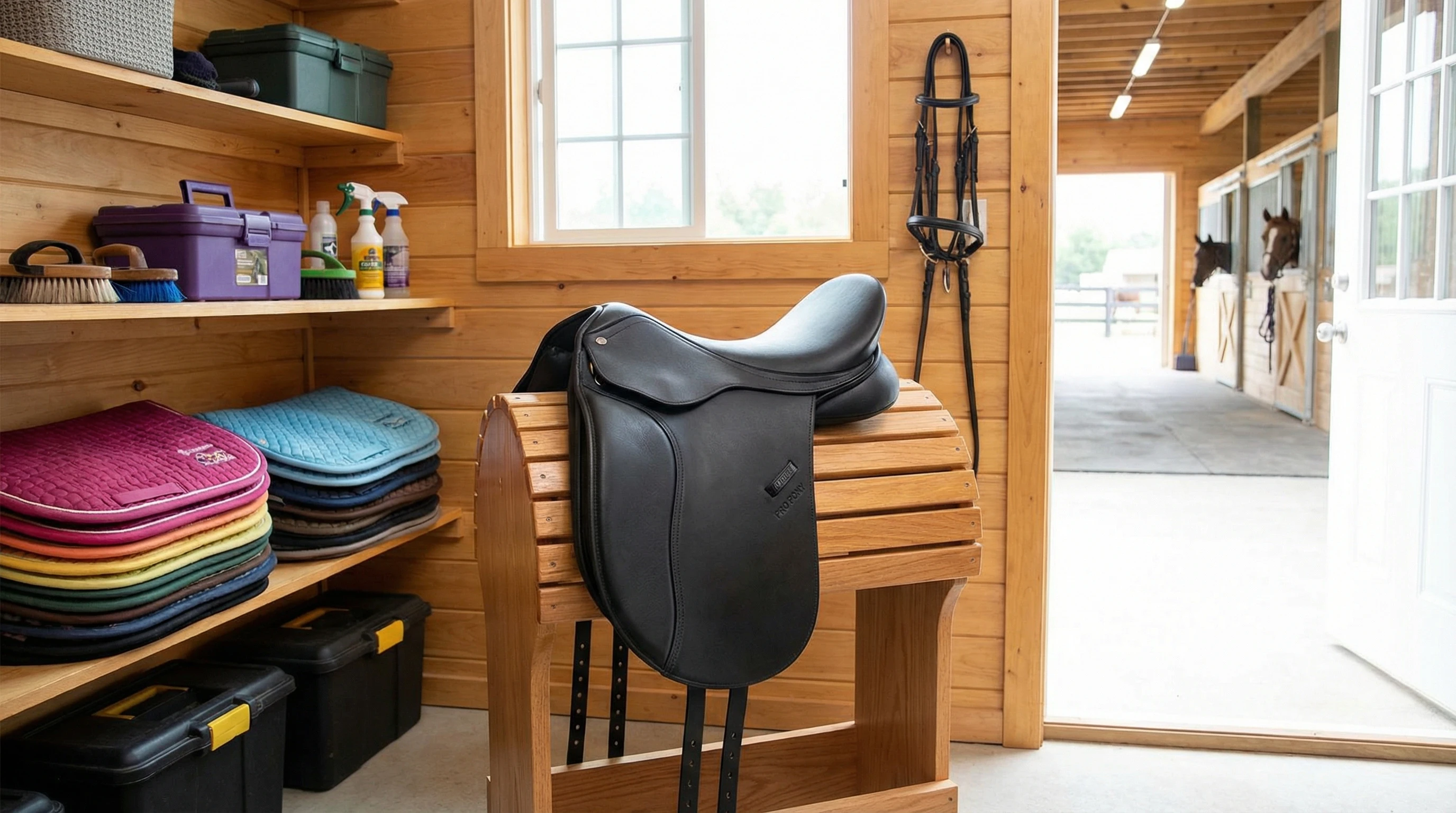
Why Proper Maintenance Matters for a Wintec Pro Pony Dressage Saddle
Your Wintec Pro Pony Dressage Saddle isn’t just any horse gear. It’s an investment in your pony rider’s comfort and performance. With the right routine, even a pony lesson barn or a frequent riding family can keep this saddle going strong for years.
Protecting Your Investment
No parent wants to see mold or cracking, or watch a brand new saddle lose resale value fast. Following the care steps keeps the saddle looking tidy, working safely, and feeling good for your rider and their pony.
Extending Saddle Lifespan
Even synthetic material wears over time with heavy use. Sweat, sand, sun, and dust all play a part. Giving your saddle a few minutes of TLC, especially after sweaty or wet rides, helps prevent long-term problems. A saddle that is consistently checked and gently wiped down will perform better and last for years to come, giving your family more time and value for your money.
Maintaining Resale Value
If you’re still comparing youth dressage options, my guide on how to choose the right dressage saddle for your child walks through what to look for as riders grow. Saddles that are cleaned regularly and inspected for early signs of wear always sell better. If you’re thinking ahead to upgrading as your rider grows, here’s my guide on how to upgrade a youth rider’s saddle effectively.
Keeping the EquiSuede soft (not shiny or sticky) and the panels even will impress buyers if you ever list it online or at a consignment shop. Buyers are much more confident in saddles that look loved and cared for, and many will even stretch their budget to snap up one in excellent shape.
What Makes the Wintec Pro Pony Dressage Saddle Different from Leather?
Synthetic EquiSuede & EasyCare Materials
Unlike leather saddles, Wintec models use EquiSuede and synthetic leather. These materials are designed to brush off daily grime and repel lots of water and sweat, but they still need simple cleaning. Traditional leather products, such as oil or conditioner, are a no-go because they can damage the finish or gum up the surface. The low-maintenance materials are still sturdy enough for active kids, lesson barns, and unpredictable weather.
If you’re comparing synthetic dressage options, my guide on how to choose an Arena Pony Dressage Saddle breaks down another popular low-maintenance alternative.
CAIR Panel System
The CAIR system uses air-filled panels instead of wool or foam. This helps with comfort and weight distribution for your pony, but it means avoiding heavy soaking or chemicals that could seep inside and affect the air panels. Less moisture and fewer harsh products keep those panels feeling just right under your rider.
EasyChange Gullet System
This saddle lets you swap gullet plates to adjust the width, fitting your pony as they change shape or swapping between lesson ponies. It’s a simple system, but needs to be kept clean and checked for early signs of rust or misalignment. If you’re pulling out the gullet regularly, keep a soft cloth handy to wipe away any dust or sweat, so the adjustment stays smooth and hassle-free.
Daily Cleaning Routine (After Every Ride)
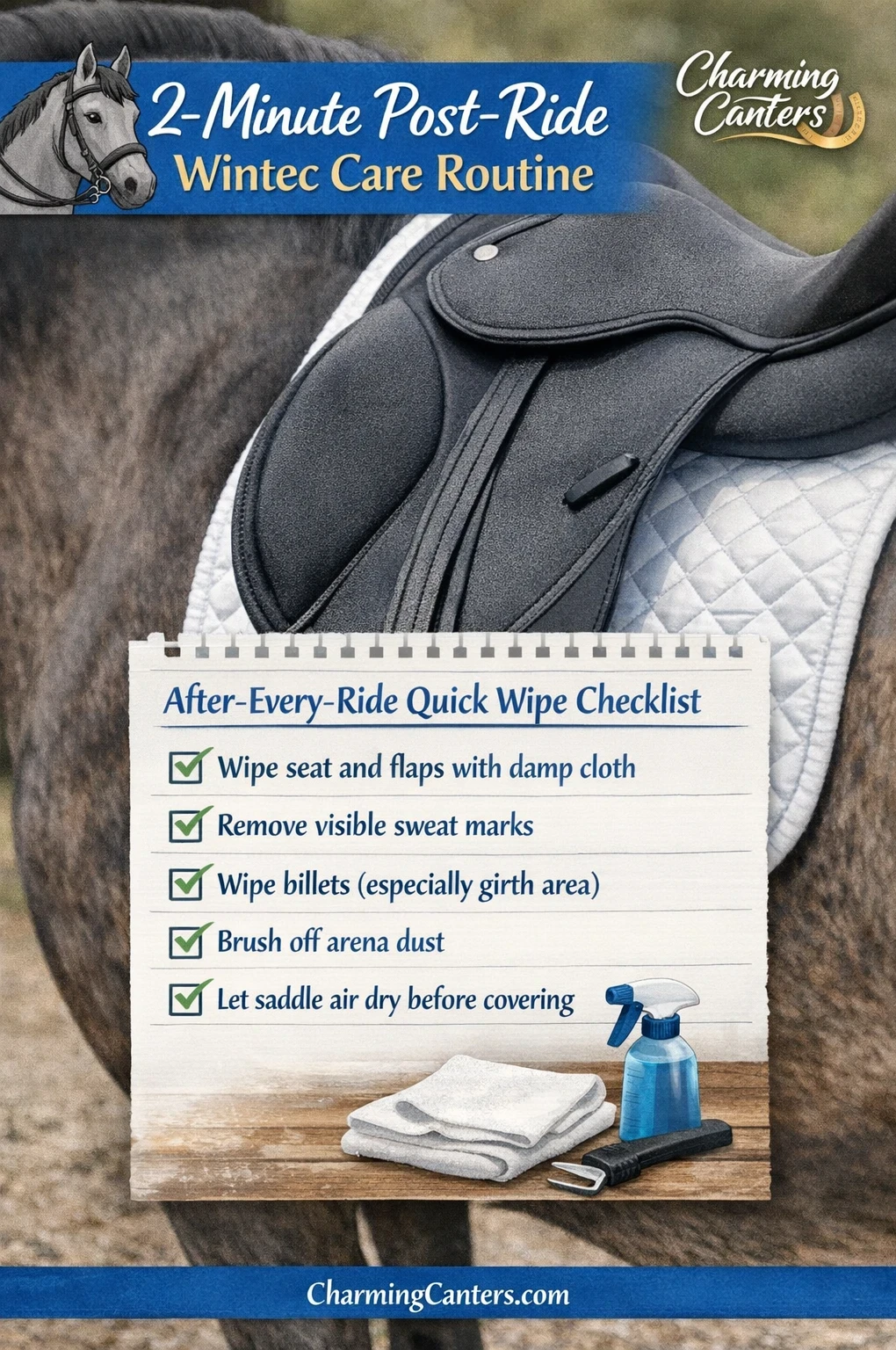
This is the part I always stress to parents and young riders: a daily wipe-down really adds up. It doesn’t take long, but makes the weekly and monthly routines way easier. Building good habits from day one will make any other cleaning steps feel simple, even with a busy schedule.
Wiping Down Sweat & Dust
Right after you pull the saddle off, grab a slightly damp, soft cloth or a soft brush. Wipe down the seat, flaps, and cantle to get rid of salt from sweat and loose dust. This prevents gritty buildup and sweat marks, especially on black synthetic saddles where white streaks can really show. Those quick wipes keep the saddle looking sharp and ready for the next ride.
Cleaning the Girth Area
This part takes the most abuse and picks up sticky dirt fast. Wipe under the flaps and billets, then gently clean the underside where sweat soaks in. Make sure this dries before storing the saddle, as leaving it damp can lead to mildewy smells or surface mold, even on synthetic gear.
Stirrup Leather & Billet Care
Quickly check the stirrup leathers for dirt or fluff, and ensure the billet straps don’t have any grit or wear. This only takes a second and helps avoid cracks or premature wear down the road. Take the time to flick off grit and dirt, which helps keep every piece safer and looking tidy.
Weekly Deep Cleaning Guide
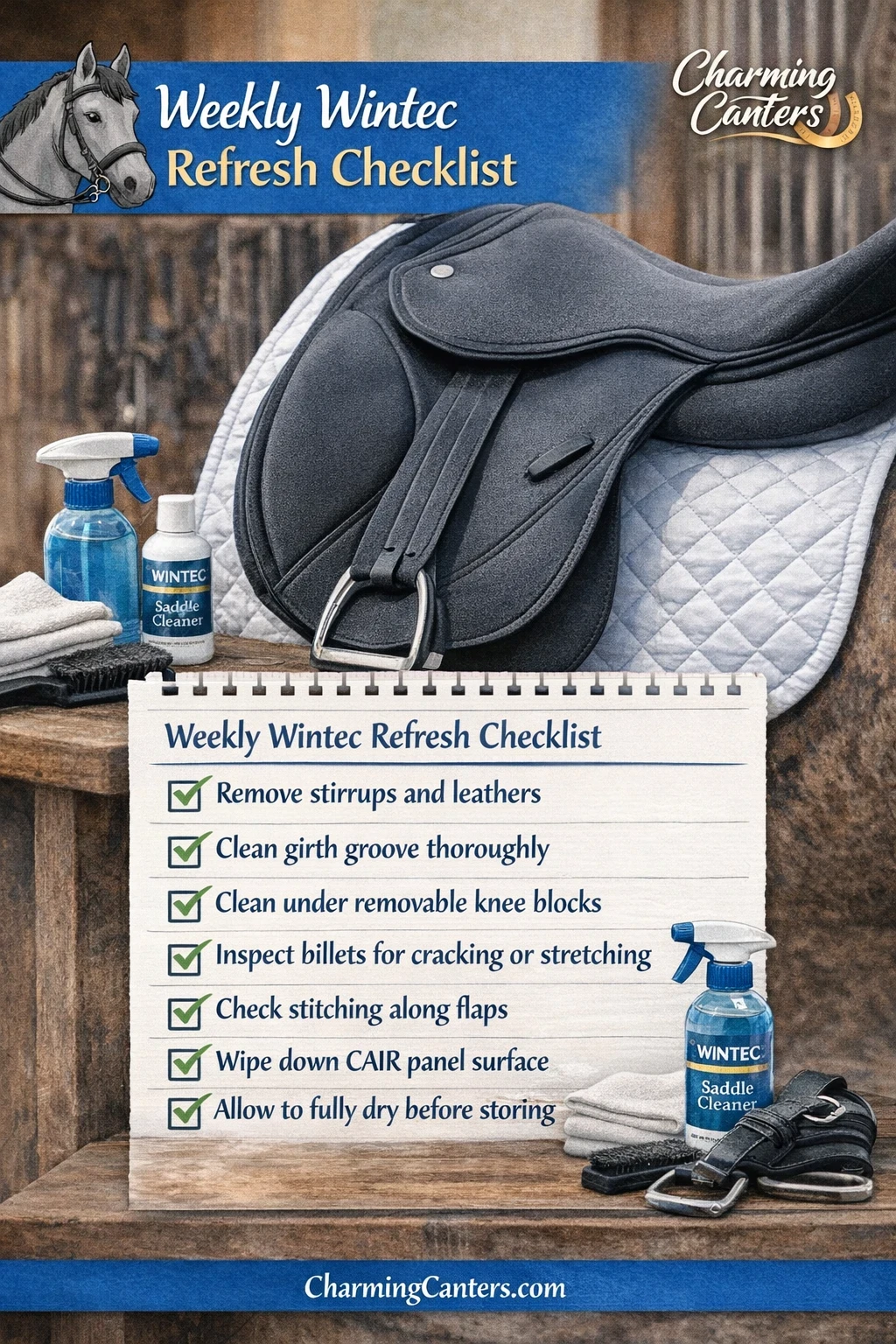
If your family is riding several days a week, a weekly deep clean helps prevent residue and stains. It also keeps the EquiSuede feeling “grippy” without turning shiny or sticky. Even if you miss a day or two, a regular Sunday cleaning makes a big difference by extending the “new” look and feel of your saddle.
What Cleaning Products Are Safe to Use
Stick to either a well-wrung damp cloth or brands recommended by Wintec, like Wintec Synthetic Saddle Cleaner or another gentle, non-soap option. Avoid anything labeled for leather care, and skip strong chemical sprays. Products specially made for synthetic saddles not only help clear away grime but also protect the unique surface finish.
How to Remove Sweat Stains
For stubborn white sweat marks or grime, make your cloth slightly wetter, but never soak the saddle. Gently rub the area, then use a dry towel to absorb moisture. Let the saddle fully air-dry before putting it away. Never stack damp pads on top; trapped moisture can create a perfect setting for mildew or odors.
Cleaning Velcro Knee Blocks
Knee blocks attach with Velcro that can get fuzzy and lose its grip. Once a week, use a Velcro brush or even an old toothbrush to lift out debris. Keep the hook side clean so the knee blocks stay adjustable and snug. This small step makes saddle adjustments faster and stops the blocks from sliding out of place during rides.
Avoiding Product Buildup
Too much cleaner or not fully wiping off cleaning cloths can leave a sticky residue. Less is more, so just a quick, even wipe is all you need. Excess product means more dust sticks, so always finish with a fresh dry towel for that finished look.
Monthly Saddle Inspection Checklist
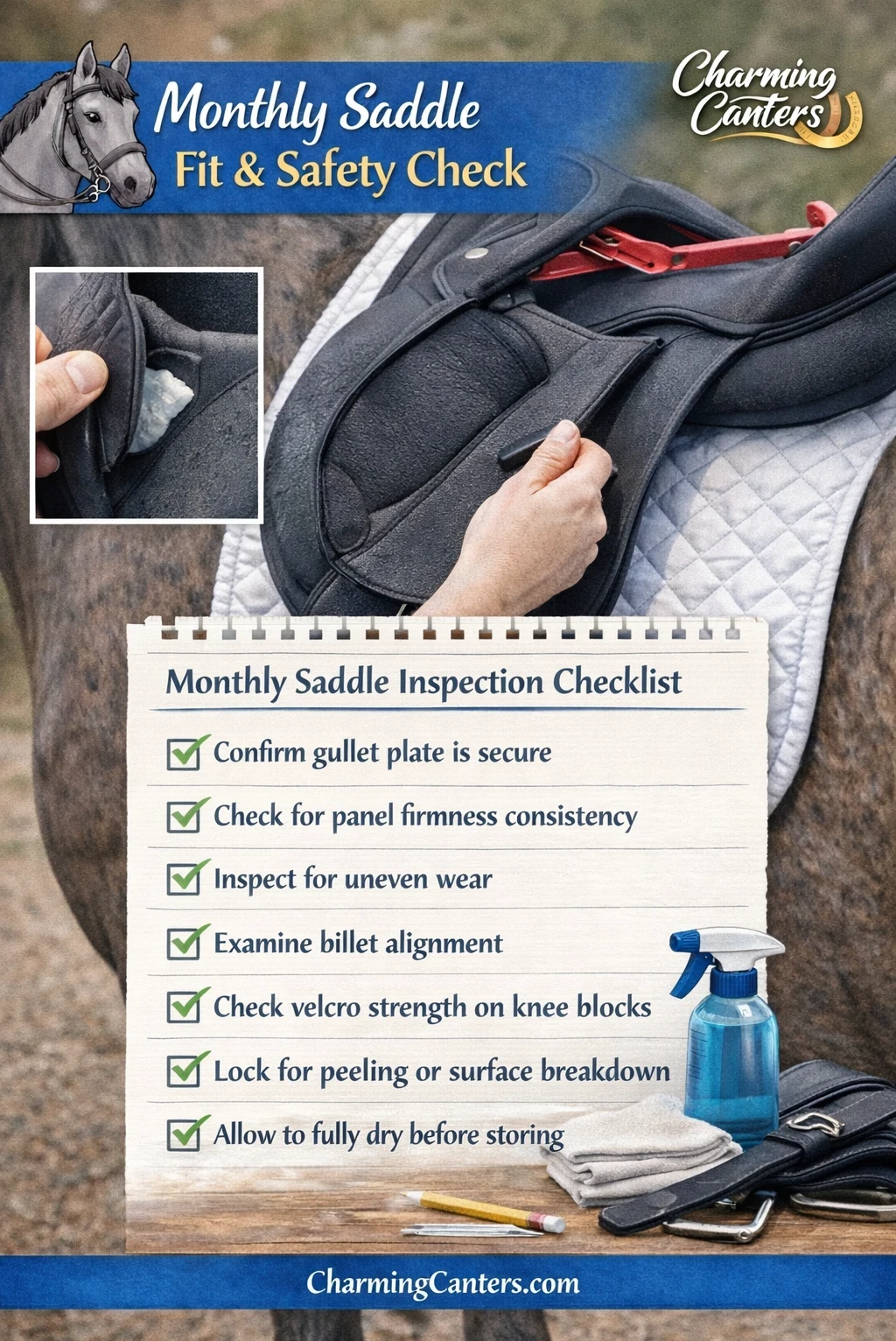
A little monthly check keeps bigger problems from sneaking up on you, making sure every part is safe and working right for your rider. If you can, set a calendar reminder for these simple but essential checks.
Checking the Gullet System
Pop out the saddle’s gullet opener and peek at the metal plate. No rust, cracks, or bending? Good to go. If your pony’s back has changed, now is the time to swap in a new gullet plate for the best fit. If you’re unsure how to tell when the width needs adjusting, I break it down step-by-step in my guide to choosing the right English saddle for a growing child and pony. Consistent checks help you spot small issues before they become more expensive or a riding hazard.
Inspecting CAIR Panels
Run your palms over the panels. Any lumps, squishy spots, or unevenness? Both panels should feel equally firm and smooth. Irregularities mean a pro inspection is smart, because panel issues can sneak up even on synthetic saddles. Smooth panels mean a happy pony and a better seat for your rider.
Examining Stitching & Billets
Look for loose stitches, frayed straps, or weakened billets where the girth attaches. Catching small repairs early avoids expensive fixes later and is really important for keeping your rider safe. Even sturdy synthetic gear needs the occasional checkup—check now and avoid future headaches.
Looking for Early Wear Signs
Shiny spots on EquiSuede, rough areas, or peeling edges are clues that a part might need attention. Noticing changes early helps you track down solutions and keeps your saddle from looking tired. Fresh eyes always spot small problems faster than waiting until there’s a big issue.
How to Store Your Wintec Pro Pony Dressage Saddle Properly

Even the most durable saddle can get damaged if stored wrong. Here are my favorite tips for making storage simple and safe:
Tack Room Humidity Tips
If your tack room is humid or damp, saddle mold and musty smells can be a problem—even for synthetic gear. Try to keep the saddle on a stand (not in a pile), in a well-ventilated spot. Moisture-absorbing packs or open trays of baking soda can help cut humidity. Clean, dry air keeps your saddle fresh month after month.
Using Saddle Covers
A breathable saddle cover (not airtight plastic) keeps dust and sunlight off without trapping moisture, and leaves the EquiSuede looking good. Covers also help prevent accidental scratches. If you don’t have a “real” cover, a clean towel or light blanket works in a pinch.
Travel Storage Advice
When heading to shows, only bag the saddle up once it’s completely dry. Throw in a little hand towel for last-minute wipe-downs before tacking up again. On long trips, let your saddle breathe at overnight stops to avoid trapped odors or condensation inside the travel bag.
What NOT to Use on a Wintec Pro Pony Dressage Saddle
This is an area that trips up lots of first-time synthetic saddle owners, so it’s worth saying again:
Leather Oils & Conditioners
These can clog the synthetic surface and cause it to peel, become sticky, or lose its grip. Skip them entirely; synthetic saddles don’t need the nourishment that leather does, and they work best when left product-free and lightly wiped down.
Harsh Chemical Cleaners
Anything with bleach, ammonia, or heavy perfumes can damage the finish and void warranties. Always stick with water or Wintec-recommended products for best long-term results. For a deeper dive into protecting saddles from rain, heat, and humidity, see my guide on weatherproofing techniques for saddles.
Excess Water Soaking
Soaking the seat or panels can push water into the CAIR system and mess with the saddle’s balance. Always use a slightly damp, not dripping, cloth. Let your saddle dry naturally and thoroughly between uses to maintain its shape and structure.
How Often Should You Replace Parts?
The Wintec is built for a long life, but a few parts do wear out with heavy use or changing ponies. Knowing the timeline for checking and replacing these parts helps you plan ahead and avoid last-minute setbacks before important rides or shows.
Gullet Plates
If you change ponies or your rider’s pony gets wider or narrower, you’ll likely swap these a couple of times a year. Replace plates immediately if you spot any warping, rust, or breakage. Properly fitted plates keep your saddle safe and comfy for pony and rider.
Knee Block Velcro
Velcro wearing down is common with lots of adjustments. If knee blocks don’t hold firm, replacing just the Velcro is quick and affordable. Keeping this fresh means faster and more reliable saddle changes when riders grow or preferences evolve.
Billets
These straps might last years, but if you ever see deep cracks or stretching, swap them out at your local tack shop or through a Wintec dealer. Riding with faulty billets is risky, and fast action is always safer.
Signs Your Saddle Needs Professional Attention
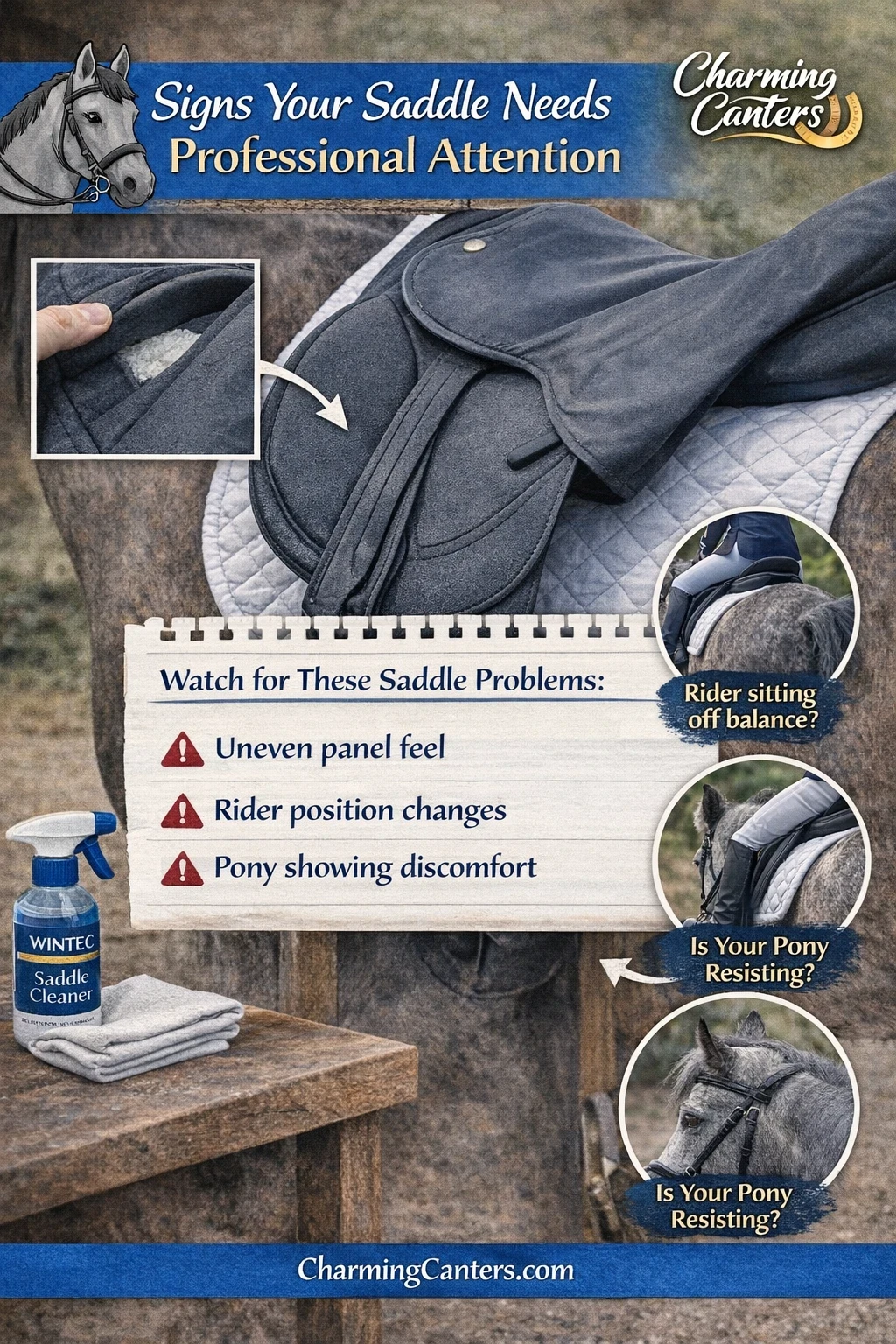
No shame in calling in a fitter! Here’s when I’d definitely have someone look things over:
Uneven Panel Feel
If one side is super soft or lumpy, your CAIR panels may need professional work to stay safe and comfy for your pony. Consistent pressure under the seat is key for both balance and pony comfort, and a pro can set things right quickly.
Rider Position Changes
Sudden tipping, trouble keeping balance, or rider discomfort might mean your saddle no longer fits and a fitting session is due. Fitting professionals help adjust or suggest changes to keep your rider secure and strong in the saddle.
Pony Showing Discomfort
Bucking, sensitivity when tacking up, or reluctance to move forward may signal the saddle isn’t right anymore, especially after growth spurts or changes in pony condition. Comfort and performance often tie back to saddle fit, so never hesitate to check in with an expert. If you’re noticing fit challenges beyond maintenance, my full guide on how to choose the right English saddle for your Thoroughbred walks through back shapes and fit basics in more detail.
Final Thoughts: Keeping Your Wintec Pro Pony Dressage Saddle Looking Show-Ready
Keeping up with daily and weekly routines isn’t about perfection. It’s about consistency and confidence. Synthetic saddles like the Wintec Pro Pony Dressage are definitely lower maintenance than leather, but regular care does more than just keep it looking good.
It helps protect your investment, supports your rider’s comfort, and keeps ponies happy too. Even a super busy barn kid or a first time English saddle owner can get great results with just a few easy habits.
As riders progress, many families eventually consider higher-end dressage models like the Bates Isabell dressage saddle review — but strong care habits start long before that upgrade.
If you’re still comparing youth dressage options, you may also find my guide on how to choose the right dressage saddle for your child helpful.
You don’t need a shelf full of products or hours of spare time; just wipe, check, and ride. With a little effort, your Wintec saddle stays show-ready, lasts longer, feels better, and remains a favorite for both riders and ponies. That’s a win all around.