How do I choose an Arena pony dressage saddle without second-guessing myself or making an expensive mistake? If you’re asking that question, you’re likely trying to balance your pony’s comfort, your rider’s security, and your budget all at once.
Choosing the right pony-specific dressage saddle isn’t just about leather or brand reputation — it’s about proper fit for a shorter back, supportive positioning for a developing rider, and confidence that your investment will truly support happy, successful rides.
Just a friendly disclaimer for transparency sake. This post may contain affiliate links. I may earn a small commission if you purchase through my links, at no extra cost to you.
👉 If you’re ready to see current pricing, available seat sizes, and gullet options, you can check availability here.
What Makes a Saddle “Pony Specific”?
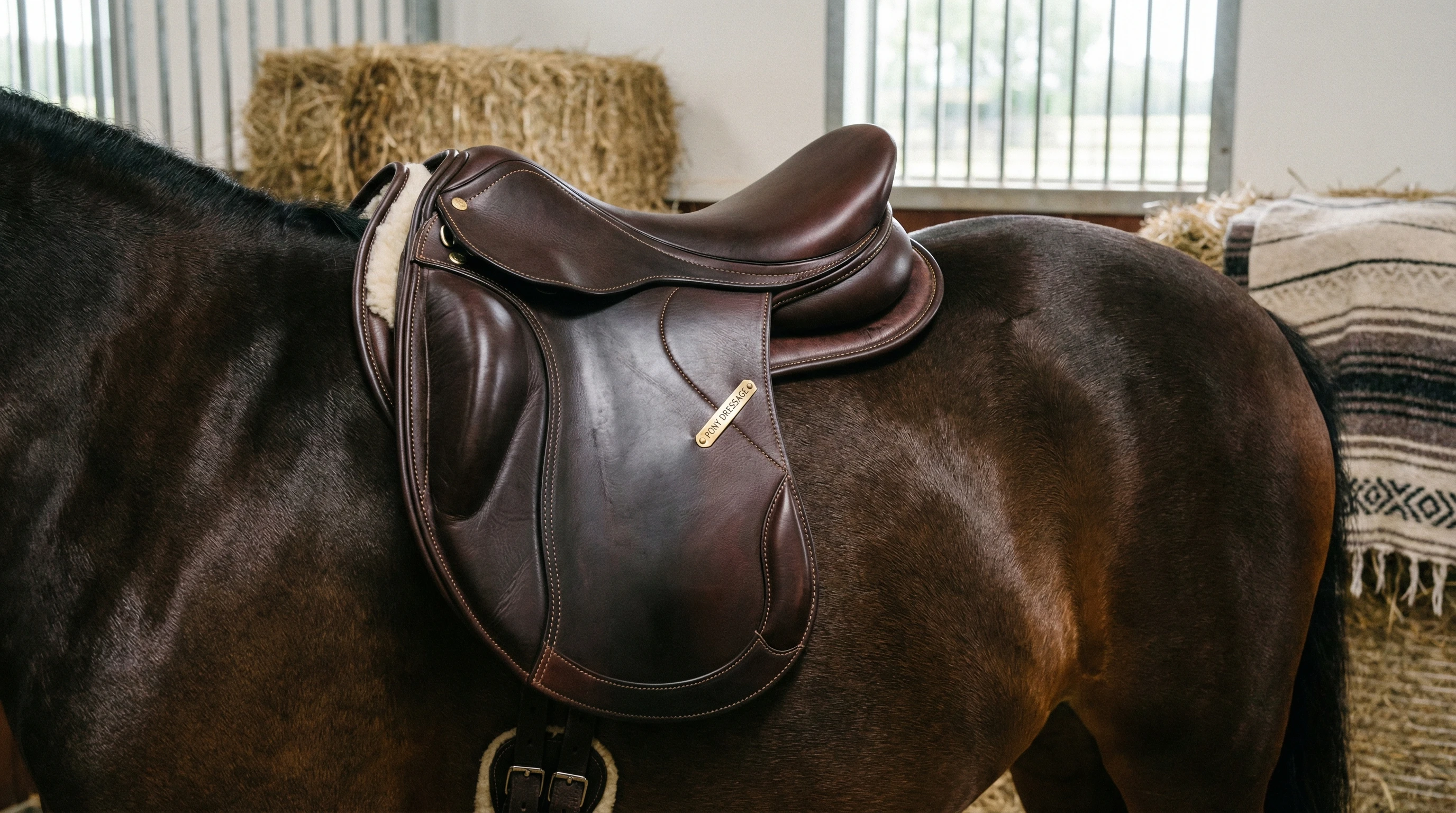
Pony dressage saddles aren’t just down-sized versions of horse saddles. They’re built to solve some unique pony problems, especially when it comes to shorter backs and smaller riders.
Regular dressage saddles can easily sit too long on a pony’s back, putting weight past the last rib and causing discomfort. Pony models, like the Arena Pony Dressage Saddle, are designed differently to fit these compact frames.
- Shorter panels: Pony saddles have shorter panels that don’t stretch beyond the pony’s last rib, which means less risk of soreness or pinching over the loins.
- Proportional flaps: Smaller riders have shorter legs, so the flap is trimmed in both length and width for a better leg position and easier contact.
- Seat sizes: Pony dressage saddles come in smaller seat sizes, made for kids or petite adults, providing a snug, secure seat that helps young riders feel stable.
- Tree balance: The tree is shaped and balanced to sit evenly, even if your pony has a rounder barrel or flatter back. This cuts down on rolling or shifting.
If you try to use a standard saddle, you’ll usually see it stretching over the pony’s croup, which can look awkward and actually be uncomfortable for your pony. Pony-specific models solve this problem so your pony can move better, and your rider has an easier time finding balance.
Understanding Seat Size for Youth Riders
One of the biggest saddle shopping worries for parents is picking the right seat size for their child. Too big and your kid will slip all over the place. Too small and things will get pretty uncomfortable fast, not to mention that your kid will outgrow it in no time.
If your rider is newer to dressage and you’re still exploring supportive options, my guide to Best Dressage Saddles For Beginners may also help you compare features that build confidence.
- 15” seat: Best for younger or petite kids. Will fit most 8–11 year olds starting out.
- 15.5” seat: A bit of extra room for older kids or those between child and teen sizing stages.
- 16” seat: Works for many average-sized 11–13 year olds or small adults. Popular for tweens who are rapidly growing.
- 16.5” seat: Good for taller teens or petite adults that regularly ride ponies.
Measuring your rider is as easy as sitting them in a hard chair and measuring from the back of the butt to the bend of the knee. Use this as your main guide, but be careful not to buy too much “room to grow.”
A too-large seat will leave your kid bobbing around, which is frustrating and can even be unsafe. It’s totally fine to buy a saddle that fits now, even if you have to trade up in a couple years.
A well-fitted seat helps your child ride with confidence and better posture right away. For more detailed guidance, check my Arena pony saddle sizing guide.
Tree Width & Gullet System
One of the coolest things about the Arena Pony Dressage Saddle is the interchangeable gullet system. Most ponies, especially if they’re on the chunkier side or still filling out with muscle, need some flexibility in saddle fit. The adjustable gullet lets you match the saddle’s width to your pony’s shape as they change over show season or with fitness work.
If you’re debating whether an adjustable tree is truly necessary, I compare the pros and cons in my Adjustable Vs Fixed Tree Saddle Comparison.
- Signs a saddle is too narrow: You’ll see dry spots or ruffled hair behind the pony’s shoulder, maybe even a squirmy pony when you tack up. There might also be white hairs that pop up over time. For a deeper look at what poor saddle fit can do over time, see my article on What Is The Impact Of An Ill-fitting Saddle On A Horse.
- Signs a saddle is too wide: The saddle may shift or roll, and there may be pressure along the withers if the saddle drops down too low.
Your pony’s shape will change over time, especially if you’re working through growth spurts or changes in musculature, so being able to switch gullets at home is pretty handy. I cover the sizing process more in my Saddle Fit Guide.
Panel Length & Pony Back Conformation
Not all ponies are built the same. Some are flatbacked and broad like Welsh cobs, while others have shorter, slightly dipped spines. The Arena Pony Dressage Saddle uses shorter panels, which is super important for sitting comfortably on a shortcoupled back without pushing into the croup.
- Flatbacked ponies: Often need a saddle that distributes weight evenly, keeping pressure off the loins and allowing free movement.
- Dipped or swaybacked ponies: Need panels that don’t bridge (leave a gap in the middle), avoiding pressure points.
It’s worth checking your pony’s sweat marks after a ride. If they’re even, you’re in good shape. If not, you may need a saddle fitter’s help. Shorter-backed ponies especially benefit from these thoughtfully designed panels, keeping both the pony and the rider happy. If you’d like to better understand what a proper evaluation involves, I walk through it step-by-step in my Dressage Saddle Fitting Guide For Adults.
Rider Position & Support
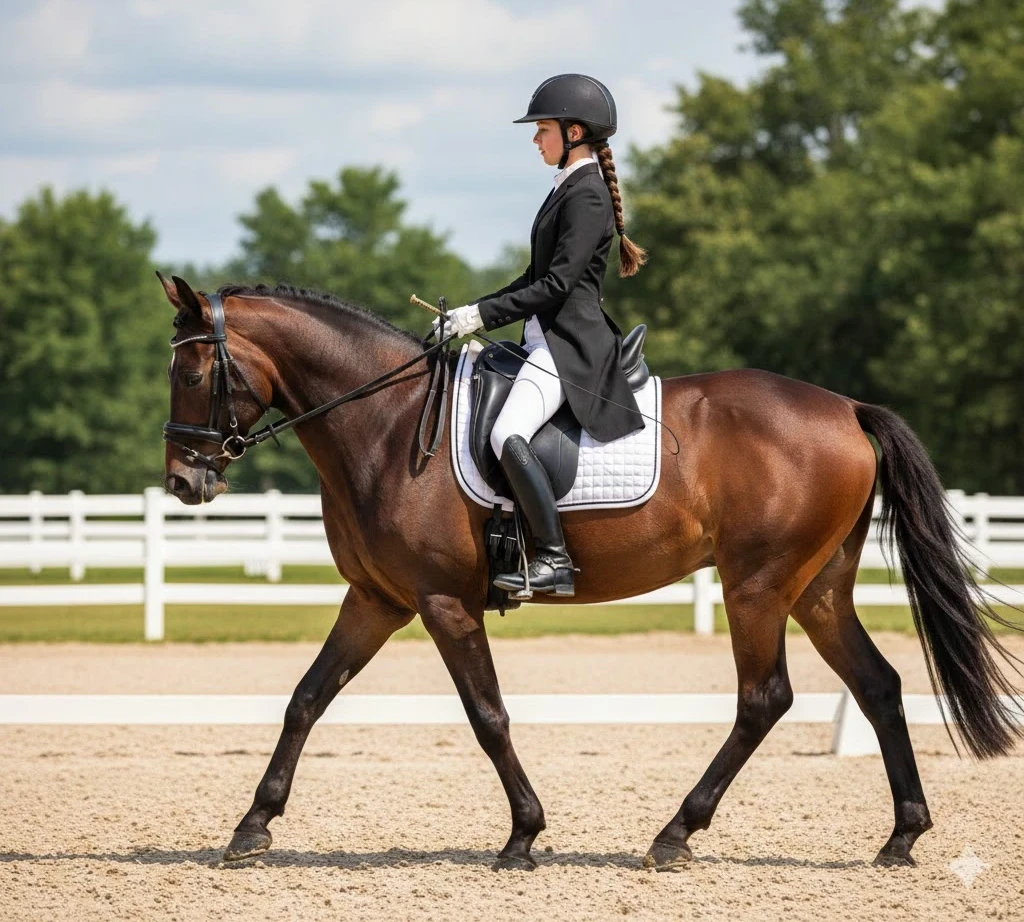
You want your child—or yourself—to feel balanced and safe in the saddle, especially during those first dressage lessons or tests. A dressage saddle like the Arena Pony model usually offers a deeper seat and built-in knee blocks for a little extra support in the right places.
- Deep seat: Helps center a new rider, so they don’t slide forward or back during transitions or big movements.
- Knee blocks: Let young riders stay steady, guiding their legs into a more correct position without forcing things.
- Balance point: Designed for young riders with shorter legs, so it’s easier to sit tall. This improves confidence and riding skills right from day one.
Nothing feels better for both mom and kid than leaving the arena after a lesson where your rider finally sits deeper, gives clear cues, and gets to hear “nice posture!” from the trainer.
Budget Expectations: What You’ll Spend
Saddle shopping for ponies isn’t always cheap, but knowing what you’re in for can ease the stress:
- New Arena Pony Dressage Saddle: Usually $1,200–$1,600 retail, depending on tack shop and any incentives or sales.
- Used market: Sometimes as low as $900 for a wellkept model, which is a great way to get quality for less.
- Materials: The Arena line uses a really durable midrange European leather and quality synthetic options. You get the feel and grip you want without branching into the superexpensive premium brands.
Easy care finishes also mean you’ll spend less time cleaning, but it doesn’t hurt to check out my Arena Cleaning Guide so your investment lasts as long as possible. It’s usually worth spending a bit for quality since it will keep your pony comfortable and your rider happy, plus they tend to hold value if you want to resell.
Check current availability and current pricing
When NOT to Choose an Arena Pony Dressage Saddle
Sometimes, even this popular model isn’t quite right for your needs. Here’s where I’d recommend looking for alternatives:
- Very wide ponies: If you have a native pony or a super cobby type that needs a hoop tree (for extreme width and roundness), the Arena may not offer enough space.
- Rider-in-between seat sizes: If your child fits awkwardly between sizes (like 15.5” is just too tight, but 16” is way too roomy), it’s worth seeing if another brand offers more fine-tuned options.
- Extremely short-backed ponies: Some ponies truly need a custom option with even shorter panels. You’ll know if your fitter steers you there.
Trying the saddle first, when possible, avoids surprises.
A good fit isn’t just about measurements. It’s about seeing your pony and rider both thrive. Here’s what you’ll notice:
- Your pony struts out with a longer stride and swings through the back.
- Your rider relaxes, sits deeper, and starts to enjoy riding even more.
- Sweat marks under the saddle are even, with no dry patches or bridges.
- No pinching or flinching at the girth or just behind the shoulder blades.
- The saddle stays in one place, even during circles or transitions.
I love seeing a young rider’s confidence grow when they’re finally in a seat that supports them, and a pony that moves more freely because nothing’s pinching or pressing in the wrong spot. That’s what makes all the research and patience worth it!
Frequently Asked Questions
Here are a few common questions from parents and pony owners that come up all the time when choosing a dressage saddle:
Question: Is the Arena Pony Dressage Saddle a good choice for growth spurts?
Answer: It can work well, especially if you don’t size up too much. Go for the best fit now, and trade up when your rider is noticeably too snug. Oversized seats cause more frustration than outgrowing a proper fit.
Question: Can I fit this saddle myself or do I need a saddle fitter?
Answer: The adjustable gullet is easy enough for most owners to handle, but checking fit with a pro before buying (or during trial) is a good idea, especially for tricky shapes.
Question: How does the Arena Pony Dressage Saddle compare with Bates or Wintec options?
Answer: They have similar adjustable gullets. Arena offers quality leather at a midrange price, while Bates tends to have more luxury features at a higher price point. Both are solid options for pony riders and worth comparing for your specific needs.
Still unsure which direction to go? Don’t leave this decision to guesswork. Take a few minutes to explore the in-depth reviews and fit guides I’ve linked throughout this post — they’ll help you narrow down sizing, fit, and rider support with confidence.
And if you want personalized guidance, drop your question in the comments below. I’m happy to help you choose the right Arena pony dressage saddle so you can move forward feeling completely confident.
👉 If you’re ready to see current pricing, available seat sizes, and gullet options, you can check availability here.
This was such a helpful breakdown, especially the way you explained short panels and seat sizing for growing riders. One question I have: how often would you recommend reassessing fit during a pony’s conditioning season? Also, for ponies that are slightly cobby but not extreme, would you still trial a hoop tree first or start with adjustable gullets?
Hi Genie. What thoughtful questions!
During a pony’s conditioning season, I like to do a quick fit check every 6–8 weeks, with a professional reassessment every few months, since their shape can change quickly as they build muscle.
For slightly cobby ponies, I usually start with an adjustable gullet system like Arena’s rather than jumping straight to a hoop tree. Many ponies can be comfortably fitted this way, and it gives you flexibility as their shape changes. If you’re struggling to achieve even contact or stability, then it’s worth trialing a hoop-tree or wider-specific model.
I hope this helps!