
English synthetic saddles have really changed over the years, and nowadays they’re a solid choice for riders of all backgrounds. If you’re just starting out with English riding, shopping for a young rider, or want something easy-going, these saddles are well worth looking into.
In this guide, I’m sharing what I’ve experienced with synthetic English saddles, highlighting their real-world advantages and some points to keep in mind for different types of riders.
Just a friendly disclaimer for transparency sake. This post may contain affiliate links. I may earn a small commission if you purchase through my links, at no extra cost to you.
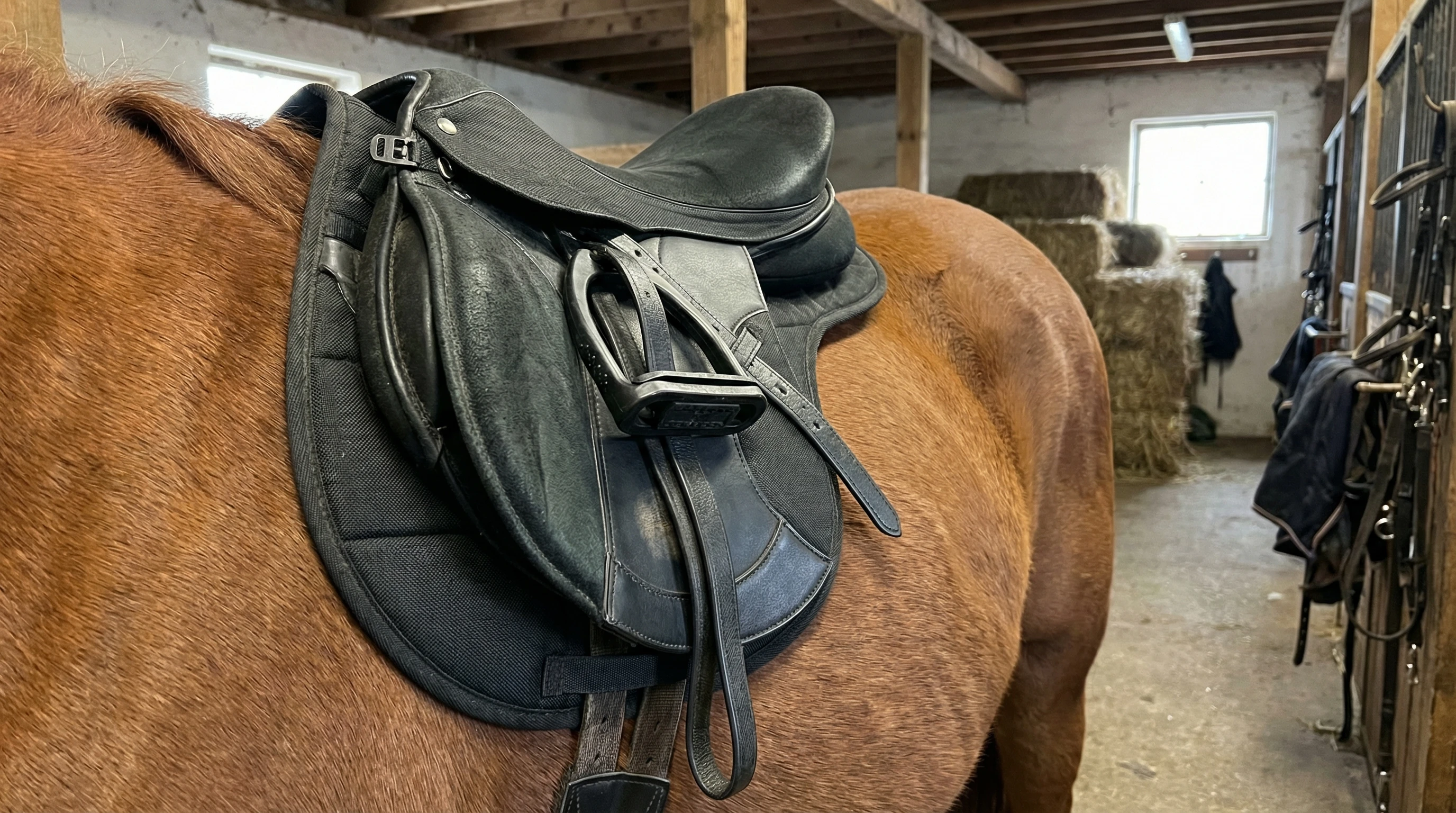
What Makes English Synthetic Saddles Stand Out?
The movement from old-school leather to synthetic materials means modern English saddles are packed with features that make riding simpler, especially for those new to the sport.
Materials like synthetic suede, Cordura, nylon, and various polymers have replaced bulky leathers. Thanks to these advances, today’s saddles are lightweight, a breeze to maintain, and often much more budget-friendly than leather ones.
Synthetic saddles have been designed for practicality, not just style. At the start, they were pegged as affordable options. But now you’ll find models that even professional riders use.
Whether it’s for your first lessons, a child stepping into English riding, or a no-fuss barn saddle, these options keep showing up anywhere ease of use and function are the goal.
Fit, Feel, and Performance: What to Expect in the Saddle
Synthetic saddles are built to be user-friendly and comfortable. Many of them have foam or gel panels built in that add extra comfort for both horse and rider. In my experience, long rides in a quality synthetic saddle feel very similar to equally priced leather versions, especially for beginner and intermediate price points.
Some riders even say the synthetic suede gives extra grip in the seat—which can be a plus for those still getting balanced in the saddle.
- Comfort on Long Rides: Padding and flexible synthetic materials help make these saddles comfortable, even on longer hacks or schooling sessions.
- Fit for Horses: Adjustable gullet systems are super common in synthetic models, which means they can be sized for horses that are still growing or barns where tack needs to fit a variety of horses.
- Reliability of Adjustable Gullets: Today’s adjustable gullet systems in synthetic saddles work well for light and moderate riding. High-end models might fine-tune the fit more, but the affordable options are practical and safe for everyday needs. See my post “The Anatomy of an English Saddle”.
- Jumping & Dressage: There are synthetic saddles made for jumping, flatwork, and even casual dressage. Their lighter weight makes them a top pick for kids or smaller adults—especially if you’re learning the ropes. While top competitors still lean toward leather, synthetic saddles are an excellent starting point or schooling option.
- Feel When Riding: The feel is a bit different—seats can be more cushioned, and the flaps often feel more flexible. Personally, I appreciate the added grip, and I’ve heard a lot of newer riders feel more secure, too.
Quality, Durability, and Safety
Synthetic saddles last longer than you might expect, as long as you stick to reputable brands. With standard use, a good synthetic saddle can last many years.
In fact, they resist stretching and cracking better than some cheaply made leather types, especially when they’re exposed to sweat or rain on the regular.
- Lifespan: I’ve seen modern synthetic saddles survive 8–10 years in lesson barns with basic care. Stitching, billets, and panels tend to last longer than really basic leather options.
- Cracking or Stretching: High-quality synthetics resist cracking and stretching, but really cheap models might wear out quickly if used constantly or left in bad weather.
- Safety for Young/Growing Horses: Adjustable gullets and the flexibility of these saddles help avoid painful pressure spots as a horse fills out, which is key for growing ponies and young horses.
- Warping: Warping isn’t much of an issue in reputable synthetic saddles stored correctly. Flimsy, off-brand models may lose their shape, but sticking with trusted brands helps keep this risk low.
Beginner & Family-Focused Advantages
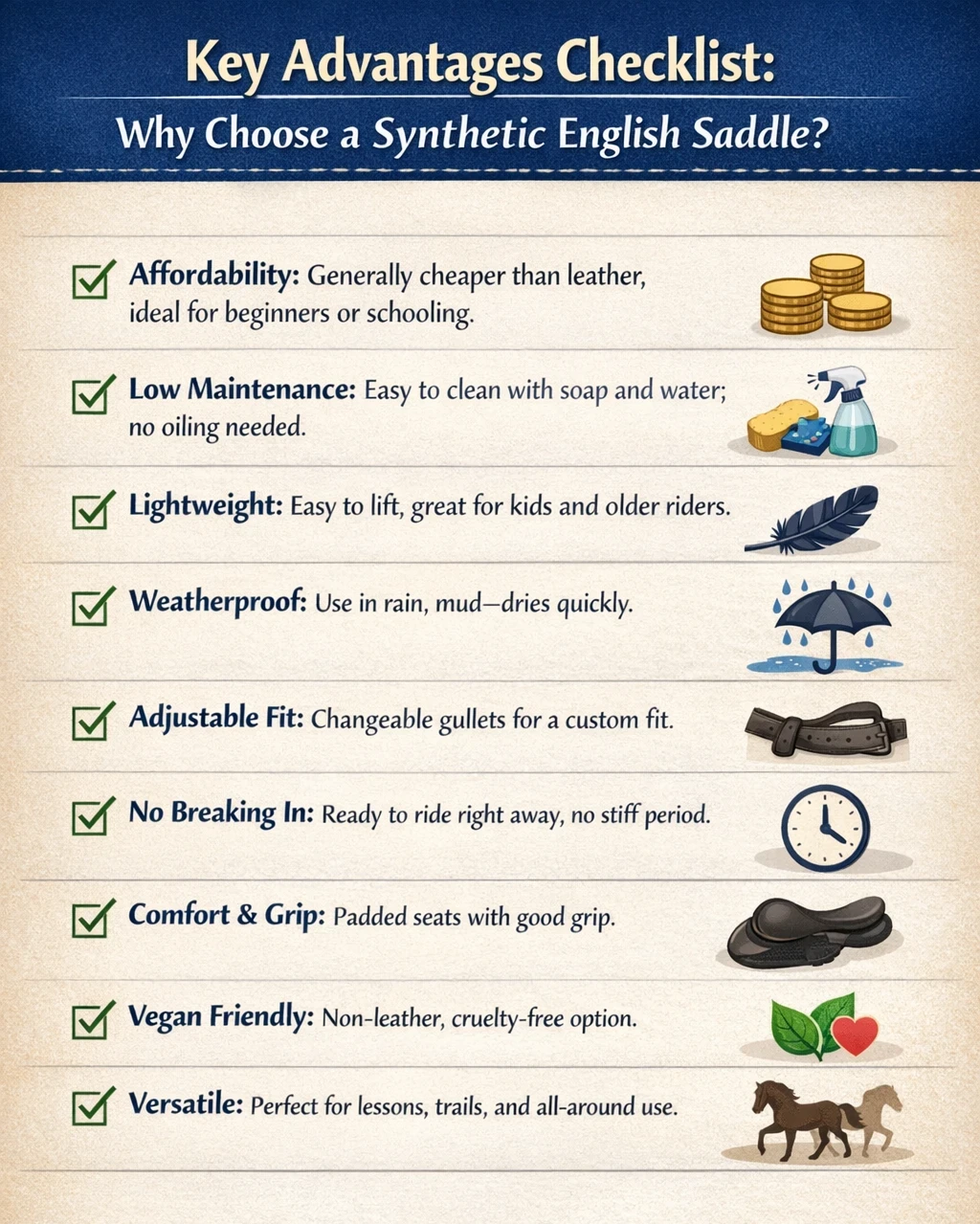
I always recommend synthetic English saddles to those just getting started with riding because they’re great for newbies, parents, and lesson programs alike. I highly recommend reading my post, “Understanding Different Types of English Riding Saddles.”
Getting back to my thoughts… I highly recomment synthetic English saddles for the below reasons:
- Easy Handling: Kids and smaller folks find it way easier to lift and tack up these lighter saddles. Some children’s models weigh under 8 pounds.
- Great for Young Riders: Models for kids and teens are designed with their comfort in mind. If your child outgrows the saddle, it’s not a huge expense lost.
- Top Picks for First-Time Riders: Brands such as Wintec, Thorowgood, and Tekna are known for making quality entry-level and school saddles that last.
- Lesson Barn Winners: Easy to clean, weather-resistant, and adjustable, these saddles are popular for group lessons and busy barns. They handle all the swapping between horses that happens in those environments.
Maintenance & Care: Low Effort, High Reward
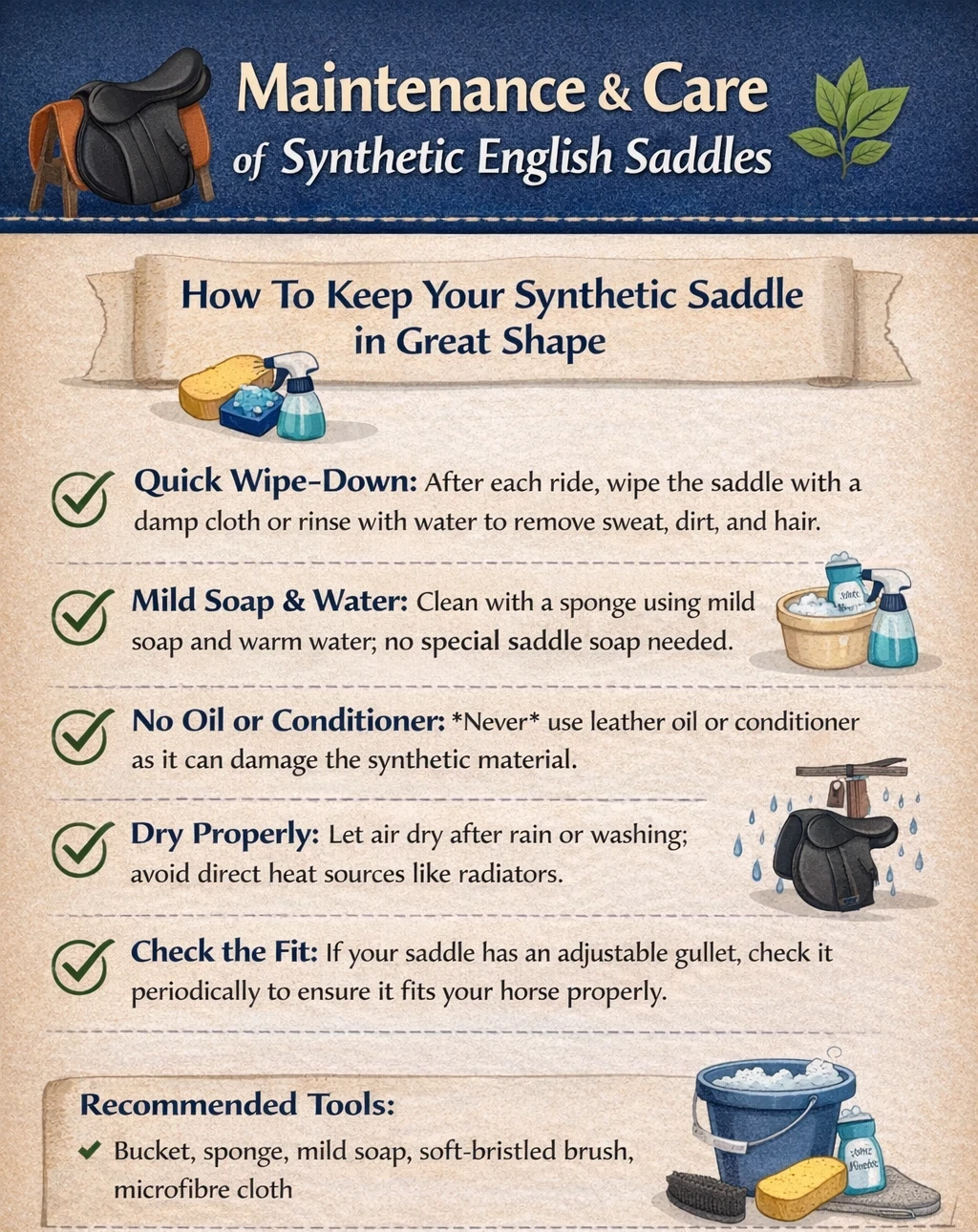
One of the biggest perks of synthetic saddles is how little fuss they need to stay looking fresh and working well. Skip the oils and conditioners—maintenance is quick and simple.
- Cleaning: Use a damp cloth and mild soap if needed. Dirt, sweat, and dust come away much more easily than from most leather saddles.
- After Getting Wet: Getting caught in the rain is not a problem. Synthetic materials dry fast and don’t develop mildew like untreated leather sometimes does. They’re a favorite for cross-country, outdoor hacking, and trail rides where water is a given.
- No Oiling Needed: Forget about oiling or using special conditioners—synthetic panels and flaps won’t dry out or get stiff.
- Cleaning Routine: For quick cleanups, a wet cloth or even baby wipes work well. I’ve seen people simply hose these saddles down after muddy rides. Just dry out the billets thoroughly after to keep them strong and safe.
Cost & Value: Getting the Most for Your Money
Cost is always a concern, and this is where synthetic saddles really shine. You’ll almost always spend less upfront compared to leather saddles of similar quality, making them a smart first investment or backup.
- Lower Price: Beginner-friendly synthetic saddles can start around $250–$400, sometimes less when sales pop up, so you avoid a major financial hit.
- Good Value: For anyone starting out or for lesson barns with lots of riders, the low price is a huge bonus. You can sell or trade up once you know more about your preferences.
- Perfect Starter Saddles: If you’re not sure you’ll keep riding long-term or your horse is young, a synthetic model lets you test the waters and save money while doing so.
- Resale: Used beginner synthetic saddles are always in demand. They get snapped up at barn swaps and online—making it easy to recover some cost if you change disciplines or move up over time.
Best All-Purpose Synthetic Saddles (Great for Beginners & Lesson Riders)
- Wintec 500 All Purpose Hart Saddle – Strong all-around choice with comfortable panels and low maintenance.
- WintecLite All Purpose Saddle – Ultra-lightweight option that’s especially good if lifting a heavy saddle is hard.
- Equitare Yates Synthetic All Purpose Saddle – Budget-friendly, easy-care option for trail rides or schooling.
Great for Younger Riders or Specific Needs
- Henri de Rivel Vegan‑X Junior Close Contact Saddle – Excellent first saddle for kids/teens (synthetic, low-upkeep).
- Wintec 500 Dressage Saddle – A dressage-focused synthetic if your reader is more into flatwork.
Step-Up or Discipline-Focused Options
- Collegiate Esteem Dressage Saddle – Handcrafted from double leather. Good fit for horse. It offers quality materials and design (like flocked panels, generous channel) at a more accessible price point than high-end brands.
- Wintec 2000 Wide All Purpose Saddle – Great for wide-backed horses.
- Cambridge Synthetic Jump Saddle – Affordable lightweight synthetic jump saddle.
Synthetic vs Leather English Saddles
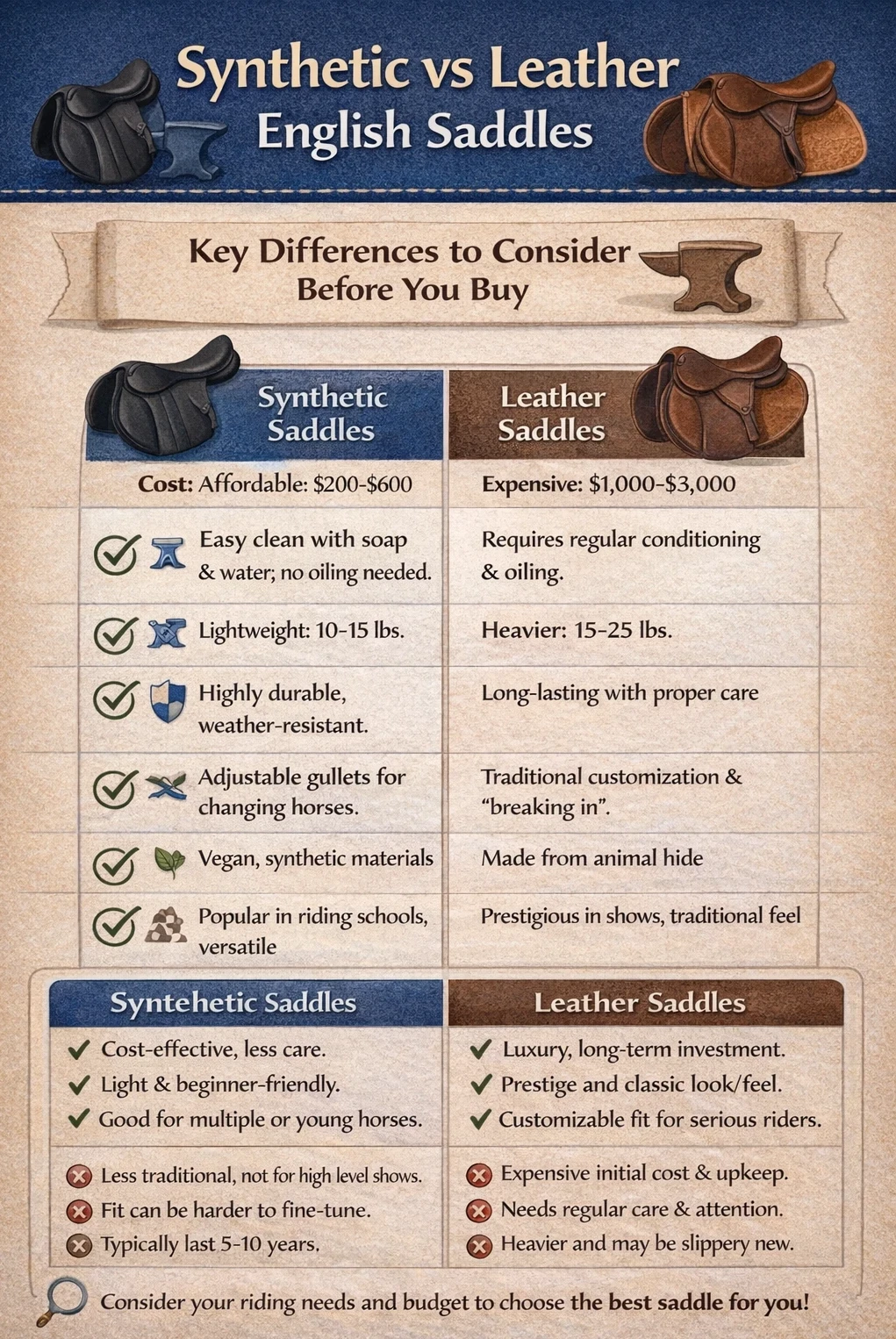
The big question always comes down to which one is better. The answer really depends on your current needs. When you want light-weight, minimal upkeep, and a budget-friendly price, synthetic saddles win.
If you’re drawn to a traditional look and want a saddle that molds more closely to your contours with time, leather might be more your style, especially for advanced riders.
- Weight: Synthetics are much lighter—sometimes half the weight of a leather saddle. Kids and petite adults can lift them without stress, making tacking up way simpler.
- Professional Use: While many pros stick to leather for high-stakes competitions, you’ll still spot synthetic saddles at local shows and in busy lesson programs. Many trainers recommend them to new riders for all the practical reasons listed above.
- When to Make the Switch: Once you’re riding at a more advanced level or want to show at the highest competition tiers, you might pick up a luxury leather model. Until then, synthetics cover every base for learning, lessons, and lots of fun riding without the high price tag.
Other Real-World Benefits
- Ethical and Vegan-Friendly: Synthetic saddles are a great option for animal-conscious riders. Lesson barns and schools also like having this choice for families who prefer to steer clear of leather products.
- Handles All Weather: Synthetics don’t mind sitting in a less-than-perfect tack room or outdoor storage. Moisture and temperature swings aren’t an issue, making these a strong pick for busy barns.
- Great for Multiple Horses: With adjustable gullets and a forgiving fit, synthetic saddles are especially practical for lesson barns or horses that are changing shape through the seasons.
Frequently Asked Questions
Are synthetic English saddles comfortable enough for longer rides?
Most riders find them comfortable for rides lasting several hours, especially when you pick models with padded seats and modern panel designs.
Is a synthetic saddle appropriate for beginner kids?
Absolutely. Kids and teens enjoy the lighter weight, and the easy cleaning means less hassle after messy rides or lessons.
Do I need to buy special cleaners for synthetic saddles?
No. Just warm water and a touch of mild soap get the job done. Skip any products made for leather—synthetic doesn’t need it.
What features should I consider in my first synthetic English saddle?
Look for a well-padded seat, an adjustable gullet, and an overall fit that matches you and your horse. Sticking with trusted brands is always a wise choice for safety and comfort.
Did you find this post helpful? If so, please leave your comments below. You might also find this post helpful in choosing a saddle – “Best English Saddles For Beginners.”
Vegan too? That’s really cool. I like that synthetic saddles are lightweight, easy to care for, and animal-friendly at the same time. It feels like a good option for beginners, families, and anyone who wants something practical without harming animals. Thank you for explaining it so clearly and keeping it easy to understand.
Hi AJ. Thanks so much!
Yes. Many synthetic saddles are vegan, which is one of the reasons they’re so popular. They really are lightweight, easy to care for, and a great animal-friendly option for beginners, families, and anyone who wants something practical without the extra upkeep. I’m glad the article was helpful and easy to understand — thanks for reading and commenting!
This is the most balanced take on synthetic vs. leather saddles I’ve read. Many articles lean too heavily into nostalgia for leather or overhype the cost savings of synthetic, but you’ve done a great job laying out the functional advantages for different riders. The emphasis on weatherproofing and low maintenance as a game-changer for those without a climate-controlled tack room is so true. And I appreciate the honest mention of considerations like flocking adjustment and long-term durability. This guide provides exactly the clear-eyed, practical information needed to make a smart choice. Well done!
Hi Cian. Thank you so much for this thoughtful comment! I really appreciate you taking the time to read the article closely — and your feedback means a lot.
I agree — too many discussions on synthetic vs. leather get stuck in nostalgia or one-sided cost arguments, so it was important to me to highlight both the practical benefits and the real considerations riders should keep in mind. I’m glad the points about weatherproofing and low maintenance resonated with you — especially for folks without a climate-controlled tack room, those factors really are game-changers.
Thanks again for the kind words and for engaging with the guide. I’m so happy it helped provide clear, useful insight as you think about your saddle choices!