
Just a friendly disclaimer for transparency sake. This post may contain affiliate links. I may earn a small commission if you purchase through my links, at no extra cost to you.
If you’re eyeing an upgrade from a basic saddle or weighing the pros and cons between leather and synthetic tack, I know the choice can feel overwhelming. When I first started riding, the thought of splurging on a full grain leather English saddle felt a little intimidating.
But having ridden in everything from budget synthetics to handcrafted leather, I’ve seen firsthand how a good leather saddle can change both the ride and the experience for you and your horse.
Here’s an all-in-one breakdown of the benefits that come with choosing a quality leather English saddle, especially for adult riders and parents thinking about investing in tack that will last.
By the way, you might also find my other post helpful, titled: “English Synthetic Saddles Advantages”.
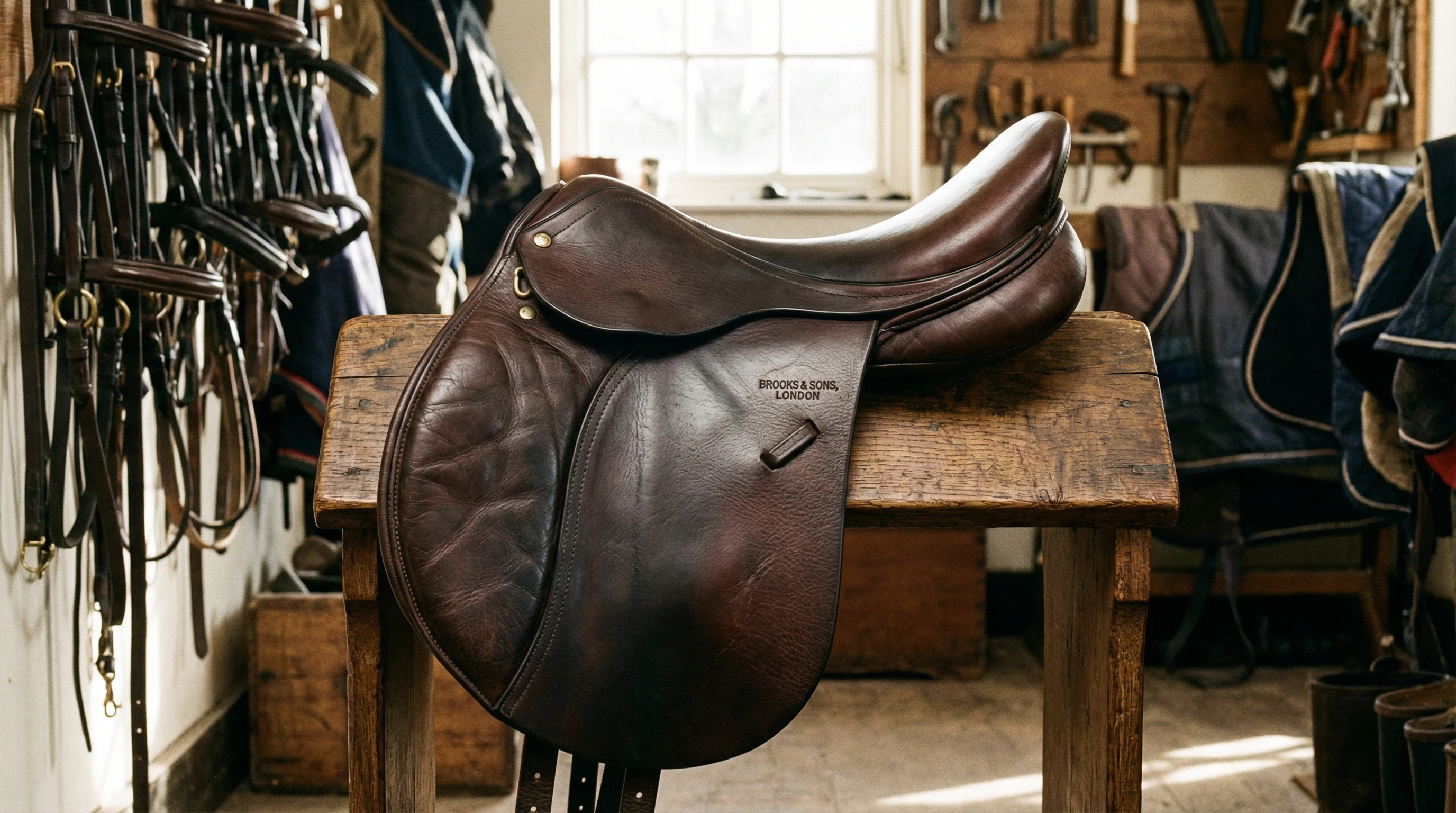
Why Go for a Leather English Saddle?
Leather saddles have been the gold standard in English riding for centuries, but these days, there’s no shortage of affordable synthetics that claim to do the job.
The big questions come down to comfort, durability, feel, and long-term value—this matters for your wallet, but also for you and your horse as a team.
- Comfort Differences for Horse and Rider: Leather naturally conforms and softens with heat and use. I’ve always found the seat cushions and panels on leather saddles to be more forgiving, especially on longer schooling days.
- Longevity and Durability: With care, leather stands up to years of use. Stitching can be replaced, and worn spots can be repaired or refinished. Synthetics often crack, separate, or break down with heavy use. They can be trickier (sometimes even impossible) to repair properly.
- Ride Feel and Communication: I notice a clear difference in feedback from my horse when riding in leather. The natural fibers don’t create static, and the subtle grip makes your cues more precise. It’s easier to feel the horse’s movement, and communication just feels more natural.
In addition, leather saddles often appeal to riders who love that classic look, the signature smell, and the timeless quality of traditional tack. Over time, leather even develops a patina, which many riders consider a badge of experience.
Some say that riding in a well broken-in leather saddle is an entirely different experience—offering both comfort and prestige.
By the way, I wrote a post, “Best English Saddles for Beginners”. This is a great post if you’re trying to decide of upgrading to leather is worth it.
Is the Higher Price Tag Worth It?
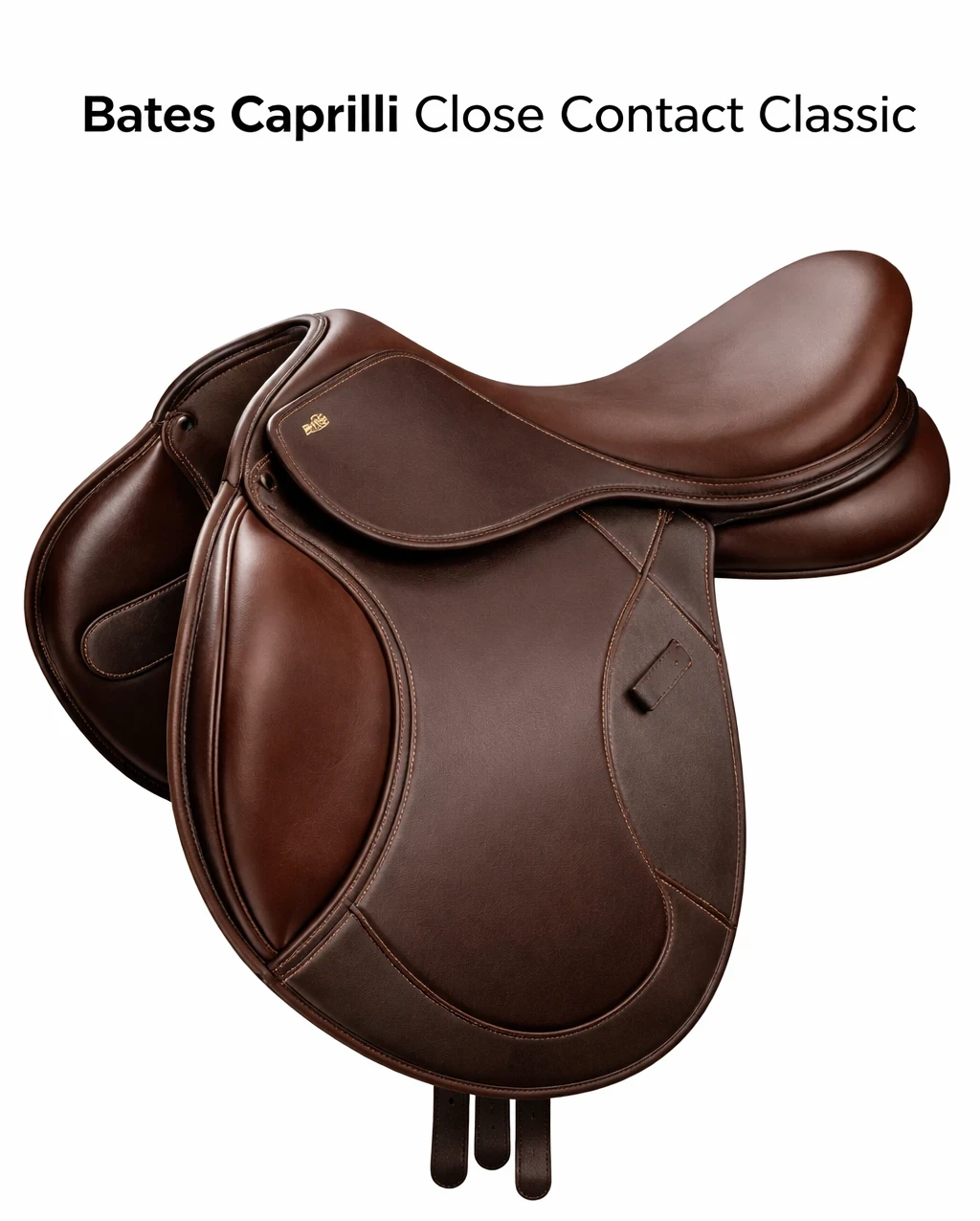 Bates Caprilli Close Contact with CAIR
Sticker shock is real with leather English saddles, so it’s totally fair to wonder if it pays off over time. When you add up saddle costs over several years, the math starts to make sense.
- Cost vs. Lifespan: Many midrange leather saddles last 15 to 30 years or more if you take care of them (cleaning after each ride, regular conditioning, storage out of direct sun or damp). A synthetic saddle will typically show its age much faster, with a five to eight year reasonable lifespan if used regularly.
- Long-Term Value: A lot of popular saddle brands (think Pessoa, Stubben, Bates, Albion) have strong resale markets. A well maintained leather saddle can be sold or traded, often for a solid portion of your original investment. Synthetics almost never hold value in the used tack market.
- Repair and Refinishing: Scratches and wear can usually be sanded, oiled, or restitched by a saddler. So instead of tossing a saddle when it gets damaged, you can bring it back to life for a fraction of the price of new.
Some riders call this the “buy once, cry once” approach. Yes, the upfront cost stings, but you avoid repeated small upgrades or outright replacements as the years roll by.
Benefits to the Horse: The Panel Advantage
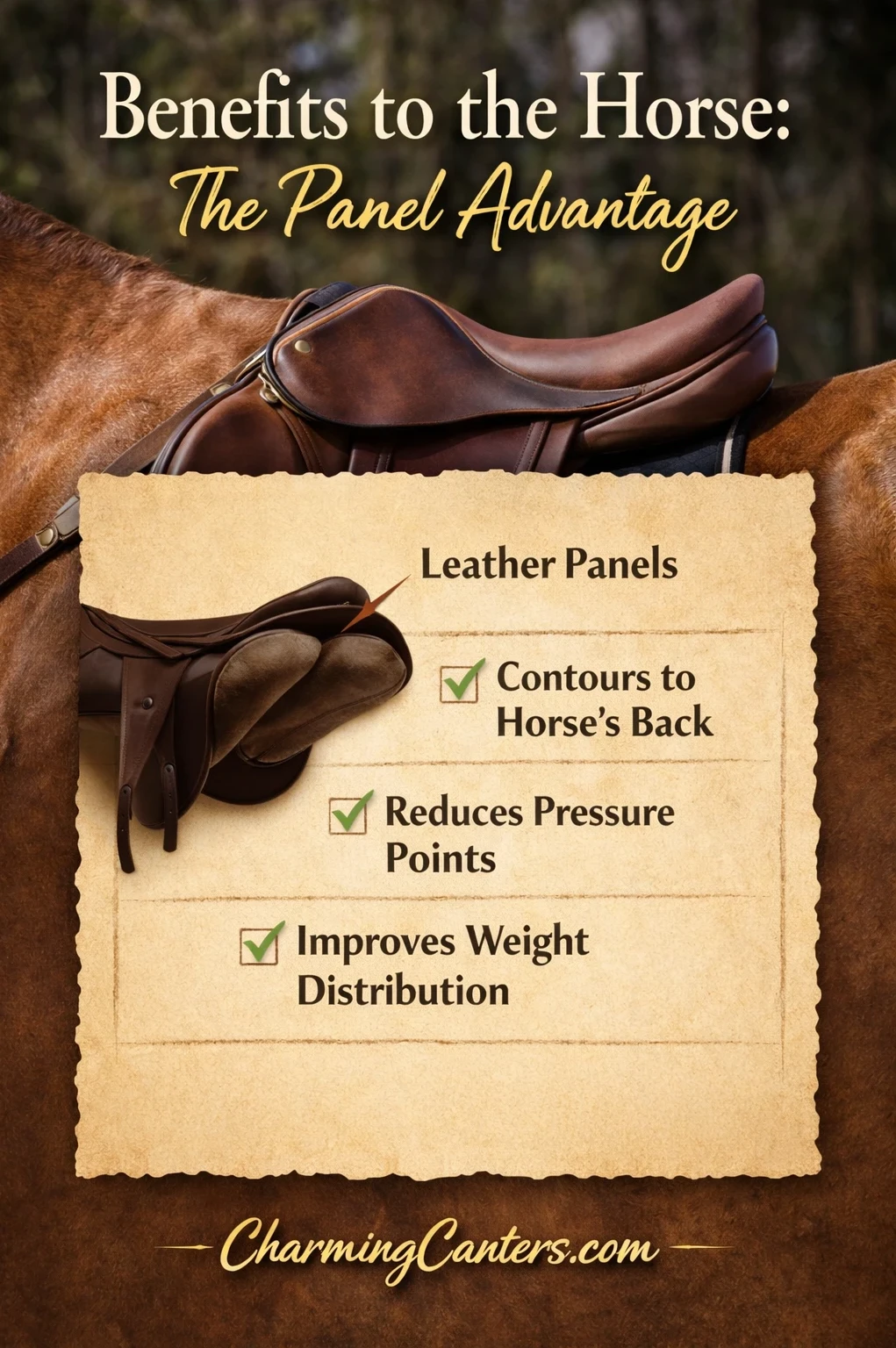
A well fitted leather saddle goes a long way in improving comfort and performance for your horse, which is something every rider wants.
After seeing the change in how a horse moves after switching to quality leather, I always recommend a proper fit from a saddle fitter for any big purchase.
- Panel Conformity with Use: Leather panels mold to the horse’s back shape over time. As leather breaks in, it actually fills out the dips and flattens areas, delivering a close contact fit you can’t really get with rigid synthetic foam panels.
- Reduced Pressure Points: Since leather flexes and settles, you end up with fewer sore spots and even weight distribution. This is also important for horses with high withers or tricky back shapes.
- Improved Weight Distribution: Older horses, sensitive horses, or those in steady work all need a saddle that won’t dig into a single area. Saddles that mold with use can reduce muscle soreness and help keep your horse happy and willing.
If you trail ride, jump, or do dressage, leather’s ability to adapt also means the saddle can remain comfortable for a broad range of back shapes as your horse’s body changes with training or age. Watching your horse work more freely and step forward with comfort is the best reward.
How Leather Improves Rider Balance and Position
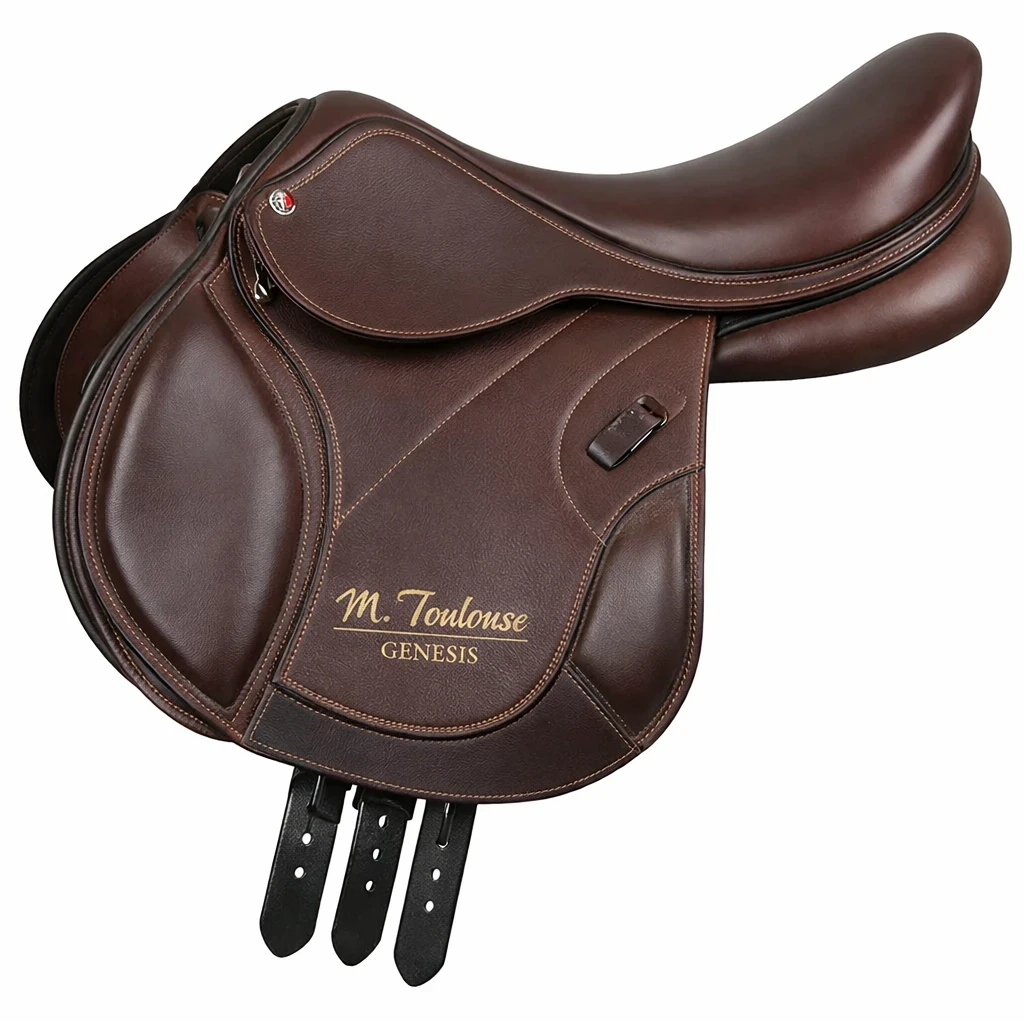 M. Toulouse Monoflap Eventing Saddle with Genesis
I always recommend sitting in a few saddles before buying, just so riders can feel what a difference good leather can make. From sticky seats to secure blocks, there’s a real sense of control and comfort, especially for beginner and intermediate riders learning new skills.
- Grip and Security: Leather, especially when slightly broken in or roughout, gives a soft, tacky feel under the seat bones and leg—not the slick, almost slippery feel of many synthetics.
- Stable Flaps and Knee Blocks: Leather flaps stay stiffer for longer, helping keep your leg in place and supporting a stable lower leg over fences or on uneven terrain.
- Leg Contact and Cues: That “stick to the saddle” feel lets subtle cues travel directly from your leg to your horse, which really helps with more refined aids and building confidence as a rider.
An additional bonus is that when you ride in a leather saddle that fits you well, it naturally helps you maintain the right position with less muscle fatigue. That means more time spent working on your riding instead of fighting awkward positions.
How Leather Saddles Mold to You and Your Horse
Breaking in a new leather saddle can take a few weeks, but once it’s softened, it starts to feel like it was made for you. I remember the first time my own saddle started to fit like a glove. No more pinching, sliding, or fighting an awkward seat shape.
- Break-In Period: New leather is a bit stiff and can be squeaky, but it quickly gains suppleness with miles in the saddle and regular conditioning.
- Adaptive Fit: Over time, the seat and panels take on your shape, the shape of your horse’s back, and the way you ride. Few synthetics adapt this way.
- Rider Preference: Most advanced riders I know will pick a soft, molded leather saddle every time over anything else, precisely because of that custom feel that develops over the years.
If you ride several horses or share tack, this molding effect is especially noticeable. Some riders will even keep a specific saddle for high mileage horses, as it delivers a reliable, reliable fit every time.
Leather Saddles for Showing and Competition
Show rings still prefer the look and feel of leather. I’ve rarely seen a synthetic saddle on a top hunter or dressage horse in competition for a simple reason—they just don’t meet the mark for appearance or tradition.
- Show Ring Standards: Judges in English disciplines often expect riders to use well maintained leather tack. It signals a commitment to presentation and horsemanship.
- Appearance, Polish, and Professionalism: Leather cleans up beautifully. A little conditioner, some elbow grease, and your shine lasts all season. Photos and judges will notice the difference.
- Discipline Specific Perks: Dressage, hunter/jumper, and eventing riders all benefit from the balance and support of leather. Each discipline also has saddle types with very specific flap, panel, and tree shapes that are easiest to find in leather.
Besides tradition, many riders appreciate how leather shows off their attention to detail and the pride they take in their tack—something that’s often rewarded in competitive environments.
Top English Leather Saddle Brands
Premium/High-End Brands (Luxury & Performance)
• Pessoa Legend Valentino Close Contact — designed with features like a half-deep seat, minimal under-leg rigging, and forward flaps for jumping and a natural, balanced rider position, making it ideal for hunters and jumpers.
• Bates Caprilli Close Contact Heritage — Innovative gullet and CAIR system for comfort and horses’ backs. Equestrian App
• M. Toulouse Annice Close Contact Saddle with Genesis — French-style leather with adjustable tree features. Dover Saddlery
Mid-Range & Trusted Everyday Brands
• Henri de Rivel Memor-X Close Contact Saddle — Durable and comfy choice for varied disciplines. Dover Saddlery
• Henri De Rivel Laureate IGP Flocked Saddle — Good all-purpose saddle with quality leather. Dover Saddlery
• Henri de Rivel Pro Buffalo Dressage Saddle — Dressage-focused leather option.
How Long Should a Leather English Saddle Last?
One of the biggest perks, in my view, is how long a leather saddle really lasts if you show it some love. The numbers speak for themselves:
- Properly Maintained Lifespan: Expect 15–30 years or even longer, especially with high end brands. I know plenty of adult amateurs riding in saddles their parents bought decades ago!
- Comparison to Synthetics: Synthetic materials often fray, warp, or split after regular use—especially in wet climates or extreme heat. Even with careful care, five to eight years is about the max you can expect before needing a replacement.
- Repairability: Leather can be restitched, patched, and oiled. You don’t have to shell out for a new saddle every time something rips or fades.
With commitment to a simple care routine, your leather saddle can serve you and your horse faithfully for years, often becoming a family heirloom passed down to the next generation of riders.
Maintenance Basics: Keeping Your Leather Saddle in Top Shape
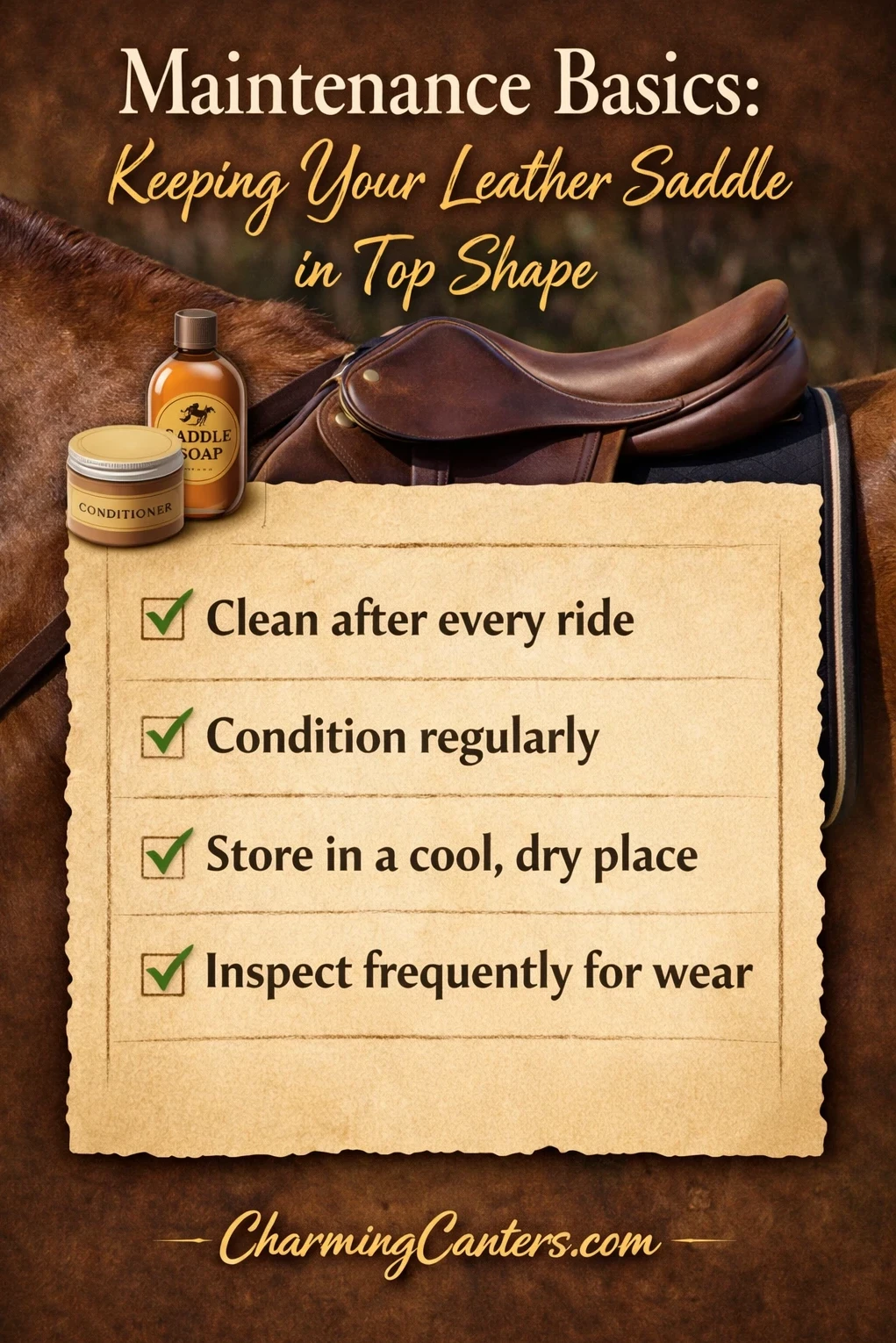
Caring for leather isn’t nearly as intimidating as it sounds. Routine maintenance is the real key, and a little attention goes a long way:
- Cleaning vs. Conditioning: I wipe mine down after every ride with a damp cloth and use saddle soap weekly. A good conditioner every month or so (more often in winter) keeps things supple without getting sticky or heavy.
- How Often Is “Too Much”?: Over conditioning can gum up leather and weaken stitching. Once a month is usually enough unless your tack lives outside or gets drenched.
- Beginner Friendly Care Tips: Don’t forget to check under flaps and billets, and use breathable covers instead of airtight bags. Even a basic routine protects your investment.
For those who love to get into the details, special conditioners and cleaners, sheepskin mitts, or soft horsehair brushes can give your saddle an extra shine and preserve its look. Tack cleaning clinics at local barns can also get you started with the right routine.
Is Leather a Good Choice for Beginners?
If your budget can stretch for it, good leather is a solid pick even for new riders. Getting used to quality equipment early on makes learning new riding skills easier, and you won’t be hunting for a new saddle every few years.
- When Leather Makes Sense: If you or your child plan to ride for several years, or want to compete, starting with leather often works out cheaper in the long run.
- When Synthetic Is Practical: For kids in fast growth spurts, limited budgets, or folks who ride in all weather without a tack room, synthetic is a reasonable pick. Upgrade to leather when you know you’ll stick with the sport.
- Budget Friendly Suggestions: Consider gently used leather saddles. They’re often available at a big discount, and you can still get the same benefits. Try local tack swaps or reputable consignment shops.
Even beginners can feel the difference provided by a well made leather saddle over cheaper alternatives. Don’t hesitate to ask trainers or experienced riders for advice about fitting and brands—they usually have recommendations based on years in the saddle.
Downsides of Leather English Saddles
No saddle is perfect, and it makes sense to know the full picture before investing.
- Weight: Leather saddles are typically heavier than synthetics, especially if they have full panels and blocks. Some riders, especially smaller adults or kids, may find them a bit much to carry or lift onto tall horses.
- Cost: No way around it; quality leather is expensive up front. While there are affordable brands and secondhand options, it still represents a bigger initial outlay.
- Maintenance Time: Leather asks for regular, thoughtful care to keep looking and performing its best. If you prefer a “hose off and go” approach, synthetics save time and effort, though at a tradeoff in longevity and comfort.
It’s a good idea to balance these cons with your riding goals, budget, and how much you value the look and feel of traditional tack. The commitment to maintenance may be worth it if you want your saddle to last for years.
There’s a real satisfaction that comes from owning and caring for leather tack, and, in my experience, most horses and riders notice the step up right away. Even considering the cons, the ride quality, feel, and lasting value are pretty tough to beat if you’re in it for the long haul.
If you have questions about specific brands or saddle fitters in your area, it’s worth reaching out to local tack shops or trainers.
They can offer hands-on advice to make your upgrade smoother. For many, choosing leather is about more than utility—it’s about building a partnership with your horse and gear that stands the test of time.
Was this post helpful? If so, I’d love to hear your comments below.
This is an excellent and very well-rounded breakdown of the benefits of English leather saddles. I really appreciate how you combined personal experience with practical, real-world considerations like longevity, resale value, and rider comfort. Your comparison between leather and synthetic saddles feels honest and balanced, especially for adult riders or parents trying to make a smart long-term investment.
The sections on how leather molds to both horse and rider and improves communication really stood out to me. Those subtle details—feel, grip, balance, and feedback—are things you don’t fully understand until you’ve ridden in different types of saddles, and you explained them in a way that’s easy to relate to.
I also loved the emphasis on proper saddle fitting and panel conformity for the horse’s comfort, which is often overlooked but so important.
Your discussion of cost versus lifespan was especially helpful. The “buy once, cry once” perspective makes a lot of sense when you factor in durability, repairability, and resale value. Including brand examples and maintenance tips adds even more value for readers who are actively shopping or upgrading their tack.
Overall, this article feels informative, reassuring, and practical without being overwhelming. It’s a great resource for beginners, returning riders, and anyone debating whether leather is truly worth the investment. Well written and very helpful—thank you for sharing your experience and insight!
Hi Monica. Thank you so much for the thoughtful and encouraging feedback!
I’m really glad the balance between real-world experience and practical considerations came through, especially around fit, feel, and long-term value. Those subtle differences in communication and comfort are hard to explain until you’ve felt them.
So it means a lot to hear that section resonated with you. I appreciate you taking the time to share such a detailed response, and I’m happy the article felt reassuring and useful for riders at different stages. Thanks again for reading and engaging!
Thank you for this insightful post. It provides the crucial “why” behind the premium price and care requirements of leather. The comparison to a fine piece of furniture that appreciates with proper care is an excellent analogy. Your explanation of the superior shock absorption and how it relates to the subtle feel of a horse’s movement is a key technical advantage that’s hard to replicate. While synthetics have their place, this article makes a compelling case for leather as the ultimate choice for performance, longevity, and that irreplaceable, traditional connection between horse, rider, and tack. A must-read for anyone making that investment decision!
Hi Cian.
Thank you so much for such a thoughtful and encouraging comment! I’m really glad the “why” behind leather resonated with you—especially the furniture analogy and the connection between feel, performance, and longevity. You’re absolutely right that while synthetics have their place, leather offers a uniquely timeless partnership between horse and rider. I truly appreciate you taking the time to share this feedback.