
You really can’t beat a well-fitted English saddle when you’re just getting into riding. The right saddle gives you a stable, balanced seat and helps build confidence from day one. Still, with so many options and a wide range of price tags, choosing your first English saddle can feel overwhelming.
Because I often reference specific saddles and gear to make this process easier, this article may include a few affiliate links. If you choose to purchase through one of them, I may earn a small commission at no extra cost to you—this simply helps support CharmingCanters.com so I can continue creating practical, parent-friendly riding resources.
If you’d like a clearer foundation before diving in, my post “The Anatomy of an English Saddle” breaks down each part of the saddle and what it actually does, which can make the rest of this guide much easier to follow.
In this guide, I’ll walk you through what to look for, how to make sure the saddle fits both you and your horse, and which brands are known for being reliable choices for beginners.
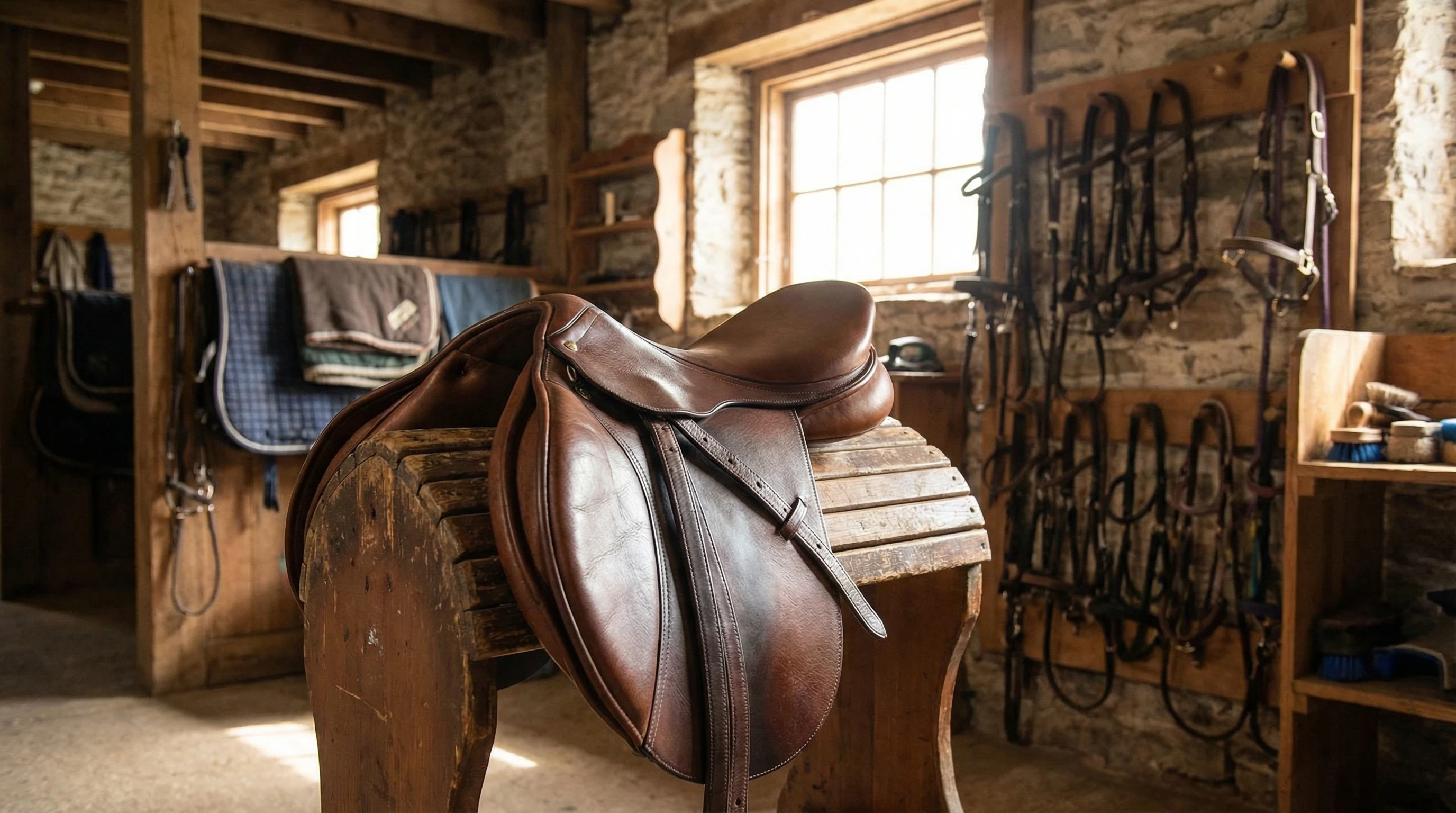
Why a Good English Saddle Matters for Beginners
Starting out with a good English saddle really does make learning to ride more enjoyable, as well as safer. Saddles are built for specific riding styles so having a good one for your discipline keeps you in a stable position.
Entry-level riders usually benefit from an all-purpose saddle since it’s made to handle basic jumping, flatwork, and even a little trail riding. A good saddle also keeps both you and your horse comfortable, helping you avoid pinching, rubbing, or too much sliding around, which can cut your lesson short or just make the ride far less fun.
How Do You Choose an English Saddle?
For most beginners, the key is to focus on these things: comfort for both you and your horse, versatility, and a price that works for your budget. Most new riders pick an all-purpose or general purpose saddle. These are meant to give you enough support whether you’re practicing over poles or just walking around the ring.
If you already know you only want to do jumping or only dressage, you could pick a specific saddle, but for most, that’s not necessary at the start. Here’s what I always mention to folks picking out a first saddle:
- Seat comfort: If possible, sit in a few different saddles. Your seat and legs should feel supported, never squished or overstretched.
- Knee rolls and padding: Some saddles offer extra padding or knee blocks for added security. These are great when you’re building confidence, but avoid anything that locks your legs in place or puts you in an awkward spot.
- Weight: Synthetic saddles are lighter and a breeze to care for. Leather has that classic look and feel, which some riders love.
- Versatility: If you ride different horses, a saddle with an adjustable gullet is a lifesaver.
- Budget: There’s no need to splurge on the fanciest saddle when you’re just starting. Save your big investment for when you know your long-term riding goals.
Trying saddles in person is worthwhile. If you’re buying online, double check the return policy so you can try the saddle at home and get a real feel for the fit on both you and your horse.
What Size Saddle Should I Buy?
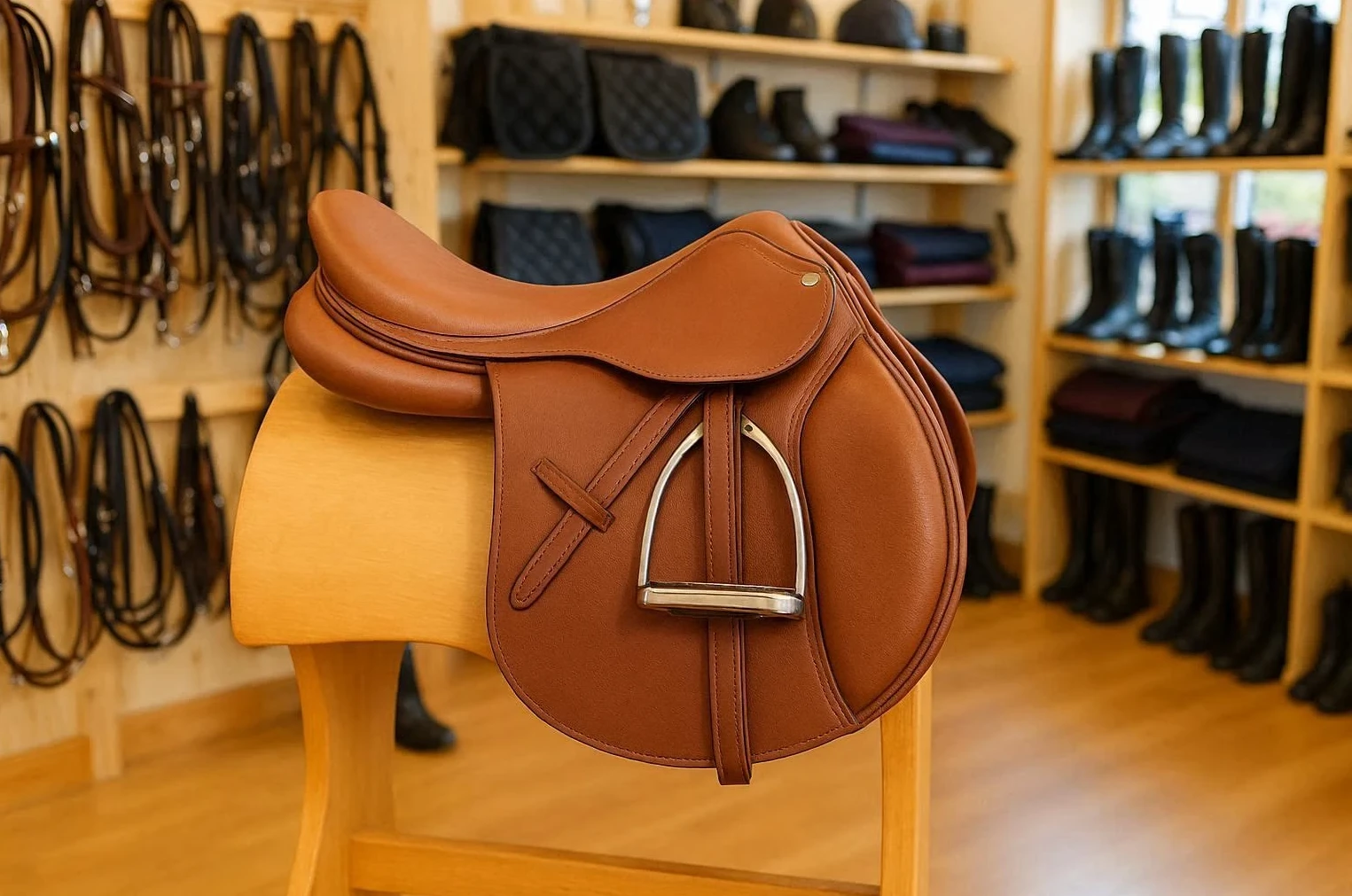
Saddle size is usually about seat size, measured in inches from the back of the pommel to the middle of the cantle. For adult beginners, seats usually fall between 16.5″ and 18″. Here’s a super simple sizing rundown I use:
- Riders under 5’2″ or with a petite frame: 16″–16.5″ seat
- Average build/height (5’2″ to 5’6″): 17″ seat
- Larger build or over 5’7″: 17.5″–18″ seat
These are just points to start. Your leg length and thigh width matter, so sit in a saddle to check comfort. If you have about a hand’s width behind you and a few fingers in front, you’re on the right track.
Flap length matters, too, especially for those with longer legs or who prefer riding with shorter stirrups. Flaps come in various shapes to suit your leg and riding style.
What Price Range Should I Pay?
Entry-level English saddles start around $300 for synthetic and can go up to $1,500 or more for quality leather. Most beginners find their match between $500 and $1,000. If that’s a stretch, check out reputable used saddles.
Second-hand saddles from reliable brands like Wintec, Bates, or Crosby are often a better choice than a cut-rate new one from an unknown maker. Make sure the tree (inner saddle frame) is solid, and ask sellers about any repairs, wear, or damage.
Shops like The Saddle Exchange or Dover Saddlery often offer trial programs or expert advice to help you choose.
How to Make Sure My Saddle Will Fit My Horse?
A saddle that fits you, but not your horse, won’t get you far. Proper fit revolves around the gullet width, the tree shape, and making sure nothing pinches, bridges, or causes pain or pressure.
Here’s my quick checklist for saddle fit:
- Place the saddle on the horse’s back with no pad. You should have two or three fingers’ width between the pommel and the horse’s withers.
- The panels on the bottom of the saddle should make even contact along your horse’s back.
- You ought to be able to slip your hand under the pommel and down to the girth with ease.
- The saddle shouldn’t rock side to side or lift in the middle.
If you’re not totally sure, check in with a local saddle fitter. Adjustable gullets are especially helpful for young horses or horses whose shape is still changing.
How Should I Care For My Saddle?
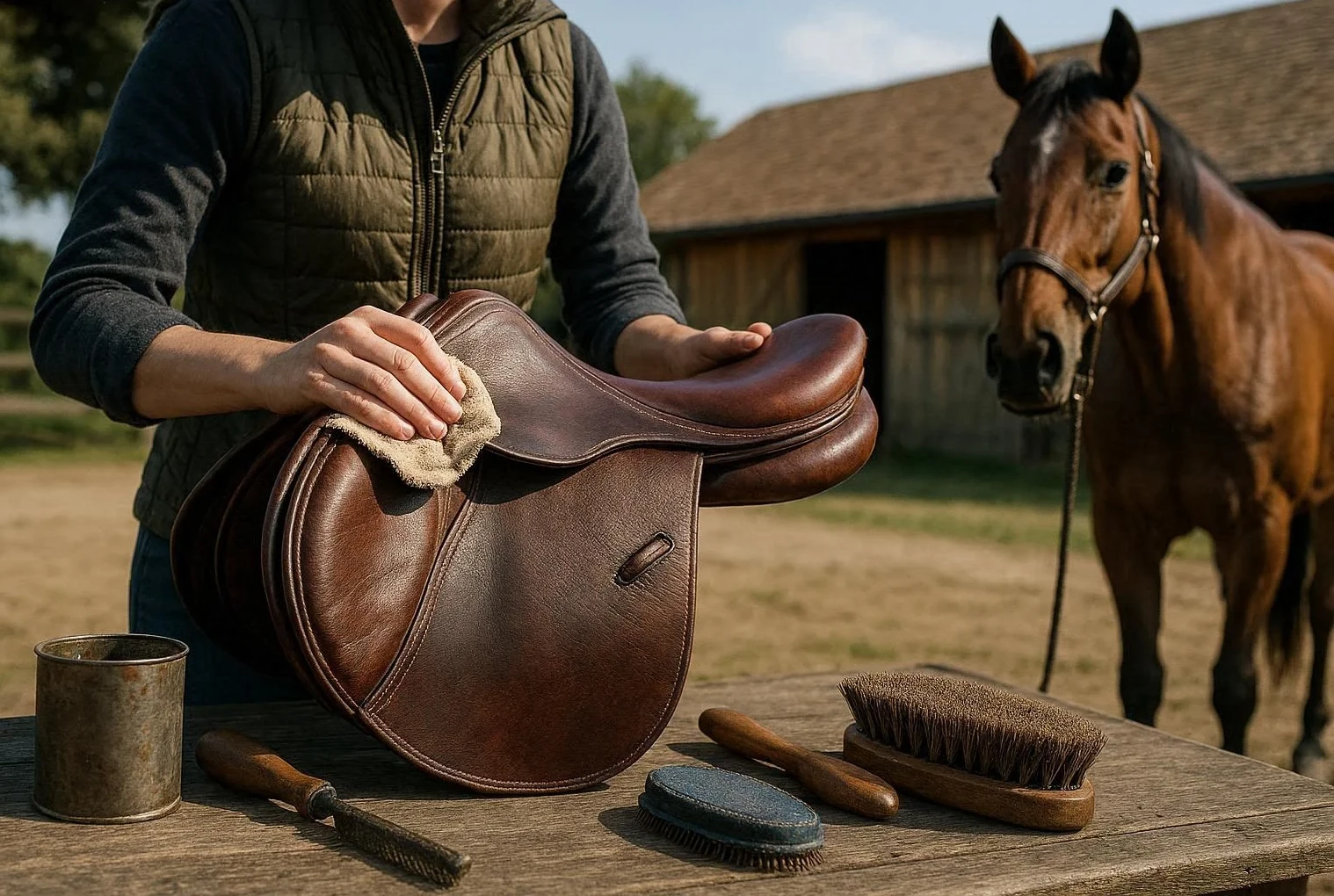
Caring for your saddle isn’t tough, though it does take a little work. For leather saddles, wipe down sweat or dirt after every ride with a damp cloth. Once a week or every few rides, use a gentle leather cleaner and then a light conditioner. Store leather away from direct sun and damp.
Synthetic saddles are super easy—they just need a quick wipe with water and a mild soap. Store your saddle on a rack and cover it with a breathable cover for longer life.
Make it a habit to look over stitching, girth billets, and any moving parts for signs of wear; catch problems early before they get serious.
Best English Saddle Brands for Beginners
You’ve got plenty of brands to pick from, but some stand out for beginner-friendly comfort and value. Here are my go-to recommendations:
- Wintec: These are super popular starter saddles. Lightweight, synthetic, and super easy to look after. Plus, their changeable gullet fits loads of horses.
- Bates: A notch up in quality from Wintec. Great for those wanting leather but don’t want to lose adjustability or comfort.
- Collegiate: Affordable leather saddles, classic looks, and simple fit options. Lessons barns love these for a reason.
- Kincade: Wallet-friendly and a nice entry into leather. Basic but solid for new riders.
- Thorowgood: This UK brand fits a wide range of horses and is especially good for ponies and horses with broad backs.
- Synthetic options: Brands like Cambridge offer synthetic saddles that are stylish and require less upkeep.
All these options are good for all-purpose riding and won’t break the bank. If you branch out into dressage or jumping, these brands offer specialized models, too.
Extra Tips for English Saddle Shopping
I always share these tips with folks hunting for their first saddle:
- Review return policies, especially when buying online.
- See if you can try the saddle before you buy at the tack shop or through a fitter.
- Look for second-hand saddles in good condition. Sometimes a gently worn-in saddle fits best right away.
- Include space in your budget for a decent saddle pad, and maybe a girth or leathers to match your new saddle.
Frequently Asked Questions
Question: Is a synthetic saddle a good choice for a beginner?
Answer: Definitely. Synthetic saddles like Wintec are light, wallet-friendly, easy to clean, and low-maintenance. Ideal for new riders looking for adjustability with less fuss.
Question: Can one saddle fit multiple horses?
Answer: Sometimes. Adjustable gullets or wider tree options mean a single saddle can fit different horses. For best comfort, though, each horse needs its own well-fitted saddle, but many riders start by sharing a versatile option.
Question: How often should I clean my saddle?
Answer: Wipe down after each ride. Give it a more thorough clean weekly or whenever you’ve been riding in heavy weather or dirt.
Question: What should I look for if buying used?
Answer: Check that the tree is solid, look for sturdy stitching, and avoid anything with deep cracks or heavy damage in the material. Try to test the fit on both you and your horse before handing over any money.
Final Thoughts
Getting the right English saddle is key for building safe riding skills and making every hour in the arena more enjoyable. Take time to find a comfy fit and stick with brands that have good feedback among beginners.
Don’t overlook gently used saddles—they can be a real bargain. And remember, it’s always smart to check in with your local tack shop or a saddle fitter if you have questions. Happy riding!
Was this post helpful? I’d love to hear your thoughts in the comments below!
And if you’re also curious about Western saddles, feel free to visit my site, Horse Saddle Comparison, where I review the best options for both beginner and advanced riders in Western disciplines.
Nice one, Shalisha,
I really like how you brought up the way beginners often get torn between going all in on something specific or keeping it simple. Most new riders underestimate how much their own comfort shapes their learning curve. When your seat feels right, everything else just clicks a bit faster.
One thing, though: how riders decide when it’s time to move from that first all-purpose setup to something more specialized. Is it purely about confidence, or do certain habits in the saddle start showing you it’s time for a switch?
I’m also curious how you feel about buying used gear from smaller local sellers rather than big-name shops. Do you think there’s still good value there, or is it too hit-or-miss for beginners who aren’t sure what to look for yet?
Hi Nikolay. Great questions. Let me answer the first one:
This is a really thoughtful question—and it’s rarely just about confidence alone.
Most riders start to outgrow an all-purpose saddle not because they’re riding poorly, but because they’re riding more consistently and more correctly. As that happens, certain patterns start to show up that signal it may be time to specialize.
Confidence does play a role, but it usually shows up after a few practical signs, such as:
Your position feels compromised rather than supported.
You may notice you’re constantly adjusting your leg, tipping forward over fences, or struggling to sit quietly in flatwork. At a certain point, the all-purpose saddle is no longer helping you stay balanced for a specific discipline.
Your riding goals become clearer.
When riders start focusing primarily on hunters, jumpers, dressage, or eventing, the demands of that discipline often exceed what a general-purpose saddle is designed to accommodate.
Your body is developing muscle memory.
As your seat improves, you’ll feel when the saddle’s balance doesn’t quite match what you’re trying to do—whether that’s needing more freedom for a longer leg in dressage or more security and support over fences.
Your horse’s way of going changes.
As horses build topline and work more correctly, a saddle that once “worked well enough” may begin to restrict movement or create subtle resistance. That’s often one of the earliest clues that specialization could help both horse and rider.
Feedback from trainers becomes more specific.
Comments shift from general corrections to things like “this saddle is putting you in front of the motion” or “you’d benefit from a straighter flap or deeper seat.”
In most cases, riders don’t switch because they’ve mastered everything—they switch because their riding has progressed enough to need equipment that supports finer details. An all-purpose saddle is a fantastic starting point, but it’s meant to be transitional. When you feel like you’re working around the saddle instead of with it, that’s usually the clearest sign it’s time to move on.
As for your second question:
Buying used English tack from smaller local sellers can offer excellent value, but it does come with a few important caveats—especially for beginners. On the positive side, local sellers often have well-cared-for saddles that were lightly used, properly stored, and sometimes only owned by one rider.
You can occasionally find higher-quality brands at a price point that would be out of reach new. Another advantage is the ability to see the saddle in person, check the leather, and sometimes even try it on your horse before buying—something you don’t always get with online or big-box retailers.
Where it becomes hit-or-miss is experience. Beginners may not yet know how to spot issues like:
subtle tree damage
uneven or compacted flocking
panels that no longer suit the horse’s back
a saddle that technically “fits” the rider but puts them in a poor position
Smaller sellers are usually honest, but they’re not always trained fitters, and they typically don’t offer return policies, trial periods, or professional assessments the way established shops do. That lack of safety net can make a used saddle a costly mistake if the fit is off.
My general advice is this:
If you’re a beginner and buying used locally, bring a knowledgeable trainer, saddle fitter, or experienced rider with you—or stick to sellers who allow a trial period.
If you have a trained eye or trusted guidance, local used saddles can be an excellent value and a smart way to stretch your budget.
If you’re unsure what to look for, a reputable shop (even when buying used through them) often provides more consistency, support, and peace of mind.
Used saddles aren’t inherently risky—but for beginners, the support around the purchase matters just as much as the saddle itself.
I hope this was helpful. Please feel free to stop by again.
This is a fantastic, well-rounded guide for anyone starting out! You’ve done an excellent job covering all the essential questions a beginner has, from explaining the different saddle types (all-purpose vs. close contact) to the crucial “new vs. used” debate. The breakdown of brands by price point and the emphasis on fit for both horse and rider are exactly the kind of practical, no-nonsense advice that’s so valuable. Thank you for putting together such a helpful resource!
Hi Cian. Thanks for your comment. I’m really glad this post was helpful to you. Let me know if you have any questions when you’re ready to buy a saddle.