
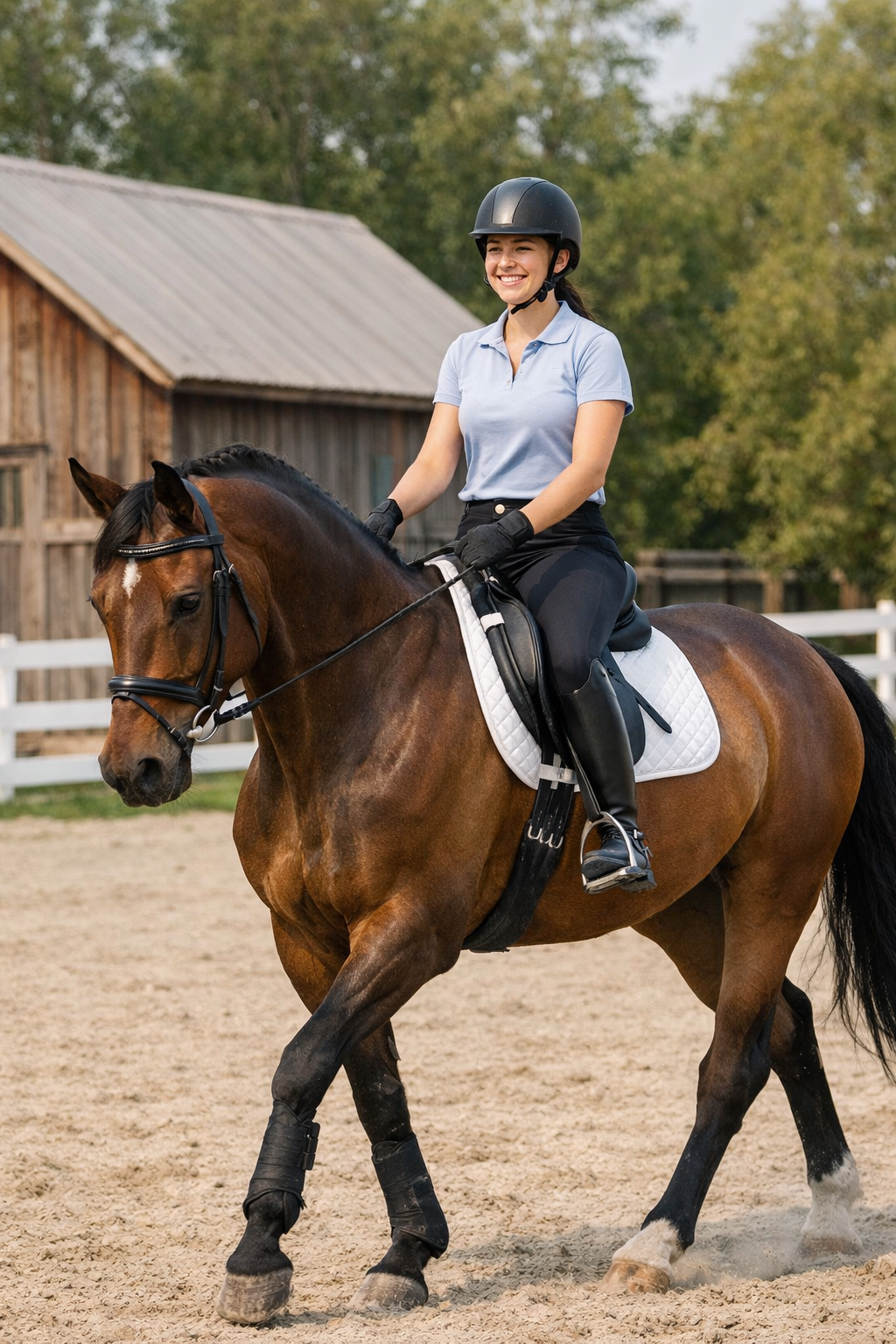
If you’re new to dressage, choosing the right saddle can make those early rides far more comfortable and much less intimidating. A well-designed beginner dressage saddle supports correct posture, improves stability in the arena, and helps keep your horse comfortable as you learn the basics.
Below is a simple guide to what makes a strong entry-level dressage saddle, along with recommended options and common mistakes to avoid when making your choice.
Affiliate disclosure: This article contains affiliate links, which means CharmingCanters.com may earn a small commission if you make a purchase through these links—at no additional cost to you. These recommendations are based on research, rider feedback, and saddle functionality, not sponsorships.
What Makes a Dressage Saddle Beginner Friendly?
The dressage world comes with its own rules, and the saddles do too. Beginner-friendly models focus on a few key things: comfort, support, and a simple fit for both you and your horse. Here’s what I look for when recommending a first dressage saddle.
- Seat depth & security: For most new riders, a semi-deep seat offers a secure, stable spot to sit. Too deep, and you might feel locked in or struggle to move with your horse’s motion. Something that’s comfy and offers support (without feeling like you’re sitting in a bucket) is usually best.
- Block size: Knee blocks are meant to support your leg, not trap it. Look for models with moderate blocks that help you keep your position but still let you shift as you learn. Massive blocks can feel intimidating at first.
- Panel contact & balance: Flatter, well-balanced panels help you stay in the sweet spot, letting your hips and seat bones connect with the horse while improving even weight distribution for your horse’s comfort.
- Adjustability: Many beginners are still growing, sharing with family, or riding different horses. Saddles with adjustable gullets, moveable blocks, and flexible panels keep things comfortable as your body and your riding change.
- Leather durability vs price point: Premium calfskin feels amazing, but most beginners are better off with beefy, grippy leather or even synthetic options for durability and easier care. And your wallet will appreciate a practical first buy.
Best Dressage Saddles for Beginners – Top Picks
Choosing a first dressage saddle can feel overwhelming, especially with so many styles, features, and price points to consider. This guide pulls together rider feedback, common fit priorities, and beginner-friendly design features to highlight saddles that offer the right balance of support, flexibility, and value. Below are several solid options, each suited to different budgets and goals as you get started in dressage.
Best Overall Beginner Dressage Saddle: Wintec 500 Dressage Saddle
Wintec’s 500 Dressage Saddle is popular for a reason. It’s lightweight, easy to care for (just wipe it down), and comes with an adjustable gullet system, so there’s no panic when your horse changes shape. The moderate-sized blocks and supportive seat help beginner riders develop an independent seat without excessive restriction.
Plus, the synthetic material holds up well to all sorts of weather, which means less stress if your tack room isn’t climate controlled. If you’re planning on spending long hours in the saddle, you’ll appreciate how forgiving it feels on both you and your horse.
Best Adjustable Dressage Saddle for Growing Riders: Bates Isabell Saddle
The Bates Isabell earns a lot of love for its adjustability. With a changeable gullet and moveable blocks, this saddle grows along with you or helps if you’re riding more than one horse. The deep seat feels secure without being confining, and it encourages good posture from the start. The double-lined leather improves grip and comfort, making it really approachable for developing riders.
Riders transitioning from other disciplines also find this saddle helpful thanks to its forgiving fit and customizable options. The Bates Isabell also comes with a reputation for longlasting quality, so you won’t outgrow it too quickly as your abilities improve.
Best Adjustable Beginner Dressage Saddle for Long-Term Progression: Ovation Salinero II Dressage Saddle
If you’re a beginner rider who wants a saddle you can grow into—rather than outgrow—the Ovation Salinero II Dressage Saddle is a smart, confidence-building choice. While it’s not a budget saddle, it offers exceptional functionality for riders who are serious about developing correct position and balance from the start.
The Salinero II features Ovation’s X-Change (XCH) adjustable gullet system, making it adaptable for horses whose shape may change with training, conditioning, or seasonal variation. That adjustability is especially valuable for beginner riders working with trainers or riding multiple horses over time.
From a rider’s perspective, the deeper seat and supportive knee blocks help encourage proper alignment without feeling restrictive—ideal for beginners learning to sit correctly, develop an independent seat, and refine leg stability. The AMS synthetic wool-flocked panels add another layer of function, allowing for fine-tuning of balance and fit as both horse and rider progress.
Unlike entry-level synthetic saddles, the Salinero II offers a more traditional leather feel and closer contact, helping beginners develop better feel and communication with their horse early on. It’s a saddle designed not just to get you started, but to support your transition from beginner fundamentals into more consistent, confident dressage riding.
If your goal is a beginner dressage saddle that prioritizes adjustability, rider support, and long-term usability over short-term savings, the Ovation Salinero II is a strong, future-proof investment.
In comparison, the Wintec 500 Dressage is often recommended as an affordable starter saddle with easy-care synthetic construction and a comfortable seat, but it lacks the adjustable gullet and tuning versatility of the Salinero II. That means once your horse’s shape changes significantly or you begin progressing into more advanced dressage work, the Salinero II will typically offer a longer, more adaptable saddle lifespan.
Best Adjustable Synthetic-Style Dressage Saddle for New Riders: Equitare Cadence Dressage Saddle
The Equitare Cadence Dressage Saddle is a practical, beginner-friendly option designed for riders who want stability, adaptability, and low-stress ownership as they learn. Its lightweight construction makes it easy to handle on and off the horse, while the balanced seat and supportive knee blocks help new riders maintain correct alignment without feeling overly restricted.
The adjustable gullet system allows the saddle to accommodate changes in horse shape, which is especially helpful for lesson horses, developing horses, or riders working with more than one mount. Easy to care for and forgiving in everyday barn conditions, the Cadence is well suited for riders who prioritize function, comfort, and flexibility while building confidence in the saddle.
If your goal is a beginner dressage saddle that offers adjustability, supportive balance, and easy day-to-day care without the complexity of higher-end systems, the Equitare Cadence Dressage Saddle is a smart, confidence-building choice.
Best Dressage Saddle for Adult Beginners: Collegiate Integrity Mono Dressage Saddle
The Collegiate Integrity Mono Dressage Saddle is a strong choice for adult beginners and riders returning to dressage who want stability, comfort, and a more refined feel without jumping straight into ultra-high-end pricing. Designed with a deeper, well-balanced seat and supportive knee blocks, it helps adult riders find correct alignment and feel secure as they rebuild confidence and consistency in the saddle.
The mono-flap design offers closer contact with the horse, which many adult beginners appreciate as it improves feel and communication without sacrificing support.
An adjustable gullet system allows the saddle to accommodate changes in horse shape, making it practical for riders working with developing horses or transitioning between mounts.
Finished in quality leather and thoughtfully shaped for everyday schooling, the Collegiate Integrity Mono strikes a comfortable middle ground—supportive without being overwhelming, and refined without feeling intimidating—making it especially well suited for adults focused on steady, confident progress in dressage.
Compared to the Wintec 500 Dressage Saddle, which offers a lightweight, easy-care synthetic build and supportive seat ideal for starting out in dressage, the Collegiate Integrity Mono delivers a more classic leather feel and closer contact thanks to its mono-flap design and deeper seat.
While the Wintec excels in easy maintenance and all-weather durability, the Collegiate’s traditional construction and rider support tend to appeal to adult beginners focused on feel and long-term foundational position.
Beginner Mistakes to Avoid When Choosing a Dressage Saddle
Even experienced riders can get tripped up buying a saddle for the first time. Here are some pitfalls worth sidestepping:
- Buying too deep or advanced: Superdeep seats and giant blocks look fancy but aren’t always beginnerfriendly. You want enough support to feel confident, but not so much you feel stuck.
- Ignoring horse fit: Your horse’s comfort is just as important as yours. A saddle that doesn’t sit evenly or pinches at the withers can cause bad behavior, soreness, and even longterm damage. I always suggest measuring your horse and getting outside help if you’re unsure.
- Focusing too much on looks: A pretty saddle means nothing if it throws you or your horse off balance. Pick function over looks for those first years in the saddle.
- Skipping trial rides: Always try before you buy. Even the “perfect” beginner saddle can feel off until you’ve ridden in it. Ask your local tack shop or fitter for demo options whenever possible.
How to Choose the Right Size Dressage Saddle as a Beginner
Sizing can get confusing fast, especially if you’re new to the horse world. Here’s a quick rundown on what to keep an eye on.
- Seat size basics: Dressage saddles are usually measured in inches (16.5, 17, 17.5, etc). Most adults start in a 17″ or 17.5″. Sit in a few and check that you can fit about a hand’s width behind you at the back edge of the seat. Too small, and you’ll feel perched; too big, and you’ll slide around.
- Flap length: Taller riders or those with longer thighs need more flap to support their leg in a longer position. Some saddles offer short, regular, or long flap options. If you find your knee bumping or extending beyond the knee block, it’s a sign that a longer flap may be a better fit.
- Block positioning: Some beginner saddles have moveable blocks, giving you a chance to experiment until you find a feel that works for you. If your knees tend to roll off the blocks, adjusting them can make a substantial difference in comfort.
- Rider height & leg length: The proportions of your upper and lower leg play a big role. If your knees poke over the block or your stirrup bar sits too far back, your posture and comfort will suffer. Try to sit in a similar saddle before buying, or ask a fitter for help.
New vs Used Dressage Saddles for Beginners
Sometimes buying new isn’t the only (or best) choice, especially with the price of tack today. Here’s when a used saddle makes sense, and what to watch for.
- When used makes sense: Buying used can mean better quality for less money. If you find a wellcaredfor saddle with clean stitching, a stable tree, and soft panels, it’s definitely worth a try. This is especially true for kids or teens who might grow out of a saddle in a year or two. A previously owned saddle may also be broken in already, making it slightly more comfortable from the getgo.
- Red flags to avoid: Pass on saddles with deep cracks in leather, mushy panels, or a tree that squeaks, bows, or creaks. Always run your fingers along all seams, and check under the panels for any warping. If you spot anything suspicious, it’s better to keep searching than risk discomfort or injury for you or your horse.
- When new is the better investment: If you need a specialized fit for a tricky horse (think swaybacked or very wide horses), or if you want a warranty and free adjustments as your riding develops, buying new gives peace of mind. This is also true if you plan to ride competitively and want everything covered by a manufacturer’s guarantee.
Final Thoughts – Choosing Your First Dressage Saddle
Your first dressage saddle should help you feel balanced, secure, and comfortable from the very beginning—so you can focus on learning, not adjusting your position every stride. The right beginner saddle offers enough support to build confidence while still allowing room to grow as your skills improve.
Whether you’re a parent investing in a first proper saddle for a young rider or an adult exploring dressage for the first time, remember that there is no single “perfect” choice—only the saddle that fits your current needs and your horse comfortably right now. As both rider and horse develop, it’s completely normal for those needs to change.
That’s why choosing a saddle with smart design, adjustability, and proven rider support matters. Use the recommendations in this guide as a starting point, compare features carefully, and prioritize fit and comfort over trends or labels. If possible, take advantage of trial options or fitter guidance to confirm what feels right.
👉 Ready to take the next step? Explore the beginner-friendly dressage saddles recommended above, check current pricing through trusted retailers, and choose the option that best supports your goals today—knowing you’re setting yourself and your horse up for a confident, enjoyable start in dressage.
I remember how overwhelming it felt the first time I tried to shop for a dressage saddle, because everything sounds “important” and the price tags do not play around. I like how you broke beginner-friendly down into simple things that actually matter, like a semi-deep seat, moderate blocks that support your leg without trapping it, and adjustability for horses that change shape. The section on avoiding a poor fit for the horse was also helpful. When you talk about beginner-friendly features like a semi-deep seat and moderate knee blocks, how should a new rider decide whether they need more support (bigger blocks/deeper seat) versus more freedom to learn correct position without feeling “locked in”?
Hi Marlinda.
Thanks so much — I totally get that feeling of overwhelm when starting dressage saddle shopping! You hit on exactly why we focused on features that actually support a beginner’s balance and confidence, without getting lost in buzzwords or intimidating price tags.
Great question about support versus freedom: the right amount really comes down to where you are in your seat and leg stability. A semi-deep seat and moderate blocks give you a secure, balanced base while still allowing your pelvis and legs to find the correct alignment. That’s perfect for most beginners because it gently guides your body without forcing it.
If you find you’re consistently losing balance, tipping forward or back, or your lower leg swings excessively, a slightly deeper seat and firmer blocks can give more “contact points” to help stabilize you. On the other hand, if you feel held in and it’s preventing you from developing your own independent seat and soft leg, then too much support can actually slow your progress.
A simple way to decide:
Do a few minutes in a saddle with moderate support and notice if you can breathe, soften your hips, and keep your heels down without gripping?
Yes → you’re in a good range.
No, you feel stuck or tense → try a saddle with a bit more freedom.
Conversely, if you keep losing your center, try a touch more support.
In short: choose support that enhances your balance but doesn’t force your position — think of the saddle as something that guides you rather than locks you in.
Hope that helps!