
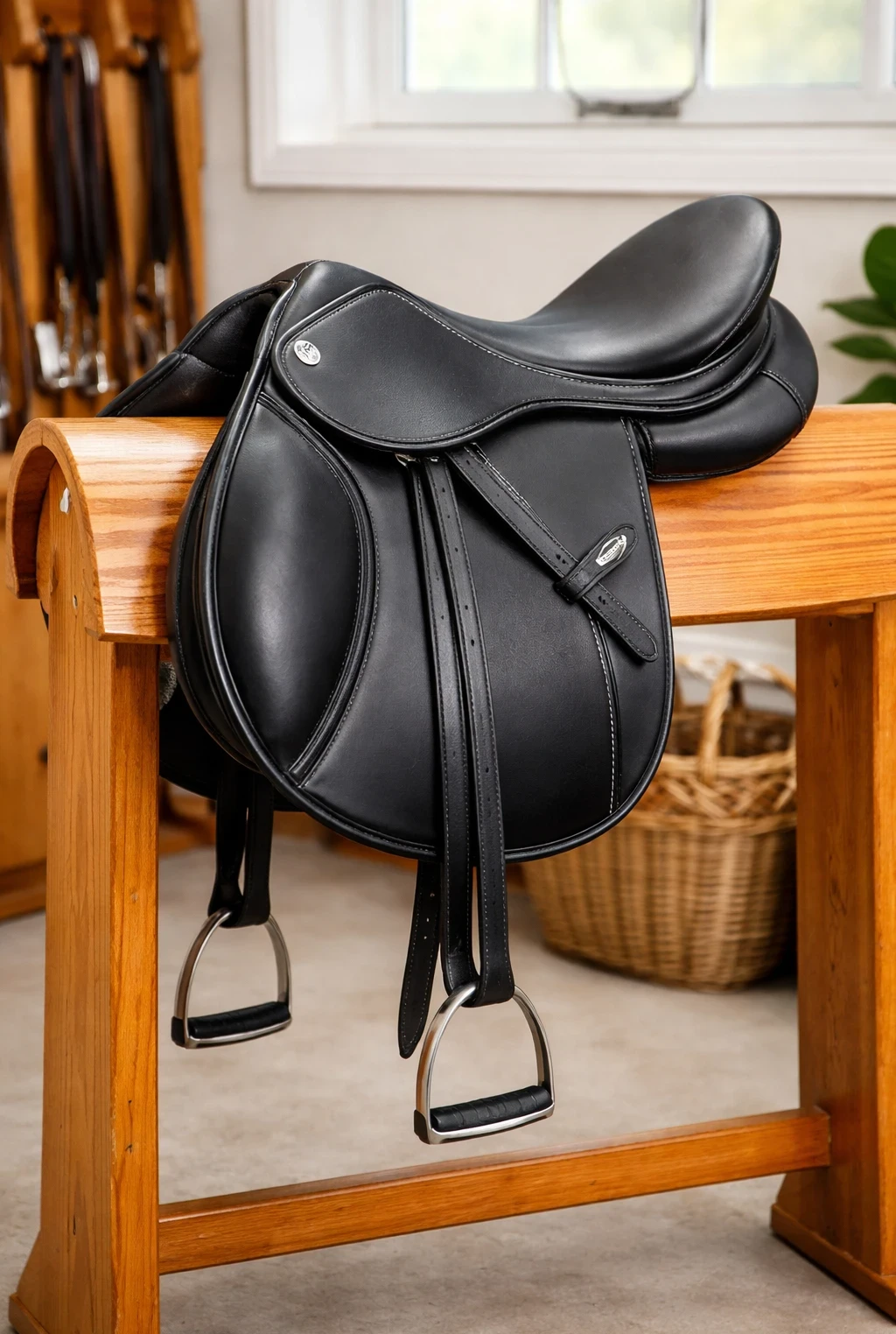
Arena Pony Dressage Saddles are built to handle all the action that comes with young, growing riders and lesson ponies, but keeping them in good shape is a bit different than looking after regular adult saddles.
Whether your saddle is used for everyday lessons, gets swapped between riders, or helps young kids through years of riding and growing, regular care is what really keeps it going.
Taking a few simple steps protects your investment, keeps your rider and pony safer, and helps the saddle stay comfortable and eye-catching for as long as possible. Plus, it means a better resale value when it’s time to size up.
Here’s a little transparency: Our website contains affiliate links. This means if you click and make a purchase, we may receive a small commission. Don’t worry, there’s no extra cost to you. It’s a simple way you can support our mission to bring you quality content.
What Makes Arena Pony Dressage Saddles Special?
Arena pony saddles are designed with soft, high quality leather that’s a lot more supple and grippy than the stiffer synthetics or basic beginner models. This makes them comfy for smaller riders, but also means they can show wear faster if not cared for the right way.
The panels are shaped to fit shortbacked ponies, and the stitching and billets are lighter but strong. Perfect for young hands and smaller horses. You’ll also find adjustable gullet systems, which are handy for growing ponies but mean that regular care near the stress points is really important.
Since this leather responds best to gentle, consistent attention, it’s better to do a little bit often rather than use conditioners heavily or soak it down. Just a straightforward, regular routine keeps things looking and feeling great.
After Every Ride: Daily Care Routine
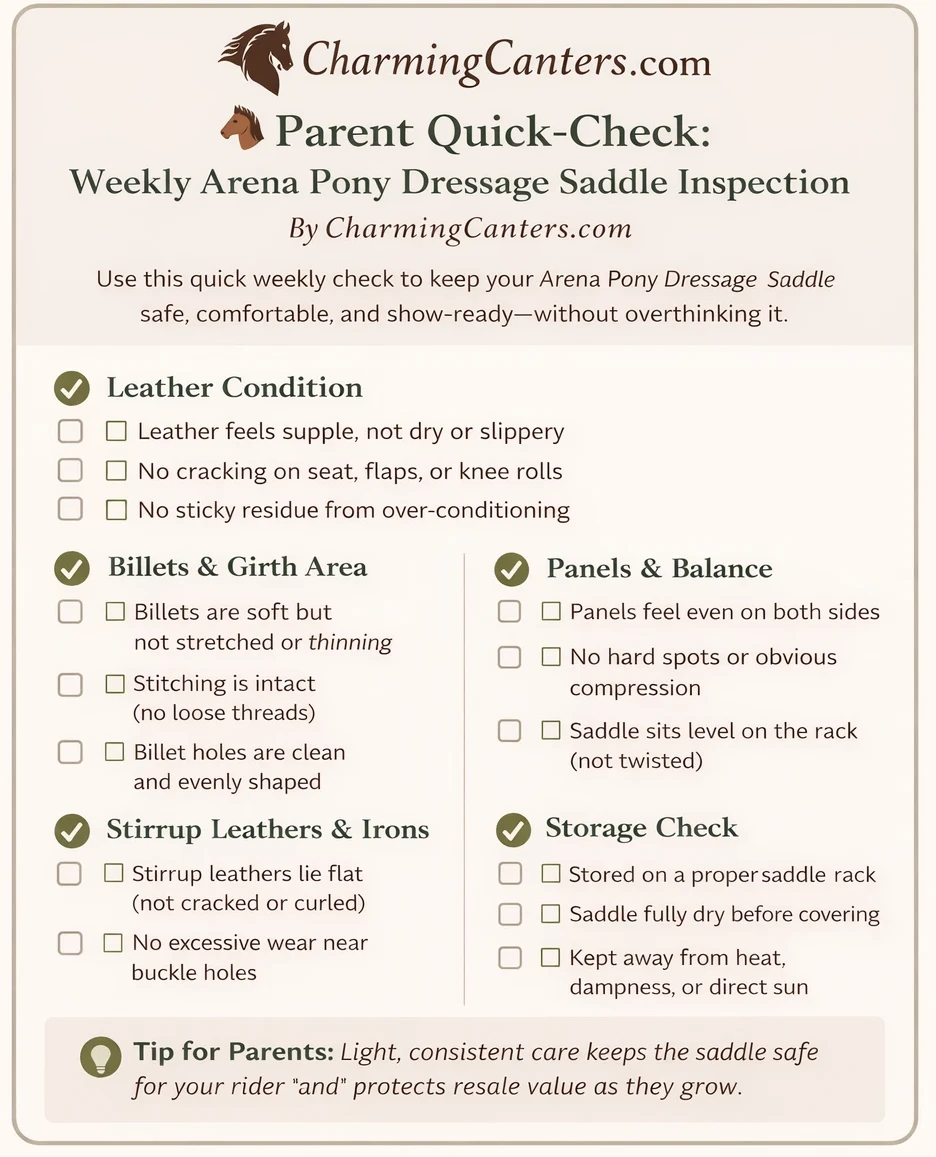
I’ve found that giving your Arena Pony Dressage Saddle a quick wipe down after every ride easily makes the biggest difference. Use a slightly damp, soft cloth, nothing soaking wet, and focus on areas that get sweaty: the seat, flaps, billets, and especially the underside near the girth.
- Wipe sweat and dirt from the seat, knee rolls, and flaps
- Give extra attention to billets and the girth area, since moisture here can break down stitching
- Let the saddle air dry somewhere cool before you stick on the cover or put it away
Avoid using baby wipes, regular household sprays, or anything with alcohol; these strip the leather of natural oils and can cause cracking. Stick to water and a plain cloth for your daily quick clean.
Weekly Cleaning: How to Clean Your Arena Pony Saddle Properly
Once a week, or every few rides if your schedule is busy, a gentle leather cleaner keeps everything from building up. Here’s how I do it:
- Use a small amount of pH balanced leather cleaner on a soft sponge or clean cloth. Use Arena Glycerine Soap.
- Work it in lightly, focusing on the seat, flaps, and all sweat contact surfaces.
- Clean around the billets and hardware, but don’t ever soak these areas; just wipe gently.
- Wipe away all cleaner or residue with a damp cloth (no pools of water on the saddle).
- Let the saddle air dry in a cool spot, away from sunlight or heaters, uncovered for a little while.
It can be tempting to scrub harder if there’s built up grime, but over cleaning can dry out the leather. I keep it light, and it pays off in both feel and appearance.
Conditioning: When and How Much Is Enough?
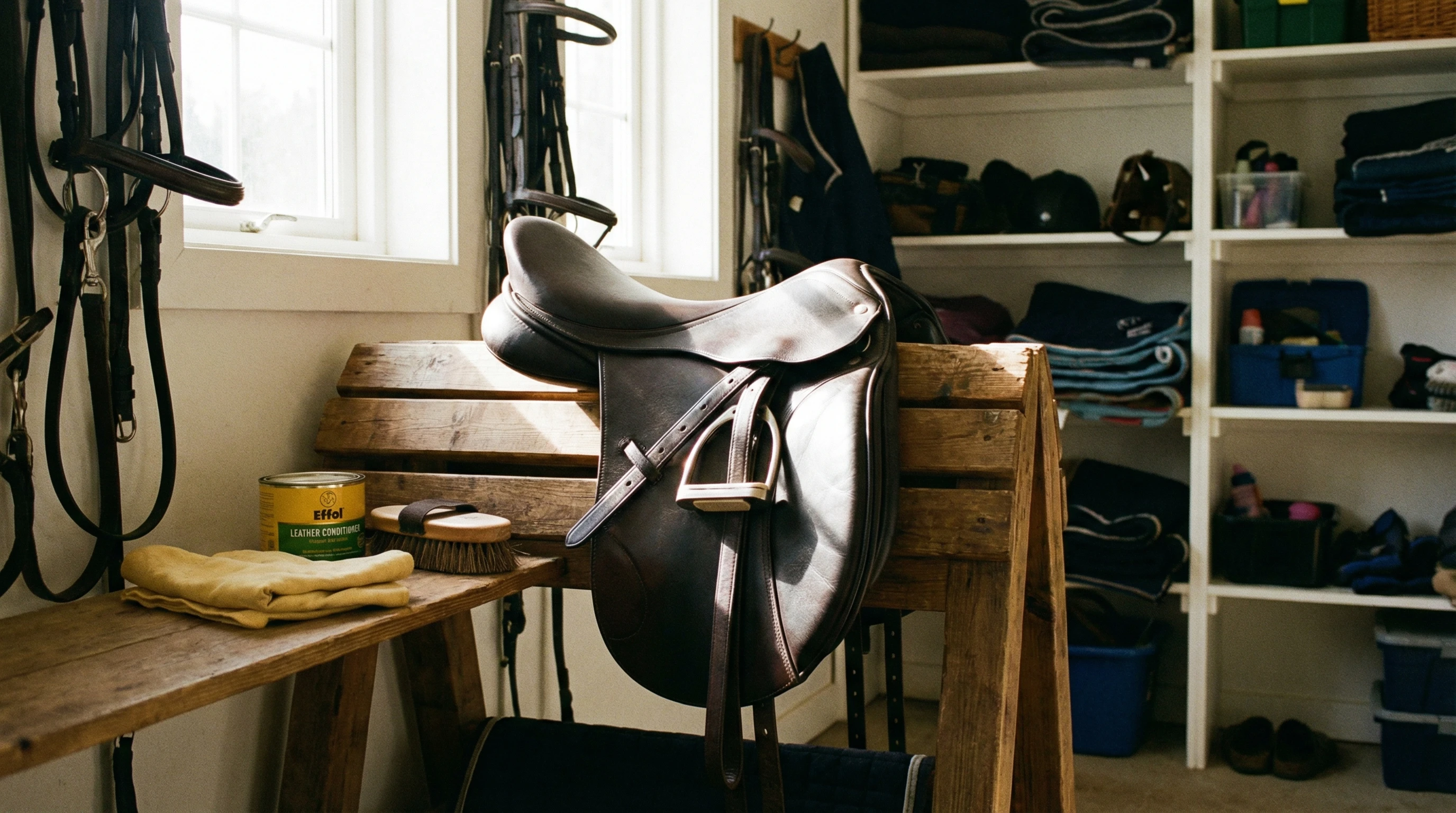
There’s a lot of advice floating around about conditioning leather saddles, and honestly, less is usually better with Arena Pony saddles. Apply a light, quality conditioner only when the leather starts feeling stiff, dull, or dry to the touch.
This might be once every few weeks or even just during dry spells, not after every cleaning. Use Arena Leather Balsam.
- Use a small amount and rub sparingly into the seat and flaps.
- Avoid loading up billets, girth straps, and anywhere with a lot of stitching; these absorb too much and can soften or stretch.
- Signs you’ve overdone it: the seat feels slick or slippery, leather gets soft and stretchy, or billet holes start losing their shape.
Keeping it light and occasional ensures the saddle stays sturdy, with a nice grippy finish for young riders.
Caring for Billets, Stirrup Leathers & High Stress Areas
Billet straps on pony saddles deal with tons of use. Ponies are usually a bit rounder and sweatier, and kids may need a tighter girth for confidence.
This means billets and stitching need extra attention. Sweat, grime, and extra tugging all add up.
- Check billet holes and stitching around the girth points often
- Watch for signs of wear: stretching, cracking, or loose threads
- Replace billets before they show real breakdown; waiting puts both pony and rider at risk
A few seconds spent inspecting these areas makes a big difference, and a repair is way cheaper and easier than a total replacement.
How to Store Your Arena Pony Saddle Correctly
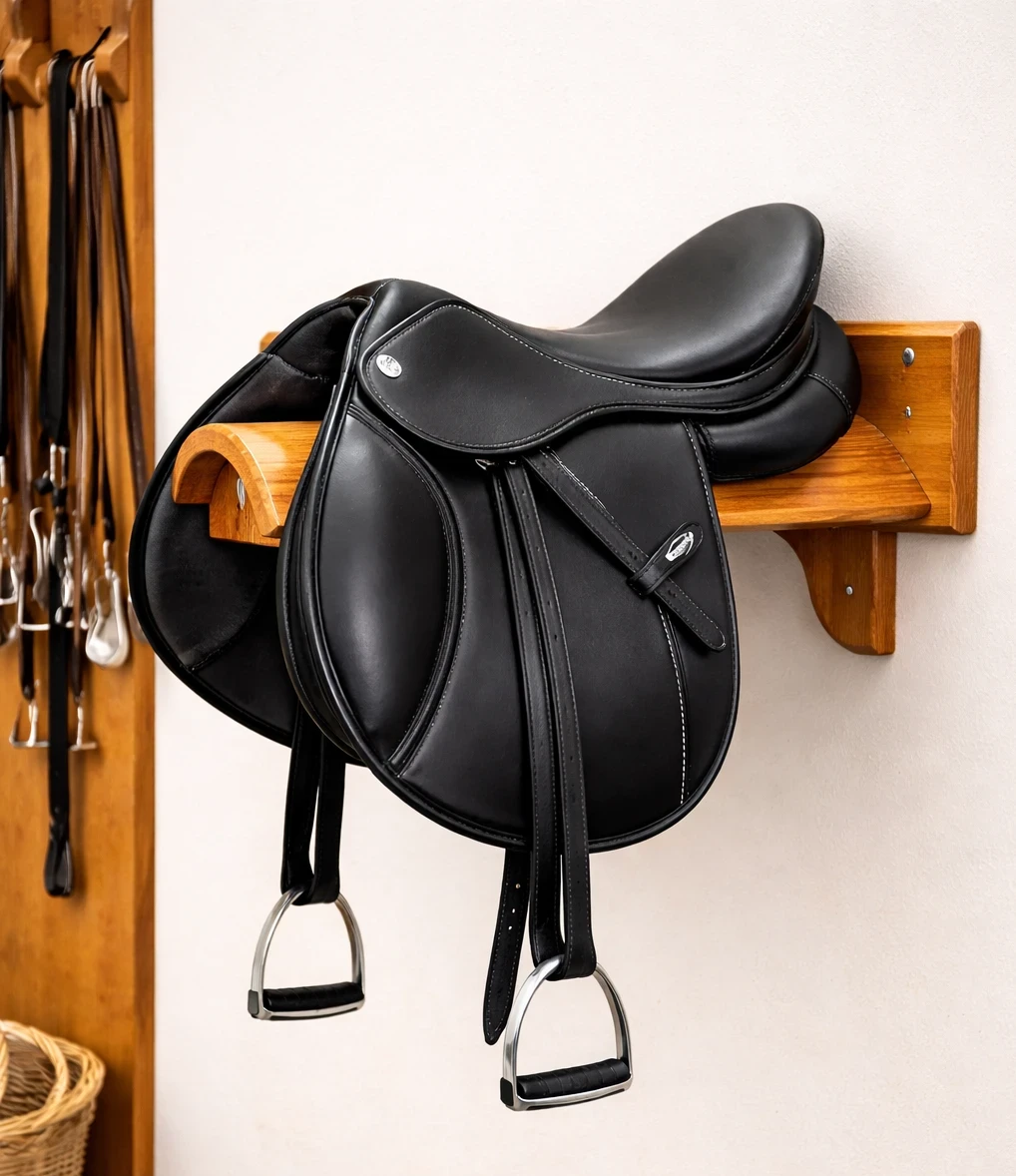
Proper storage is super important if you want your saddle to keep its shape and not develop pressure marks, warping, or worse. Always use a saddle rack that holds up both the pommel and cantle evenly. Stay away from wire racks or draping your saddle over a fence rail, since these put odd pressure on the panels and tree.
- Store in a cool, dry place (never directly over a heater, and definitely out of the sun)
- Stick to a breathable fabric saddle cover, not a plastic bag that will trap moisture
- Air out the saddle regularly, especially after damp or sweaty rides
Little changes here help your saddle stay comfy, adjustable, and looking sharp. Over time, you’ll see that these efforts truly set your saddle apart, keeping it reliable for practice and show days alike.
Barn and Travel Storage Tips for Everyday Reality
Not everyone has a private tack room. For lesson barns or Pony Club, saddles often get moved around, stacked, or squeezed into small spaces. The wear and tear from switching environments can add up quickly if you’re not alert each time you store your tack.
- Always keep saddles on racks, not on damp floors or thrown on top of trunks
- If storing multiple saddles, use saddle pads or soft cloths between them to prevent rubbing
- Transport saddles clean and dry. If you’re heading home after a show and the saddle got wet, let it air before putting it away
- Avoid leaving the saddle in a hot car, trailer, or in a tack room where water leaks or condensation are common
Adding your initials to a gear tag or using a unique cover also helps avoid mix ups in busy barns. It’s also helpful to regularly look over your gear for any bumps, scrapes, or signs of moisture that could sneak in during barn shuffling.
Common Mistakes Parents and Riders Make
- Over conditioning (using too much oil or balm)
- Using household cleaners, baby wipes, or vinegar
- Storing the saddle while damp or wet
- Ignoring billet or stitching wear
- Leaving the saddle in a hot car or tack room
Avoiding these easy mistakes keeps your saddle safer and maintenance costs lower in the long run. Taking just a bit more time to double check storage and cleaning habits really pays off for both comfort and safety.
How Proper Care Supports Fit and Re-sale Value
When a saddle gets frequent and gentle care, the panels and tree keep their shape better, and the leather stays supple and protective. This is especially handy for Arena saddles, since their panels adapt to different pony shapes and fluctuating withers or back muscles as your child grows.
Well cared for saddles not only feel comfier for both pony and rider, but are far easier to resell if you move up in size.
- Panels keep their cushioning and shape
- Gullet and adjustability systems stay tight and safe
- Resale is smoother; clean gear just shows better, period
I’ve checked in with plenty of tack shops, and they always point out that the best trade in and consignment values come from owners who followed this light but regular care approach.
Saddles that look and feel good get noticed first, so gentle care makes a real difference in how fast they sell—or if they get the thumbs up during a trade in.
Who Benefits Most from This Care Routine?
- Parents of kids who are still growing and might need to trade up saddles
- Lesson barns with shared, high traffic tack
- Pony Club families who want gear that can survive years of rallies, shows, and riding lessons
- Anyone switching from a synthetic to a premium leather saddle
If you’re in any of these groups, sticking to this plan helps you enjoy your Arena Pony Dressage Saddle for longer, save money, and avoid those unexpected tack emergencies. It steps up the whole riding experience whether you’re showing, schooling, or just riding for fun at home.
Final Thoughts
Saddle care with a pony dressage saddle doesn’t need to feel complicated or overwhelming. In my experience, small daily habits and light weekly care do far more for leather longevity and rider safety than occasional deep-cleaning marathons. When care feels simple, consistency follows—and consistency is what protects both the saddle and the pony over time.
If you’re still evaluating whether an Arena Pony Dressage Saddle is the right choice for your rider, or want to better understand fit, adjustability, and long-term use for growing ponies, you can continue with my guide on how to choose an Arena Pony Dressage Saddle.
This was really helpful, especially the reminders about not over-conditioning and watching the billets closely. With the adjustable gullet system on Arena Pony dressage saddles, how often would you suggest checking the screws and hardware to make sure everything stays secure as ponies change shape? And for saddles used several times a week in lesson programs, is there a point where professional deep cleaning or reflocking becomes necessary to protect fit and resale value?
Hi Aly. You ask the most thoughtful questions. I love it. This is exactly the kind of stuff that keeps these saddles fitting well and holding their value.
For the adjustable gullet screws and hardware, I’d just get in the habit of checking them regularly instead of waiting for something to feel off:
Normal use: about every 4–6 weeks
Busy lesson program: closer to every 2–3 weeks
And definitely right after any gullet change
They’re pretty reliable, but with ponies changing shape (and lots of hands on the saddle), things can slowly loosen without anyone noticing.
For lesson saddles, you’re also spot on thinking ahead about deeper care.
Even with Arena saddles (since they use CAIR panels instead of wool), you still want to keep an eye on overall balance and pressure:
Plan on a professional fit check every 4–6 months
Have someone look at it sooner if you notice uneven sweat marks, stiffness, or changes in how the pony moves
In heavier programs, you may need panel adjustments or shimming sooner than expected
If it helps, a simple way to think about it:
Hardware – check often (every few weeks in lesson barns)
Fit – check seasonally
Professional help – before there’s a problem, not after
That little bit of routine attention makes a huge difference—especially with lesson ponies where saddles get a lot of use. I hope this helps. Please stop by again!