
Getting a good ride out of your English saddle depends quite a bit on how you adjust your girth. A properly fitted girth keeps your saddle stable, your horse comfortable, and helps you ride better.
Girth issues are often symptoms of broader saddle-fit problems. Check out my post where I talk about proper English saddle fit.
Whether you’re just starting out or you compete in specific riding disciplines, knowing the ins and outs of girth adjustment really makes a difference.
Why Proper Girth Adjustment Is Really Important
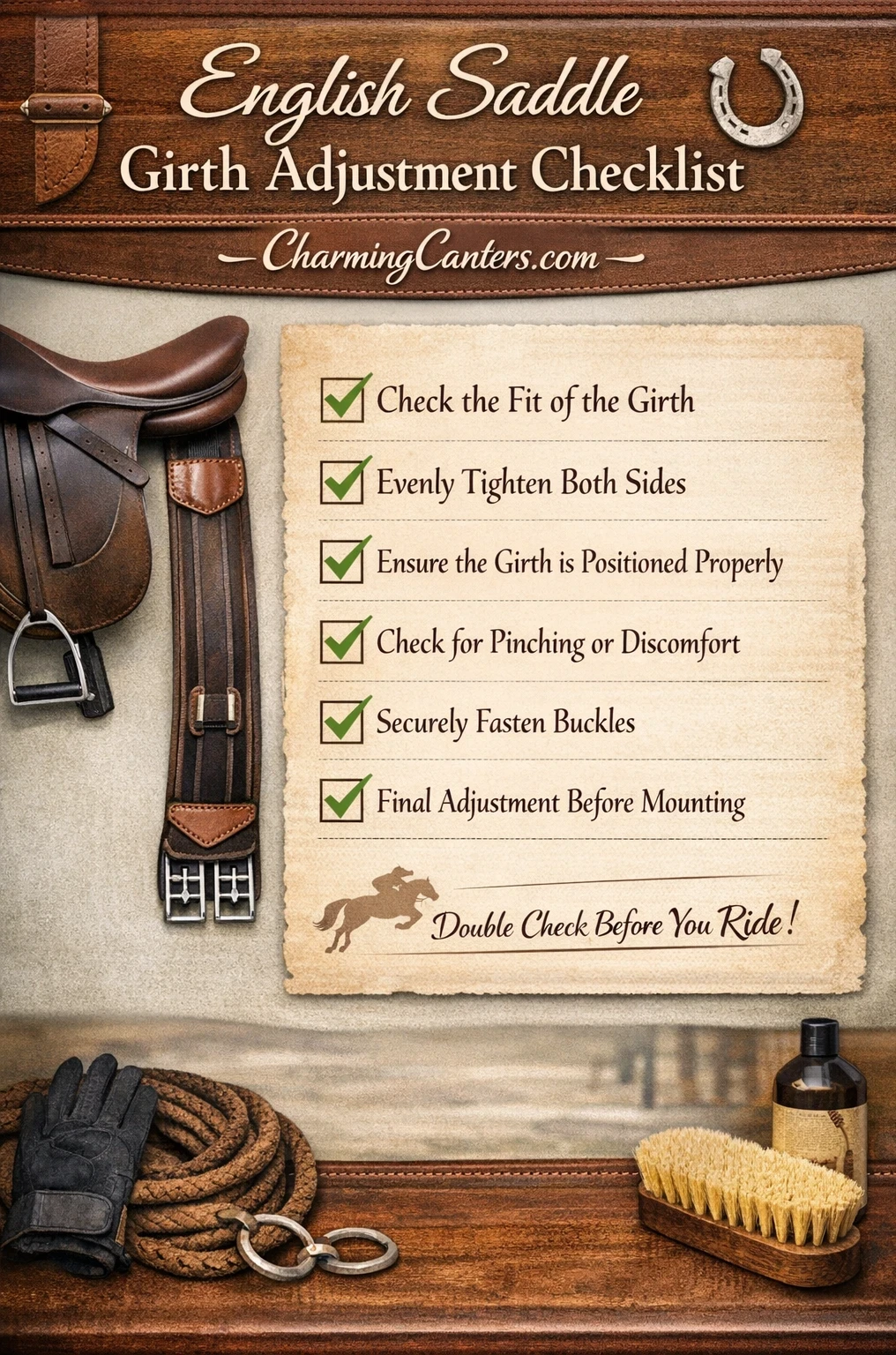
There’s no way around it—a loose or badly adjusted girth can throw off both your ride and your horse’s comfort. I’ve seen plenty of new riders dealing with saddles that slip or switch up, which isn’t just annoying.
It affects your balance, your horse’s movement, and even your safety.
Getting the hang of proper saddle girth adjustment is one part of riding that’s always worth practicing, no matter your experience level. Not only does it safeguard your ride, but it also makes sure your horse enjoys every moment under saddle.
Girth adjustment becomes even more important in situations like long trail rides or competitions, where equipment security matters even more.
Dealing With Saddle Slipping or Shifting
If your saddle slides sidetoside or backward, there’s a good chance your girth isn’t adjusted right. Sometimes, it’s just too loose, or the girth isn’t sitting in the right spot.
Other times, it could be the wrong shape or width for your horse. Pay attention to how your saddle feels right after mounting and after a few minutes of riding.
Sometimes girths settle, and you’ll need to tighten them again.
Hunters and all-purpose English riders especially notice shifting when going over uneven ground, while dressage beginners spot it when working on circles.
For jumpers, girth slipping can be a real headache during landing. A nonslip pad can help in some cases, but it won’t fix poor girth adjustment, so always start there first.
How Tight Is Too Tight?
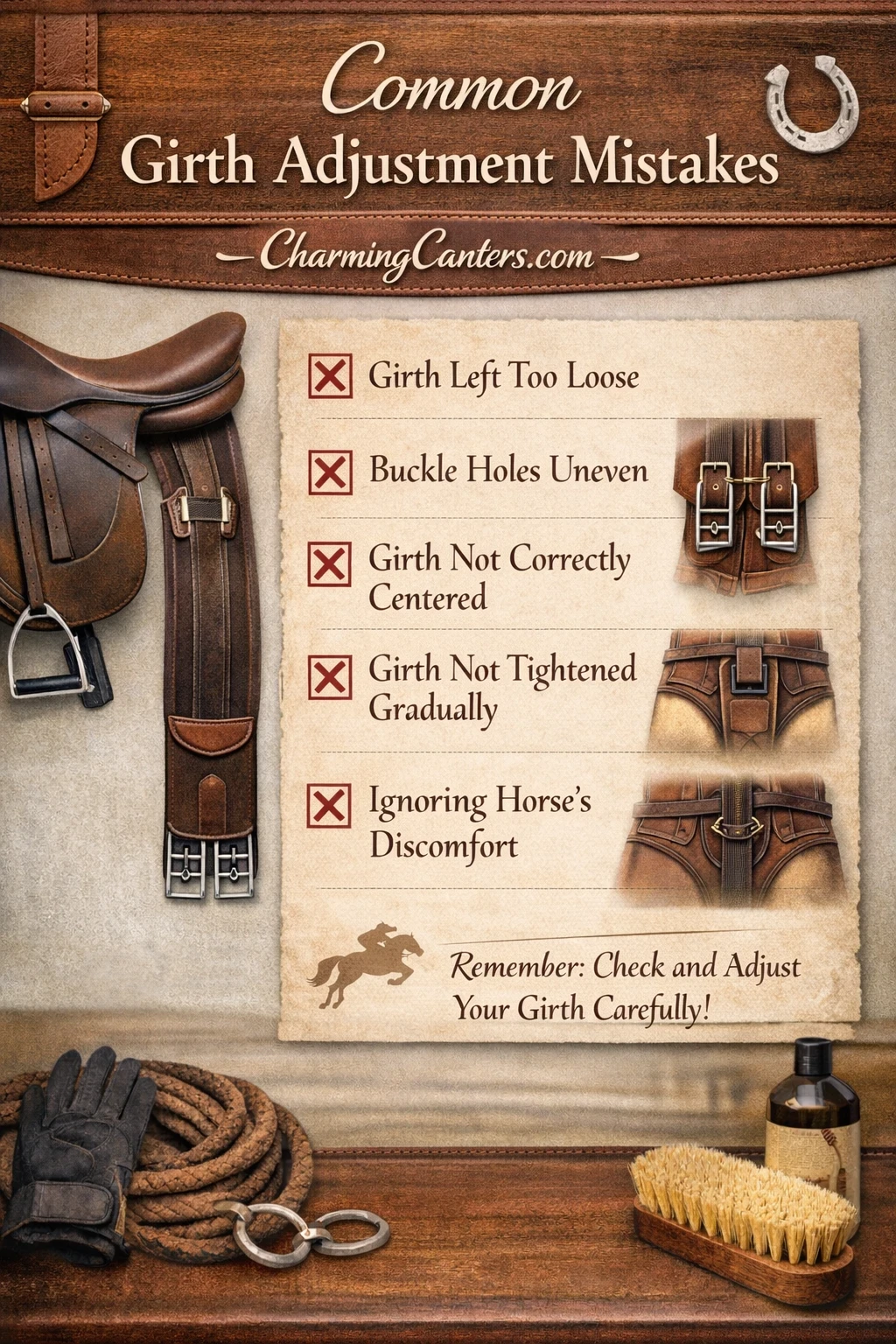
There’s this idea that tighter is better, but that’s not true. An overly tight girth pinches, limits your horse’s breathing, and can even cause muscle soreness.
I usually check tightness with my fingers: snug enough that you can slide two fingers comfortably between the girth and your horse, but still tight enough so the saddle doesn’t move sidetoside.
Discipline matters here. Jumpers often ride with the girth a tad tighter for security, while recreational riders and dressage beginners keep it a bit looser to avoid pinching.
Always adjust gradually, checking your horse’s reaction as you go. Take note that a horse warming up can change their barrel shape, so regular checks go a long way for ongoing comfort.
Choosing the Right Girth Billet Combinations
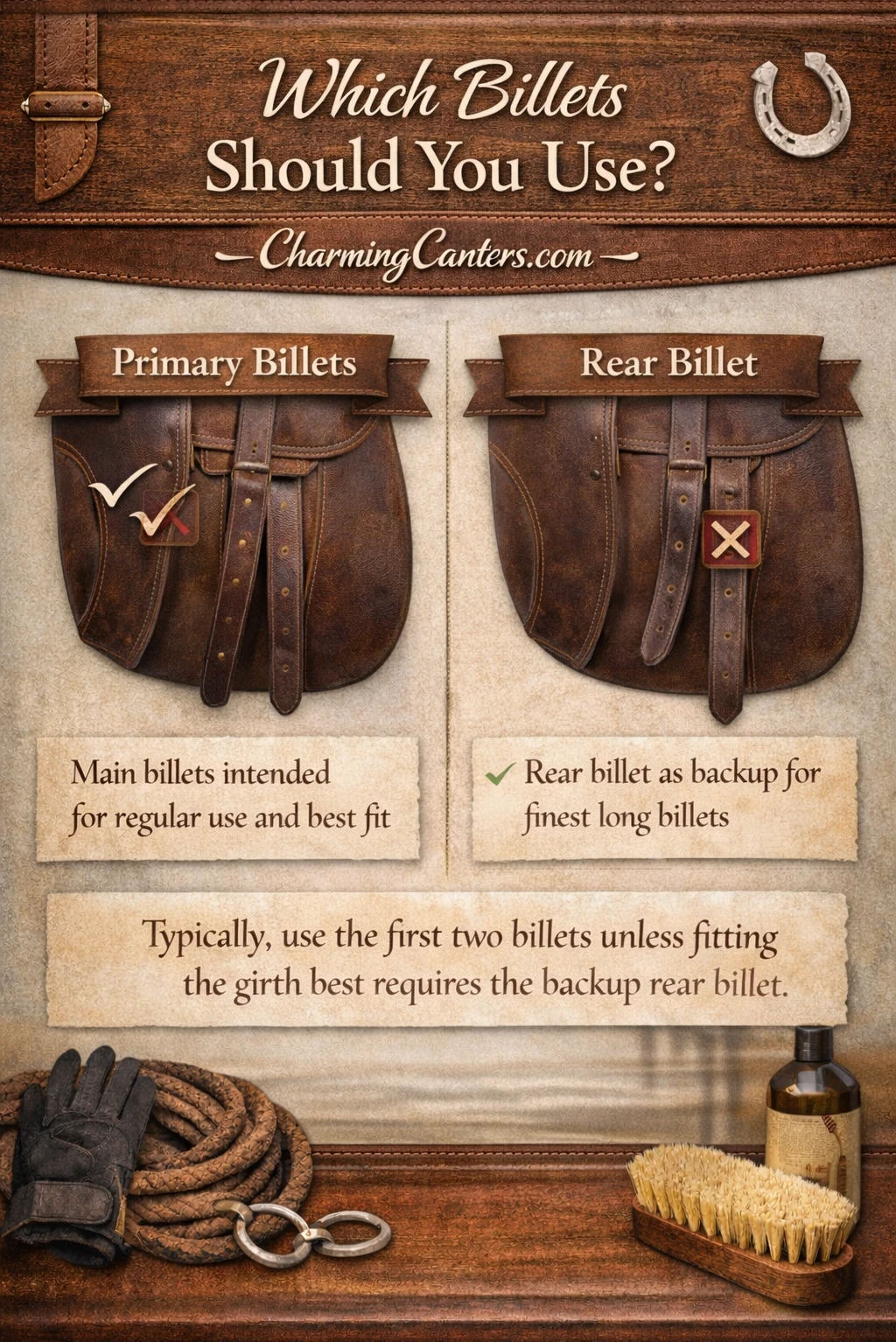
Bilateral girths and regular English girths all attach to billets (the leather straps on your saddle). These provide location options. Using the first and third billets can help with saddle stability, especially if your horse has a forward girth groove.
Mix and match a bit to see what helps your saddle stay put. For jumpers or horses with conformation challenges, I sometimes swap between using the second and third, or first and third billets.
Think of billet selection like picking shoes: sometimes only a certain combo really fits best!
Elastic vs Nonelastic Girths: What’s the Difference?
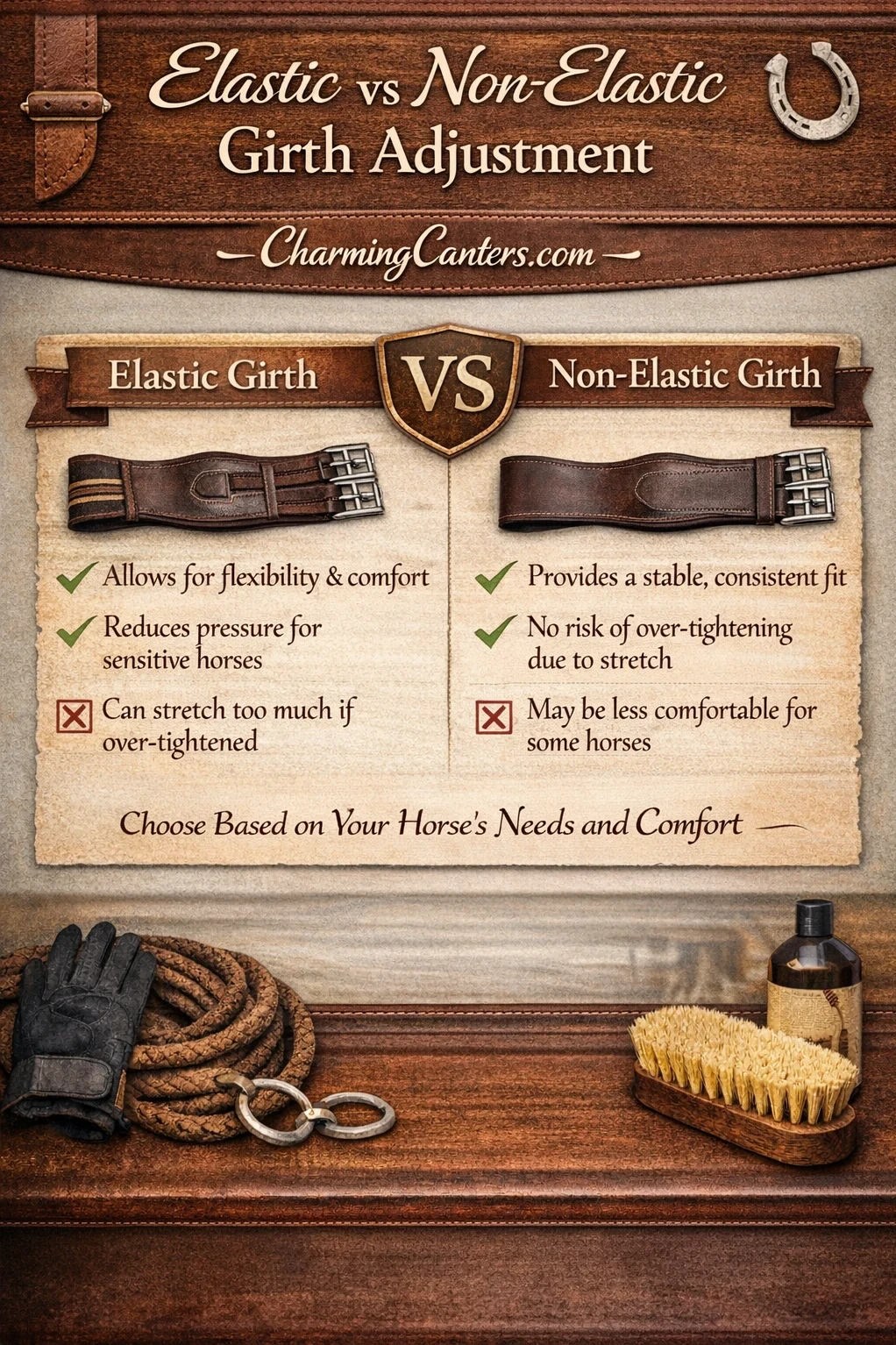
You’ll find girths with elastic on one or both ends and some with none at all. Elastic ends give a little flexibility during movement and breathing. I like these for most disciplines since they let the saddle move naturally with your horse.
However, non-elastic girths can provide more stability and sometimes work better for roundbarreled horses that tend to slip saddles.
Dressage beginners may find a girth with stretch feels comfier for the horse, but hunters and jumpers sometimes opt for less elastic so the saddle won’t wiggle during bigger movements.
In recent years, specialized girths have entered the market, boasting new materials for added comfort and support.
Readjusting Your Girth: How Often?
Your horse’s back and barrel can change as they warm up. So it’s a good idea to check your girth after a few laps or minutes of work. Saddles can settle into position, making a once-snug girth suddenly loose.
I always check and, if needed, tighten my girth before and after mounting, then again about 10 minutes into my ride, especially before jumping or fast work. It’s always safer to catch a loose girth early, rather than risking a shifting saddle at the wrong moment.
Preventing Pinching, Rubs, and Girth Galls
Poor girth adjustment can cause pinching, skin rubs, and those nasty girth galls no one wants to see on their horse. Make sure your girth is lying flat, with buckles clear of the skin.
Clean equipment, soft padding, and checking for wrinkled skin will help keep your horse comfortable.
Hunters and dressage beginners: fleece or sheepskinlined girths can be especially forgiving if your horse is sensitive. Always keep an eye out for signs of discomfort after your ride and step up your cleaning routine to prevent skin issues.
Horse Conformation and Girth Issues
Some horses just don’t make girthing easy. Round, flat-barreled horses or those with a forward girth groove need a little extra attention and sometimes specialty girths.
To understand why girths behave differently on different horses, please read my posts where I talk about choosing the right English saddle for horses with prominent withers and my other post which addresses round-barreled horses.
If your saddle keeps creeping forward or back, or your girth wants to slip into your horse’s armpit, it might be time to try an anatomical or shaped girth.
All-purpose riders see a lot of variety here, so I always recommend watching how saddles and girths sit as you ride. Sometimes, a shaped girth paired with a special pad helps keep even the trickiest conformation problems in check.
DisciplineSpecific Tips for Girth Stability
- Hunters: Priority is a clean look. Use an elasticended girth or cover for less bulk, but check fit regularly because elastic can stretch out midclass.
- Jumpers: Go for reliable, slightly wider girths with sturdy buckles. Tighten a bit extra before big jumps; still, check horse comfort first.
- Dressage Beginners: Equal pressure is key. Consider a contoured or anatomical girth and adjust after a trot warmup.
- AllPurpose English Riders: Test several girth styles to see what keeps your saddle steady as you switch between flatwork, light jumping, and the occasional trail ride.
- Recreational Riders: Comfort wins. Sheepskin or softsided girths are often appreciated by horses in light work. Don’t forget to check tightness midride, especially if out for a few hours.
Recognizing Incorrect Girth Adjustment
If you see these signs, your girth likely needs tweaking:
- Saddle shifting sidetoside during mounting or trotting
- Girth marks, swelling, or skin rubs after a ride
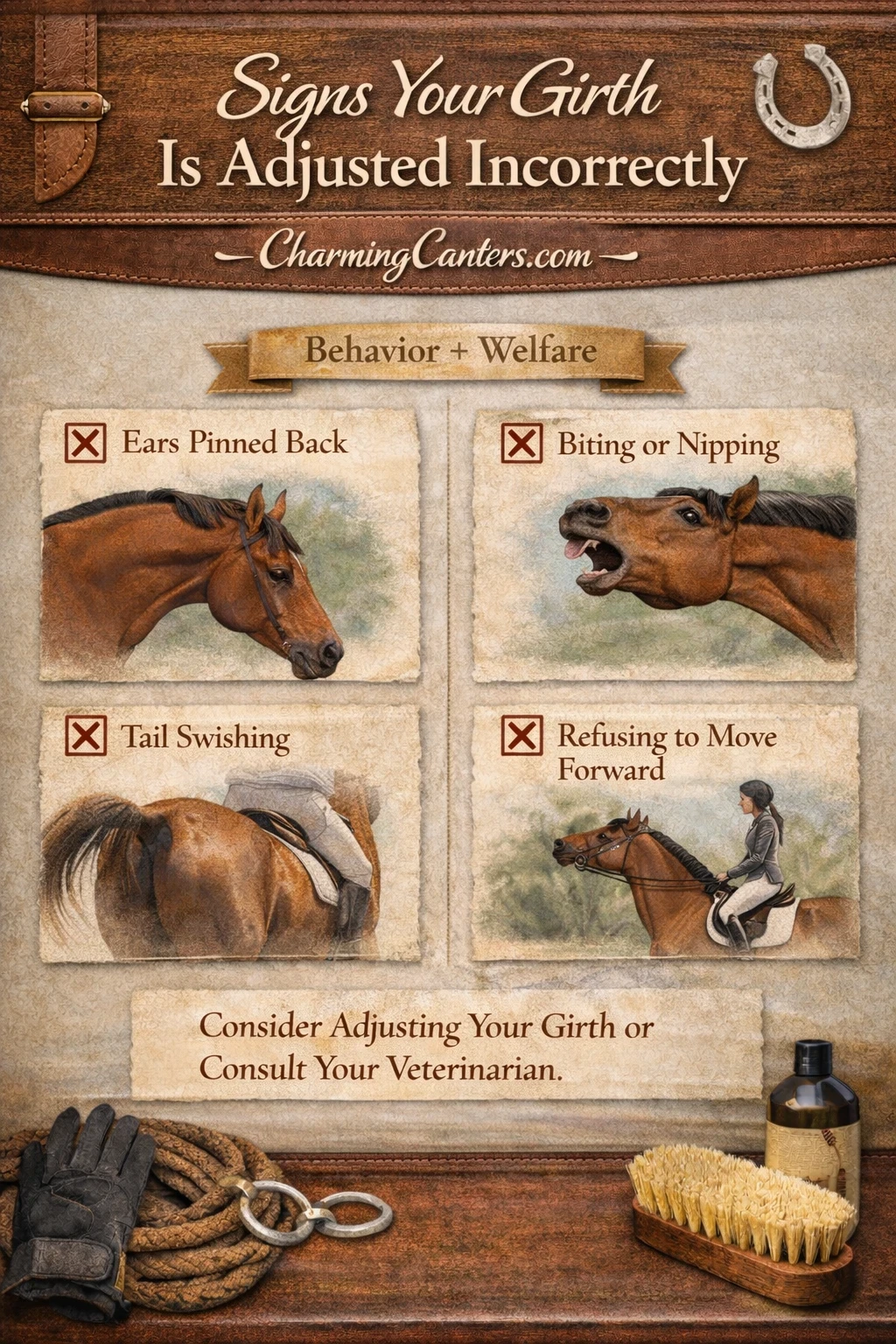
- Head tossing or tail swishing when tightening the girth
- Your horse refusing to move forward or pinning ears during saddling
- Persistent slipping, no matter what saddle pad you use
Any of these mean it’s worth reexamining your setup and checking both girth style and adjustment method.
Take a moment to track down the cause. Sometimes an easy fix can make a world of difference in your horse’s happiness.
Safety Matters: What’s at Stake?
Getting lax with your girth adjustment can end up with a saddle on the ground—or worse, you on the ground.
Always double-check before mounting and just before working at speed. Especially in the show ring or on trails, a secure, correctly fitted girth gives one less thing to worry about and helps keep you and your horse safe.
Staying sharp with your tack check isn’t just for beginners, either. Even experienced riders catch small issues before they become big problems by keeping an eye out regularly.
Common Questions About Girth Adjustment
How do I know if my girth is tight enough?
Check after making final adjustments. You shouldn’t be able to yank the saddle sideways, but two fingers should fit between the girth and horse. Your horse should move and breathe easily.
What’s the best girth for sensitive horses?
Anatomical girths with fleece or soft lining can help, especially if you’re seeing rubs or galls. Always keep your girth clean. For highly sensitive horses, you can also try specialty gel pads under your girth for an extra layer of softness.
Should I use elastic or nonelastic ends?
Elastic ends usually work for most horses, giving a bit of stretch for comfort. For very round horses or those who need extra stability, try a nonelastic girth instead. Testing both types might point you toward what makes your horse happiest and keeps your saddle secure.
Do different disciplines really require different girth types?
Yes. Jumpers usually go with stronger, less stretchy girths, while hunters and dressage riders may choose something a bit plusher. Test what works for your horse and your main type of riding. Some riders even change girths based on the type of ride planned that day, so having options doesn’t hurt.
Quick Recap: Best Practices
- Always check girth tightness before mounting, after a few minutes of riding, and before faster or more technical work.
- Check for saddle slip and watch your horse’s reaction during girthing.
- Swap girth styles or billets based on what keeps your saddle stable and your horse happy.
- If you see any discomfort, girth gall, or slipping: reassess your setup immediately.
- Prioritize comfort and security over tightness alone, no matter your discipline.
- Don’t overlook regular equipment cleaning—it keeps both your tack and your horse in better shape for every ride.
Keep a close eye on your girth adjustment to help your horse stay comfy, your tack secure, and your riding time much more enjoyable. The right setup sets the foundation for every successful ride, bringing peace of mind for both horse and rider.
Did you find this post helpful? If so, please leave your comments below. For more help on saddle fitting guides, see my post on English Saddle fit for Specific Horse Breeds.
This is such a thorough guide! I love how you break down girth adjustment for different disciplines and horse types—so practical for both beginners and experienced riders. The tips on checking tightness, choosing elastic vs nonelastic, and watching your horse’s reaction are especially helpful. Thanks for sharing such clear advice to keep both horse and rider comfortable and safe!
Hi Monica.
Thank you so much — I really appreciate your kind words! I’m glad the breakdown felt useful and practical for riders at any experience level.
Girth fit is one of those details that can make a huge difference in comfort and performance, yet it’s often overlooked. Watching how the horse reacts, understanding when elasticity helps (or doesn’t), and knowing how tight is “just right” all go a long way toward happier rides for both horse and rider.
Thanks again for reading and taking the time to leave such encouraging feedback — it means a lot!
This is such a thorough and practical guide to something riders sometimes overlook. I really appreciate how you emphasized that girth issues are often connected to overall saddle fit, not just tightness alone. The reminder to recheck the girth after warming up is especially important, so many horses change shape once they start moving. I also like how you broke down discipline specific considerations, since jumpers, dressage riders, and recreational riders truly have different needs. Your tips about billet combinations and elastic versus non elastic girths add helpful detail that newer riders might not think about. Most importantly, the focus on the horse’s comfort, watching for rubs, sensitivity, and behavioral signs, keeps welfare front and center. This post is a great reminder that small adjustments can make a big difference in both performance and safety.
Hi Andre.
Thank you so much for this thoughtful feedback — I really appreciate you taking the time to share it. I’m glad the connection between girth adjustment, overall saddle fit, and the horse’s comfort came through clearly. You’re absolutely right that small checks, like re-girthing after warm-up, can make a meaningful difference in both stability and welfare. Your perspective adds a lot to the conversation, and I’m grateful you found the guide helpful.